
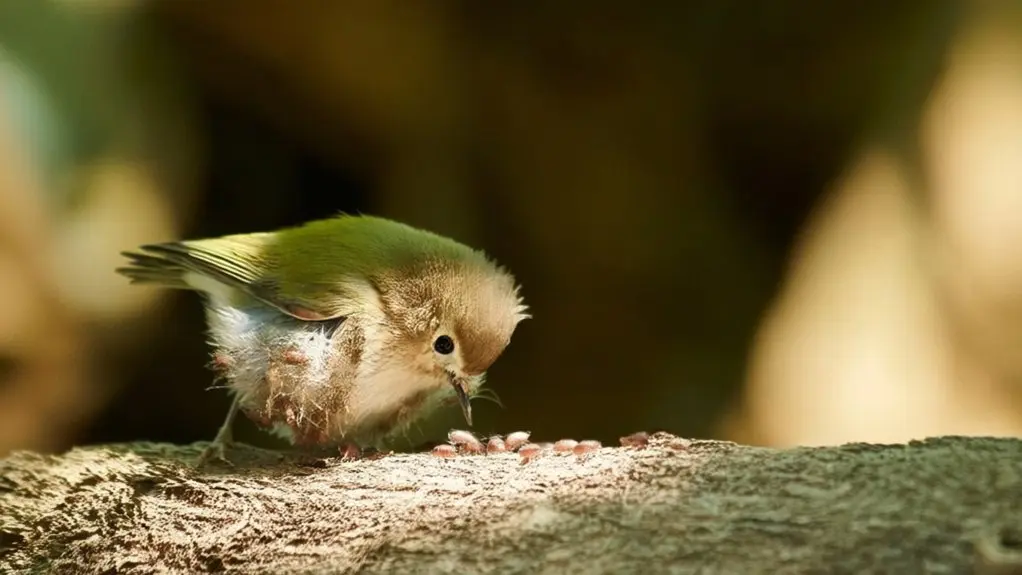
Yes, birds can get lice. These tiny, wingless parasites feed on blood, skin, and feather debris. You might notice small insects and firmly attached eggs, called nits, on their feathers.
This causes irritation, feather damage, and stress. Birds like sparrows and finches, especially those in crowded or social environments, are the most vulnerable. Lice spread through direct contact and contaminated nesting materials.
They rarely bite humans, but infestations can really harm a bird’s health. So, if you spot lice, it’s important to treat the problem thoroughly. Next, we’ll explore some effective prevention and control methods.
What Are Bird Lice and How Do They Affect Your Birds?
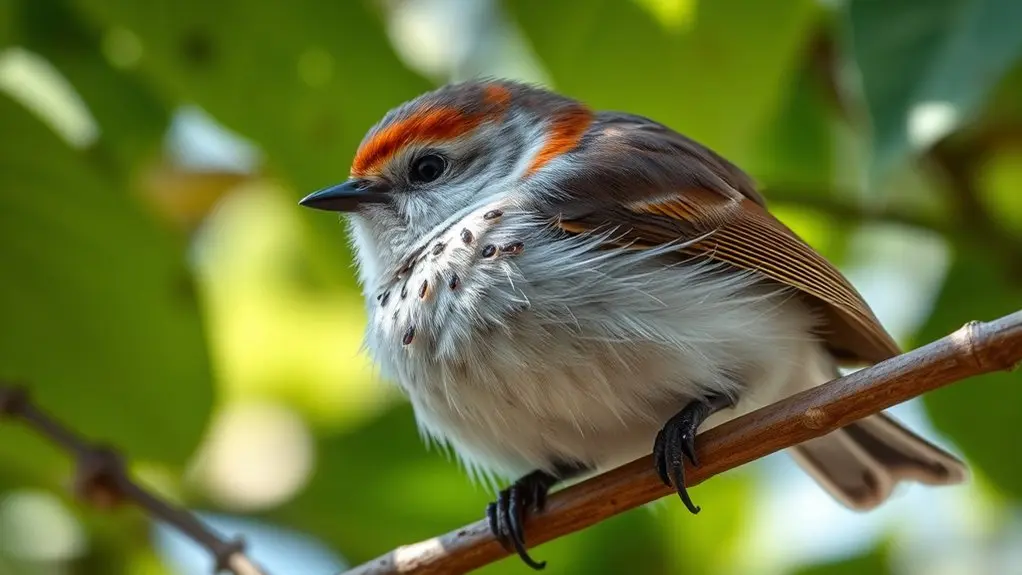
Although bird lice are tiny wingless insects measuring only 1-2mm, they can considerably affect your birds by feeding on their blood, skin, and feather debris. These parasites attach their eggs, or nits, firmly to feather shafts, starting the parasite lifecycle right on your bird.
Tiny wingless lice attach eggs to feathers, feeding on blood and skin, significantly impacting your bird’s health.
As lice mature, they consume essential nutrients, which leads to compromised feather health and causes irritation. You’ll notice your bird preening excessively and losing feathers, which only makes their feather condition worse.
The skin irritation from lice feeding also increases stress and discomfort, weakening your bird’s overall health. Since lice transfer easily between birds, an untreated infestation can escalate quickly.
Knowing the parasite lifecycle helps you catch the problem early. This way, you can protect your bird’s feather health and avoid the negative effects of a long-term infestation.
Which Birds Are Most at Risk of Getting Bird Lice?
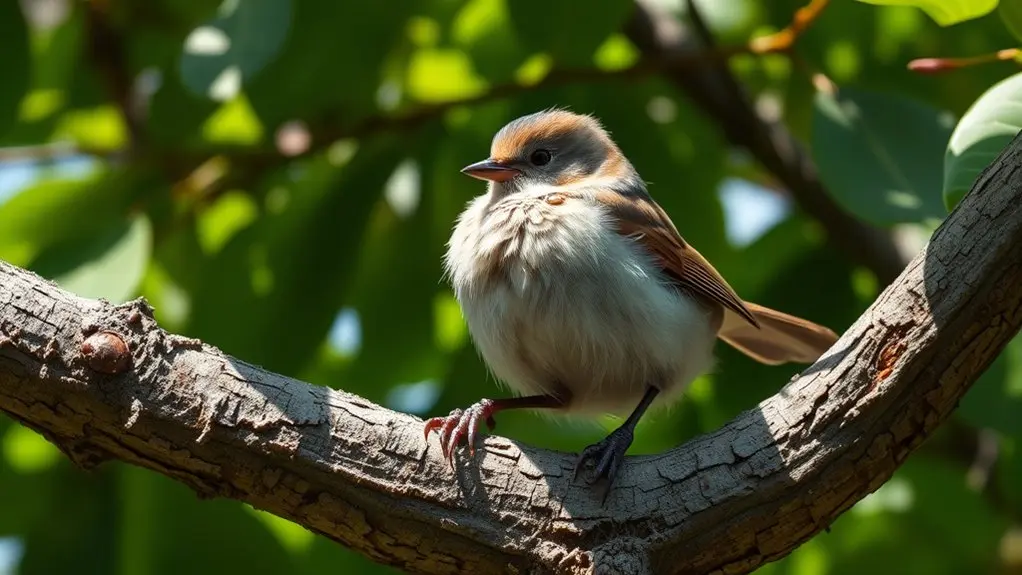
Understanding which bird species are most vulnerable to lice infestations can help you monitor and protect them effectively.
Passerine birds, such as sparrows, finches, and canaries, are particularly susceptible due to their dense feathering. This dense feathering can compromise feather health when infested.
Additionally, birds with nesting habits that involve crowded colonies or frequenting bird feeders and birdhouses face increased lice exposure.
Species like parrots and cockatoos, which spend considerable time in close contact, also show higher infestation rates.
Although bird lice are less common on waterfowl, ducks and swans nesting terrestrially remain at risk.
Where Do Bird Lice Live and How Do They Spread?
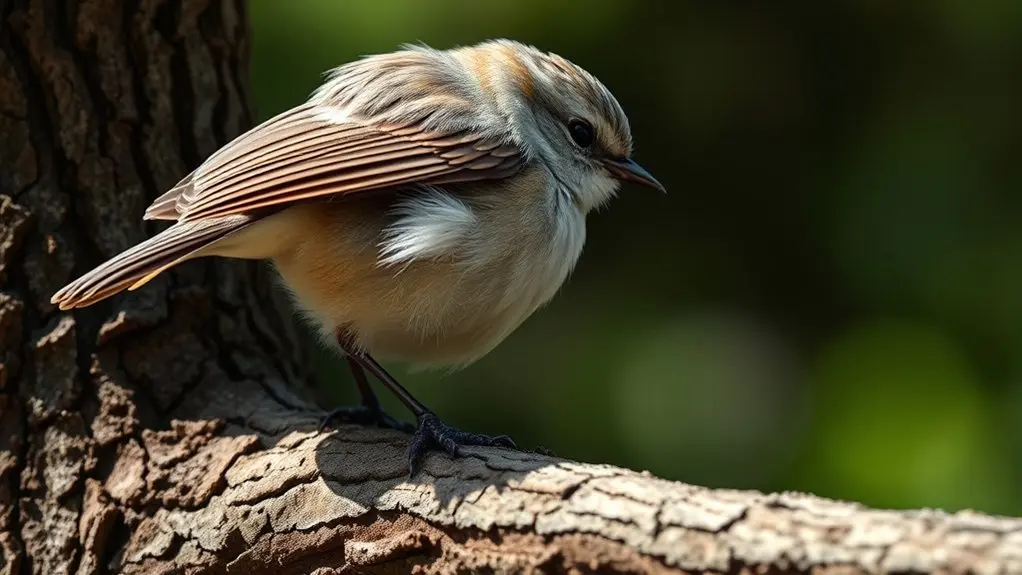
You’ll find bird lice living mainly on their host’s feathers, skin, and around the vent area. They often hide in feather shafts and skin folds.
These little critters spread mostly through direct contact—like when birds mate, nest, or interact socially. But that’s not all; they can also move from one bird to another via shared nests, contaminated feathers, or even tools.
Knowing where they live and how they spread is really important if you want to manage lice infestations effectively.
Typical Bird Lice Habitats
Because bird lice depend on their hosts for survival, they typically inhabit a bird’s feathers, skin, and areas around the vents, where they feed on blood and skin debris. These ectoparasites often coexist with feather mites, which occupy similar microhabitats but differ in feeding habits.
Bird lice also act as nest parasites, residing in sheltered environments like tree branches, building eaves, and attics where birds breed. While primarily species-specific, lice may temporarily leave their host, inhabiting nests or bedding materials to survive periods between hosts.
This proximity to the bird’s habitat guarantees their survival but limits long-term viability away from a host. Understanding these typical habitats helps clarify how bird lice maintain populations and interact with their environment, emphasizing their close association with both the bird and its nesting sites.
Lice Transmission Methods
Although bird lice primarily inhabit the feathers, skin, and vent areas of their avian hosts, they rely on close physical contact between birds to transfer effectively. Their transmission exploits behaviors and environmental factors, reflecting evolutionary adaptation to maximize survival and spread.
You should understand these key methods:
- Direct contact during nesting, mating, or roosting allows lice to move easily from one bird to another.
- Shared nesting materials like twigs and leaves serve as indirect vectors for lice transfer.
- Contaminated environments, including birdhouses and perches, facilitate lice dispersal beyond immediate hosts.
Bird populations may develop genetic resistance to lice infestations, but lice continuously adapt, maintaining this parasitic relationship through precise evolutionary strategies.
How Can You Spot Bird Lice and Their Signs?
You can spot bird lice by taking a close look at the bird’s head, neck, and wings. These little pests are tiny, wingless insects, usually about 1-2mm long. Keep an eye out for small dark specks on the feathers or skin—they might actually be lice eggs stuck to the feather shafts.
Besides just spotting the lice, watch for signs like excessive preening, damaged feathers, or irritated skin. These are pretty common clues that your bird might have an infestation and needs a closer check-up.
Identifying Lice On Birds
When inspecting a bird for lice, focus closely on the head, neck, and wings. These tiny wingless insects, measuring just 1 to 2 millimeters, are most commonly found there.
To accurately identify lice, pay attention to a few things. First, check the feather cleanliness. Look for small dark specks or nits attached to feathers—these usually indicate lice presence.
Next, do a physical examination. Observe any adult lice moving on the bird’s body or firmly attached to feathers, especially in areas with dense plumage.
Also, consider the nest hygiene. Poor nest conditions often go hand in hand with higher lice infestations. So, it’s a good idea to assess the bird’s environment for cleanliness.
Keeping feathers clean and maintaining nest hygiene can really help reduce the risk of infestation. If you think you see lice, a detailed examination or talking to a vet will make sure you get the right identification and treatment.
Common Infestation Signs
Because bird lice are tiny and often blend into the plumage, spotting an infestation requires careful observation. You might notice small, dark specks moving on the bird’s feathers, especially around the head, neck, and vent areas. Inspect feather shafts closely for lice eggs, or nits, which appear attached to feathers.
Poor feather health, such as damaged or missing feathers, often signals infestation. Behavioral changes are also key; birds may preen excessively or show discomfort from lice bites, leading to skin irritation.
If you suspect lice, examine the bird meticulously or consult a veterinarian. A professional can confirm infestation by inspecting feathers and skin under magnification, ensuring accurate diagnosis and appropriate treatment to restore feather health and alleviate behavioral distress.
It’s always best to get expert advice when you’re unsure.
Why Do Bird Lice Sometimes Bite Humans?
Although bird lice are highly specialized to live exclusively on their avian hosts, they may occasionally bite humans if their natural hosts are absent or if their nests are situated near human activity. These bites are rare and usually harmless, as bird lice lack adaptations to survive on human skin.
You might experience these bites mainly because bird nests are close to areas where people often hang out, which can lead to accidental encounters. Also, when birds leave their nests or are removed, lice might get displaced temporarily and try to find other hosts.
Sometimes, lice just wander and accidentally come into contact with your skin, causing brief, accidental bites. While these bites can cause minor irritation or itching, they don’t transmit diseases and don’t mean you have a long-term infestation.
How to Get Rid of Bird Lice and Keep Them Away
Dealing with bird lice effectively requires a combination of targeted treatment and environmental management. Start with veterinarian-approved medications like ivermectin to eliminate lice on birds. At the same time, practice thorough nest removal and feather grooming to disrupt lice life cycles.
Make sure to clean cages, perches, and bedding regularly to remove eggs and prevent re-infestation. It’s also a good idea to limit contact with wild birds and seal enclosures to keep new lice out.
| Action | Purpose |
|---|---|
| Vet-approved meds | Kill lice on birds |
| Nest removal | Remove lice habitats |
| Feather grooming | Physically remove lice and eggs |
| Clean environment | Eliminate eggs and larvae |
| Limit wild contact | Prevent new infestations |
Keep an eye out with regular inspections to make sure the lice are fully gone. Staying on top of it really makes a difference!
When Should You Seek Professional Help for Bird Lice?
If you’ve tried home treatments for bird lice and the infestation persists, it’s important to consult a professional. Persistent lice need expert assessment to get the right bird lice treatment and improve prevention strategies.
You should seek professional help when your bird shows severe irritation, feather loss, or skin infections, which usually means the infestation is advanced. Also, if lice are widespread or don’t respond to over-the-counter remedies, targeted medication and environmental treatment are necessary.
Not sure if what you’re seeing are lice or eggs? An avian specialist can make sure you get an accurate diagnosis and the right treatment plan.
Getting professional help early prevents your bird from suffering for too long and lowers the chance of the lice coming back.
Frequently Asked Questions
Can Bird Lice Survive on Pets Like Cats or Dogs?
You won’t find bird lice surviving long on cats or dogs because bird lice transmission requires avian hosts.
For effective lice treatment methods, focus on birds and their environment, not your mammalian pets.
Do Bird Lice Affect the Egg-Laying Ability of Birds?
You’ll find bird lice don’t directly harm egg health, but severe infestations cause stress and anemia. This weakens their reproductive impact by reducing importance and distracting birds from ideal egg-laying behaviors.
Are Bird Lice Harmful to Wild Bird Populations?
Think of bird lice transmission as a low tide. The impact on bird health rarely floods wild populations. You won’t see significant harm since natural grooming and resistance keep lice from overwhelming birds.
This helps maintain ecological balance effectively. Birds have their ways to handle these pests, so it’s usually not a big deal. Overall, bird lice don’t cause major problems in the wild.
Can Bird Lice Infest Birds Kept in Aviaries or Cages?
Yes, bird lice can infest birds kept in aviaries or cages. You should maintain nest hygiene and monitor feather health closely. Lice spread easily in confined spaces, which makes it important to stay on top of things.
If left untreated, lice can cause feather damage and skin irritation. So, keeping an eye out is really key to keeping your birds comfortable and healthy.
Do Seasonal Changes Influence Bird Lice Infestations?
Yes, seasonal changes impact bird lice infestations by affecting feather health and molting cycles. Warmer seasons accelerate lice reproduction, while molting weakens feathers and increases susceptibility.
Conclusion
Dealing with bird lice is like untangling a stubborn knot. It can be challenging but manageable with the right approach. You need to stay vigilant, regularly inspect your birds, and act promptly at the first sign of infestation.
Understanding their behavior and life cycle helps you break the lice’s grip effectively. By combining thorough cleaning, targeted treatments, and preventive measures, you’ll protect your birds’ health and keep these parasites at bay.
Don’t hesitate to consult a professional if infestations persist. It’s always better to get expert advice than to let the problem worsen. Taking quick action makes all the difference.