
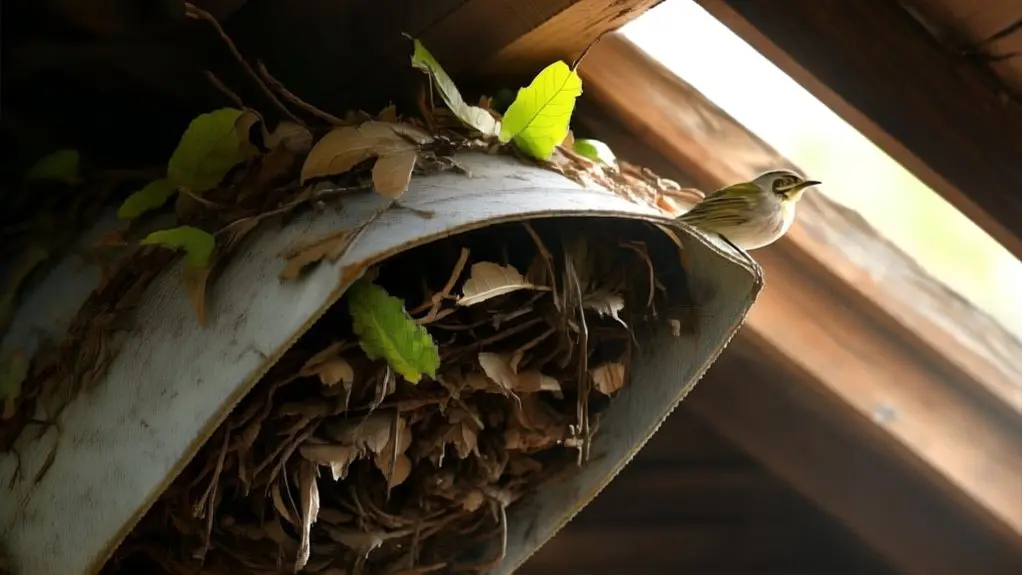
Yes, birds can easily get into your attic through tiny gaps, vents, or damaged roofing that are often overlooked. They take advantage of weak spots like unsealed vents, torn insulation, or loose soffits. This especially happens during migration or harsh weather when they’re looking for shelter.
Once inside, they build nests which can cause structural damage. Plus, there are health risks from droppings and pests that come along with them. It’s important to understand how they get in and recognize signs of nesting.
Knowing these details helps you prevent problems and keep your attic secure and safe. So, take some time to explore the specifics and protect your home.
How Do Birds Get Into Your Attic?
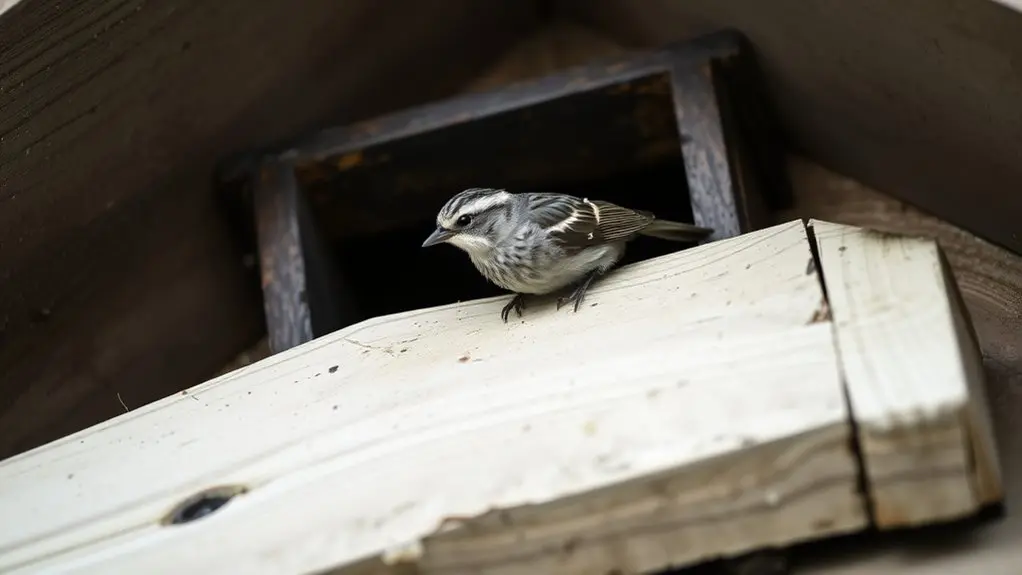
Although attics are usually enclosed spaces, birds can still find their way in through small openings like vents, soffits, or gaps around roof edges. These entry points often line up with unsealed or poorly protected roof vents, gable vents, or eaves.
Birds take advantage of weak spots or damaged shingles and sometimes even make holes bigger by tearing insulation or chewing on materials.
Birds exploit weak spots and expand holes by tearing insulation or chewing on materials.
Their feeding habits and migration patterns play a big role in when and why they look for shelter in attics. This is especially true during breeding seasons or bad weather.
Migratory birds might use attics as temporary shelters, while non-migratory birds could decide to build nests there.
Knowing this helps explain why birds see attics as easy-to-access, cozy spaces. So, it’s smart to check common entry points regularly to keep them out, especially considering their natural behaviors and seasonal movements.
What Are the Signs Birds Are Nesting in Your Attic?
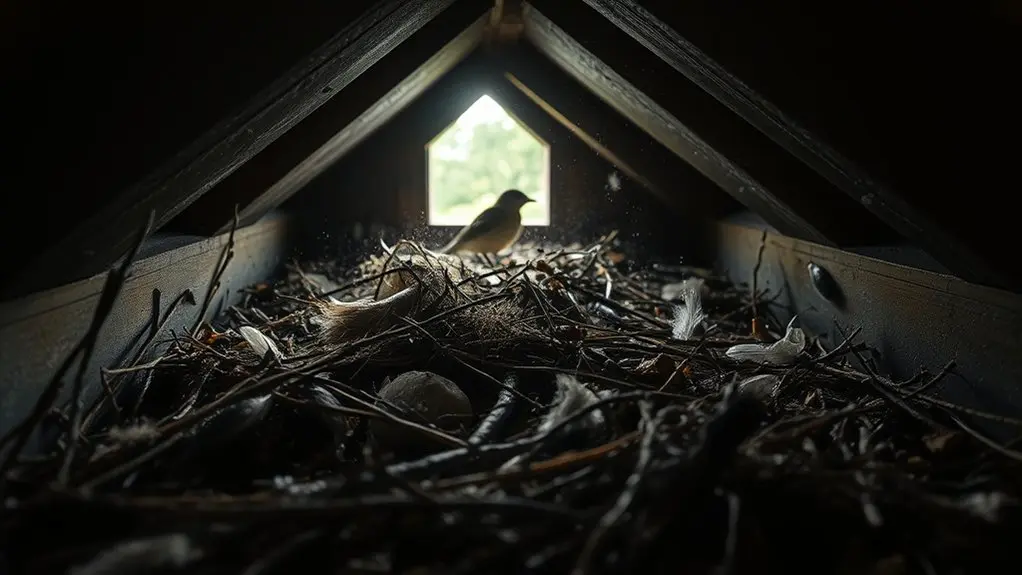
You might start hearing faint chirping sounds coming from your attic, especially during early mornings or evenings. That’s usually a good sign that birds are active up there.
Also, take a look around vents and eaves for any nesting materials like twigs, grass, or feathers. Finding those means birds are probably building their nests nearby.
And if you notice any disturbed attic vents or damaged screens, that’s another clue. It often means birds have found a way inside and are making themselves at home.
Audible Chirping Sounds
When you hear audible chirping sounds in your attic, it often means birds have nested there and are actively communicating with their chicks. You might notice the chirping gets more frequent in the early morning or late evening. This usually signals feeding or nesting behavior.
Sudden bursts of chirping after quiet intervals often suggest parent birds are returning with food. If you hear persistent, repetitive chirping near vents, eaves, or roof openings, that’s a good sign of nesting activity inside.
Sounds coming from behind walls or ceiling panels also support the idea there’s a nest within the attic space.
Feather color won’t help you identify the chirping, but if you see the birds outside, that can help with species identification. Paying attention to these sound patterns lets you figure out if birds are nesting without needing to see the nest itself.
It’s a pretty handy way to know what’s going on up there.
Visible Nesting Materials
Since birds need secure and hidden spots to raise their young, visible nesting materials like twigs, grass, feathers, and leaves often show that they’re around in your attic. You might even spot eggshell fragments or freshly built nests tucked away in soffits or hidden corners.
If you see a mix of messy debris and nesting materials, it usually means birds are actively building their nests. Identifying feathers can also give you clues about which bird species are involved.
Here’s a quick summary of common signs:
| Material Type | Location | Significance |
|---|---|---|
| Twigs & Grass | Rooflines, Soffits | Basic nest construction |
| Feathers | Near vents, corners | Species identification |
| Shredded Insulation | Mixed with debris | Active nesting and habitation |
When you put these signs together with droppings and smudges, it’s a pretty clear indication that birds are nesting in your attic.
Attic Vent Disturbances
How can you tell if birds have taken up residence near your attic vents? During bird migration seasons, increased activity around vents often signals nesting habits. You might hear faint chirping, squeaking, or flapping sounds, especially during quiet daytime hours.
Look for visible bird droppings or nesting materials like twigs and feathers near vents or attic entrances. Birds frequently pull apart or block attic vents with debris, reducing airflow and potentially causing structural damage.
Scratching noises or birds darting behind soffits indicate active nesting. Exterior signs such as missing or damaged vent covers also suggest bird presence. These disturbances reflect typical behaviors during nesting, driven by the need for safe, sheltered environments during migration and breeding periods.
Monitoring these signs can help you address infestations promptly and protect your attic’s ventilation system.
How to Confirm If Birds Are Still Nesting
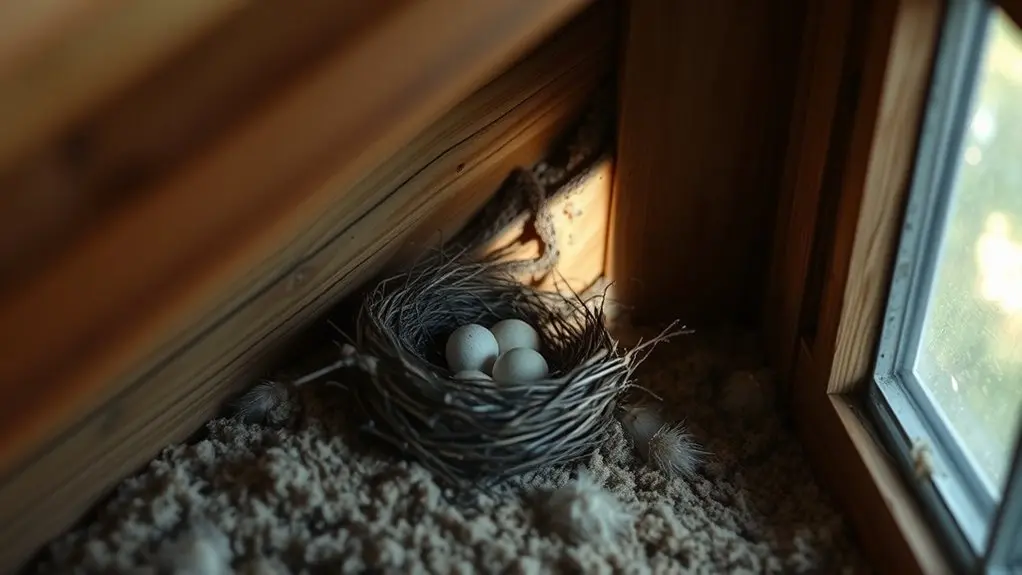
To confirm if birds are still nesting in your attic, you’ll need to carefully monitor signs of recent activity over several days. Since bird migration and nesting seasons vary regionally, timing your observations is essential.
Check for fresh droppings or new nesting materials near vents or entry points, indicating active use.
Look for fresh droppings or new nesting materials near vents, signaling recent bird activity.
Listen for continuous bird chirping, chick peeping, or feeding sounds inside the attic, which confirm ongoing nesting.
You can also place lightweight markers like crumpled paper at entryways to see if disturbances occur within three days.
Using binoculars or a camera with a zoom lens helps you inspect from a safe distance without disturbing the birds.
If you notice consistent presence of these indicators during nesting seasons, it’s a reliable sign that birds are still occupying your attic.
Just keep an eye out and be patient as you observe.
What Damage and Health Risks Do Birds Cause in Your Attic?
When birds establish nests in your attic, they often cause significant structural and health problems. Because of bird migration and nesting behavior, large nests trap moisture, which promotes mold and degrades wood.
Bird droppings contain bacteria, fungi, and parasites that pose health risks. Plus, uric acid corrodes insulation and wiring, which can lead to fire hazards. Nests and waste also harbor pests like mites and ticks, and these pests can transmit diseases.
Accumulated debris generates foul odors and can cause respiratory issues.
| Damage Type | Health Risk |
|---|---|
| Moisture-induced mold | Bacteria and fungi spread |
| Corroded wiring | Parasites and pests |
| Structural weakening | Respiratory irritants |
You need to address these issues promptly to keep your attic in good shape and protect your health.
When and How Should You Remove Birds From Your Attic?
Addressing the presence of birds in your attic requires careful timing and methodical steps to minimize damage and health risks. Removal should occur only after bird species have completed their nesting behavior and fledged their chicks. This usually happens about 10 to 14 days after nesting.
Disturbing active nests isn’t just risky for the birds but also violates legal protections for many species. To make sure the birds have left, you can place visual markers like crumpled paper at entry points and check back after three days.
Once you’re sure the birds are gone, wear protective gear to clean and sanitize the attic thoroughly. This means removing droppings, feathers, and nesting materials that could pose health hazards.
Finally, be sure to seal all entry points securely to keep birds from coming back. This way, you respect the birds’ natural breeding cycle while protecting your property and health effectively. It’s all about timing and being careful with each step.
How Can You Prevent Birds From Returning to Your Attic?
To keep birds from coming back to your attic, start by sealing up all the gaps and holes. You can use durable materials like metal mesh or caulk for that.
It really helps to install physical barriers too—bird-proof vent covers are great because they block the usual spots where birds try to get in.
Plus, it’s a good idea to have regular inspections so you can catch any new weak points early, before the birds find a way back inside.
Seal Entry Points
How can you effectively prevent birds from re-entering your attic once they’ve been removed? Start by sealing all gaps, holes, and vents larger than a pencil eraser with heavy-duty metal mesh or flashing. Different bird species exhibit specific nesting behavior, so addressing all potential entry points is essential.
Regularly inspect and repair damaged soffits, fascia boards, and roof vents to eliminate nesting sites. Install bird-proof vent covers or screens on attic vents and exhaust fans to block access. Use caulk or expandable foam to seal small gaps around pipes and wiring holes.
Additionally, keep trees and branches trimmed away from the roof, as they provide easy access for birds trying to reach your attic. These measures together really help reduce the chance of birds coming back.
Install Physical Barriers
When you install physical barriers over all potential entry points, you create an effective defense that prevents birds from accessing your attic. Using heavy-duty metal mesh or bird-proof vent covers stops birds from entering. Sealing gaps with steel or concrete further reduces access points.
Exclusion devices like one-way doors act as nest deterrents by letting birds leave but not come back.
Key steps include:
- Cover all vents and openings with durable mesh or covers.
- Seal cracks and holes using robust materials.
- Install one-way exclusion devices to encourage bird exit.
These physical barriers work as bird repellents by denying entry and discouraging nesting. Installing them before nesting season really strengthens your attic’s protection against birds getting in.
Schedule Regular Inspections
Although installing physical barriers is essential, scheduling regular inspections plays an equally important role in preventing birds from returning to your attic. Conducting seasonal checkups before and after nesting periods allows you to detect new entry points early.
During inspections, focus on soffits, vents, roof gaps, and eaves, where birds commonly exploit openings. Addressing these vulnerabilities through timely entry point sealing prevents birds from establishing nests.
Using professional services ensures thorough assessments and effective sealing, reducing the risk of overlooked damage.
Consistent monitoring and maintenance minimize re-infestation chances by promptly identifying structural changes or wear.
Why Do Birds Choose Attics for Nesting?
Because attics provide sheltered, quiet spaces that mimic natural nesting sites like tree cavities, birds often select them for raising their young. During bird migration, many species look for secure spots to set up nests, and attics fit this need well.
Their nesting habits drive them to find protected, elevated areas that reduce exposure to predators and weather. You’ll find attics appealing because they offer a stable, insulated environment that supports egg incubation and chick development.
Accessible gaps and vents make it easy for birds to get in while keeping them hidden. Plus, the quiet, undisturbed atmosphere mimics the natural nesting habitats birds instinctively prefer.
Understanding these factors helps explain why birds frequently choose attics, especially during breeding season. That’s why regular inspections are essential to prevent unwanted nesting.
Frequently Asked Questions
What Types of Birds Most Commonly Invade Attics?
You’ll most commonly find swallows, house sparrows, and starlings invading attics because of their nesting habits. These birds look for safe, sheltered spots to build their nests.
Their migration patterns often lead them to seek out vertical spaces like attics for breeding and roosting. It’s all about finding a cozy, protected place to raise their young.
Can Birds Cause Structural Damage Beyond Nesting Materials?
Birds don’t just sing trouble; they chip away at your attic’s defenses. Their pecking damages insulation, worsening attic insulation impact.
At the same time, droppings corrode materials, making bird sound mitigation more complicated. This can lead to costly structural repairs beyond just dealing with nesting mess.
Are There Legal Protections for Birds Nesting in Attics?
You must follow legal protections for birds nesting in attics, as laws safeguard bird migration and habitats. Disturbing active nests during breeding seasons can violate regulations. This means you need to be careful about when and how you handle the situation.
Usually, humane exclusion methods are required, and you should comply with wildlife authorities to avoid penalties. It’s important to work with professionals who understand these rules. That way, you can keep both the birds and yourself protected.
How Long Do Birds Typically Stay Once Nesting in an Attic?
You’ll notice birds typically enjoy their temporary home in your attic insulation for about 3 to 4 weeks, aligning with bird migration patterns. They stay through nesting and fledging before quietly continuing their seasonal journey.
It’s kind of like a short staycation for them. Once the baby birds are ready to fly, the family moves on. So, while it might feel like they’re settling in, it’s really just a brief stopover.
Can Bird Droppings Attract Other Pests to the Attic?
Yes, bird droppings cause pest attraction by providing nutrients that support insects and mold. These droppings also harbor bacteria and parasites, drawing rodents and other pests. This increases the risk of broader infestations in your attic.
Conclusion
You should understand how birds enter your attic, recognize the signs they leave behind, and confirm their presence carefully. It’s also important to address the damage and health risks they can cause. You must remove them safely and prevent their return effectively.
By knowing why birds choose attics for nesting, you can take informed, proactive steps to protect your home. Staying vigilant and acting promptly will help a lot. Using the proper methods will guarantee your attic remains bird-free and secure.