
You can’t get Omicron from birds because they’re highly unlikely to catch it. Scientific studies show birds’ ACE2 receptors, which the virus needs to enter cells, differ structurally from mammals’. This difference blocks infection.
Experimental exposure in chickens and ducks shows no sustained viral replication or transmission. No natural Omicron infections have been found in wild or domestic birds.
If you want to understand why birds remain clear of this virus and how it behaves in other animals, there’s more to explore.
Can Birds Get Omicron or Other COVID-19 Variants?
Although the COVID-19 pandemic has raised concerns about cross-species transmission, current evidence shows that birds can’t contract Omicron or other human COVID-19 variants. Research indicates SARS-CoV-2 primarily infects mammals, with no documented cases in avian populations.
The virus’s spike protein mutations in Omicron optimize binding to human ACE2 receptors, which differ markedly from those in birds, preventing infection.
You should note that while avian migration can transport various pathogens, scientific surveillance hasn’t detected SARS-CoV-2 on migrating birds or in domestic species. Although feather contamination might theoretically carry viral particles, it doesn’t equate to active infection or transmission.
Why Birds Are Unlikely Hosts for Omicron
Because birds possess cellular receptors that differ considerably from those in mammals, they lack the necessary binding sites for SARS-CoV-2 variants like Omicron to infect their cells.
You should understand that bird migration and avian immune mechanisms further reduce any hypothetical susceptibility.
Here’s why birds are unlikely hosts for Omicron:
- Their avian immune system effectively counters many viruses, preventing Omicron replication.
- Genetic differences between birds and mammals mean the virus can’t adapt to avian cellular environments.
- Bird migration patterns don’t correlate with viral transmission dynamics seen in mammalian hosts.
So, the combination of receptor incompatibility, robust avian immunity, and genetic divergence makes birds improbable reservoirs or vectors for Omicron.
This emphasizes the low risk of cross-species infection from birds to humans.
Evidence From Studies on Bird Susceptibility to COVID-19
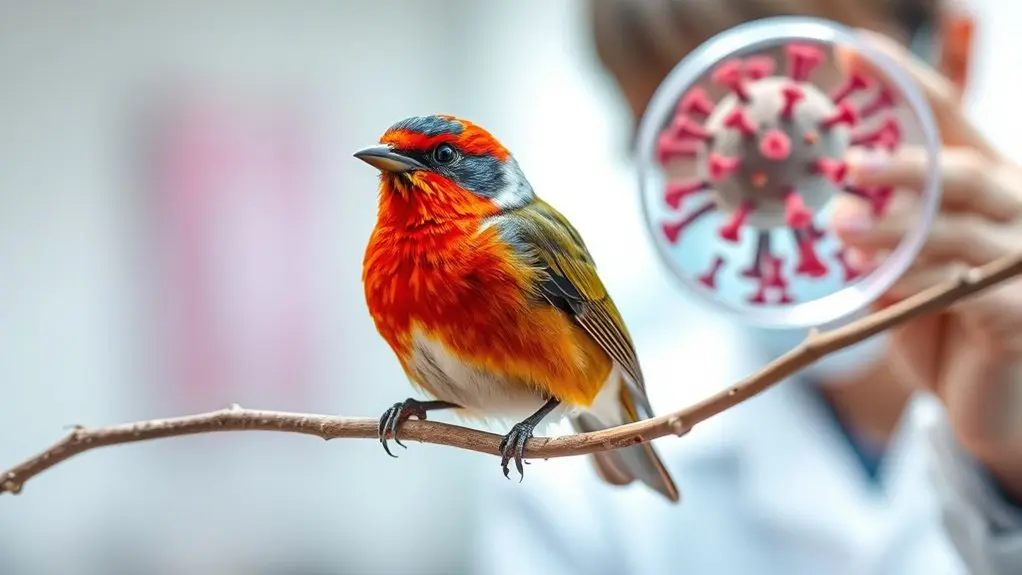
You’ll find that studies on various bird species consistently show minimal to no infection when exposed to SARS-CoV-2, including Omicron.
This resistance mainly comes from differences in the avian ACE2 receptor, which the virus has a hard time binding to effectively.
Experimental exposures back this up, too—viral replication stays limited or doesn’t happen at all in birds like chickens and ducks.
Bird Species Infection Studies
When examining bird species’ susceptibility to SARS-CoV-2, including the Omicron variant, studies consistently show that most birds resist infection due to structural differences in their ACE2 receptors.
Experimental infections in species like chickens and ducks reveal minimal viral replication, which highlights their limited susceptibility.
You should note these key findings:
- No documented natural infections of Omicron or other variants exist in wild or domestic birds. This suggests there’s a negligible risk during bird migration.
- Laboratory evidence shows a transient viral presence in some birds. However, no sustained infection or transmission has been observed.
- Species such as pigeons and gulls are unlikely to act as reservoirs. They continue to maintain feather health and population stability.
Avian ACE2 Receptor Role
Although SARS-CoV-2 exploits the human ACE2 receptor to enter cells efficiently, avian ACE2 receptors differ structurally in ways that markedly reduce their binding affinity for the virus’s spike protein. This structural divergence, confirmed through molecular modeling, arises from specific amino acid variations that hinder effective viral entry.
You’ll find that these differences explain why birds, despite their extensive migratory patterns and active bird flight capabilities, show minimal susceptibility to Omicron and other SARS-CoV-2 variants. Experimental data support this, as species like chickens and ducks exhibit negligible viral replication.
Consequently, the avian ACE2 receptor’s unique configuration makes most bird species unlikely natural hosts for the virus. This limits concerns about SARS-CoV-2 transmission through avian migration or flight-related behaviors.
Experimental Exposure Results
Since birds’ cellular receptors differ markedly from those of humans, experimental exposure studies have consistently shown minimal susceptibility to SARS-CoV-2 infection in species like pigeons and chickens.
You’ll find that direct inoculation with high viral doses rarely results in infection or symptoms.
Domestic poultry exhibit no viral replication, indicating low susceptibility.
Also, bird migration patterns and feather coloration have no observed effect on viral transmission or susceptibility.
These findings reflect birds’ incompatible ACE2 receptors, which hinder viral entry.
Experimental evidence strongly suggests that Omicron and other SARS-CoV-2 variants don’t infect birds naturally.
This reduces concerns about birds serving as reservoirs or vectors in the pandemic.
So, even though birds play an important role in the ecosystem, they’re unlikely to contribute to SARS-CoV-2 spread.
Your understanding clarifies that concerns about avian involvement remain unfounded.
How SARS-CoV-2 Infects Animals Besides Birds
You’ll find that SARS-CoV-2 infects various mammals by binding to their ACE2 receptors. This binding is what enables the virus to jump between different species.
For example, known hosts include animals like minks, deer, cats, and dogs.
There’s also experimental data showing that ferrets and hamsters can catch the virus. So, it’s not just random; these animals really are susceptible.
Understanding how this works is super important because it helps us figure out the virus’s potential to mutate and spread beyond just birds.
Animal Infection Mechanisms
When SARS-CoV-2 infects animals besides birds, it primarily targets the ACE2 receptor, much like it does in humans. This receptor’s structural variations across species influence viral binding efficiency and susceptibility.
Unlike birds, whose ACE2 receptors differ markedly, many mammals present compatible receptors enabling infection.
You should consider three key mechanisms: First, the viral spike protein binds ACE2 receptors with species-specific affinity, enabling entry. Second, mutations in SARS-CoV-2 can enhance receptor binding in certain animals, fostering reservoirs. Third, transmission occurs through direct contact or aerosols, as seen in experimental infections of ferrets and hamsters.
Understanding these mechanisms is essential, especially given bird migration patterns may influence viral spread indirectly. Also, avian vaccines might mitigate cross-species transmission risks.
This precision informs surveillance and control strategies beyond human hosts.
Known Mammalian Hosts
While birds exhibit limited susceptibility to SARS-CoV-2 due to differences in their ACE2 receptors, many mammals have compatible receptors that allow viral entry and replication. Unlike avian migration and the bird immune response which limit viral spread, mammals such as mink and white-tailed deer sustain infection naturally. Experimental data confirm ferrets and hamsters are highly susceptible and can transmit the virus.
You should note that some mammals may act as viral reservoirs, increasing zoonotic risk.
| Mammal | Susceptibility | Transmission Mode |
|---|---|---|
| Mink | High | Natural |
| White-tailed Deer | Moderate | Natural, Prolonged |
| Cats | Moderate | Natural |
| Dogs | Low | Natural |
| Ferrets | High | Experimental |
Why the Virus’s Spike Protein Matters for Which Animals It Infects
Because the spike protein mediates the virus’s entry into host cells, its mutations play a critical role in determining which animals Omicron can infect. You need to understand that the mutation impact on the spike protein affects vaccine efficacy and host range.
Specifically, the spike protein’s compatibility with animal receptors dictates susceptibility.
Consider these points: Mutations alter spike structure, changing binding affinity to receptors in mammals and potentially birds. Enhanced or reduced infectivity depends on how well the spike protein fits the host’s cellular receptors.
New spike mutations enable Omicron to infect species previously resistant, expanding potential animal reservoirs.
Which Animals Have Been Infected With Omicron and Why
Although Omicron primarily spreads among humans, it has crossed species barriers, infecting several animal hosts such as deer, mink, and hamsters. You should note that these infections arise from close human contact and Omicron’s adaptive mutations enabling cross-species transmission.
White-tailed deer in North America, for example, have become reservoirs, potentially sustaining viral circulation independent of humans.
Experimental data confirm species like hamsters and ferrets can carry and transmit Omicron, highlighting their susceptibility.
While avian migration and bird vocalizations are critical for virus spread in birds, current evidence doesn’t confirm Omicron infection in wild birds.
Understanding which animals harbor Omicron helps assess zoonotic risks and ecological impacts. But the role of birds remains uncertain, given their distinct physiology and behaviors compared to known susceptible mammals.
Can Birds Spread Omicron to Humans?
How likely are birds to transmit Omicron to humans? Current scientific evidence shows this risk is extremely low. Studies haven’t confirmed any cases of birds spreading SARS-CoV-2, including Omicron, directly to humans.
Bird-to-human transmission of Omicron is extremely unlikely, with no confirmed cases to date.
Consider these key points: Bird migration can disperse various pathogens, but no verified data link it to Omicron transmission. Feather contamination by viral particles is theoretically possible, yet no research demonstrates viable Omicron presence or transmission through this route.
Omicron primarily spreads human-to-human via respiratory droplets, making avian-to-human transfer negligible. Based on surveillance and research, you shouldn’t worry about birds as vectors.
The primary focus remains on human interactions, while bird migration and feather contamination don’t contribute meaningfully to Omicron spread.
Common Myths About Birds and COVID-19
When you hear claims that birds can carry or spread the Omicron variant of COVID-19, it’s important to know these are myths without scientific proof. Studies show that SARS-CoV-2, including Omicron, mainly infects humans and some mammals, not birds.
Even though bird migration helps spread various bird diseases, no data link migratory or local birds to COVID-19 transmission. The virus’s genetic makeup doesn’t support infection in birds, no matter their feather color or where they live.
People often misunderstand because they see birds in cities, but these observations don’t have any virus-related evidence. Knowing these facts helps you spot misinformation and get the real story about birds and COVID-19—so you don’t worry about things like bird migration or plumage causing the virus to spread.
How Bird Flu Differs From COVID-19 and Why It Matters
You need to understand that bird flu and COVID-19 have different virus structures. This difference affects how they spread and which hosts they infect.
Bird flu mainly targets birds but can sometimes infect mammals.
On the other hand, COVID-19, including its Omicron variant, is mostly adapted to humans.
These biological differences help explain why their patterns of spread and the risks they pose are quite different.
Virus Structure Comparisons
Although both bird flu and COVID-19 are RNA viruses that cause respiratory illness, their structural differences critically shape their behavior and impact. You need to understand these distinctions to grasp why their host interactions vary.
Bird flu’s segmented RNA genome enables viral recombination, allowing rapid genetic shifts.
By contrast, COVID-19’s single-stranded RNA evolves mainly through point mutations, influencing adaptability differently.
Consider these key differences:
- Bird flu’s hemagglutinin and neuraminidase proteins target avian receptors, while COVID-19’s spike glycoprotein binds human ACE2 receptors, dictating species specificity.
- The segmented genome of bird flu facilitates reassortment, accelerating viral evolution, unlike COVID-19’s non-segmented genome.
- Host immune response targets distinct viral surface proteins, affecting vaccine and treatment strategies differently.
These structural contrasts underscore the unique epidemiology and control challenges of each virus.
Transmission Differences Explained
The distinct viral structures between bird flu and COVID-19 directly influence how each virus spreads among their respective hosts. Bird flu, such as H5N1, primarily transmits among birds through direct contact with infected droppings or secretions. This is often helped along by bird migration and compromised feather hygiene.
On the other hand, COVID-19, including the Omicron variant, spreads mainly via respiratory droplets in humans. It shows limited ability to infect birds naturally because of its genetic makeup.
While some avian species can harbor certain flu strains, Omicron’s host range stays mostly mammalian.
Understanding these transmission differences really matters. It shapes how we manage outbreaks and informs biosecurity protocols. This is especially true when trying to prevent cross-species transmission that could happen when wild migratory birds and human populations interact.
What Omicron Means for Bird Owners and Wildlife
How does Omicron impact bird owners and wildlife? Current evidence shows Omicron doesn’t infect birds, which means birds seem to be immune to this variant. As a bird owner, you don’t have an increased risk of passing Omicron to your birds. So, there’s less worry about the virus spreading among wild or captive birds.
Here are some key points to keep in mind:
- Omicron mainly infects humans; there have been no cases reported in birds.
- Scientific studies show no evidence that Omicron harms bird populations.
- Ongoing monitoring confirms that Omicron doesn’t affect bird health or wildlife stability.
Because of this, you can keep caring for your birds without extra concern about Omicron transmission. Just stick to your usual hygiene practices rather than any special COVID-19 precautions for your birds.
Frequently Asked Questions
How Can I Protect My Pet Birds From Other Respiratory Diseases?
You can protect your pet birds from respiratory diseases by maintaining feather hygiene and minimizing their exposure during bird migration seasons. Regularly cleaning cages is also super important to keep germs at bay.
Providing balanced nutrition helps keep their immune system strong, so make sure they get all the right vitamins and minerals. Avoiding irritants like smoke or strong chemicals can prevent their airways from getting irritated.
When you bring new birds home, quarantining them for a while helps make sure they aren’t carrying anything contagious. And don’t forget to schedule regular veterinary check-ups to catch any issues early. Taking these steps can really make a difference in keeping your feathered friends healthy!
Are There Any Vaccines Available for Birds Against Viral Infections?
You might notice veterinarians administering avian vaccination to poultry coinciding with seasonal outbreaks. While no vaccines target human viruses like Omicron, avian vaccination plays a vital role in viral prevention against avian influenza and other bird-specific diseases.
It’s pretty interesting how these vaccines are specifically designed for birds. They help keep flocks healthy and reduce the spread of infections. So, even though humans don’t get vaccinated with these, birds certainly benefit from them.
What Symptoms Should I Watch for if My Bird Is Sick?
You should watch for respiratory distress, nasal discharge, coughing, sneezing, lethargy, diarrhea, and poor feather condition.
Catching symptoms early helps prevent avian transmission. It also guarantees timely veterinary care to address your bird’s illness effectively. So, keeping an eye on these signs is really important.
Can Bird Feeders or Birdhouses Spread Diseases Among Wild Birds?
Think of bird feeders as crossroads in bird migration, where bird disease transmission can hitch a ride. You’ll find they facilitate close contact, so cleaning feeders regularly helps break the cycle.
This reduces illness spread among wild birds. It’s a simple step that makes a big difference. Keeping things clean keeps the birds healthier.
How Do Birds Typically Recover From Viral Infections?
You’ll see birds recover from viral infections through avian immunity, which produces antibodies to neutralize pathogens. They may shed viruses during recovery, influencing viral transmission among populations. But a strong immune response typically guarantees clearance and protection.
Conclusion
You don’t need to worry about birds catching Omicron or spreading it to you. Scientific evidence shows they’re unlikely hosts because of differences in their cellular receptors.
While bird flu remains a separate concern, COVID-19 variants like Omicron mainly infect mammals, not birds. So, assuming birds carry Omicron is pretty outdated—kind of like sending a telegram in the digital age.
Stay informed and focus on proven transmission routes to protect yourself and the wildlife around you.