
You can’t get parvo in birds because canine parvovirus specifically targets mammalian cells and can’t infect avian species. Birds lack the necessary cellular receptors for this virus, making infection impossible.
Instead, birds face other viral threats like avian influenza and Newcastle disease. These require different prevention and care strategies.
Understanding these distinctions helps protect your bird’s health and well-being. To learn about signs, prevention, and proper veterinary care, keep exploring this topic further.
What Is Parvo and Which Animals Does It Affect?
Although parvo, or canine parvovirus, primarily targets dogs, you might wonder if other animals, such as birds, can be affected. Parvo is highly species-specific, infecting mammals like dogs, cats, and some wild carnivores by targeting rapidly dividing cells in their intestines and bone marrow.
Birds, however, lack the cellular receptors necessary for parvo to infect them, making infection virtually impossible. This means that despite bird migration exposing avian populations to diverse environments, they remain unaffected by canine parvovirus.
Moreover, parvo doesn’t influence traits like feather coloration, which are unique to bird physiology and unrelated to viral susceptibility. Understanding this species specificity clarifies that parvo poses no threat to birds, even as they traverse continents during migration.
How Parvovirus Spreads Among Mammals
Because parvovirus is highly contagious among mammals, understanding how it spreads is really important for controlling outbreaks. The virus mainly targets dogs and cats, showing strong host specificity. Its ability to spread quickly is influenced by viral mutations.
Parvovirus spreads rapidly among dogs and cats, with mutations influencing its contagious nature and host specificity.
You can reduce the risk of infection by knowing the ways parvovirus transmits. It spreads through contact with contaminated feces, vomit, or surfaces. The virus can survive for months because it’s tough in the environment.
It also spreads through direct interaction between infected and susceptible mammals, which helps it move fast. Plus, exposure to contaminated environments is a risk since viral particles stay infectious on surfaces.
These ways the virus spreads show why it’s so important to keep things clean and contained. While viral mutations might change how it spreads, they usually don’t make it jump beyond mammals. So, the virus stays pretty specific to its hosts.
Why Birds Cannot Get Parvovirus Infection
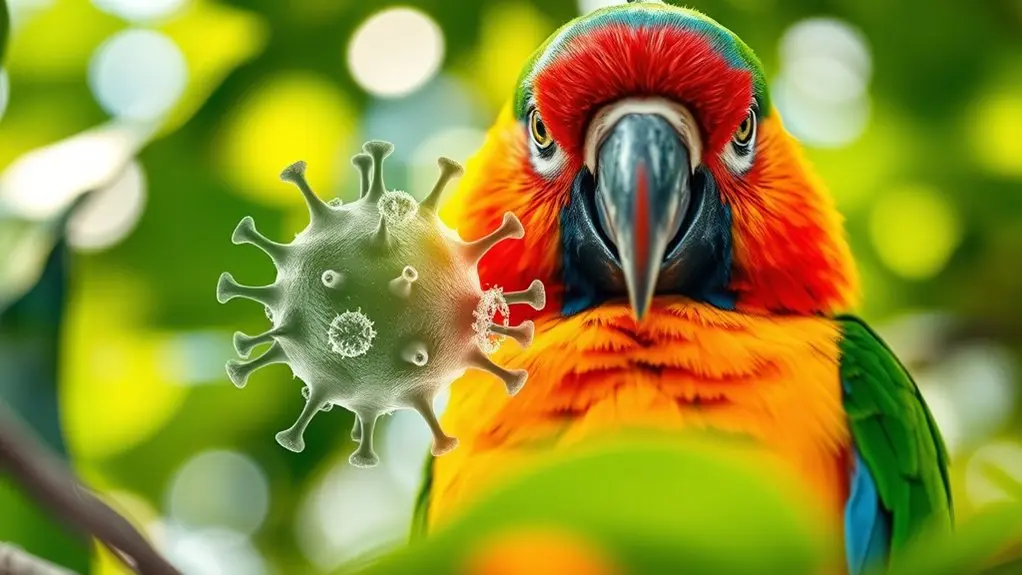
Understanding how parvovirus spreads among mammals highlights why the virus can’t infect birds. Parvoviruses target specific cellular receptors found only in mammalian cells, which are absent in avian species. This species-specificity prevents the virus from attaching to or replicating within bird cells.
Additionally, birds’ immune systems differ fundamentally from mammals, providing natural resistance to parvovirus infection. Scientific studies confirm no evidence of parvovirus replication in birds, reinforcing this immunity.
Maintaining proper avian nutrition is vital for supporting their unique immune defenses and promoting ideal feather health, which further protects birds from infections.
Common Viral Diseases That Affect Birds
While birds aren’t vulnerable to canine parvovirus, they do face threats from several avian-specific viral diseases. These infections can impact bird migration patterns and even affect feather coloration due to stress or illness.
You should be aware of these common viral diseases in birds:
- Avian Influenza: Infects various species, causing respiratory distress and high mortality, disrupting migration routes.
- Pigeon Paramyxovirus (Newcastle Disease): Leads to neurological symptoms like tremors and paralysis, impairing flight and survival.
- Infectious Bursal Disease: Targets young birds’ immune systems, causing immunosuppression and vulnerability to secondary infections.
Understanding these diseases helps you recognize the challenges birds face beyond canine parvovirus. It really shows how important it’s to monitor wild and domestic bird populations during migration seasons.
Signs of Viral Illness in Birds to Watch For
You should keep an eye out for common viral symptoms like lethargy, loss of appetite, and abnormal droppings in your bird. These signs can be subtle but are important to notice.
Also, watch for any behavioral changes—things like sudden feather plucking or ruffled feathers often signal that something might be wrong.
And don’t forget about respiratory signs. If your bird is sneezing, has nasal discharge, or seems to be breathing with difficulty, these are clear warning signs that need prompt attention.
Common Viral Symptoms
Because viral infections can progress quickly in birds, recognizing common symptoms early helps you act promptly to protect your flock. Viral illnesses often disrupt feather health, which messes with the bird’s ability to stay properly insulated and fly well. This can even affect migration patterns in wild species.
Key symptoms to watch for include lethargy and loss of appetite, which usually means there’s a systemic infection going on. You might also notice respiratory distress and abnormal droppings, like diarrhea or discoloration.
Sudden weight loss with ruffled feathers and decreased activity is another big red flag.
Catching these signs early is super important for timely intervention and to stop the virus from spreading. Neurological symptoms can happen too, but focusing on these common physical ones will help you keep a close eye on your birds and maintain overall flock health.
Behavioral Changes Noted
Although physical symptoms are often the first signs you notice, behavioral changes can provide critical early clues to viral illness in birds. You may observe lethargy, decreased appetite, and reduced activity, signaling an underlying infection.
Alterations in sleep patterns, such as increased sleep or prolonged hiding, are common indicators.
Watch for changes in feather grooming; unusual feather plucking or neglect of grooming can suggest systemic illness. Decreased social interaction and sudden behavioral shifts, like wing drooping or tremors, may indicate neurological involvement.
These behavioral signs often appear before or alongside physical symptoms, making them essential for early detection.
Noticing these changes promptly allows you to seek veterinary care sooner, improving the bird’s chances of recovery from viral diseases like parvo.
Respiratory Signs Observed
When birds face viral infections, respiratory signs often emerge as clear indicators of illness. You may notice changes in bird vocalizations, such as persistent coughing or gurgling sounds, signaling inflammation in the respiratory tract. Feather grooming might decrease, reflecting overall discomfort and lethargy.
Key respiratory signs to watch for include sneezing, nasal discharge, and visible swelling or redness around the nares and sinuses. You might also see labored breathing, open-mouth breathing, or exaggerated tail bobbing, all of which indicate respiratory distress.
Along with these, decreased appetite and lethargy often accompany respiratory symptoms. Monitoring these signs helps identify viral illnesses early.
Prompt attention can improve outcomes by ensuring proper care and minimizing complications linked to respiratory infections in birds.
How Birds Fight Off Viruses and Other Infections
You rely on your bird’s specialized immune system to fight off viral infections effectively. Their innate and adaptive responses team up, including some unique antibodies that help neutralize pathogens and build resistance.
Knowing how these defenses work can really help you support your bird’s health and keep illnesses like parvo at bay. It’s all about understanding what’s going on inside so you can give your feathered friend the best care possible.
Avian Immune Defenses
Because birds lack lymph nodes, they rely on specialized lymphoid tissues like the bursa of Fabricius to develop and regulate their immune cells.
You’ll find that their innate immune system includes physical barriers such as feathers and skin, which play a critical role in protecting against pathogens.
Maintaining a balanced avian diet directly supports feather health and overall immune function. It’s pretty interesting how what they eat can impact their immune defenses.
Key components of avian immune defenses include heterophils and macrophages that rapidly respond to infections.
There’s also humoral immunity producing antibodies to neutralize viruses and bacteria.
Plus, cell-mediated immunity targets infected cells for clearance.
Factors like age, stress, and nutrition influence these defenses.
Viral Infection Resistance
Although viral infections pose significant threats to avian health, birds have evolved robust immune mechanisms to counteract these pathogens effectively. You’ll find that their immune system combines innate defenses with adaptive responses, allowing rapid identification and elimination of viruses.
Genetic resistance plays a vital role, as some species naturally resist certain viruses due to inherited immune traits.
When exposed to viruses, birds generate specific antibodies, establishing immune memory that enables faster, stronger responses upon re-exposure. Specialized organs like the bursa of Fabricius facilitate the maturation of immune cells essential for this process.
Additionally, vaccination programs enhance viral infection resistance by priming these immune responses before natural exposure. This improves survival rates and overall health in both wild and domesticated birds.
Debunking Parvo and Bird Health Myths
Certainly! Here’s the modified version with alternative words replacing “ensure” in a contextually appropriate manner:
—
While parvovirus poses a serious threat to mammals like dogs and cats, it doesn’t infect birds. Parvo is highly species-specific, targeting only certain mammals, so you don’t need to worry about your parrot or canary contracting it. Many bird health myths confuse parvovirus with other avian diseases, but birds remain unaffected by canine or feline parvoviruses.
To clarify common misconceptions:
- Birds can’t transmit or host parvovirus despite their role in bird migration.
- Viral infections in birds are distinct from mammalian viruses.
- Feather coloration changes relate to nutrition and health, not parvovirus exposure.
Understanding these distinctions helps you avoid unnecessary fear and provides accurate diagnosis, protecting your bird’s well-being with science-based knowledge.
How to Protect Your Bird From Viral Diseases
You can cut down on viral diseases by keeping things super clean and making sure any new birds spend some time in quarantine before joining your flock.
Vaccinations are really important for some bird viruses, although there isn’t a vaccine for parvo in birds yet.
Keeping your bird’s environment tidy and watching their health closely can help stop outbreaks before they start.
Plus, it means you can catch any problems early and get your bird the treatment they need right away.
Viral Disease Transmission
How do viral diseases spread so quickly among birds, and what steps can you take to protect your feathered companion? Viral mutation and host adaptation enable viruses to infect birds efficiently, often through direct contact or contaminated surfaces. These mechanisms speed up transmission within bird populations, so staying alert is really important.
To reduce risks, you should quarantine new or sick birds to keep infections from spreading. Also, avoid sharing food and water sources among birds to limit cross-contamination. It’s a good idea to monitor your bird’s health regularly for any early signs of viral infection.
Understanding these transmission pathways helps you act quickly when needed. Vaccination can help protect against some viruses, but not all viruses have effective vaccines.
Preventative Hygiene Practices
Because viral diseases can spread rapidly among birds, maintaining strict preventative hygiene practices is essential to protect your feathered companion. Prioritize regular perch cleaning and disinfect cages, toys, and feeding areas with bird-safe agents to minimize viral presence. Perform daily feather grooming to help your bird maintain healthy plumage and reduce pathogen load.
Always wash your hands thoroughly before handling your bird or cleaning its environment to prevent cross-contamination. Avoid introducing new or wild birds into your flock without proper quarantine and health screening to limit exposure to infectious agents.
Ensure good ventilation in the living area to reduce airborne pathogens. Additionally, clean and replace food and water dishes daily to prevent contamination.
This creates a thorough approach to viral disease prevention in your bird’s environment. Taking these steps can really make a difference in keeping your bird healthy and happy.
Vaccination Importance
Maintaining rigorous hygiene practices lays a solid foundation for disease prevention, but vaccination provides an additional layer of defense against viral infections in birds.
Though no parvovirus vaccine exists for birds, immunizations against viruses like paramyxovirus and avian influenza enhance genetic immunity and prime your bird’s immune system.
To protect your bird effectively, follow these key steps: consult an avian veterinarian for tailored vaccination schedules and booster timing. Support your bird’s immune response with balanced nutritional support.
Also, maintain vaccination records to ensure long-term immunity in multi-bird environments.
Vaccination minimizes viral outbreaks and strengthens your bird’s resilience against contagious diseases. It safeguards both individual birds and flocks.
When to Contact a Veterinarian About Bird Viral Health
Although birds don’t contract parvovirus, you should stay alert for signs of viral illness like lethargy, decreased appetite, or abnormal droppings. These symptoms might point to infections such as Pacheco’s virus or psittacine beak and feather disease.
If you notice sudden behavioral changes or symptoms that don’t go away, it’s important to contact an avian veterinarian right away.
Early intervention can really help prevent your bird’s health from getting worse. Keeping your bird’s nutrition on point and the cage clean supports their immune system, but that’s not a substitute for professional care when they’re sick.
Getting an accurate diagnosis takes specialized knowledge, so try to avoid self-medicating or putting off a vet visit.
Timely veterinary attention means your bird gets the right treatment, which can improve their chances for a better outcome.
Best Practices to Prevent Viral and Bacterial Infections in Birds
To considerably reduce the risk of viral and bacterial infections in your birds, you need to implement strict hygiene protocols and preventive measures. Controlling exposure during bird migration periods is essential, as migrating birds can introduce pathogens.
Also, encourage regular feather grooming to maintain skin health and reduce microbial load. Here are key practices to follow:
- Clean and disinfect cages regularly to eliminate infectious agents.
- Quarantine new birds for at least 30 days to prevent pathogen transmission.
- Provide a balanced diet rich in vitamins and minerals to strengthen immunity.
Avoid contact with wild birds and contaminated surfaces to minimize infection risk. Regular veterinary check-ups help detect infections early, ensuring timely intervention.
Frequently Asked Questions
Can Parvovirus Survive on Bird Feathers or Cages?
Parvovirus can survive on bird feathers temporarily, but feather contamination is pretty rare. So, it’s not the main way the virus spreads.
You really want to focus on keeping the cages clean. Using effective disinfectants like bleach solutions is key to getting rid of the virus. This helps prevent the virus from spreading through contaminated cages or bedding.
Are There Vaccines for Parvo in Birds?
You won’t find parvo vaccines for birds because their immune response naturally blocks parvo symptomatology. Like a fortress, their biology prevents infection, so no vaccines exist or are needed for avian species against parvovirus.
Basically, birds just don’t get affected by parvo the way other animals might. So, there’s no need to create or give them a vaccine for it. It’s kind of like they have built-in protection that does the job for them.
Can Birds Transmit Parvo to Dogs or Cats?
You can’t worry about birds transmitting parvo to dogs or cats. Despite avian migration and feather grooming, parvovirus targets mammals only. So, birds don’t carry or spread this virus to your pets or others.
It’s pretty straightforward. Birds just aren’t part of the parvo transmission chain. Your dogs and cats are safe from catching it from birds.
What Should I Do if My Bird Is Exposed to Parvo?
Like a shield against unseen foes, you should maintain bird nutrition and rigorous cage cleaning to prevent illness. Monitor your bird closely for symptoms, and consult a vet promptly to guarantee its health remains uncompromised.
It’s really important to keep an eye on your bird and act quickly if you notice anything unusual. Don’t hesitate to reach out to a vet—the sooner, the better for your feathered friend’s well-being.
Are There Any Bird-Specific Parvovirus Strains?
Yes, bird-specific parvovirus strains exist but they differ from mammalian ones. You should know that the bird immune response targets distinct viral mutations.
Because of this, parvovirus mutation patterns in birds classify them separately. This ensures species-specific infection and immunity dynamics.
Conclusion
You now know birds can’t get parvo, as this virus targets only certain mammals. While parvovirus won’t threaten your feathered friend, many other viral diseases can. So, staying vigilant is essential.
Watch for signs of illness and keep their environment spotless. Prevention is your best weapon. Remember, protecting your bird from infections isn’t just important—it’s as critical as oxygen itself.
Always consult a vet promptly if you suspect viral health issues. Don’t wait around; getting professional advice early can make all the difference. Your bird’s health depends on it!