
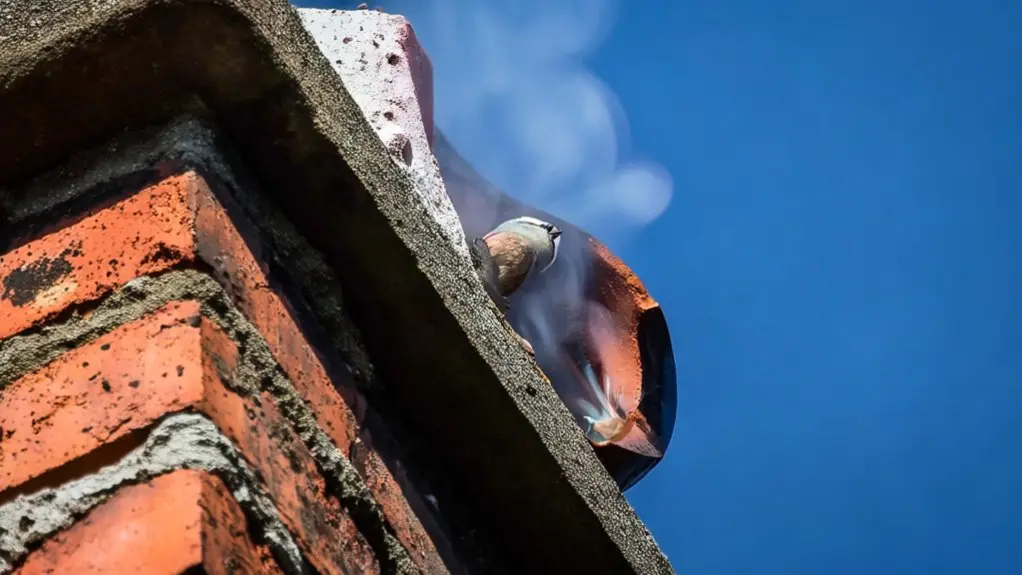
You can’t assume birds trapped in your chimney will escape on their own, as nests or damage often block their exit. Birds rely on clear, unobstructed flues to fly out, but narrow spaces and lack of perches make self-rescue difficult.
Signs like chirping, feathers, or airflow issues indicate their presence. To protect both birds and your home, humane removal and proper prevention measures are essential.
Keep going to understand effective solutions and legal guidelines.
How Do Birds Get Trapped in Chimneys?
Although chimneys may seem like safe passageways, birds can easily get trapped inside when they enter through open flues or damaged caps with gaps. Bird behavior plays a vital role, as many species explore chimneys searching for sheltered nesting sites.
When nesting materials accumulate, they can block exit routes, especially if the damper is closed or the cap is deteriorated.
Even birds like chimney swifts, adapted to narrow spaces, risk entrapment if the chimney becomes obstructed or sealed.
You’ll find that improperly fitted or damaged caps increase the chance of birds entering but not exiting.
Understanding these factors helps you realize why chimneys become traps.
Birds’ instinct to nest and the physical barriers created by materials and structural issues combine to cause entrapment.
Can Birds Trapped in Chimneys Escape on Their Own?
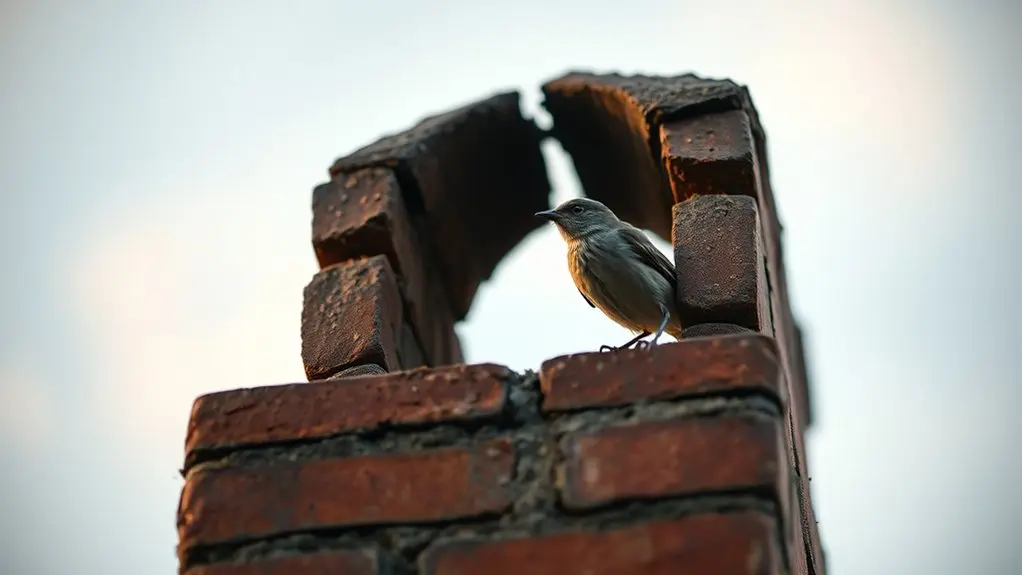
How often do birds trapped in chimneys manage to escape on their own? Bird behavior plays a vital role here. Most birds use their natural flight ability to exit chimneys when the flue or chimney cap is open and unobstructed.
During migration, birds often leave voluntarily once they detect fresh air or an exit. However, if chimney maintenance is lacking, such as blocked flues, damaged caps, or accumulated nests, birds may become confined and unable to escape.
In these cases, natural escape is unlikely without human intervention. Proper chimney maintenance ensures clear passages, which supports birds’ instinctual behavior to find their way out.
Why Do Nesting Birds Struggle to Leave Chimneys?
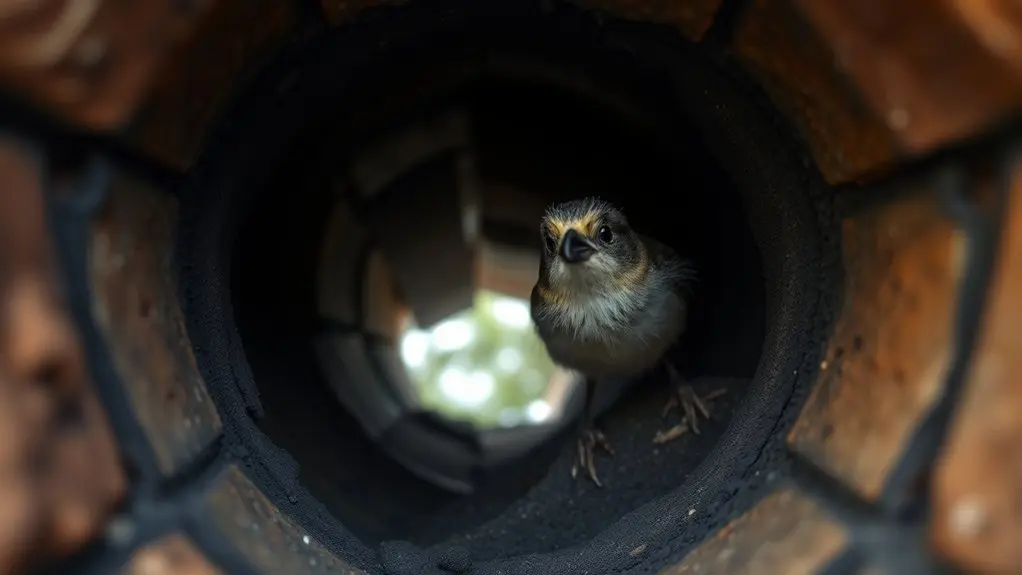
When birds nest inside chimneys, they often struggle to leave because the smooth, vertical surfaces prevent them from gaining the altitude and angle necessary for flight.
Chimney construction typically lacks natural perches or footholds, which are essential for birds to build momentum and execute proper bird flight dynamics.
The confined space restricts their wing movement, making it harder to generate lift. Also, structural barriers like caps or damage can disorient birds, especially migratory species relying on instinctual flight paths.
During nesting, exhaustion and confusion further reduce their ability to navigate toward the chimney opening.
Understanding how chimney design impacts bird flight dynamics helps explain why nesting birds frequently become trapped or delayed when trying to exit these narrow, vertical shafts.
It’s a tricky spot for them to maneuver, and without the right footholds or space, getting out isn’t as simple as it might seem.
What Are the Signs Birds Are Trapped or Nesting in Your Chimney?
You might hear chirping or fluttering sounds coming from your chimney, especially during nesting season. That’s a good sign birds could be trapped or nesting inside.
Also, take a look around your fireplace for nesting materials like twigs or droppings—these are clear clues that birds are there.
On top of that, if you notice smoke backing up or the airflow feeling weaker than usual, it might mean there’s a blockage caused by birds or their nests.
Audible Bird Noises
Although bird noises coming from your chimney might seem harmless, they often indicate nesting or trapped birds inside. Bird vocalizations such as chirping, twittering, and scratching sounds frequently signal activity within the chimney. You’ll notice increased noise during dawn or dusk when birds try to enter or exit.
Persistent fluttering or banging noises often suggest that birds are trapped, struggling to find a way out. Bird distress signals include sudden loud chirps or alarm calls, which occur when birds feel confined or threatened.
Additionally, audible wing flapping or scratching noises reveal attempts to escape.
Paying close attention to these sounds helps you identify whether birds are nesting or trapped. That way, you can take timely, appropriate action to address the situation. It’s always better to catch these signs early before things get worse.
Visible Nesting Material
If you spot twigs, leaves, or grass inside your chimney, it’s a strong indicator that birds have established a nest there. During nest construction, birds carefully select materials suited for insulation and stability. Visible nesting material signals active use or recent occupancy.
You might also notice feathers, droppings, or debris near the hearth. These reinforce signs of bird presence. Observing these signs helps you figure out whether birds are trapped or nesting.
| Sign | Implication |
|---|---|
| Twigs, leaves, grass | Nest construction with chosen materials |
| Bird droppings | Recent or ongoing bird activity |
| Feathers on hearth | Presence of birds or nest nearby |
| Chirping or fluttering sounds | Birds inside or near the chimney |
| Visible gaps/damage | Entry/exit points for nesting or trapping |
Smoke And Airflow Issues
When birds build nests or become trapped in your chimney, they often obstruct airflow, leading to noticeable smoke and ventilation problems. During bird migration seasons, their nesting habits increase the chance of blockages.
You might hear persistent chirping or fluttering sounds coming from the chimney, especially during quiet times, signaling trapped birds.
Smoke backing up into your home or fireplace clearly shows airflow obstruction caused by nests or birds inside the flue. Unusual odors, like musty or bird-like smells, also indicate restricted ventilation.
Additionally, weak or inconsistent airflow when using your fireplace suggests an obstruction.
Spotting debris such as twigs, leaves, or droppings near the firebox further confirms nesting activity. Recognizing these signs early helps you address chimney blockages effectively and maintain safe airflow.
What Should You Do If Birds Are Trapped in Your Chimney?
If you think there might be birds trapped in your chimney, the first thing to do is confirm they’re actually there—but try not to disturb them. Many birds are protected by law, so it’s important to be careful.
You shouldn’t attempt to remove the birds yourself because handling them the wrong way can hurt them and may even break wildlife protection laws. The best move is to get in touch with a professional who knows how to safely and legally help with the removal.
They can also give you tips on how to prevent this from happening again.
Identifying Trapped Birds
Although trapped birds often make distinct chirping or fluttering sounds within the chimney, you can also identify their presence by looking for visible signs like nests, droppings, or movement near the chimney opening.
Understanding bird migration patterns and nesting habits helps you anticipate when birds are more likely to seek shelter in chimneys.
During migration seasons, birds may accidentally enter chimneys. Nesting habits can lead them to establish nests inside as well.
If you notice these signs, approach cautiously. Opening the damper might help, but it’s safer to contact wildlife professionals. They guarantee humane removal and prevent injury to both birds and property.
Acting promptly minimizes distress and potential harm to trapped birds, keeping them safe during vulnerable times.
Legal Protection Guidelines
Because birds trapped in chimneys are protected under the Migratory Bird Treaty Act, you must follow strict legal guidelines to avoid harming them or facing penalties. Legal compliance is essential for bird conservation when dealing with trapped birds.
You should never attempt to forcibly remove birds yourself, as this risks injury and legal trouble.
Instead, follow these steps to guarantee proper care and compliance:
- Wait for the birds’ natural migration period before intervening.
- Contact licensed wildlife professionals for humane removal.
- Avoid disturbing the birds to prevent stress or harm.
- Install a chimney cap after the birds leave to prevent future entrapment.
- Understand and respect legal protections to support bird conservation efforts.
Following these guidelines keeps you within the law and prioritizes the birds’ welfare. It’s really about doing the right thing for both the birds and yourself.
Professional Removal Assistance
When birds become trapped in your chimney, reaching out to professional wildlife removal services is the safest and most effective course of action. Experts use specialized tools and techniques to access the chimney interior, guaranteeing the birds’ safe extraction without injury.
Since many trapped birds are migratory species protected under laws like the Migratory Bird Treaty Act, professionals ensure compliance with these regulations. They also consider factors like feather coloration to identify species, which helps guide appropriate handling.
After removal, experts inspect the chimney and can install bird-proof caps to prevent future entrapments, especially during bird migration seasons when chimney visits increase.
Taking prompt professional action protects both you and the birds, assuring humane treatment and reducing risks associated with DIY attempts.
What Legal Rules Apply to Removing Birds From Chimneys?
If you need to remove birds from your chimney, you must follow strict legal rules designed to protect migratory species like chimney swifts. The Migratory Bird Treaty Act of 1918 prohibits disturbing nests or eggs, especially during breeding seasons tied to bird migration and nesting habits.
Violating these laws can lead to hefty fines and penalties.
You should wait until birds have naturally migrated before attempting removal. Only authorized wildlife professionals with permits can legally handle or relocate birds, ensuring humane treatment and conservation.
Key legal points include:
- Protection of migratory birds under federal law
- Prohibition on disturbing nests or eggs during breeding
- Timing removal to respect bird migration cycles
- Requirement for professional, permitted intervention
- Emphasis on humane and conservation-focused procedures
How Does Chimney Design Affect Birds’ Ability to Escape?
Although birds often use chimneys as temporary shelters or nesting sites, the design of the chimney really affects their ability to escape safely. Chimneys with straight, unobstructed flues made from smooth flue material let birds easily fly upward and get out.
But when the flue is narrow or curved, it can confuse birds and make it harder for them to find their way. Chimney insulation also matters because it keeps the structure strong and prevents damage that might block exits.
Plus, chimneys capped with mesh or screens can trap birds inside by blocking escape routes. Damaged or blocked openings make it even more difficult for birds to leave.
How Can You Prevent Birds From Getting Trapped in Chimneys Again?
To prevent birds from getting trapped in chimneys again, you need to take proactive measures that block their access and discourage nesting. Since bird migration can increase chimney visits, it’s essential to act before and after migration seasons.
Proper chimney insulation also plays a role by maintaining structural integrity and preventing gaps that birds could exploit.
Proper chimney insulation helps maintain structure and closes gaps that birds might use to enter.
Consider these steps:
- Install a chimney cap with a critter-proof design to block entry points.
- Regularly inspect and maintain chimney caps for damage or gaps.
- Use bird deterrent devices like spike strips near the chimney opening.
- Provide alternative nesting sites, such as swift towers, to divert birds.
Also, schedule professional chimney inspections and cleanings after bird migration.
These actions collectively reduce the risk of birds becoming trapped while preserving chimney function. Taking these simple steps can make a big difference, so it’s worth staying on top of them!
Frequently Asked Questions
What Types of Birds Most Commonly Get Trapped in Chimneys?
You’ll find chimney swifts, pigeons, sparrows, and starlings most commonly trapped due to bird nesting inside chimneys. Their frequent visits often cause chimney blockage, making it tough for them to escape once inside these narrow flues.
These birds are attracted to chimneys because they offer a safe, enclosed space for nesting. But once they’re in, the narrow flue can make it really hard to get out. It’s a tricky situation for both the birds and the homeowners.
How Long Can Birds Survive Inside a Chimney?
You can expect birds trapped inside a chimney to survive from a few days up to 4-6 weeks during bird nesting. This is especially true if the chimney insulation retains warmth.
However, a lack of water or fresh air can drastically reduce their survival time. So, it really depends on the conditions inside the chimney.
Can Chimney Smoke Harm Birds Trapped Inside?
Yes, chimney smoke can seriously harm birds trapped inside by causing respiratory distress or even death. It’s really important to be aware of this risk.
You should perform a chimney inspection regularly to help prevent any problems. And if you suspect there are birds trapped inside, don’t hesitate to contact bird rescue experts. They can make sure the birds stay safe and get the help they need.
Do Birds Cause Damage to Chimney Structures?
Oh sure, bird nesting is just your chimney’s way of adding “natural insulation,” right? But you’ll find bird nesting damages chimney insulation, weakens mortar, and causes moisture buildup.
Are There Bird-Friendly Chimney Cap Options Available?
Yes, you can find bird-friendly chimney caps that act as bird deterrents while allowing safe bird exit. These caps help keep birds from getting stuck or nesting inside your chimney.
Combining these with regular chimney cleaning strategies helps prevent blockages and supports both chimney safety and bird conservation effectively. It’s a smart way to protect your home and care for local wildlife at the same time.
Conclusion
If you think birds trapped in chimneys will just flap their wings and fly out like tiny superheroes, think again! They often struggle and need your help to escape safely. Ignoring the signs can turn your chimney into a feathery prison.
By understanding chimney designs and legal rules, you can prevent these feathered friends from becoming chimney captives. Act smart, protect wildlife, and keep your chimney bird-free for good!