
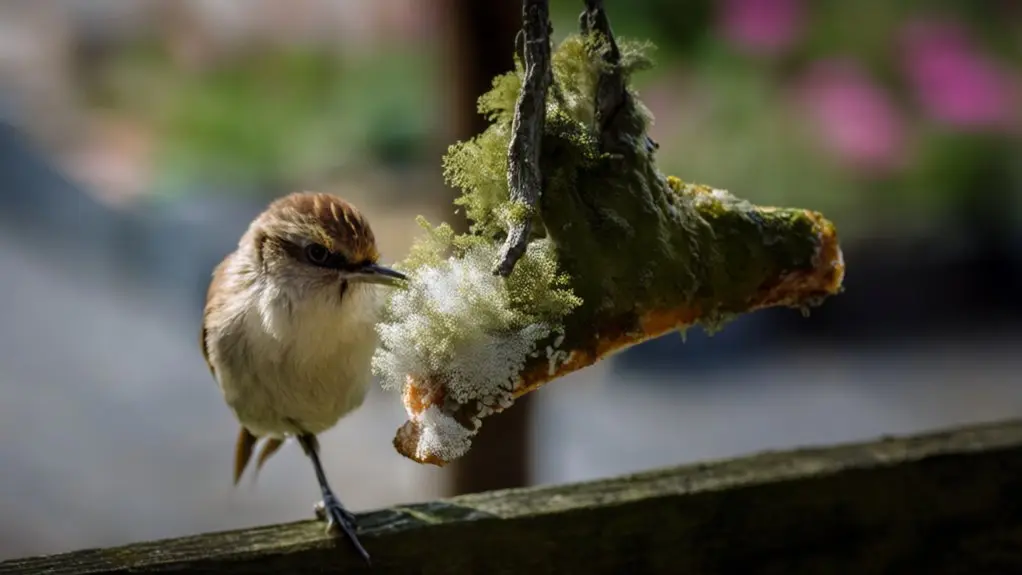
Yes, you can make birds seriously ill by feeding them moldy bread. Mold grows rapidly on damp bread, producing harmful spores and mycotoxins that cause respiratory, digestive, and immune problems in waterfowl.
These toxins can weaken birds, trigger disease outbreaks, and even lead to death. Feeding fresh, dry bread reduces these risks and supports bird health.
To protect wildlife, it’s important to understand how mold affects birds and follow safe feeding practices. Taking a little care goes a long way in keeping our feathered friends healthy.
What Is Moldy Bread and How Does Mold Grow Outdoors?
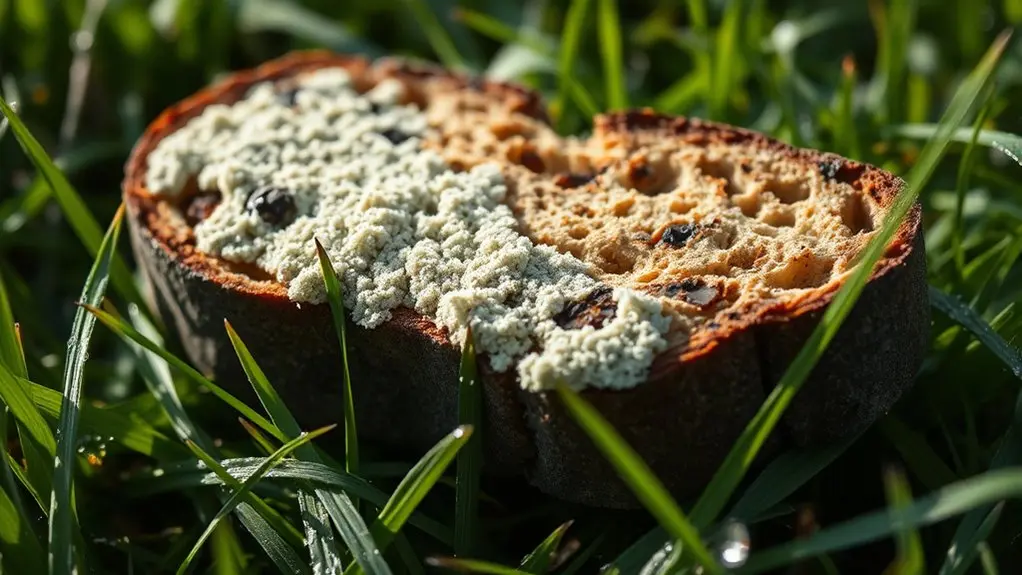
When you leave bread outdoors, moldy growth can appear quickly because mold spores in the air settle on the moist surface and begin to proliferate. Moldy bread develops fuzzy patches in colors such as green, black, or white, signaling fungal colonization.
Outdoor conditions like moisture, warmth, and organic material create an ideal environment for mold spores to thrive and multiply rapidly, often within 24 to 48 hours. High humidity and dampness further accelerate this process.
Moist, warm outdoor conditions with organic material enable mold spores to multiply quickly, often within 1-2 days.
Understanding moldy bread is important in the context of bird nutrition, as bread is sometimes offered to birds. However, once mold grows, the bread’s composition changes, potentially affecting its suitability as food.
Recognizing how mold forms outdoors helps you better assess the risks associated with feeding moldy bread to birds. So, it’s a good idea to think twice before offering moldy bread to wildlife.
Why Moldy Bread Harms Birds’ Health
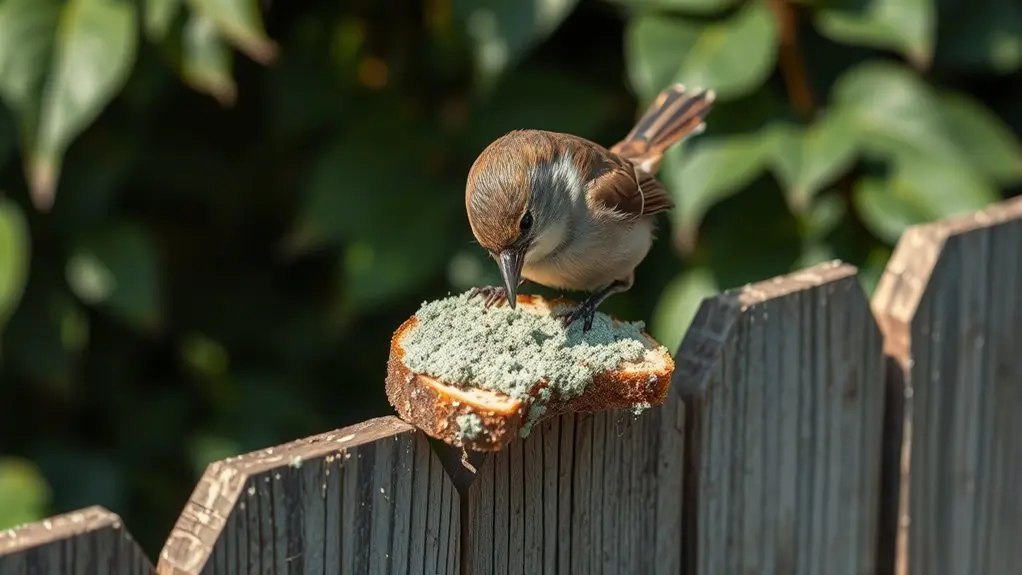
You should know that mold grows really fast on bread when it’s left in damp conditions. This mold creates toxic substances that are harmful to birds.
So, when waterfowl eat moldy bread, they’re actually risking diseases that can cause serious health problems.
Knowing about these risks helps you keep birds safe by not feeding them spoiled food.
Mold Growth Conditions
Because mold thrives in damp and warm environments, bread left under such conditions quickly becomes a breeding ground for harmful spores. Mold contamination happens when moisture and organic material on the bread create the perfect setting for mold to develop.
This mold produces spores that can trigger bird allergies or release mycotoxins toxic to birds.
You should watch for signs of mold growth, which usually show up as fuzzy or discolored patches on the bread surface.
Another clue is a musty or earthy odor, which means mold is actively developing.
Also, softening or moisture buildup on the bread promotes spore proliferation.
Feeding moldy bread to birds exposes them to these spores, which increases health risks a lot.
So, to keep birds safe, avoid giving them bread with any signs of mold growth.
Eating moldy bread can cause illness or even death in birds.
Disease Transmission Risks
Although moldy bread may seem harmless, it introduces harmful fungi and bacteria that can infect waterfowl, causing serious illness or death. When birds consume moldy bread, they risk contracting aspergillosis, a fungal infection that damages respiratory tissues.
Mold spores spread rapidly through bird populations, especially given common bird behavior like flock feeding, increasing disease transmission risks.
Plus, exposure to mold can trigger allergy symptoms in susceptible birds, which further compromises their health. The toxins produced by mold weaken their immune systems, making them more vulnerable to secondary infections.
So, by feeding moldy bread, you’re actually helping these pathogens spread and disrupting natural bird behaviors that are essential for their survival and health.
Avoid feeding moldy bread to protect bird populations from disease outbreaks linked to mold contamination. It’s a simple step that can make a big difference.
Impact On Waterfowl
How exactly does moldy bread harm waterfowl? When you feed moldy bread to ducks or geese, it releases toxins that cause respiratory and digestive issues, weakening their immune systems. This makes them more vulnerable to infections, which can threaten entire populations during critical times like bird migration.
Mold spores spread quickly among waterfowl, speeding up disease outbreaks that can devastate nesting areas. This affects nest preservation by lowering the survival rates of offspring.
Think about these effects on waterfowl health:
- Respiratory distress and digestive problems make it harder for them to feed and get the energy they need for migration.
- Immune suppression increases their chances of catching infections common in crowded habitats.
- The rapid spread of mold spores raises the risk of disease outbreaks, putting local waterfowl communities in danger.
Diseases Moldy Bread Can Cause in Waterfowl
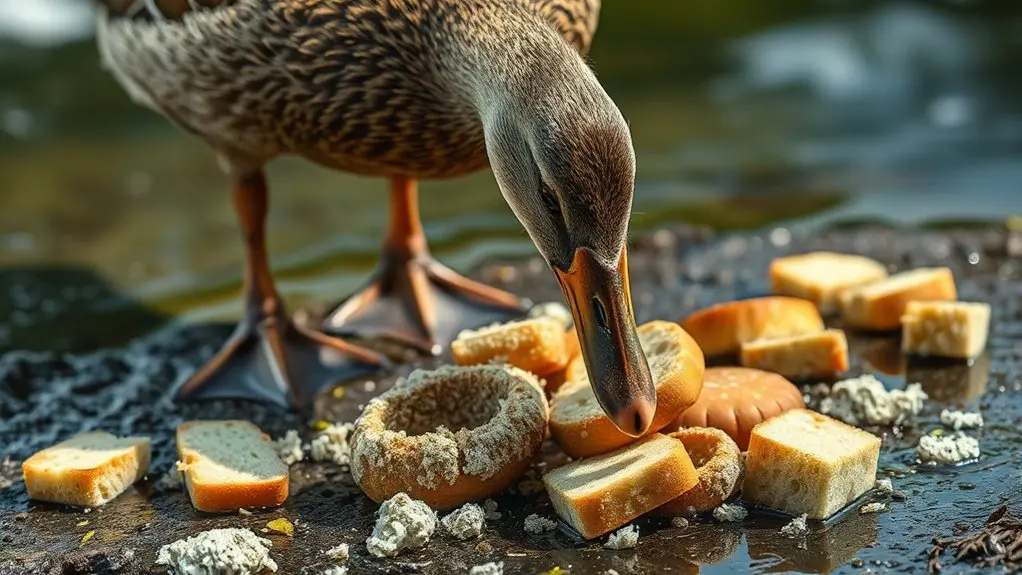
What risks does moldy bread pose to waterfowl health? Moldy bread introduces harmful fungi and bacteria that compromise bird immunity, making waterfowl vulnerable to infections.
Mold toxicity from mycotoxins can cause severe respiratory and digestive issues, greatly weakening their immune response. These toxins can be fatal if ingested in large amounts.
Waterfowl consuming moldy bread face increased chances of contracting diseases such as avian botulism and aspergillosis. Both illnesses impair essential organ functions and may lead to rapid decline or death.
Because mold toxicity undermines bird immunity, even a small amount of moldy bread can trigger serious health problems. So, it’s best to avoid feeding waterfowl moldy bread to prevent these risks and protect their well-being.
Signs Waterfowl Show When Sick From Mold
When waterfowl consume moldy bread, you may notice several signs indicating illness. These symptoms can affect their behavior, physical condition, and social interactions. Pay close attention, especially to changes in feather coloration and nesting habits.
- Physical symptoms: Look for abnormal discoloration or visible mold around the beak and feathers. You might also see respiratory distress or swelling.
- Behavioral changes: Sick waterfowl often display lethargy, loss of appetite, and abnormal swimming behavior. They may isolate themselves from the flock.
- Nesting habits: Infected birds might abandon nests or show weakened nesting activity. This happens because their immune system is compromised and they’ve difficulty maintaining balance.
Recognizing these signs early helps wildlife specialists step in and prevent further health problems for the affected waterfowl. It’s always better to catch these symptoms sooner rather than later.
Why Feeding Fresh Bread Is Safer for Birds
Because moldy bread poses significant health risks to waterfowl, feeding fresh bread is a safer alternative that minimizes these dangers. Mold growth produces toxins harmful to birds, potentially causing illness or death. This is especially true during critical times like bird migration when energy demands peak.
By providing fresh, properly stored bread, you reduce the likelihood of mold contamination. This helps support bird health throughout seasonal feeding cycles. Biologists emphasize that fresh bread helps maintain robust bird populations and prevents disease spread.
When you feed birds fresh bread, you contribute to their well-being and survival during migration and seasonal feeding. You also avoid the risks associated with leftover or damp bread that promotes mold.
This simple practice supports ecological balance and protects avian species during vulnerable times.
Safe Feeding Practices to Avoid Mold-Related Illness
You should always feed birds fresh bread to prevent mold-related illnesses caused by toxins in spoiled food. Moldy bread can be really harmful, especially to waterfowl like ducks and geese.
So, it’s important to only offer bread that’s free of mold.
Also, make sure to store the bread in dry conditions. This helps avoid promoting fungal growth that could be dangerous for the birds.
Keeping these simple steps in mind can really protect their health.
Fresh Bread Importance
Although feeding birds might seem simple, offering fresh, non-moldy bread is super important to keep them healthy. Mold toxins can really mess with waterfowl by weakening their health, which affects things like migration and nesting habits.
To keep feeding safe, here are some easy tips to follow:
- Always check bread for visible mold before feeding it to the birds. If you see anything questionable, just toss it out.
- Store bread in a dry, cool place so it doesn’t get moldy from dampness.
- Try to feed the birds right after you offer the bread so leftovers don’t spoil.
Just a little care goes a long way in helping our feathered friends stay happy and healthy!
Mold Risks Explained
Ensuring the bread you offer to birds is fresh directly impacts their health by minimizing exposure to harmful mold and mycotoxins. Mold develops rapidly on bread stored in damp or warm conditions, so it’s really important to check for mold before feeding.
Eating moldy bread can cause respiratory issues, weaken their immune system, and in some cases, even lead to death in waterfowl because of toxic mycotoxins. To keep these risks low, it’s best to store bread properly—keep it dry and in airtight containers.
Make it a habit to regularly inspect bread for any visible mold or strange smells. Catching mold early can prevent a lot of health problems.
When you prioritize mold-free bread, you’re helping protect birds from serious health issues and supporting the well-being of local waterfowl populations.
Proper Feeding Guidelines
When feeding birds, always choose fresh bread free of mold to prevent illness and protect their health. Moldy bread contains toxins harmful to waterfowl, which can disrupt bird migration and nesting behaviors. So, it’s really important to pick fresh bread.
To guarantee safe feeding, follow these guidelines: Provide only fresh, dry bread to avoid mold growth, especially in humid conditions. Avoid leftover or damp bread since it can harbor harmful fungi and bacteria.
Also, keep an eye on the birds’ natural behaviors and feed in moderation. This helps prevent them from becoming dependent on humans, which can affect their migration patterns.
What Biologists Recommend About Feeding Waterfowl
Because feeding waterfowl can introduce health risks, biologists generally advise against it unless necessary. When you do feed waterfowl, only offer fresh, mold-free bread to prevent disease transmission. Moldy bread can rapidly spread fatal illnesses.
Leftover food should be promptly removed to avoid damp environments where mold thrives. These practices help sustain healthy populations by reducing disease outbreaks that could disrupt bird migration and nesting habits.
Promptly removing leftovers prevents mold growth and helps protect waterfowl migration and nesting success.
Feeding waterfowl irresponsibly can alter their natural behaviors, affecting migration timing and nesting success. By following biologists’ recommendations, you support waterfowl health and ecological balance.
This helps minimize human impact on these critical life cycle processes.
Responsible feeding guarantees that waterfowl maintain their natural habits without increased vulnerability to illness or habitat degradation. So, it’s really about keeping them safe and healthy in the long run.
Preventing Moldy Bread Illnesses in Park Birds
You should avoid feeding park birds moldy bread because it carries harmful fungi that can make them really sick, or even worse, cause death. This is especially true for waterfowl like ducks and geese.
Instead, always offer fresh bread and make sure to throw away any leftovers properly. Doing this helps lower the risk of disease and keeps the birds healthier.
Risks Of Moldy Bread
Although feeding birds in parks seems harmless, offering moldy bread poses significant health risks to waterfowl. Moldy bread compromises bird nutrition and can introduce harmful pathogens that lead to serious health complications.
When you feed moldy bread, you risk rapid disease transmission among waterfowl populations. You also expose them to respiratory issues and internal infections caused by toxins produced by mold.
On top of that, there’s an increased chance of mortality due to weakened immune systems from poor nutrition.
Mold develops on bread stored in damp conditions, making it unsafe for birds. By understanding these risks, you can help protect park birds from mold-related illnesses and contribute to maintaining healthy bird populations.
Safe Feeding Practices
How can you guarantee the birds you feed stay healthy and free from mold-related illnesses? Start by offering only fresh bread, as mold grows rapidly on damp or leftover bread, posing serious health risks. Moldy bread can spread disease quickly among birds, especially during critical periods like bird migration when energy demands are high, and nesting habits require ideal nutrition.
Avoid feeding spoiled or moist bread to support healthy populations and prevent illness. Responsible feeding practices reduce the risk of mold-related diseases that can be fatal. By understanding bird behavior and providing safe, uncontaminated food, you help maintain their health throughout migration and nesting seasons.
Always check bread for freshness before feeding. This way, you ensure waterfowl and park birds remain robust and disease-free. It’s a simple step that makes a big difference!
Protecting Waterfowl Health
Why does feeding waterfowl moldy bread pose such a serious threat to their health? Moldy bread spreads disease rapidly, causing respiratory issues that can impair essential functions during bird migration and disrupt nesting behaviors.
To protect waterfowl health, follow these key practices:
- Dispose of leftover bread properly, especially in damp environments, to prevent mold growth.
- Avoid feeding bread altogether; biologists recommend this to reduce mold-related illnesses.
- If feeding, offer only fresh, non-moldy bread to minimize disease transmission risks.
Handling Aggressive Geese During Breeding Season
Because geese become highly protective during breeding season, you should exercise caution when near their nests or goslings.
Nest protection triggers strong bird aggression, causing geese to hiss or charge if they perceive a threat. Approaching or disturbing nesting geese increases the risk of aggressive encounters.
To minimize conflict, maintain a respectful distance and avoid any interference with nests or young goslings. Handling or moving goslings away from parents only increases stress and aggression in adult geese.
This can potentially endanger both you and the birds.
Biologists advise observing geese quietly from afar, allowing their natural behaviors to continue undisturbed.
Following these guidelines keeps you safe while respecting the geese’s natural defense mechanisms during their critical breeding period.
It’s really about giving them space and understanding their need to protect their young.
Respecting Wildlife: Supporting Healthy Bird Populations
Where should you focus your efforts to support healthy bird populations? Prioritize safe feeding practices, respect natural behaviors, and promote community awareness.
Moldy or spoiled bread can harm birds, especially waterfowl during bird migration. Here’s how you can help:
- Provide fresh, uncontaminated food to prevent disease spread and support sustainable bird populations.
- Observe birds from a distance, avoiding disturbance to nesting habits and young birds to protect their breeding success.
- Educate others about responsible wildlife interaction to maintain balanced ecosystems and encourage conservation.
Frequently Asked Questions
Can Moldy Bread Affect Pet Birds Differently Than Wild Birds?
Yes, moldy bread affects pet birds differently because their controlled diets and closer human contact increase mold exposure risks. This can impact bird health more severely than wild birds.
Wild birds tend to have stronger immune defenses and varied foraging habits, which help them avoid or cope better with mold. So, they’re generally less affected by moldy bread than pet birds.
How Long Does It Take for Moldy Bread to Become Toxic to Birds?
Mold growth can start within 24-48 hours, leading to toxin transfer that makes bread toxic to birds. You shouldn’t offer bread older than one day, especially in humid conditions, to prevent exposing birds to harmful toxins.
It’s better to be safe than sorry when it comes to feeding birds. Moldy bread might seem harmless, but those toxins can really hurt them. So, keep an eye on how fresh the bread is before sharing it with your feathered friends.
Are Certain Bird Species More Vulnerable to Mold Toxins Than Others?
Yes, you’ll find certain bird species show higher mold toxin sensitivity due to weaker avian immunity. Waterfowl, predatory birds, and those with nutritional deficiencies are more vulnerable. This is especially true during stress periods like breeding or migration.
These times put extra strain on their bodies, making it harder to fight off toxins. So, it’s not just the species but also their condition and life stage that matter when it comes to mold toxin vulnerability.
Can Mold Spores From Bread Spread to Other Foods Birds Eat?
Mold growth migrates, making mold spores spread swiftly. Yes, mold spores from bread contamination can easily transfer to other foods birds eat, increasing ingestion risks.
You should discard moldy bread promptly to prevent cross-contamination and protect bird health. It’s better to be safe than sorry when it comes to feeding birds. Mold can be harmful, so keeping their food mold-free is key.
What Are Natural Alternatives to Bread for Feeding Wild Birds?
You should choose bread alternatives like seeds, nuts, berries, and insect-based foods to improve bird nutrition. These natural options provide essential nutrients and promote healthier diets.
Plus, they help avoid the risks associated with feeding processed or moldy bread to birds. It’s a much better way to keep our feathered friends happy and healthy.
Conclusion
You might think feeding birds moldy bread is harmless, but it’s actually a hidden danger that can harm their health and spread disease. Moldy bread invites illness, weakens waterfowl, and disrupts ecosystems.
Instead, choose fresh, safe food and respect wildlife habitats. By doing so, you protect birds from sickness and support thriving populations.
Remember, your small choices ripple through nature. Feed health, not harm, with every crumb you offer.