
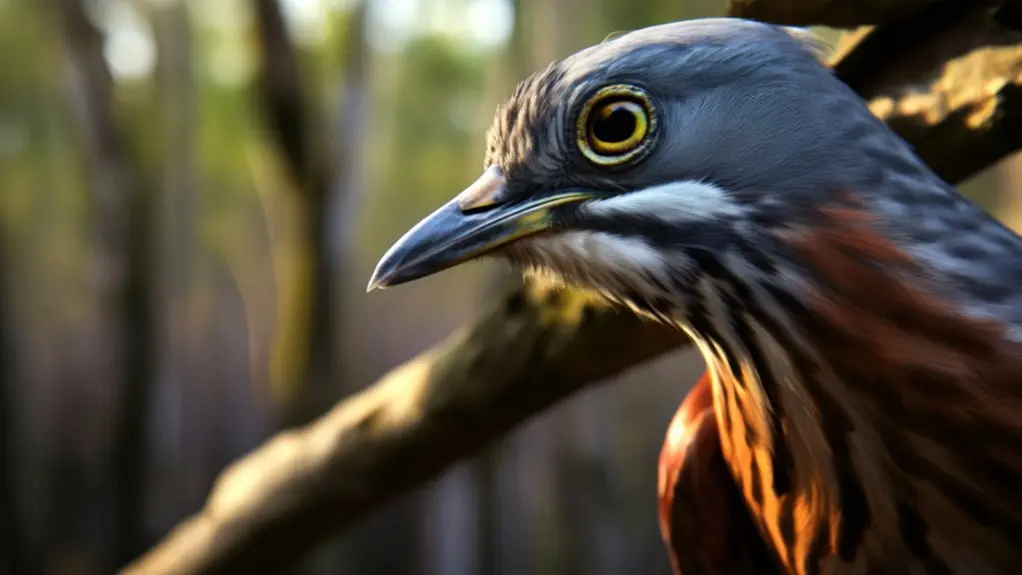
Yes, birds can go blind due to infections, injuries, nutritional deficiencies, or environmental toxins that damage their eyes. You might notice signs like cloudy eyes, disorientation, or changes in behavior.
Blindness affects their ability to find food, avoid predators, and navigate. But some birds adapt by relying more on other senses. Proper care and environmental adjustments can improve their quality of life.
It’s interesting to explore how blindness impacts different species and what you can do to help.
What Causes Blindness in Birds?
Although multiple factors can lead to blindness in birds, infections, injuries, nutritional deficiencies, and genetic conditions are the primary causes.
Blindness in birds mainly stems from infections, injuries, nutritional gaps, and genetic issues.
When you think about bird migration, vision plays a vital role. Impaired sight can really mess with their navigation and survival.
Eye infections often come from pathogens birds pick up during migration. These infections can damage the eye tissues and lead to blindness.
Nutritional deficiencies, especially a lack of vitamin A, harm retinal health and might even change feather coloration by messing with pigment production.
Injuries from collisions or predator attacks during migration can cause trauma-induced blindness too.
Genetic conditions may also affect vision and influence feather coloration patterns that help with species identification.
It’s important to understand these causes because losing vision makes it harder for birds to find food, avoid predators, and complete their seasonal migrations.
In the end, this impacts their survival and ability to reproduce.
Which Diseases and Injuries Can Cause Bird Blindness?
You’ll find that common causes of blindness in birds include infectious diseases like avian pox and conjunctivitis. These illnesses can seriously damage the eye tissues if they aren’t treated promptly.
Eye injuries are another major factor. Trauma from things like collisions or predator attacks can mess up the optic nerve or other parts of the eye, which often leads to vision loss.
On top of that, nutritional deficiencies and exposure to toxins can take a toll on a bird’s eye health over time, gradually contributing to blindness.
Common Causes Of Blindness
When birds suffer from blindness, it often results from a range of diseases and injuries that directly affect their eyes or surrounding tissues. Infectious diseases like avian pox, herpesvirus, and aspergillosis cause lesions that impair vision.
Nutritional deficiencies, particularly vitamin A shortages, degrade ocular health.
Exposure to toxins, including pesticides, also leads to ocular toxicity and vision loss.
Age-related conditions such as cataracts and retinal degeneration commonly affect older birds.
These vision impairments can alter bird feather coloration and disrupt migration patterns because sight plays a critical role in navigation and mate selection.
Understanding these causes helps you recognize risks that may compromise a bird’s visual system and overall behavior.
It really emphasizes the importance of proper care and environmental management for maintaining avian eye health.
Taking care of their vision means helping birds stay healthy and thrive.
Eye Injuries And Trauma
How do injuries and diseases directly impact a bird’s vision? Trauma from collisions or flying into objects can cause irreversible eye damage, leading to blindness. Diseases such as avian pox and conjunctivitis provoke swelling and crusting around the eyes, impairing sight.
Toxic exposures may result in corneal burns or internal damage, further risking vision loss. Nutritional deficiencies, particularly of vitamin A, can cause keratoconjunctivitis, a serious eye disorder. Parasites like eye mites induce inflammation that damages ocular tissues.
These impairments interfere with essential behaviors. For instance, compromised vision disrupts feather grooming, reducing a bird’s ability to maintain waterproofing and insulation. Also, blind birds struggle with nesting behavior because impaired sight makes it hard for them to build and protect nests efficiently.
Ultimately, this affects their survival and reproduction.
Infectious Diseases Impacting Vision
Injuries and trauma can severely impair a bird’s vision, but infectious diseases also play a significant role in causing blindness. Diseases like avian pox, aspergillosis, and conjunctivitis induce swelling, crusting, or inflammation that obstruct sight.
Viral infections such as West Nile Virus cause neurological damage, affecting visual processing. Fungal infections, particularly aspergillosis, produce sinus complications that may impair the eyes. Additionally, avian herpesvirus can damage the retina or optic nerve, resulting in permanent blindness.
Corneal ulcers or abscesses from infections cause scarring and clouding, further diminishing vision. While genetic mutations and environmental toxins primarily influence susceptibility, they often exacerbate these infections.
Understanding these factors is critical when evaluating and managing vision loss in birds due to infectious diseases. It’s important to consider all these aspects to provide the best care possible.
How Common Is Blindness in Different Bird Species?
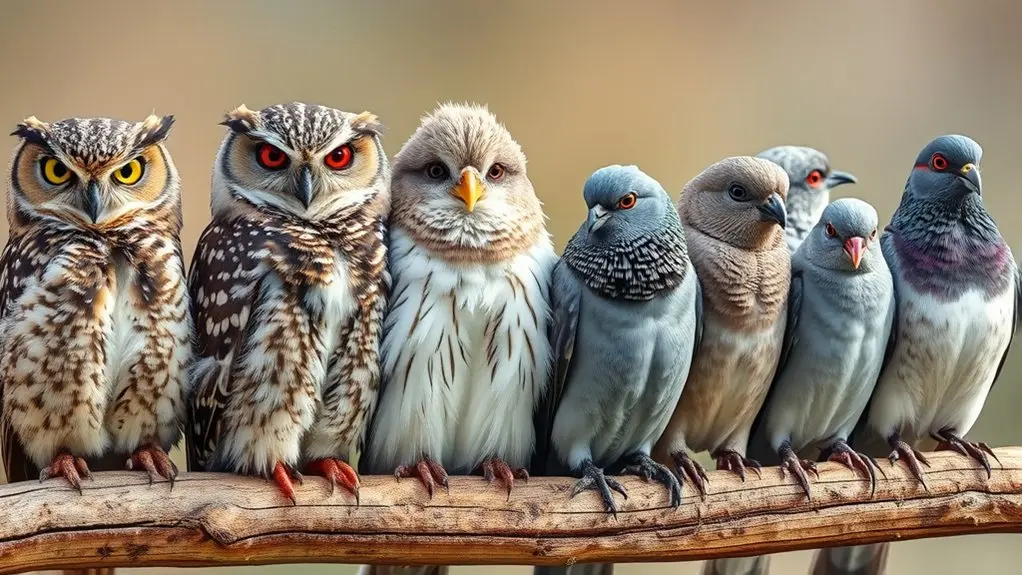
Although blindness remains relatively rare among birds, it has been recorded in both wild and captive populations due to various causes such as injuries, infections, and genetic disorders.
You’ll find that certain species, like parrots and songbirds, are more susceptible to hereditary eye diseases, increasing their risk of vision loss.
As birds age, eye problems become more common across species, impacting their ability to navigate vital behaviors such as bird migration.
In birds of prey, which rely heavily on acute vision for hunting, blindness is less common but can severely affect survival.
Environmental factors influencing feather coloration may indirectly signal health issues, including eye conditions.
What Are the Signs That a Bird Might Be Going Blind?
Recognizing the signs that a bird might be going blind can help you address vision issues early and improve the bird’s quality of life. You might observe difficulty orienting oneself, with frequent collisions against cage walls or objects. Also, the bird may not respond to visual stimuli, like not reacting when food or toys move nearby.
Sometimes, you might notice a cloudy or whitish discoloration in the eyes, which could mean cataracts or lens opacity.
Behavioral changes are common too, including increased hesitation, cautious movement, or altered nesting behaviors.
Besides these, keep an eye out for any changes in feather coloration. This might indicate underlying health problems that affect vision.
Swelling or crustiness around the eyes can also signal infections that contribute to blindness.
How Does Blindness Affect Bird Behavior and Survival?
When birds lose their vision, their behavior and survival strategies change dramatically due to impaired navigation and foraging abilities. You’ll notice reduced movement and disorientation as they struggle to locate food and avoid predators.
Blindness also influences feather coloration indirectly. Birds unable to forage well may experience nutritional deficits that dull their plumage.
Nutritional deficits from poor foraging can dull a bird’s feather coloration over time.
Nesting behaviors suffer too. Without sight, birds find it harder to build and maintain nests or protect their young effectively.
Social interactions within flocks become challenging, affecting communication and cohesion since visual cues play a key role.
Overall, you’ll see a reliance on other senses, but the increased risks of starvation and injury considerably reduce survival rates.
Blindness alters essential behaviors vital for a bird’s life cycle and fitness. It’s a tough adjustment, and survival becomes a real challenge.
Can Birds Recover From or Adapt to Blindness?
You’ll notice that birds often adapt to blindness by relying more on their other senses, like hearing and smell. It’s pretty amazing how they can adjust in that way.
Rehabilitation techniques usually focus on helping them navigate and find food even when they can’t see well. Plus, making their environment safer and easier to access goes a long way.
Knowing about these strategies is really important if we want to support birds dealing with different levels of vision loss.
Natural Adaptation Strategies
Several bird species demonstrate remarkable natural adaptation strategies that enable them to cope with blindness. When color perception diminishes or disappears, birds often adjust their flight patterns to rely more on other senses. You can observe these adaptations as follows:
- Enhanced auditory and olfactory senses guide navigation and foraging without visual cues.
- Gradual vision loss allows birds to develop compensatory behaviors, reducing reliance on sight.
- Neurological changes improve tactile recognition of familiar environments through touch and sound.
- Flight adjustments include slower, more cautious movements to avoid obstacles and maintain balance.
These strategies depend heavily on the blindness cause and severity, as well as whether motor functions remain intact. While birds can’t restore color perception, they effectively adapt their behavior to maintain survival despite vision loss.
Rehabilitation Techniques Available
Two primary outcomes define how birds respond to blindness: recovery through medical intervention or adaptation via behavioral changes. If blindness results from infections or injuries, veterinary care may restore sight.
When blindness is irreversible, birds adapt by enhancing other senses and learning to navigate using tactile and auditory cues.
Rehabilitation techniques use consistent aviary lighting to maintain circadian rhythms. They also use scent markers and textured surfaces to help birds improve their spatial orientation.
Understanding bird feather patterns aids in evaluating health and mobility during recovery.
Specialized training helps blind birds move safely. Predictable routines and environmental enrichment support their well-being.
These methods have enabled many blind birds to thrive in captivity, showing that rehabilitation can really improve quality of life despite visual impairment.
Environmental Accommodations Needed
Although blindness poses significant challenges for birds, they often compensate by enhancing their other senses, especially hearing and touch. To support a blind bird’s adaptation, you’ll need to implement specific environmental accommodations that enable recovery and safety.
Consider these key modifications: arrange textured perches consistently to provide tactile orientation. Use scent cues to mark feeding and nesting areas, which helps with spatial memory.
Make sure nesting areas are safe by ensuring nests are secure, accessible, and free from hazards. Also, encourage feather grooming by placing perches and toys within easy reach to promote natural behavior.
How to Care for a Blind or Visually Impaired Bird
When caring for a blind or visually impaired bird, you’ll need to rely on its heightened senses, such as hearing and touch, to help it get around and interact. Providing tactile cues like textured perches and toys can really help your bird understand its environment.
Try to keep the cage layout consistent with secure, hazard-free areas to prevent injury and make movement easier.
Feeding is important, of course, but you might need to adjust how you offer food to suit your bird’s needs. Make sure your bird has easy access to food and water and maintains a balanced diet.
Since flight might be affected, it’s a good idea to limit flight space to avoid accidents and encourage safe movement.
Don’t forget regular vet check-ups to keep an eye on your bird’s health and manage any changes related to vision loss.
How to Prevent Eye Injuries and Protect Bird Vision
Since birds rely heavily on their vision, protecting their eyes from injury and maintaining eye health is essential. You can prevent eye injuries and support bird vision by following these steps:
- Keep their environment free from sharp objects, toxic fumes, and irritants like smoke or strong cleaning chemicals to avoid damage.
- Regularly inspect and clean cages and toys to prevent dirt or bacteria buildup that may lead to infections.
- Provide a balanced diet rich in vitamins A and E, vital for eye health and preventing deficiencies.
- Ensure stable perching areas to promote perching stability and encourage regular bird feather grooming, which protects the eyes from debris.
Also, avoid sudden bright lights or direct sunlight exposure to reduce eye discomfort or injury risks. Taking these simple steps can really make a difference in keeping your bird’s eyes safe and healthy.
When Should You Seek Veterinary Help for Bird Eye Problems?
If your bird displays symptoms such as eye swelling, discharge, or difficulty seeing, you should seek veterinary help immediately.
Sudden vision loss or blindness requires prompt professional evaluation to prevent irreversible damage.
Sudden vision loss demands immediate veterinary attention to avoid permanent damage.
Persistent redness, crusting, or changes in eye color that don’t improve with basic care also indicate the need for a vet.
Additionally, if your bird paws at its eyes or shows signs of distress, consult a veterinarian.
Early intervention is essential to address underlying issues often linked to poor bird nutrition or inadequate feather grooming, which can compromise eye health.
Timely veterinary care helps diagnose infections, injuries, or nutritional deficiencies affecting your bird’s vision.
This ensures effective treatment and preserves eye function.
Frequently Asked Questions
Do Birds Have Night Vision Capabilities?
Yes, you’ll find many birds have night vision capabilities supported by feather adaptations that reduce glare and nesting behaviors that favor low-light conditions. These features enhance their ability to forage and protect young during dusk or nighttime hours effectively.
It’s pretty fascinating how these adaptations work together, right? Birds really have evolved some clever ways to thrive even when the light is low.
How Do Birds’ Eyes Differ From Mammals’ Eyes?
You’ll find birds have up to five times greater vision acuity than mammals due to their eye structure. They have a denser cone cell layer and a specialized pecten. This setup lets them focus sharper and see colors better.
Pretty amazing, right? Their eyes are built to give them an edge in spotting things from far away or in tricky light. It’s one of the cool ways nature has fine-tuned different creatures for their lifestyles.
Can Birds Recognize Colors?
You can trust birds’ color perception and visual acuity to be exceptional. They distinguish a broader spectrum, including ultraviolet. This helps them identify food, mates, and navigation cues with remarkable accuracy.
Their vision goes beyond what humans can see, making their world much more colorful and detailed. It’s pretty amazing how they use these abilities every day.
What Role Does Eyesight Play in Bird Migration?
You’ve probably relied on sight to find your way, just like birds. Bird eyesight is essential for migration navigation, helping them interpret visual cues, recognize landmarks, and detect polarized light. This ensures precise, long-distance journeys across diverse environments.
It’s pretty amazing how birds use their vision to stay on track during migration. They pick up on details we might not even notice, making their travels smoother and safer. So, next time you’re trying to find your way, remember—you’re using some of the same tricks as our feathered friends.
Are Some Bird Species More Visually Acute Than Others?
Yes, some bird species are more visually acute than others. You’ll notice that species with advanced feather adaptations and specialized nesting strategies often rely on sharper vision to spot predators and navigate their environments effectively.
It makes sense, right? Birds that need to be extra aware of their surroundings tend to have better eyesight. This helps them stay safe and find food more easily.
Conclusion
While blindness in birds may seem like a huge barrier, many species adapt surprisingly well. They rely on other senses to get around and understand their world. Still, the difference between seeing and blind birds really shows how important vision is for survival and behavior.
Knowing the causes, signs, and care tips can help you protect bird vision. It also helps you support birds that have trouble seeing. Quick veterinary care and taking preventive steps are key to keeping a bird’s eyes healthy and improving their quality of life.