
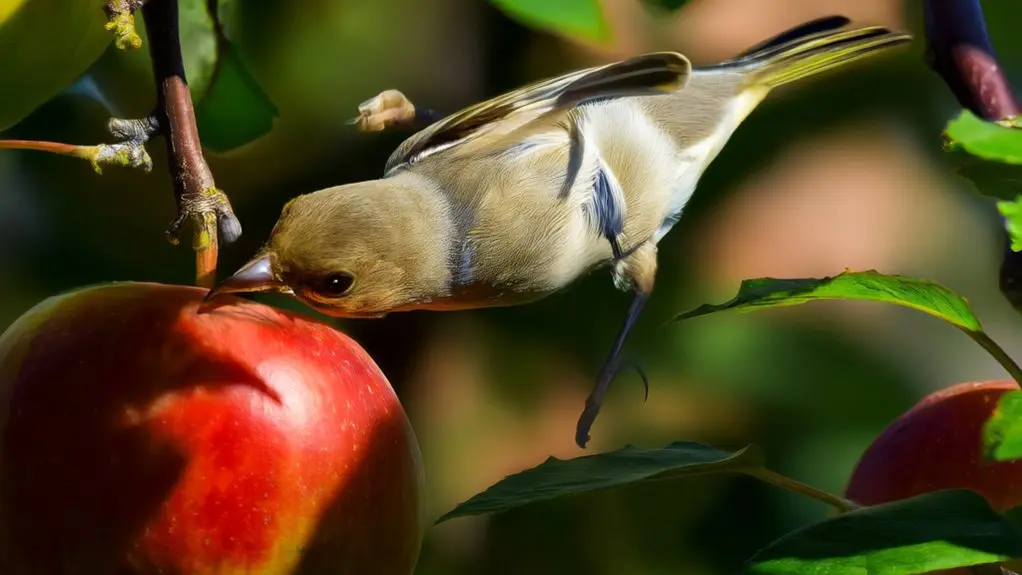
You can safely offer apples to birds if you thoroughly wash the fruit and remove all seeds. Apple seeds contain cyanogenic compounds that release toxic cyanide when crushed. Swallowed whole seeds pose less risk, but broken or chewed seeds can be harmful.
Including apple skin provides extra nutrients and encourages natural feeding behavior. Just be sure to avoid feeding damaged or moldy fruit to protect bird health.
Want to know which birds enjoy apples and how to prepare them safely? Keep reading to find out!
Are Apples Safe for Birds?
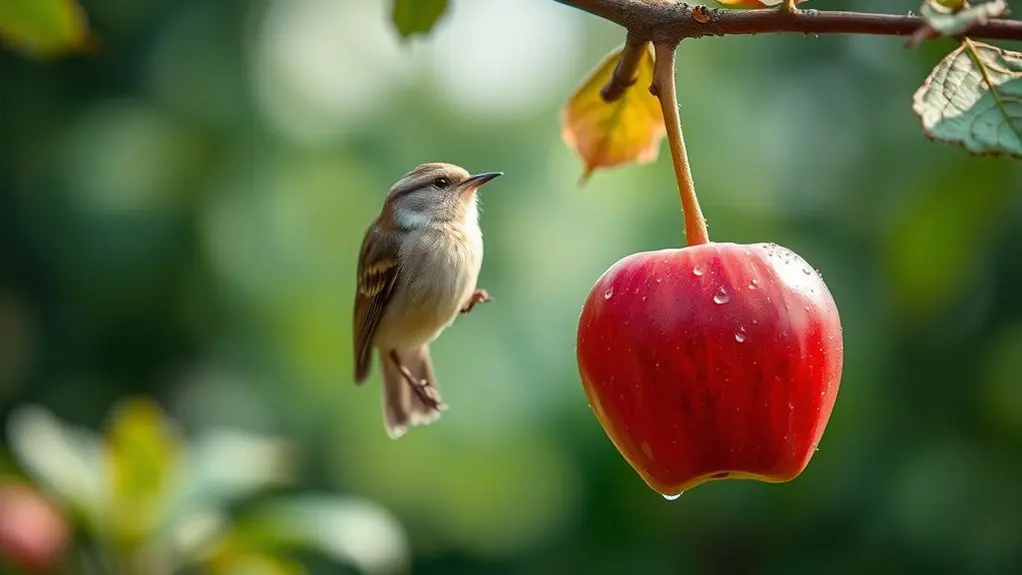
How safe are apples for your bird? Apples can be a beneficial addition to bird dietary diversity when prepared correctly. After apple harvesting, thoroughly wash the fruit to eliminate pesticides and contaminants that could harm your bird.
Offering both flesh and skin provides a range of nutrients and sensory enrichment. While apple seeds contain cyanogenic compounds, routine removal of seeds before feeding markedly reduces potential risks. Accidental ingestion of a small number of seeds is unlikely to cause harm, but it’s best to err on the side of caution.
Moderation is key; apples should complement, not replace, a balanced diet. By following these guidelines, you support your bird’s health and dietary variety safely and effectively. It’s pretty simple once you get the hang of it!
How Dangerous Are Apple Seeds for Birds?
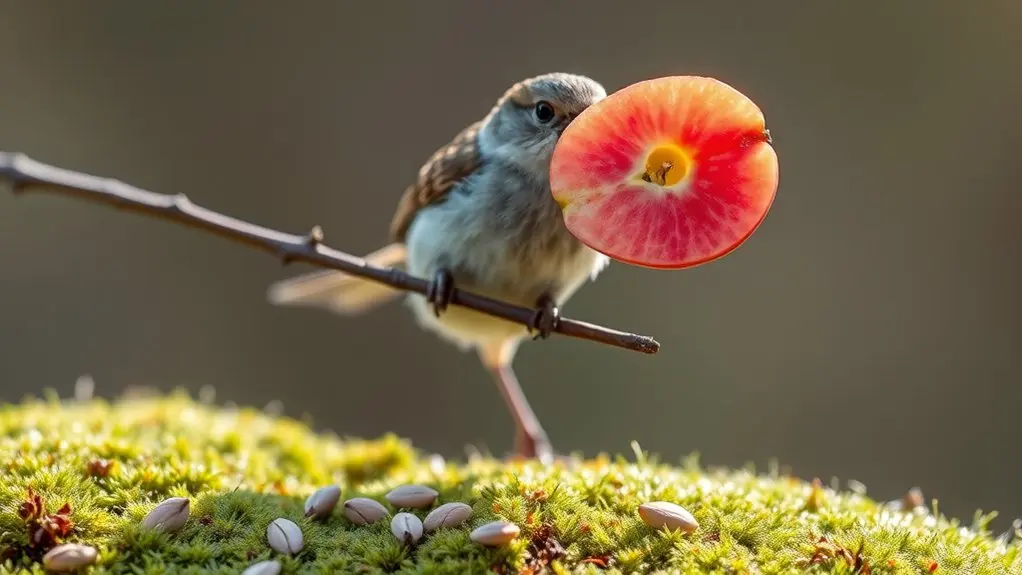
Although apple seeds contain cyanogenic compounds that can release hydrogen cyanide when crushed or chewed, the actual danger to birds depends on how many seeds they eat and their condition. Seed toxicity varies based on the number of seeds a bird ingests and whether the seeds are broken.
You should keep these points in mind when thinking about bird health:
- Chewing or crushing multiple seeds increases cyanide release, which means a higher risk of poisoning.
- Swallowing whole, intact seeds usually lowers the toxicity since the seeds stay unbroken.
- Cyanide exposure can cause serious health problems if a bird eats enough crushed seeds.
- If you notice poisoning symptoms after seed ingestion, getting immediate veterinary care is really important.
Knowing these factors helps you understand the real threat of apple seed toxicity to birds and take the right precautions.
Why Remove Apple Seeds Before Feeding?
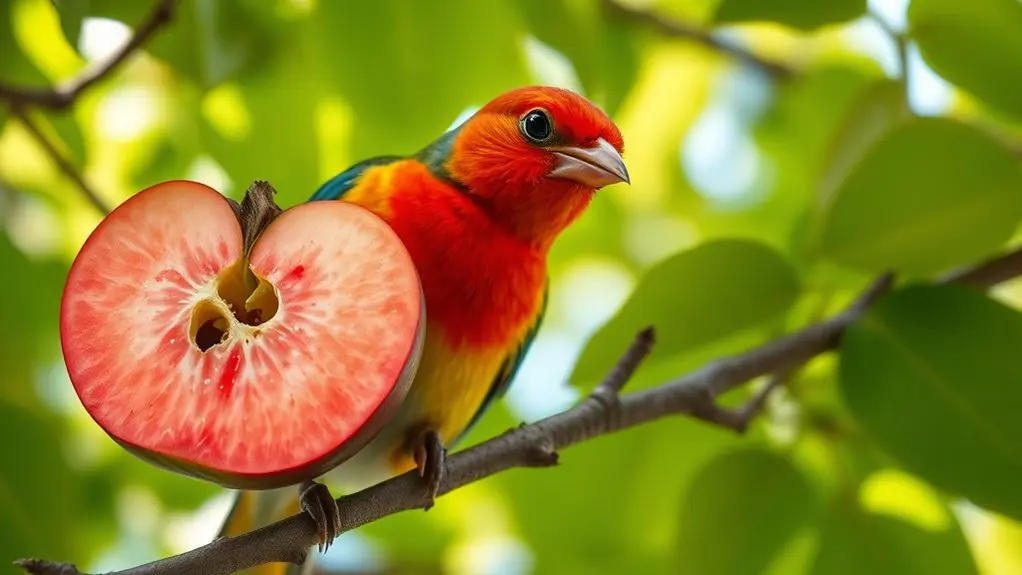
You should remove apple seeds before feeding them to your bird because the seeds contain cyanogenic compounds.
When these seeds are crushed or chewed, they can release toxic hydrogen cyanide. So, removing the seeds helps minimize the risk of cyanide exposure.
It’s a simple step that makes feeding much safer for your feathered friend.
Cyanide Risk In Seeds
Because apple seeds contain amygdalin, a compound that releases cyanide when broken down during digestion, it’s important to take into account the risks before feeding apples to birds.
Seed toxicity arises primarily during seed digestion when amygdalin decomposes into cyanide. Although birds can detoxify small amounts of cyanide, you should still be cautious.
Consider these points:
- Apple seeds contain amygdalin, which can release cyanide during digestion.
- Chewing or crushing seeds increases cyanide release, while swallowing whole seeds poses less risk.
- The typical cyanide amount from a few seeds is usually insufficient to harm birds.
- Removing seeds reduces potential cyanide exposure and minimizes risks linked to seed toxicity during digestion.
Seed Removal Benefits
Why should you remove apple seeds before feeding them to birds? Apple seeds contain cyanogenic compounds that release hydrogen cyanide when crushed or chewed. This presents a notable seed toxicity risk.
While intact seeds pose less danger, removing them is a vital feeding precaution to prevent accidental cyanide exposure, especially for small or voracious eaters. Plus, seeds can cause choking or internal injury if birds try to swallow or crack them.
To minimize health risks and guarantee a safer feeding environment, routinely discard apple seeds.
| Benefit | Explanation |
|---|---|
| Reduced Seed Toxicity | Prevents cyanide release from crushed seeds |
| Feeding Precautions | Avoids choking hazards and injuries |
| Safer Environment | Lowers risk of accidental poisoning |
Safe Feeding Practices
Although apple seeds contain compounds that can release toxic cyanide when crushed or chewed, many people overlook the importance of removing them before feeding birds.
Seed toxicity happens when cyanogenic compounds break down during bird digestion, releasing hydrogen cyanide, which is harmful. Whole, intact seeds pose less risk, but chewed or crushed seeds increase toxicity.
To guarantee safe feeding practices, follow these steps:
- Always remove apple seeds before offering fruit to birds.
- Cut apples into small, manageable pieces to minimize seed damage during bird digestion.
- Avoid feeding apples with broken or crushed seeds to prevent cyanide release.
- Monitor bird behavior to make sure they don’t chew seeds, which reduces exposure to seed toxicity.
Removing seeds helps minimize the risk of cyanide poisoning and supports bird health. It’s a simple step that goes a long way!
What If a Bird Accidentally Eats Apple Seeds?
If a bird accidentally eats apple seeds, the risk of cyanide poisoning depends largely on whether the seeds are chewed or swallowed whole. Seed toxicity happens when cyanogenic compounds in the seeds break down during digestion, releasing hydrogen cyanide. But if the seeds stay intact and pass through the digestive tract without breaking, the risk is pretty minimal since the toxins aren’t released.
However, if the seeds are chewed or crushed, that increases cyanide exposure and poses a greater threat, especially if the bird eats multiple seeds. Still, most birds probably won’t suffer poisoning from just an occasional accidental nibble.
That said, it’s a good idea to keep an eye on any bird that might be showing signs of distress. If you notice anything unusual, contacting an avian veterinarian quickly ensures the bird gets the right care and helps avoid any complications from seed toxicity.
Can Birds Safely Eat Apple Skin?
You can safely offer apple skin to birds, as long as you wash it thoroughly to get rid of any pesticides or dirt. The skin actually gives them extra fiber and nutrients that are good for their health.
Plus, it encourages natural beak activity, which is a nice bonus.
Just make sure you don’t give them any skin that’s moldy, rotten, or has been treated with harmful chemicals.
Nutritional Benefits Of Skin
Many birds can safely eat apple skin once it’s thoroughly washed to eliminate pesticides and contaminants. The apple peel offers valuable nutritional fiber and essential nutrients that support birds’ digestive health and overall well-being. Including the skin enhances their diet quality and promotes natural foraging behavior.
Consider these benefits:
- Apple peel provides extra nutritional fiber, aiding digestion and nutrient absorption.
- The skin contains antioxidants and vitamins that contribute to immune support.
- Foraging through the peel stimulates mental and physical activity, benefiting bird engagement.
- Some bird species favor the texture and flavor of apple skin, increasing consumption variety.
Safety Precautions For Skin
While apple skin offers valuable nutrients and enrichment for birds, making sure it’s safe before feeding is super important. When you’re giving seasonal fruit varieties, be sure to wash the skin thoroughly. This helps get rid of pesticides, dirt, and any chemical residues.
Avoid apple skins that have been treated with artificial coatings or preservatives because those can harm birds. Also, it’s a good idea to inspect the skin carefully for mold or rot. If you find any spoiled parts, just toss them out.
The skin’s fiber and natural sugars are what attract birds, but only clean, untreated skin should be offered to keep them healthy.
Are Pear Seeds and Other Fruit Pits Safe for Birds?
Although pear seeds and other fruit pits may seem harmless, they contain cyanogenic compounds that can release cyanide when crushed or chewed. This poses risks to birds, especially when seeds are broken during feeding.
Seed dispersal in nature often involves fruit ripeness signaling, but feeding birds unprocessed seeds may be unsafe.
Consider these points:
- Pear seeds, like apple seeds, contain cyanogenic compounds releasing cyanide when chewed.
- Stone fruit pits (cherries, peaches, plums) have higher toxin concentrations and increased toxicity.
- Swallowing whole, intact seeds is less harmful than crushing them, which releases toxins.
- Removing seeds and pits before feeding reduces poisoning risk and prevents physical injury.
To protect birds, always remove seeds and pits from fruits before offering them. It’s a simple step that makes a big difference for their safety.
How to Prepare Apples for Feeding Birds
To safely offer apples to birds, start by thoroughly washing the fruit to eliminate pesticides and dirt that could harm them. Remove the seeds and core, as they contain cyanogenic compounds toxic to birds. Slice the apple into manageable pieces to facilitate feeding, optionally leaving the skin on to encourage natural biting and tearing.
Always check that the apple is fresh and free from mold or rot to guarantee proper fruit preservation and avoid health risks. Following bird feeding etiquette means providing clean, safe food that supports avian health.
| Step | Action | Reason |
|---|---|---|
| Wash | Rinse thoroughly | Remove pesticides, dirt |
| Remove seeds | Extract core and seeds | Prevent cyanide poisoning |
| Slice | Cut into pieces or halves | Facilitate feeding |
| Peel (optional) | Leave skin or peel | Enhance biting activity |
| Inspect | Check for freshness, no mold | Ensure fruit preservation |
Which Birds Are Attracted to Apples and Other Fruits?
If you provide fresh apples and other fruits in your backyard, you’ll attract a variety of bird species known for their fruit-based diets. Many fruit-eating birds adjust their feeding habits according to bird migration patterns and nesting habits. They seek nutrient-rich food sources like apples during breeding or migration seasons.
Species commonly drawn to apples and fruits include American robins, gray catbirds, and scarlet tanagers. These birds favor soft, ripe apples in nesting habitats. You’ll also see cedar waxwings and northern cardinals, which are known for incorporating fruits into their diet.
Orioles prefer oranges but also enjoy apple slices, especially during migration. Woodpeckers and thrashers are frequent visitors at feeders offering cut fruit. Choosing softer apple varieties like Golden Delicious makes it easier for these birds to enjoy the fruit.
Tips for Feeding Fruit to Birds in Your Yard
When feeding fruit to birds in your yard, selecting the proper feeder type and keeping things clean are really important. It helps support bird health and encourages them to keep coming back.
Try using platform or tray feeders to offer fruit chunks or soaked dried fruits like raisins. These make the fruit tastier and easier for birds to digest.
Make sure to clean your feeders regularly and throw away any moldy or rotted fruit right away to prevent disease.
Also, try to minimize using chemicals on your plants. This is especially important when birds are nesting because they’re more vulnerable then.
Leaving some fruit on the trees is a great idea, too. It supports natural foraging, which is super important during bird migration when birds need extra energy.
To keep pests like squirrels and raccoons away, use baffles and don’t overfill your feeders. That way, the fruit stays available for the birds.
These simple practices create a safe feeding spot that helps both resident and migratory birds thrive in your yard. It’s a win-win for you and the birds!
Frequently Asked Questions
Can Baby Birds Eat Apples Safely?
You can safely feed baby birds small pieces of certain apple varieties once they’re fledglings. Just make sure to focus on bird nutrition by removing the seeds first.
Offer the fruit in moderation to avoid any digestive issues or choking hazards. It’s all about keeping their little tummies happy and safe!
How Often Should I Feed Apples to Wild Birds?
Like Goldilocks seeking balance, you shouldn’t feed apples to wild birds daily. Two to three times weekly supports bird nutrition best.
Make sure to offer a variety of fruits to provide balanced nutrients. Avoid relying too much on apples for the best health of the birds.
Do Apples Help Birds During Migration?
Yes, apples help birds during migration by providing essential apple nutrition, including sugars and vitamins. You can support their bird diet by offering apples, which supply energy and hydration critical for their long, demanding journeys.
It’s pretty amazing how something as simple as an apple can make a big difference. Birds need all the help they can get when flying such long distances. So, next time you see migrating birds, think about how a little apple snack could be just what they need!
Can Cooked Apples Be Given to Birds?
Yes, you can offer cooked apples to birds. It’s best to choose apple varieties that are low in acidity because that helps with bird digestion.
Cooking softens the fruit, which makes it easier for birds to digest. Just be sure to avoid adding any sugars or spices. That way, you’re keeping the birds healthy and safe.
Are Canned or Dried Apples Safe for Birds?
Canned apples can hide harmful sugars and preservatives, so avoid them for bird feeding.
Dried apples are rich in apple nutrition and are safer only if they are additive-free and offered sparingly.
Just make sure to follow bird feeding tips to keep your feathered friends healthy.
Conclusion
You can safely offer apples to birds, but always remove the seeds first to prevent cyanide poisoning. Apple skin is generally safe and provides nutrients, yet washing it thoroughly is key. Pear seeds and other fruit pits pose similar risks, so prep fruit carefully.
If a bird accidentally eats seeds, monitor its behavior closely. Just like a careful alchemist, you’ll guarantee your feathered friends enjoy a nutritious treat without harm.