
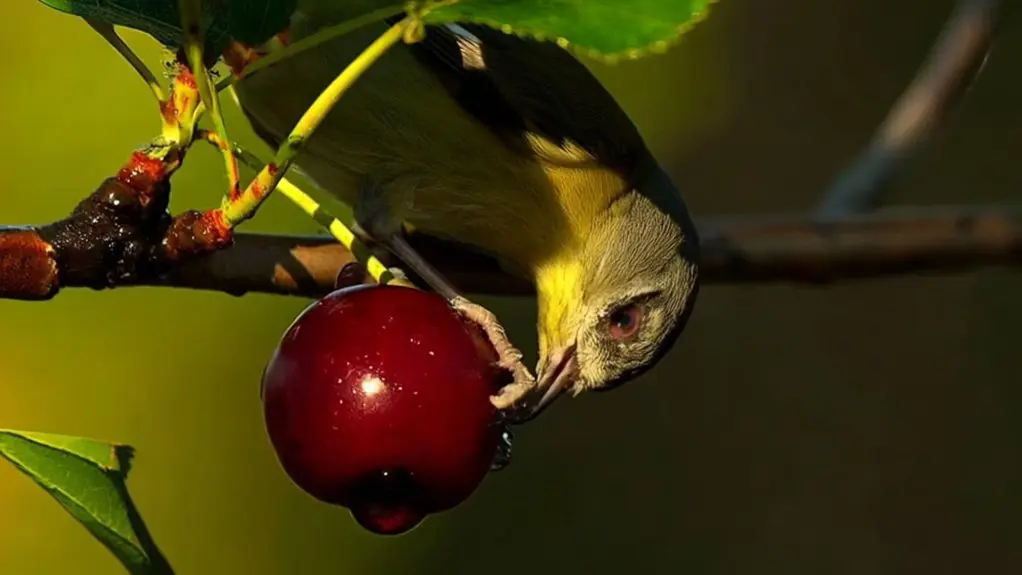
Yes, birds can definitely have cherries and are naturally drawn to them because of their high sugar content, bright red color, and enticing aroma. They especially like sweet, early-ripening varieties.
Often, birds target fruit just as it starts to blush or turn red. This feeding tends to increase damage during peak ripeness. But don’t worry, you can use strategies like netting and visual deterrents to reduce losses.
Trying out these methods can really help you protect your cherry crop from hungry birds. It’s all about finding what works best for your situation.
Why Birds Are Drawn to Cherries
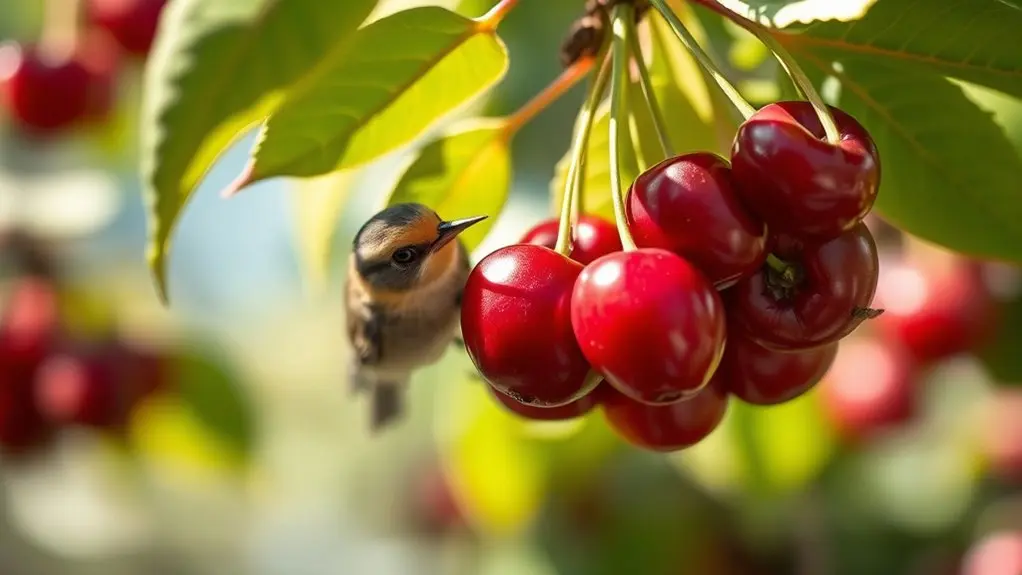
Although many fruits attract birds, cherries stand out because their sweetness and high sugar content make them particularly appealing. You’ll notice that ripening cherries emit a natural aroma, which acts as a chemical signal drawing birds from considerable distances, especially during migration seasons.
Bird migration patterns align closely with cherry ripening, making sure birds find this rich energy source when other foods may be scarce. The bright red hue of cherries serves as a visual cue, signaling ideal ripeness and encouraging feeding behavior.
If you practice timely cherry tree pruning, it can enhance fruit quality and visibility, which further increases bird attraction. This careful management supports both fruit production and provides birds with a reliable, nutritious treat during critical migration periods.
Which Cherry Varieties Do Birds Prefer Most?
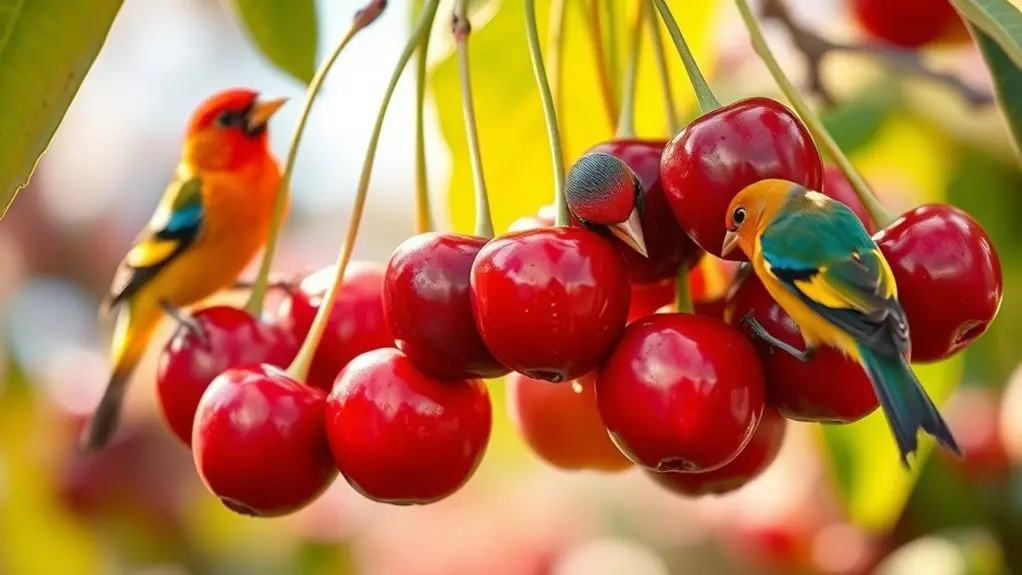
The bright red blush and high sugar content that make cherries attractive to birds also influence which specific varieties they prefer. During bird migration, energy demands increase, so birds seek cherries with sweeter cherry flavor and early ripening times. You’ll notice robins and other birds targeting these varieties more frequently.
Sweet cherry varieties with elevated sugar content are favored over tart types. Early-ripening cherries become accessible sooner, aligning with bird migration schedules. Red-berried cherries with conspicuous red spots attract more birds than yellow or duller fruits.
Larger cherries are easier for birds to spot and consume than smaller, concealed ones.
Understanding these preferences helps predict bird-cherry interactions during critical migration periods. It’s pretty interesting to see how nature’s timing works in favor of both the birds and the fruit. So, next time you see birds flocking to your cherry trees, you’ll know exactly why!
When and How Birds Damage Cherry Crops
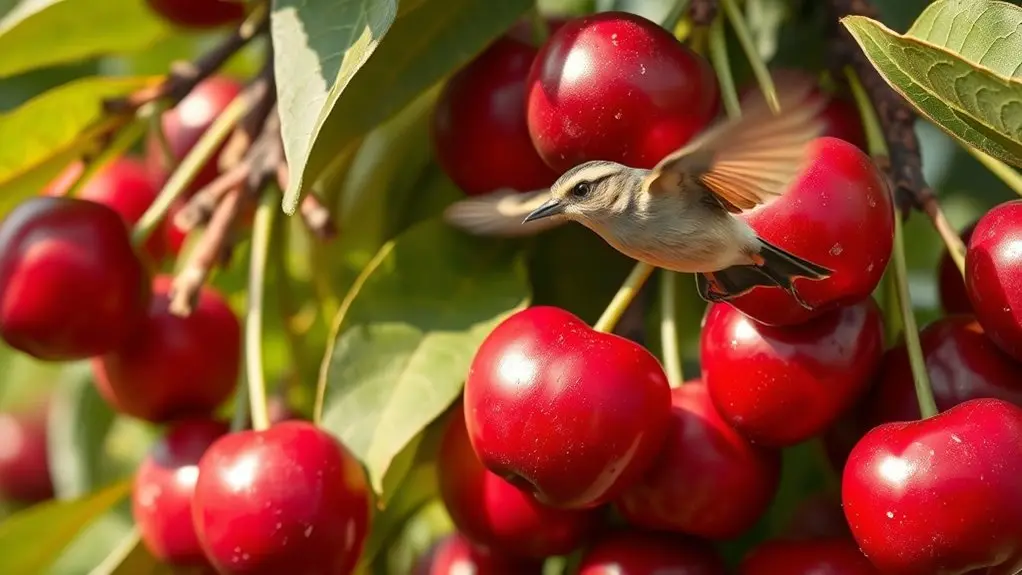
When cherries start developing their characteristic red blush, robins and other birds increase their feeding activity, often before the fruit reaches full ripeness. During bird migration, these avian species are drawn to cherry orchards, especially where early-ripening varieties produce accessible sweet cherries. The timing coincides with the post-cherry blossom period, as fruit becomes more abundant.
Birds primarily target sweet cherries due to their high sugar content, causing significant crop loss during ripening. You’ll notice damage peaks when cherries are red or blushing, attracting more birds. Their feeding behavior often results in punctured or partially eaten fruit, reducing marketable yield.
Understanding this interaction between bird migration patterns and cherry development stages helps clarify when and how birds damage cherry crops. It really emphasizes the vulnerability window during ripening. So, keeping an eye on this timing can make a big difference in protecting your harvest.
Non-Lethal Ways to Keep Birds Away From Cherries
Bird damage during cherry ripening highlights the need for effective prevention strategies that protect crops without harming wildlife. Since bird migration coincides with fruit ripening, you have to use methods that work with these natural behaviors.
Protecting cherries during ripening requires strategies that safeguard crops and respect migrating birds.
Here are some non-lethal approaches you can try:
- Use reflective objects like CDs or foil to create visual disturbances. Just remember to move them regularly so birds don’t get used to them.
- You can also try sound devices or noisemakers to scare birds away. But keep in mind, birds may get used to the sounds after a while, so these might lose their effectiveness.
- Another idea is to plant early-ripening or sour fruit varieties nearby. This can naturally distract birds from your main cherry crop.
- Netting is effective too, but it needs careful installation to make sure it covers everything and doesn’t harm the birds.
Using these strategies will help protect your cherries while respecting bird migration patterns and keeping the ecosystem balanced.
How Netting Protects Cherry Trees Effectively
When you install netting properly, you’ll want to secure a fine mesh all around the tree. This blocks birds but still lets sunlight and air flow through easily.
If you’re dealing with smaller or dwarf trees, netting is usually more cost-effective and easier to manage than other protection methods.
Because of these benefits, netting is a solid choice to help reduce crop loss while keeping your trees healthy.
Netting Installation Techniques
Although installing netting may seem straightforward, achieving effective protection for your cherry trees requires careful attention to technique. Using appropriate netting materials and installation tools is vital to create a secure barrier against birds.
You need to attach the netting to a sturdy frame, like PVC pipes, to prevent sagging and gaps. Covering the entire tree with a 30×30 ft net ensures full coverage for a 10-foot-tall cherry tree.
Secure the net edges tightly to the ground or support to block bird entry, and employ tensioned support structures to keep the net taut, minimizing tears.
Follow these key steps for effective installation:
- Select durable netting materials and proper installation tools.
- Attach netting to a strong frame to avoid sagging.
- Completely cover the tree with adequate net dimensions.
- Secure edges firmly and maintain tension for durability.
Cost Considerations For Netting
Investing in a 30×30 ft net, which typically costs around $40, provides thorough coverage for a 10-foot-tall cherry tree and markedly reduces bird-related crop damage. When considering cost comparison, factor in the initial price, installation materials, and maintenance effort. Material durability plays a vital role; high-quality nets last multiple seasons, offsetting upfront costs.
Proper attachment to a support frame enhances protection efficiency, minimizing bird intrusion and crop loss.
| Cost Aspect | Description |
|---|---|
| Netting Purchase | ~$40 per 30×30 ft net |
| Installation Setup | Additional frame/support costs |
| Longevity & Durability | Multi-season use reduces expenses |
This scientific, detailed approach guarantees you understand the investment’s value in effectively safeguarding your cherry harvest.
Benefits Over Other Methods
When you compare netting to other bird deterrent methods, its physical barrier provides unmatched protection by completely preventing birds from reaching the cherries. This is especially essential during bird migration when flocks intensify feeding activity, coinciding with cherry ripening.
Netting covers the entire canopy, ensuring no access regardless of bird species or behavior. Unlike visual or noise deterrents, netting works continuously without requiring frequent adjustments. It’s a set-it-and-forget-it solution that really gives you peace of mind.
Key benefits include:
- Reliable exclusion of all bird species during cherry ripening.
- Humane protection without harming birds.
- Long-term durability reducing recurring costs.
- Consistent performance throughout bird migration periods.
Visual Decoys and Reflective Objects to Deter Birds From Cherries
You’ll find that reflective objects like CDs and foil work best when they move. Those unpredictable flashes really startle birds away from your cherries. It’s a simple trick, but it makes a big difference.
Try positioning these deterrents at natural predator heights. This way, they mimic real threats and have a stronger impact. Birds are more likely to keep their distance.
Also, don’t forget to regularly change where you put them and how they look. If you don’t, birds might get used to them, and they won’t be as effective anymore. Keep things fresh to keep the birds away!
Effective Reflective Deterrents
How can reflective objects effectively reduce bird damage to cherries? You can use shiny items like CDs or foil to exploit bird migration patterns and protect cherry orchard biodiversity. These objects produce flashes mimicking predator eyes, which momentarily deters birds feeding on cherries.
To maximize effectiveness, place reflective items at heights matching natural predators’ perches to increase perceived threats. Using various reflective materials like pie pans or pinwheels helps create diverse light patterns.
Also, frequently move or rotate reflective deterrents to prevent birds from getting used to them. Keep an eye on bird behavior regularly so you can adjust placement and avoid a drop in deterrent impact.
Moving Decoys Importance
Although static decoys may initially deter birds from cherry trees, they quickly lose their effectiveness as birds get used to them being still.
To keep up the deterrent effect, you need moving decoys that mimic silent predators like owls or snakes. These animated figures tap into birds’ natural instinct to avoid danger much better than static models.
Regular decoy maintenance is key too. This includes repositioning and inflating them to prevent birds from getting too comfortable around them.
You can also combine visual decoys with reflective objects such as CDs or foil. This creates a dynamic, multi-sensory barrier that confuses and repels birds.
Moving these reflective items often helps disrupt birds’ ability to get used to the setup, making the deterrence more effective.
Placement Height Strategies
When you place visual decoys and reflective objects at heights that mimic natural predator perches, typically between 10 and 15 feet, you markedly increase their ability to deter birds from cherry trees. Effective decoy placement relies on height optimization to simulate genuine threats, enhancing birds’ perception of danger.
Reflective objects like shiny CDs should align with cherry foliage height for maximum impact. To prevent habituation, vary device heights and reposition regularly. You can mount decoys on tall stakes or structures to cover more canopy area.
Key strategies include:
- Position decoys at 10-15 feet, matching predator perch heights.
- Hang reflective objects at cherry canopy level.
- Change heights and locations frequently.
- Utilize tall mounts to expand coverage.
These height-focused methods make deterrents more convincing and protect ripening cherries effectively. Give these a try, and you’ll see better results keeping those birds away!
Planting Strategies That Divert Birds From Cherry Trees
Because birds target sweet cherries as a prime food source, you can reduce crop damage by planting early-ripening mulberries or sour fruits nearby. Establishing a bird habitat with diverse fruit types creates alternative feeding options that naturally divert avian attention from your cherry trees.
Early-season mulberry varieties like Illinois Everbearing ripen before cherries, attracting birds early and sparing your main crop.
Similarly, planting sour fruits such as pie cherries, currants, or elderberries provides less desirable yet appealing alternatives. This fruit diversity diminishes the likelihood of birds focusing solely on sweet cherries.
By strategically incorporating these distraction crops, you foster a balanced ecosystem that minimizes bird predation on your cherry harvest.
This approach relies on understanding bird preferences and timing to effectively protect your fruit without using deterrents. It’s a smart way to keep your cherries safe while supporting local wildlife.
Harvest Timing and Cultural Tips to Reduce Bird Damage
Planting early-ripening mulberries and sour fruits helps redirect birds from your cherry trees, but managing harvest timing also plays a vital role in reducing bird damage.
By applying precise cultural practices, you can minimize losses effectively. Focus on these key strategies:
- Harvest cherries a few days before peak ripeness to reduce their attractiveness to birds.
- Pick cherries promptly once they reach the desired stage, limiting exposure in the orchard.
- Allow cherries to finish ripening indoors or under protective covers to avoid predation.
- Integrate early-ripening distraction crops to divert bird attention away from cherries.
These cultural practices, combined with strategic harvest timing, create a controlled environment that greatly lowers bird-related fruit damage while maintaining fruit quality.
It’s all about timing and being proactive to keep your cherries safe and tasty.
Frequently Asked Questions
Are Cherries Safe for All Bird Species to Eat?
You shouldn’t assume all bird cherry varieties are safe, as cherry nutritional content varies. While many birds tolerate cherries well, some species might react differently. So, always check specific dietary needs before offering cherries to birds.
Better safe than sorry, right? Just a little heads-up can keep our feathered friends happy and healthy!
Can Eating Cherries Harm Birds in Any Way?
Cherry toxicity is generally low, but you should watch bird dietary habits carefully. Eating cherries with pits or pesticide residues can harm birds, causing digestive issues or poisoning. So, always verify cherries are safe and properly prepared for them.
Do Birds Help With Cherry Tree Pollination?
You won’t find birds aiding cherry tree pollination; insects handle that during cherry harvesting.
When feeding birds, follow bird feeding etiquette to avoid disrupting their natural roles. Birds mainly disperse seeds rather than pollinate flowers. So, they’re not the ones doing the pollination work here.
How Do Birds Digest Cherry Pits?
You might think cherry pits harm birds, but they actually digest them quite efficiently. Birds have strong beaks and special enzymes that help break down the pits. This way, they can enjoy the cherry flavor as part of their diet.
Interestingly, birds process the cyanide compounds found in the pits safely. In normal amounts, these compounds don’t become toxic to them. So, no worries—birds have it all figured out!
Can Feeding Birds Cherries Affect Their Migration Patterns?
You won’t see a significant migration impact from cherry consumption. While feeding cherries may alter local feeding behavior, it doesn’t influence birds’ long-term migratory routes or timing.
These patterns depend on broader environmental cues and food availability, not just what they eat in one spot. So, offering cherries might change where birds hang out for a bit, but it won’t change their big travel plans.
Conclusion
Think of your cherry tree as a beacon in a bustling city, attracting curious visitors, the birds. Just like streetlights draw moths, cherries lure birds with their vibrant hues and sweet nectar.
By understanding their preferences and behaviors, you can skillfully guide these feathered guests away using nets, decoys, or strategic planting. It’s kind of like being a careful conductor directing an orchestra.
Your informed actions will harmonize protection and nature’s dance, making sure your cherries thrive unscathed.