
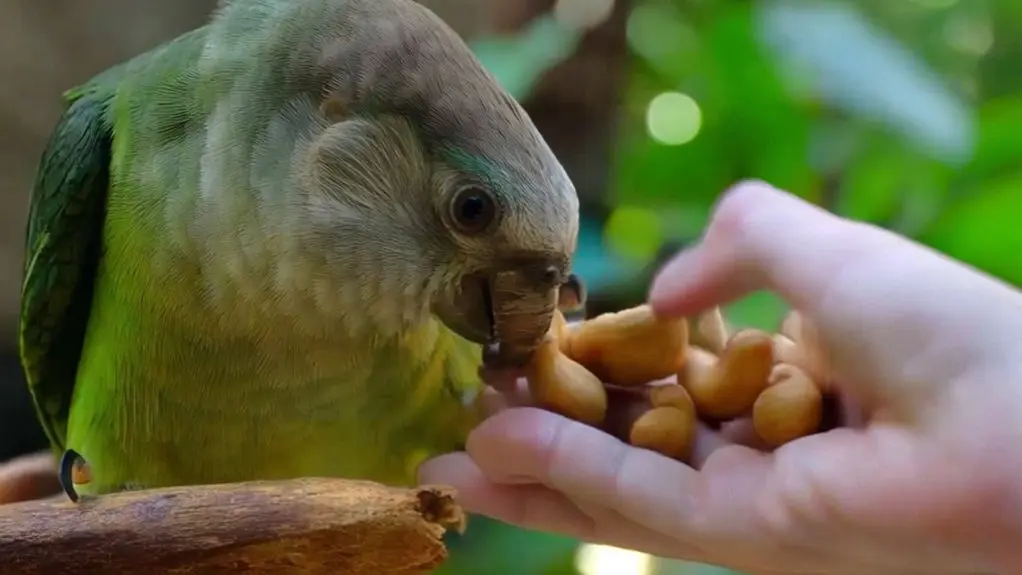
You can safely feed birds plain, unsalted, roasted cashews in moderation. But only certain species with strong beaks, like parrots or nuthatches, can manage them without health risks. Avoid raw cashews and shells because they contain toxic compounds or pose choking hazards.
Overfeeding can lead to obesity and digestive problems. Always watch for signs of distress, and stop feeding if issues arise. Understanding proper nut choices and feeding methods guarantees your bird’s safety and well-being.
It’s all about knowing what’s safe and keeping an eye on your feathered friends!
Can Birds Eat Cashews Safely?
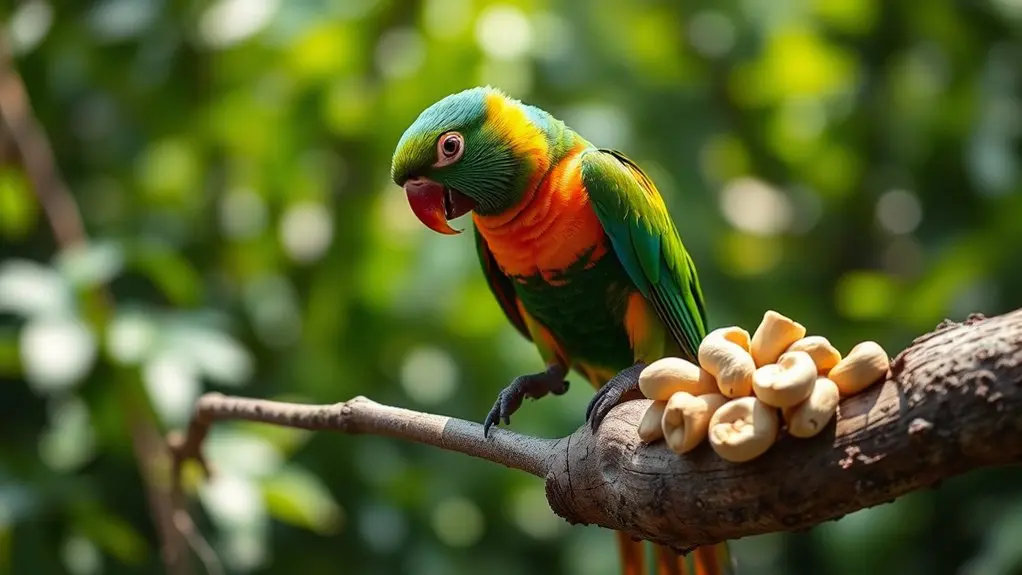
Although cashews aren’t toxic to most bird species, you should only offer plain, unsalted cashews in moderation to guarantee safety. Bird behavior plays a critical role in how effectively a bird can consume cashews, especially given the nut’s hard texture.
Many birds engage in nut cracking to access the edible kernel, but cashews’ tough shell can challenge smaller species. Observing your bird during feeding helps assure it can handle the nut’s size and hardness without risk of choking or injury.
Smaller birds may struggle with cashew shells, so always watch feeding to prevent choking or injury.
Avoid salted or flavored cashews, as additives may cause health issues. Due to their high fat content, cashews should remain an occasional treat rather than a dietary staple.
This supports safe and balanced nutrition aligned with natural bird behavior.
Cashews’ Nutritional Value for Birds
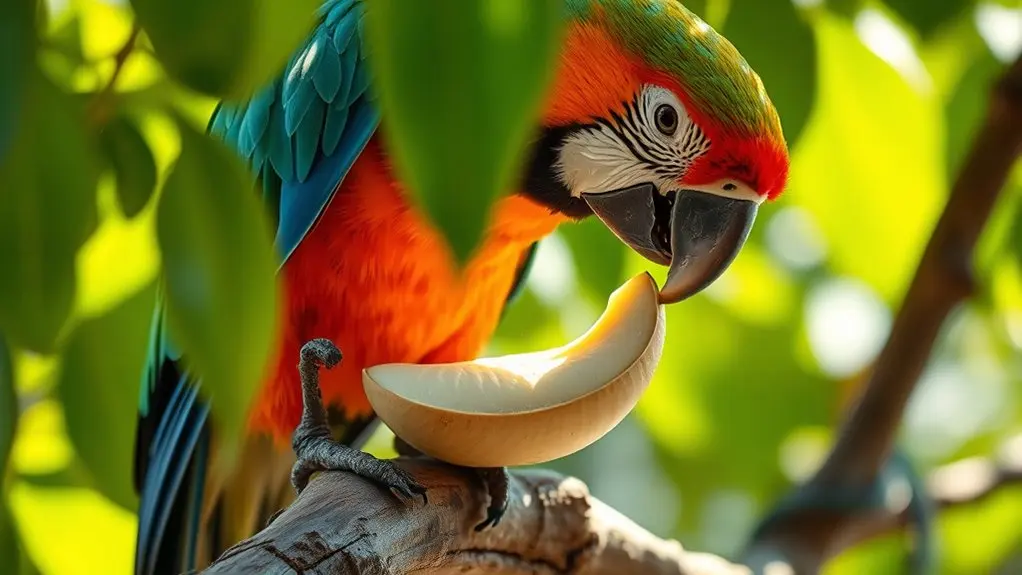
Understanding how cashews affect your bird’s diet requires looking at their nutritional makeup. Cashews offer some great benefits, like healthy monounsaturated fats, protein, and important minerals such as magnesium and copper. These nutrients help support your bird’s metabolism and overall health when given in moderation.
Because cashews are high in fat, they provide a concentrated energy source. This can be especially helpful during colder months when birds need extra calories.
But remember, only offer raw, unsalted cashews and keep the amounts small to avoid overfeeding.
Also, cashews contain phytochemicals that might be toxic or hard for some birds to digest if they eat too much. So, it’s best to think of cashews as an occasional treat rather than a regular part of your bird’s diet.
Which Bird Species Are Most Likely to Eat Cashews?
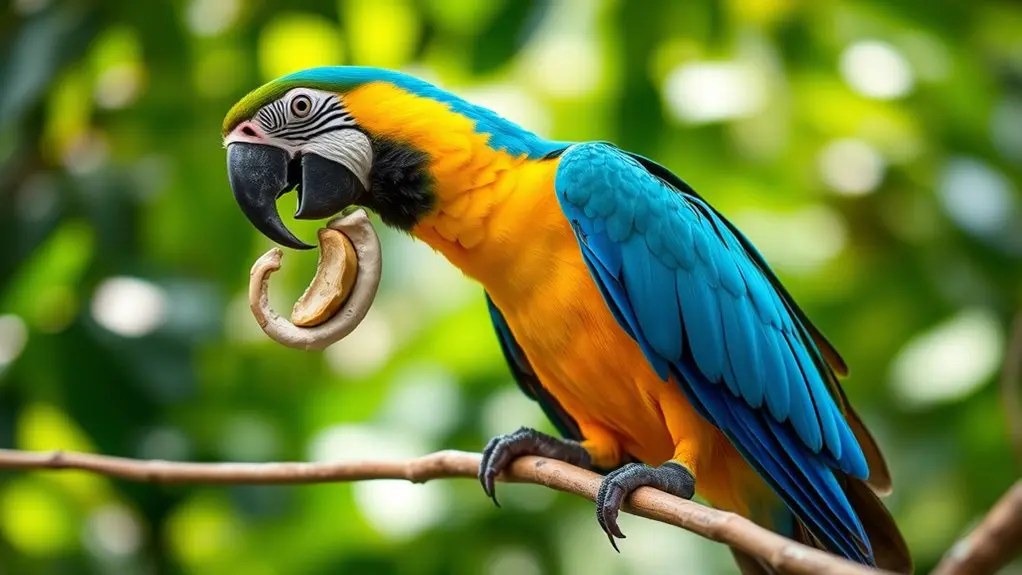
When you consider which bird species are most likely to eat cashews, it’s important to focus on those with strong beaks capable of cracking hard shells. Birds with such adaptations can efficiently perform nut shell removal, a critical step in accessing the edible kernel.
Practicing proper bird feeding etiquette means offering cashews only to suitable species to avoid harm or frustration.
Offer cashews only to birds with strong beaks to ensure their safety and enjoyment.
Species most likely to eat cashews include parrots and some toucans. They’re known for powerful beaks adept at cracking nuts.
Nuthatches and similar species also specialize in extracting seeds from hard shells.
Occasional consumers like jays and woodpeckers might eat cashews, though they usually prefer softer nuts.
Small songbirds generally lack the beak strength for cashews, making them poor candidates for this treat.
What Are the Risks of Feeding Cashews to Birds?
You should know that raw cashews have toxic compounds like urushiol, which can be harmful to birds and might cause allergic reactions.
Plus, salted or flavored cashews usually have additives that aren’t good for their health.
Potential Toxicity Concerns
Although cashews can seem like a healthy treat, feeding them to birds carries several risks you need to contemplate. Raw cashews contain urushiol, a toxic irritant harmful to birds. Even roasted cashews, while safer, pose potential dangers if not properly managed.
You should be aware of nut shell dangers since shells can cause choking or digestive blockages. Also, processing additives like salt, oils, or seasonings added during processing are toxic to birds.
And don’t forget the high fat content—excessive intake can lead to obesity and related health issues.
To minimize toxicity risks, always offer only roasted, unsalted cashews in small amounts. Avoid nuts with shells or added flavorings.
Understanding these factors helps you protect your bird’s health effectively.
Allergic Reactions Risk
How do cashews affect your bird’s immune system? Cashews contain urushiol, a toxin that can trigger allergic sensitivities in some birds. When you expose your bird to nuts like cashews, its immune system may react adversely, causing symptoms such as swelling or distress.
The severity of these allergic reactions varies between species, with some birds more prone to nut allergies. Roasted, unsalted, and shell-less cashews reduce the risk but don’t eliminate it entirely. Seasoned or salted cashews increase the likelihood of immune responses and should be avoided.
Understanding your bird’s specific susceptibility to nut exposure is vital before introducing cashews to its diet, as allergic sensitivities can compromise its health and well-being. Make sure to monitor your bird closely for any signs of adverse reactions after feeding cashews.
Feeding Moderation Importance
When feeding cashews to birds, moderation is really important to avoid any health problems. Cashews have a high fat content, and their shells can contain toxins that might harm birds if they eat too many or if the nuts aren’t prepared properly.
To keep things safe and healthy, always offer unsalted, shell-less cashews. The shells contain urushiol, which is a toxin that can be harmful if ingested. It’s best to avoid giving birds any cashews with shells.
Also, try to steer clear of processed or flavored cashews. These often have additives and extra salt, which aren’t good for birds.
Keeping these tips in mind helps you feed birds safely and store nuts properly.
How to Feed Cashews to Birds Safely
To feed cashews to birds safely, you’ll want to make sure you’re using only unsalted, roasted, and shell-less nuts. These are the best options to keep things safe and healthy for your feathered friends.
It’s a good idea to offer cashews in small portions. This way, you can prevent your bird from getting too much fat at once, which isn’t great for them.
Also, keep an eye on how your bird reacts after eating cashews. Watch for any signs of digestive upset or discomfort.
Cashew Preparation Tips
Although cashews can be a nutritious treat for birds, you must prepare them correctly to guarantee their safety. In bird habitats, improper nut harvesting and preparation can introduce risks. To feed cashews safely, verify you use only unsalted, roasted, and shell-less nuts.
Avoid raw or salted cashews, as they contain toxic substances or excess sodium harmful to birds.
Follow these preparation tips:
- Break cashews into small pieces to prevent choking, especially for smaller bird species.
- Store cashews in a cool, dry place and check for mold or spoilage before feeding.
- Offer cashews sparingly as a treat, not as a staple food, to maintain dietary balance.
Portion Size Guidelines
Since cashews contain high fat levels and potential choking hazards, you should feed them to birds in carefully measured, small portions. Proper nut portioning and controlled feeding frequency are vital for safe consumption.
Offer only unsalted, raw, or dry-roasted cashews without additives. Limit treats to occasional servings, avoiding regular inclusion in the diet. Adjust portion size based on species and size to prevent health risks.
| Bird Species | Portion Size | Recommended Feeding Frequency |
|---|---|---|
| Small (e.g., finches) | One small crumb | Once weekly |
| Medium (e.g., parrots) | 1-2 small pieces | Twice monthly |
| Large (e.g., cockatoos) | 2-3 small pieces | Monthly |
This guideline helps you balance nut portioning with feeding frequency safely. It’s all about keeping your bird happy and healthy!
Monitoring Bird Reactions
When you introduce cashews to your bird’s diet, start with small portions to carefully observe their response. Monitoring bird behavioral cues and digestive health indicators is essential to ensure safety.
Watch for signs such as lethargy, vomiting, or changes in droppings, which may indicate intolerance or allergic reactions.
Always use fresh, unsalted, raw, and shell-less cashews to prevent toxicity.
Pay attention to bird behavioral cues like refusal to eat or agitation. Also, keep an eye on digestive health indicators including diarrhea or constipation.
Don’t forget to watch for any physical distress such as puffed feathers or labored breathing. If any adverse reactions occur, stop feeding cashews immediately.
Regular observation helps you confirm that cashews are a safe occasional treat in your bird’s diet.
Better Nut Alternatives for Birds
If you want to offer nuts that better match birds’ natural diets, consider options like peanuts, walnuts, and almonds. These nuts align more closely with what birds encounter in their natural habitat, making them nutritionally appropriate and easier for birds to process.
Unlike cashews, which have high fat content and tougher shells, these alternatives have thinner shells that make it easier for birds to harvest the nuts.
Unlike cashews, peanuts, walnuts, and almonds have thinner shells, making them easier for birds to harvest.
Plus, peanuts, walnuts, and almonds are less likely to contain toxins when raw or roasted without additives, so they’re safer for birds to eat.
By choosing these nuts, you support birds’ natural foraging behaviors and dietary needs, which helps keep them healthy and happy.
How to Spot Nut-Related Health Issues in Birds
Although nuts like cashews can provide nutritional benefits, you need to watch for signs of health issues in birds caused by nut consumption. Bird digestive health can be compromised by overconsumption or exposure to salted, roasted, or moldy nuts. These may trigger nut allergy symptoms or toxicity.
To spot nut-related health problems, observe your bird closely for: lethargy and loss of appetite, which could indicate toxicity or allergy; abnormal droppings that signal digestive upset or fungal infection; and difficulty breathing, a serious symptom requiring immediate veterinary care.
Monitoring these signs helps prevent long-term complications such as obesity or fungal infections. Prompt identification and veterinary intervention are essential to maintain your bird’s health and well-being when feeding nuts like cashews.
Just keep an eye on your feathered friend and don’t hesitate to get help if something seems off.
Frequently Asked Questions
Can Cashew Shells Harm Birds if Ingested?
Yes, you should avoid cashew shells because toxicity concerns arise from urushiol compounds. Shell ingestion risks include poisoning and gastrointestinal distress. So, never let birds consume cashew shells to guarantee their safety and health.
It’s really not worth the risk when it comes to your feathered friends. Just stick to safe treats and keep those shells far away!
Do Cashews Affect Bird Behavior or Mood?
While cashews offer nutritional benefits aligned with bird dietary preferences, they don’t directly alter behavior or mood. You’ll notice their healthy fats support health, but they won’t cause immediate changes in a bird’s emotional state or activity.
Are Cashew Allergies Common in Pet Birds?
Cashew allergies in pet birds are uncommon, but you should prioritize bird nutrition and food safety by avoiding raw or seasoned cashews.
Offering plain, unsalted cashews sparingly minimizes potential allergic reactions and digestive issues in your bird.
It’s always better to be cautious and keep your feathered friend’s diet simple and safe.
Can Baby Birds Eat Cashews Safely?
You shouldn’t feed baby birds cashews due to bird nutrition and dietary restrictions. Their immature digestive systems can’t handle the hardness or toxins.
It’s best to wait until they’re mature. And always check with experts before introducing cashews safely into their diet.
How Do Wild Birds Typically Find Cashews?
Imagine a medieval knight foraging. Wild birds use their feeding habits to locate cashews near human waste or farms. They rely on their nutrition instincts and learned cues to identify these energy-rich nuts in their environment efficiently.
It’s pretty clever how they do it. Birds watch and remember where food sources are. Then, they come back to those spots again and again to snack. This way, they make sure they get the best bites without wasting time.
Conclusion
Feeding cashews to birds is like offering a rare gem, valuable but needing careful handling. While cashews provide nutrients, not all birds can safely enjoy them. There are risks like allergies or digestive issues that you should keep in mind.
You have to weigh the benefits against the dangers and pick safer nut alternatives when you can. Think of it like a gardener tending delicate blooms—you want your feathered friends to thrive. That means feeding thoughtfully, watching closely, and always prioritizing their unique dietary needs.