
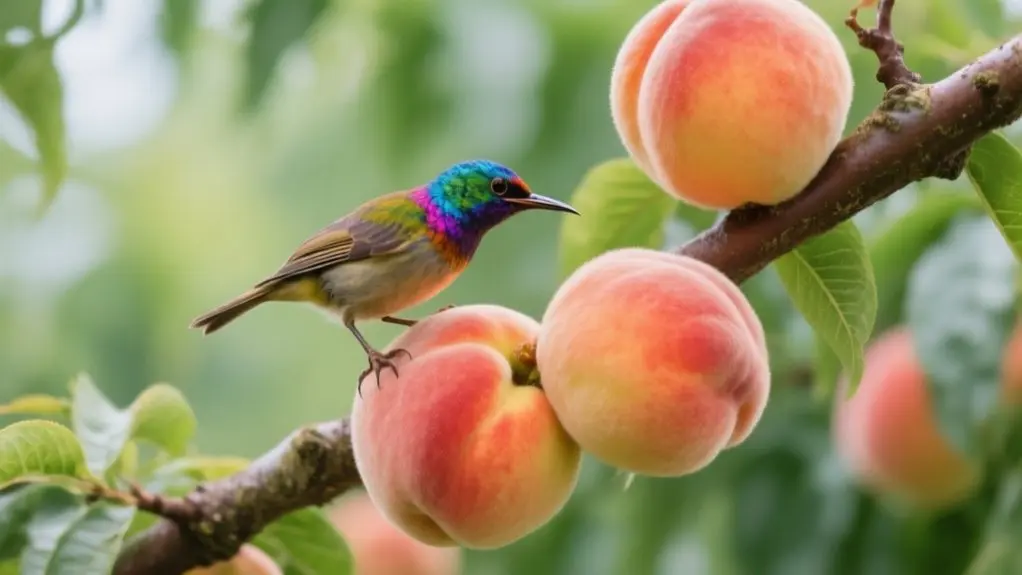
Yes, you can safely offer peaches to many bird species when prepared properly. Always wash peaches thoroughly, remove the pit to avoid cyanide poisoning, and cut fruit into small pieces.
Peaches provide vitamins A, C, and fiber but contain high sugar. So, limit the serving size to 5–10% of the diet to prevent health issues like obesity or digestive upset.
Watch for signs of intolerance. Understanding careful preparation and balanced feeding will help keep your bird healthy.
Are Peaches Safe for Birds to Eat?
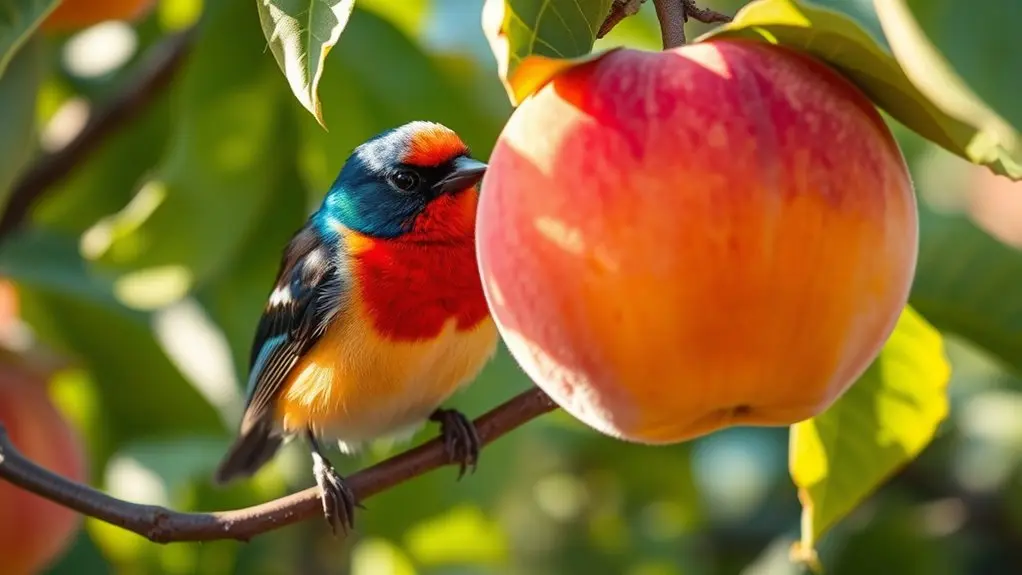
Although peaches can be a nutritious treat for birds, you must remove the pits before offering them, as the pits contain cyanide, which is toxic.
Always remove peach pits before feeding birds, as they contain toxic cyanide.
The flesh of peaches provides essential vitamins A, C, and E, along with hydration and antioxidants, supporting birds’ health during energy-intensive activities like bird migration.
When birds consume peaches, the nutrients can aid in maintaining vibrant feathers, which is vital for effective feather grooming and flight efficiency.
However, because peaches have high sugar content, you should offer them sparingly to avoid weight gain or digestive issues.
Always wash peaches thoroughly and cut them into small pieces to guarantee safe consumption.
Which Birds Can Safely Eat Peaches?
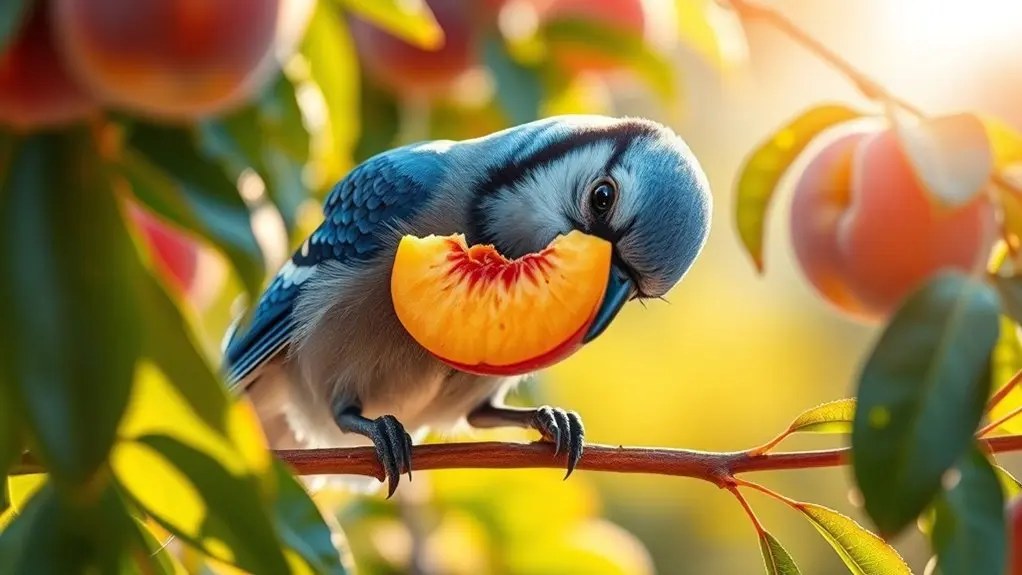
When you offer peaches to birds, knowing which species can safely consume them is essential to guarantee their health. Many parrots, such as African greys, cockatiels, and conures, with their vibrant feather coloration, can eat peaches in moderation once pits are removed.
Wild songbirds like orioles, thrushes, and waxwings, which often incorporate stone fruits into their diets during nesting habits, also safely consume peaches.
Larger species, including toucans and hornbills, can enjoy small peach pieces as part of varied feeding.
Seed-eaters like finches and canaries may eat peach flesh sparingly due to sugar content.
Birds with sensitive digestive systems, such as budgerigars, require minimal peach amounts to avoid gastrointestinal distress.
Understanding these dietary needs aligns with observing natural feeding behaviors and ecological roles.
What Nutrients Are in Peaches for Birds?
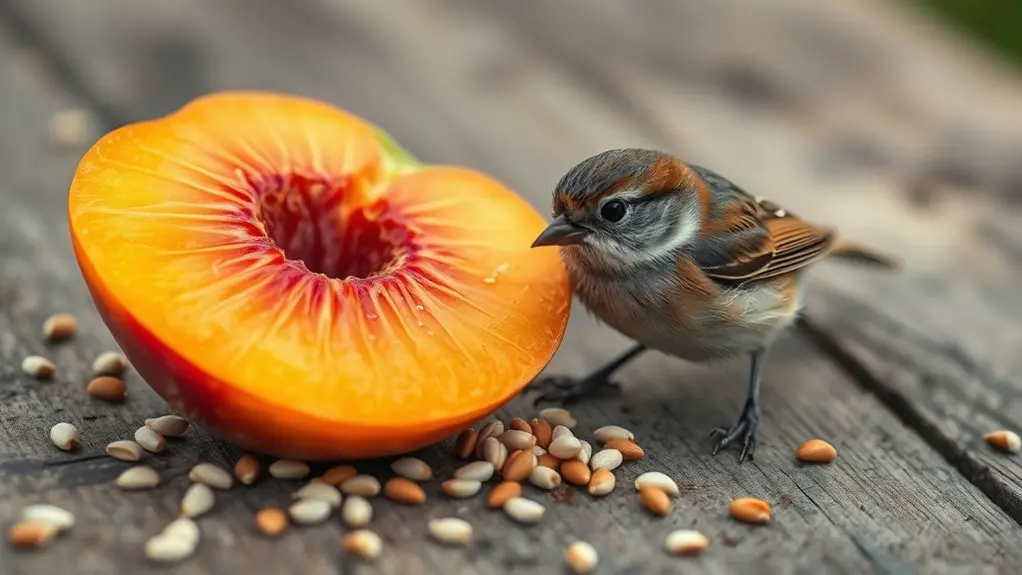
Because peaches contain a variety of essential nutrients, they can contribute considerably to a bird’s diet when offered properly. A nutrient comparison shows peaches are rich in vitamins A, C, and E, supporting immune function and vision health in birds.
Peaches provide essential vitamins A, C, and E, boosting birds’ immune and vision health when served correctly.
They also provide antioxidants like beta-carotene, which protect cells from oxidative damage, enhancing overall health benefits.
Additionally, peaches supply dietary fiber, promoting efficient digestion, and essential minerals such as potassium and magnesium, indispensable for metabolic processes.
While natural sugars in peaches offer quick energy, moderation is essential to prevent adverse effects.
Understanding these nutrient components allows you to appreciate how peaches can complement your bird’s diet, supporting their wellbeing without replacing primary food sources.
Why Remove Peach Pits Before Feeding?
You need to remove peach pits before feeding because they contain cyanogenic compounds that release toxic cyanide when ingested. This toxin can cause severe respiratory and neurological problems in birds.
Toxic Elements In Pits
Although peach flesh is safe and nutritious for birds, the pits contain amygdalin, a compound that releases cyanide upon ingestion and poses a significant toxic risk. Peach pit toxicity arises primarily from cyanide hazards, which can interfere with oxygen transport in your bird’s bloodstream, leading to poisoning.
Even small amounts of crushed or broken pits can release enough cyanide to be harmful.
Besides chemical toxicity, swallowing whole pits risks choking or causing intestinal blockages. To protect your pet bird, always remove peach pits thoroughly before feeding any peach flesh. This precaution eliminates the danger of cyanide exposure and prevents physical obstruction, ensuring safe consumption.
Understanding these toxic elements in pits helps you make informed choices about offering peaches to your birds. So, it’s always better to be safe and double-check before sharing this tasty fruit with your feathered friend.
Cyanide Risks Explained
When birds chew or crush peach pits, the amygdalin inside releases cyanide, a potent toxin that disrupts cellular oxygen utilization. This pit toxicity presents serious cyanide hazards to birds, as even small amounts of crushed pits can quickly impair essential physiological functions.
Cyanide interferes with the bird’s ability to use oxygen at the cellular level, leading to rapid health deterioration or death. Birds may be attracted to the taste or smell of the pits, which increases the risk of accidental ingestion and poisoning.
Because of these risks, you must remove peach pits entirely before feeding peaches to birds. Avoiding exposure to pit toxicity is critical for protecting both pet and wild birds from potentially fatal cyanide hazards associated with peach pits.
Safe Feeding Practices
The presence of cyanogenic compounds in peach pits poses a clear risk to birds, making removal of the pit a necessary step before feeding. These compounds release cyanide, which is highly toxic even in small amounts. This can cause respiratory distress and other health issues.
If a bird accidentally ingests fragments from cracked or broken pits, the danger increases markedly. To keep birds safe, especially during critical periods like migration when their energy needs and feather grooming are heightened, you must make sure the pit is completely removed.
Offering peach slices without pits eliminates the risk of cyanide poisoning and supports overall avian health. Careful preparation shows responsible feeding practices and helps maintain the well-being of birds relying on safe, nutritious food sources during their migratory and grooming routines.
How Many Peaches Should You Feed Your Bird?
You should limit peaches to about 5-10% of your bird’s total diet to avoid giving them too much sugar and calories. Just offering a small piece or a few slices once a week usually works well for most birds.
It’s important to always serve peaches in moderation and make sure to remove any leftovers quickly. This helps prevent spoilage and keeps your bird healthy.
Recommended Fruit Intake
How much peach should you feed your bird to maintain a balanced diet? Peaches should make up just 5-10% of your bird’s overall diet. Birds rely on consistent nutrition for important activities like migration and producing their complex songs.
So, it’s really important to keep fruit intake, including peaches, between 15-30% of their daily consumption. Offering small peach portions that match your bird’s beak size helps keep things in moderation. This way, you avoid too much sugar, which can lead to weight gain and stomach problems.
Try spreading peach servings throughout the week and mix them with other fruits, veggies, and pellets.
Portion Size Guidelines
Although peaches offer valuable nutrients, feeding them in controlled portions is essential to maintain your bird’s health. Peaches should constitute only 5-10% of your bird’s daily diet to balance antioxidant benefits with dietary fiber intake without overwhelming their system.
Experts advise giving a few small peach pieces per week, ensuring fruit overall remains within 15-30% of daily nutrition. This careful portioning prevents excess sugar consumption, which can lead to metabolic issues.
Adjust servings based on your bird’s size and dietary needs to maintain nutritional equilibrium.
Moderation And Frequency
Maintaining peach servings within 5-10% of your bird’s overall diet supports balanced nutrition while avoiding excessive sugar intake. You should offer peaches sparingly. Small pieces a couple of times a week suffice to prevent overconsumption that can lead to weight gain and gastrointestinal issues.
Since fruits, including peaches, should make up only 15-30% of your bird’s daily intake, prioritize pellets, vegetables, and greens for the majority of their nutrition.
Observing your bird’s behavior during feeding can help you gauge interest and acceptance. This makes fruit treats an effective form of cage enrichment without compromising health.
Moderation guarantees your bird enjoys peaches as a stimulating, nutritious addition rather than a dietary staple. This helps maintain overall well-being and dietary balance.
Risks of Overfeeding Peaches
Because peaches contain high levels of natural sugars and calories, overfeeding them can lead your bird to gain excessive weight and develop obesity. This condition can interfere with natural behaviors such as bird migration and feather grooming, which require ideal health.
Overfeeding peaches can cause obesity, disrupting essential bird behaviors like migration and feather grooming.
Here are key risks of overfeeding peaches:
- Excessive sugar intake increases the risk of fatty liver disease, impairing metabolic functions.
- Calorie-dense peaches may displace balanced nutrients like proteins and vegetables, causing nutritional imbalances.
- Overconsumption can cause gastrointestinal upset or diarrhea, affecting digestion and overall well-being.
- Obesity from overfeeding stresses your bird’s body, reducing mobility and natural preening activities essential for feather maintenance.
How to Prepare Peaches Safely for Your Bird
You should always wash peaches thoroughly to get rid of any pesticides and bacteria before giving them to your bird.
It’s really important to remove the pit completely since it contains cyanide, which can be very dangerous.
After that, cut the peach into small pieces that are just the right size for your bird’s beak to avoid any choking risks.
Washing Peaches Thoroughly
Although peaches might look clean, rinsing them thoroughly under running water is essential to remove pesticides, dirt, and bacteria before offering them to your bird. This step is especially important during peach ripeness peaks in seasonal availability when contamination risks may rise.
Follow these steps for safe preparation:
- Rinse each peach under cold running water, avoiding soaps or chemicals that could harm your bird.
- Use a soft brush or cloth to gently scrub the surface, ensuring all residues are removed.
- Pat the peach dry with a clean towel or paper towel to reduce moisture, preventing mold growth.
- Wash peaches immediately before feeding to maintain ideal freshness and minimize bacterial contamination.
Proper washing safeguards your bird’s health while allowing it to enjoy peaches safely. So, take a little extra time to clean those peaches right!
Removing Pits Completely
When preparing peaches for your bird, removing the pit completely is essential to prevent exposure to cyanide, a toxic compound found within it. Because of how peaches are grown, the pit stays firmly stuck in the fruit’s center, so you need to extract it carefully. Use a sharp knife to cut around the pit cautiously, making sure no fragments stay attached to the flesh.
Even small pieces can release cyanide, which can be really dangerous when birds forage. After you take the pit out, check the peach thoroughly to make sure it’s fully removed. This careful preparation not only keeps your bird safe but also lets it enjoy the fruit without worry.
Handling peaches properly shows you understand their anatomy and the risks linked to pit ingestion. It’s a small step that makes a big difference for your bird’s health and happiness.
Cutting Appropriate Serving Sizes
Since birds vary widely in size and beak shape, cutting peaches into appropriately sized pieces is essential to prevent choking hazards. Observing your bird’s behavior helps determine the best portion size to support diet diversity safely. Follow these steps:
- Cut peaches into small, manageable pieces that fit comfortably in your bird’s beak, considering its size and beak strength.
- Remove the pit completely to eliminate cyanide risk.
- Serve fresh, ripe peach slices or chunks to maximize nutritional value and encourage natural foraging behaviors.
- Regularly inspect leftover fruit and discard uneaten pieces promptly to avoid spoilage and mold growth.
This precise preparation aligns with your bird’s natural feeding patterns and supports a safe, varied diet. It’s a simple way to keep your feathered friend happy and healthy!
How Peaches Fit Into a Balanced Bird Diet
Because peaches contain valuable nutrients like vitamins A and C, you can include them as a small part of your bird’s diet. For ideal bird nutrition, peaches should make up only 5-10% of food intake due to their sugar content. Offering peaches alongside a fruit variety, vegetables, and pellets ensures a balanced diet meeting essential nutritional requirements.
Always remove pits to prevent cyanide poisoning. Moderation is key to avoid weight gain and digestive issues.
| Nutrient | Source | Role in Bird Nutrition |
|---|---|---|
| Vitamins A & C | Peaches | Immune support, antioxidant |
| Fiber | Vegetables | Digestive health |
| Protein | Pellets | Tissue repair, growth |
Combining these food groups promotes overall avian health effectively. It’s a simple way to keep your feathered friend happy and healthy!
Signs Your Bird May React Poorly to Peaches
If your bird reacts poorly to peaches, you might notice symptoms such as vomiting, diarrhea, or lethargy shortly after feeding. These signs can indicate intolerance or sensitivity related to bird dietary restrictions.
Also, peach tree diseases or residues might introduce molds or pollen that make reactions worse. Watch for these key indicators:
- Itchy or swollen areas around the beak, face, or eyes, which could mean an allergic response.
- Decreased activity or loss of appetite, hinting at gastrointestinal discomfort.
- Respiratory issues like sneezing or labored breathing, possibly from peach pollen or mold exposure.
- Persistent or worsening symptoms that need immediate veterinary attention.
Catching these signs early helps prevent complications and keeps your bird healthy. So, keep an eye out and don’t hesitate to get help if things seem off.
Tips for Introducing Peaches to Your Bird’s Diet
Noticing how your bird responds to peaches is the first step before adding this fruit to their diet. Begin by offering small, thoroughly washed, and appropriately sized pieces of ripe peach. Make sure the pit is completely removed to eliminate cyanide toxicity and choking hazards.
Introduce peaches gradually, combining them with a variety of fruits and vegetables. This helps maintain balanced bird nutrition and prevents your bird from relying too much on just one food source.
Keep a close eye on your bird for any signs of trouble, like changes in behavior or different stool consistency. These could mean your bird isn’t tolerating peaches well.
Always serve fresh peaches and remove any uneaten portions quickly. This avoids spoilage and mold growth.
Taking it slow like this helps your bird safely enjoy new foods while getting a good mix of fruits for better health.
Frequently Asked Questions
Can Birds Eat Canned or Processed Peach Products?
You shouldn’t feed birds canned or processed peaches because peach toxicity risks increase from added sugars and preservatives. These additives can really mess with a bird’s digestion.
Fresh peaches are definitely the safer choice. They don’t have those harmful additives that can impair their digestive health. So, it’s best to stick with fresh fruit when treating your feathered friends.
Do Birds Prefer Peaches Over Other Fruits?
You’ll find birds often prefer peaches due to fruit preferences influenced by their dietary habits. Their attraction stems from peaches’ aroma, softness, and sugar content. This makes them more appealing compared to less juicy or aromatic fruits.
It’s kind of interesting how these factors come together to shape what birds like to eat. So, when you see birds going for peaches, it’s not just random—they really seem to enjoy the taste and texture. Peaches offer a juicy treat that other fruits might not match.
How Often Can Wild Birds Safely Eat Peaches?
You should offer wild birds ripe peach flesh only a few times weekly to support proper bird digestion. Overfeeding disrupts their diet, so monitor peach ripening closely and avoid daily or excessive peach consumption for their health.
Are Peach Leaves or Flowers Safe for Birds?
Imagine a knight avoiding poison arrows. Similarly, you should avoid offering peach leaves because they are toxic.
Birds usually prefer fruits over leaves or flowers. This matches their natural diet and helps them avoid harmful cyanide exposure.
Can Feeding Peaches Affect a Bird’s Behavior?
Feeding peaches can affect your bird’s behavior by influencing bird digestion and stimulating fruit preferences. Moderate amounts promote natural foraging, which is great for keeping your bird engaged and happy.
But be careful not to overfeed. Too many peaches might cause hyperactivity or gastrointestinal discomfort. This can change your bird’s mood and activity levels, which isn’t ideal.
Conclusion
You can safely offer peaches to your bird, but remember to remove the pits to avoid any health risks. Start with small amounts to see how your feathered friend reacts, as not all birds tolerate peaches equally.
Like walking a tightrope, balancing treats with a nutritious diet is essential to their well-being. By preparing peaches properly and observing your bird’s response, you’ll guarantee these juicy fruits become a healthy, enjoyable addition to their meals.