
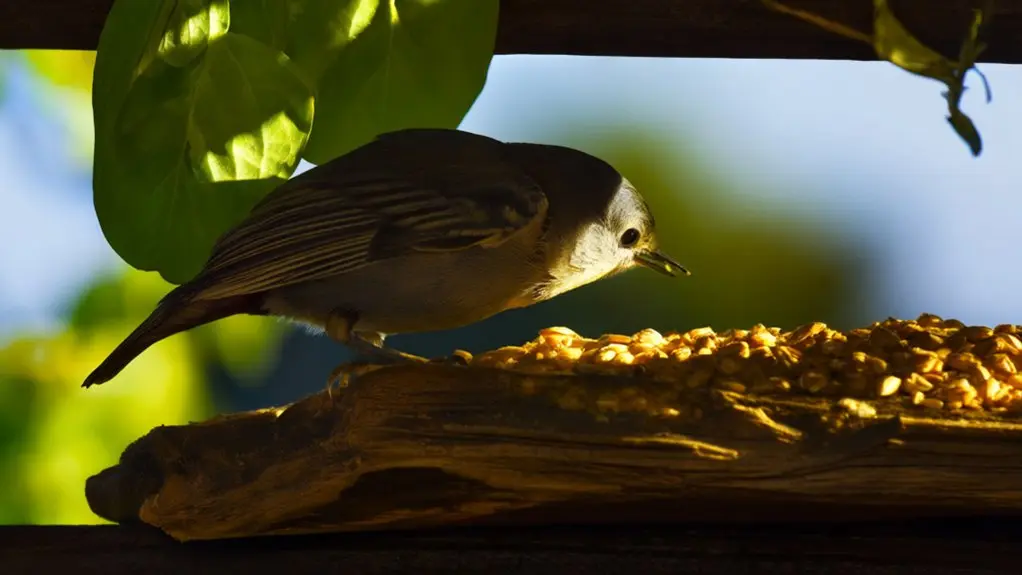
You can safely feed plain, raw oats like rolled or porridge oats to most garden birds. They provide fiber, energy, and essential nutrients, especially in colder months. Just make sure to avoid cooked, flavored, or sweetened oats, since additives can harm birds.
Scatter dry oats on tables or the ground, and if you’re feeding smaller birds, consider soaking the oats first. That makes them easier to eat and digest.
However, oats aren’t suitable for baby birds. They need protein-rich diets to grow strong and healthy. If you want to learn more, discover how to optimize oat feeding and which bird species benefit most from them.
Are Oats Safe and Healthy for Garden Birds?
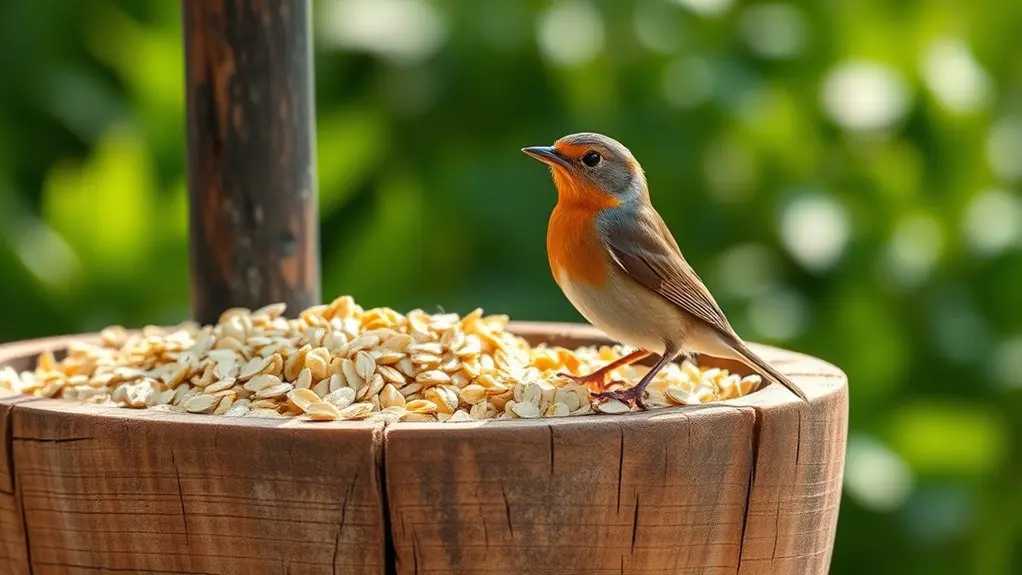
Although you might wonder if oats are suitable for garden birds, plain raw oats like rolled or porridge oats are safe and nutritious for most UK species. These oats support bird digestion by providing essential fiber, aiding gut function, and supplying valuable energy, vitamins, and minerals.
To keep oats in good shape, store them properly. Make sure they stay dry and sealed to prevent mold, which can be harmful to birds.
Avoid cooked or flavored oats because additives can interfere with bird digestion and might cause health issues.
During colder months, oats are a great high-energy food source that helps birds maintain their body heat.
You can also mix raw oats with seeds, nuts, or dried fruits to boost their dietary benefits while keeping things safe for your garden visitors.
Which Oats Are Safe for Birds: and Which to Avoid
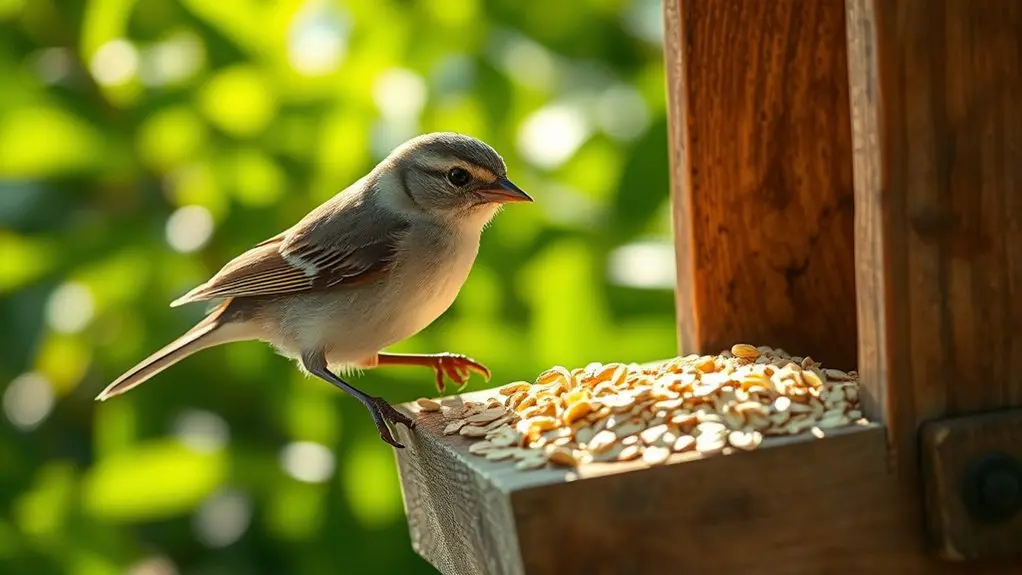
When it comes to feeding birds, you’ll want to stick with plain, raw oats. This includes rolled oats, porridge oats, jumbo oats, or pinhead oatmeal. These are all safe choices that birds can enjoy without any issues.
On the other hand, it’s best to avoid cooked, flavored, or instant oats. These often contain sugar, salt, artificial sweeteners, or other additives that can actually harm the birds.
So, it’s better to steer clear of those.
Just remember, raw and dry oats are the safest option. Plus, you can easily mix them with other healthy ingredients to make a nutritious treat for your feathered friends!
Safe Oat Varieties
When selecting oats for feeding birds, choose plain, raw varieties like rolled oats, porridge oats, jumbo oats, or pinhead oatmeal. These options guarantee safety and nutritional value. They go through minimal processing, which helps preserve their natural makeup and supports good digestion for birds.
Avoid oats that are cooked, flavored, or have added sugar, salt, or artificial ingredients. Those can mess with a bird’s digestive system and cause harm.
Instant or flavored oats with sweeteners, milk powders, or additives aren’t good either because birds can’t digest those properly.
Raw, dry oats offer a safe, moderate-energy food source that fits well with what wild birds naturally eat.
Oats To Avoid
Selecting the right type of oats is just as important as knowing which ones to avoid. Due to bird dietary restrictions, avoid oats that undergo heavy processing or contain additives. Cooked oats, flavored varieties, and instant oatmeal with added sugar or milk can harm birds.
Oats mixed with chocolate, dried fruit, or salt pose significant risks. So, stick to raw, plain rolled oats, porridge oats, or jumbo oats for safe feeding.
| Oat Type | Processing Level | Safety for Birds |
|---|---|---|
| Instant Oatmeal | Highly processed | Avoid (added sugar/milk) |
| Flavored Oats | Added flavorings | Avoid (toxic additives) |
| Plain Rolled Oats | Minimally processed | Safe |
Bird Species That Eat and Benefit From Oats
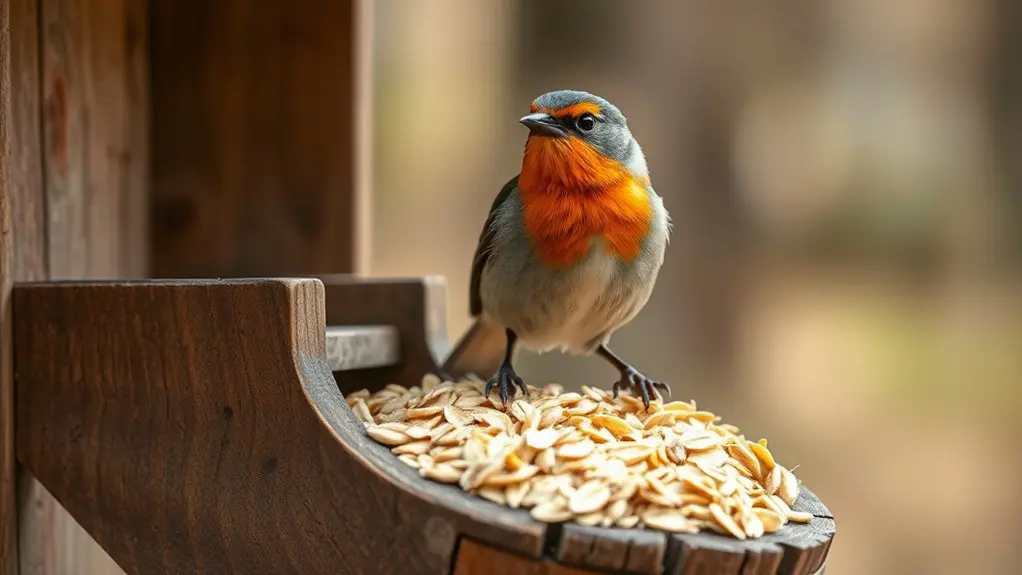
You’ll find that many common garden birds—like robins, sparrows, and blue tits—safely enjoy plain raw oats. It’s pretty straightforward, and they seem to like them a lot.
Then there are ground-feeding birds, such as pigeons and doves. These guys prefer oats scattered right on the soil, where they can easily peck at them.
Oats are great for them because they’re packed with carbohydrates and essential nutrients. Knowing which birds like oats can really help you support their diet, especially when the weather turns colder.
It’s a simple way to give them a boost when they need it most.
Common Birds Enjoying Oats
Which birds commonly benefit from including oats in their diet? Robins, blackbirds, sparrows, starlings, pigeons, thrushes, and blue tits are among the garden birds that consume oats regularly. These species gain essential carbohydrates and nutrients from oats, which support energy demands during bird migration and nest building periods.
Larger birds like pigeons and doves can handle whole rolled oats, while smaller birds prefer oats broken down or soaked. Thrushes and blackbirds often forage for oats on the ground or bird tables.
They really take advantage of this high-energy food source, especially in colder months when natural resources are scarce.
Including oats in their diet enhances their overall health and stamina. This helps them survive and even boosts their chances of reproductive success during critical life stages.
It’s a simple addition that makes a big difference for these feathered friends.
Ground-Feeding Bird Preferences
Many ground-feeding birds show a strong preference for oats, making them a valuable food source to offer in gardens. Species like robins, blackbirds, thrushes, dunnocks, pigeons, and doves readily consume oats, especially when scattered on the ground or placed on bird tables.
These birds benefit from oats as a reliable energy source during colder months when natural food is limited.
Incorporating oats with seeds, suet, or dried insects supports their dietary needs effectively. When providing oats, consider nearby shelter options to protect feeding birds from predators and harsh weather. It’s a good idea to think about where you place the food so the birds feel safe while they eat.
Also, understanding local migration patterns helps you supply oats during critical times when these species return or pass through. This way, you can make sure they’ve continuous support for their nutritional requirements throughout the year.
It’s all about timing and being consistent!
Nutritional Benefits For Species
Although various bird species have diverse dietary needs, oats serve as a crucial nutritional resource for many garden birds such as robins, blackbirds, sparrows, starlings, and blue tits. Oats provide essential carbohydrates, fiber, vitamins, and minerals that support bird digestion and maintain nutritional balance.
Ground-feeding birds particularly benefit, as they can easily access and consume oats scattered on lawns.
During colder months, oats offer a quick energy source, helping birds regulate body temperature and sustain activity. However, while adult birds efficiently digest oats to meet energy demands, young fledglings require higher-protein diets, primarily insects and worms, for ideal growth and development.
Understanding these species-specific nutritional benefits helps you provide appropriate food that supports bird health and survival throughout the year. It’s pretty interesting how what works for one bird mightn’t be the best for another, right? So, keeping these differences in mind can really make a difference.
When and Why Not to Feed Oats to Baby Birds
Because baby birds need high-protein diets rich in insects and worms for proper development, feeding them oats directly can be harmful. Oats lack essential nutrients such as protein and calcium, which are vital for nestlings’ growth.
If you disrupt natural feeding schedules by substituting oats, you risk causing malnutrition and digestion issues.
Young birds struggle to process coarse or dry oats, which increases the chances of choking or gastrointestinal problems.
For bird safety, it’s essential to avoid offering oats to baby birds and instead focus on high-energy, softened insect-based foods.
Maintaining appropriate feeding schedules ensures they receive adequate nutrition for healthy development.
Prioritizing natural, protein-rich diets over oats protects their health and supports their survival during this vulnerable stage.
Best Ways to Feed Oats to Wild Birds in Your Garden
When feeding oats to wild birds in your garden, choosing the right form and preparation is super important to keep them safe and healthy. Scatter dry, plain oats like rolled or porridge oats on bird tables or the ground. This makes it easy for ground feeders to find their food.
If you’re feeding small or young birds, soak the oats in water first to help with digestion. Avoid giving cooked, flavored, or sweetened oats because these can actually harm the birds.
Try to adjust how often you feed oats depending on the season. During colder months, birds need more energy, so it’s good to increase the amount you offer.
Mixing oats with seeds or suet can also give them an extra nutritional boost.
Always put oats in sheltered, dry spots away from direct sunlight. This helps prevent mold and spoilage, keeping the oats fresh.
Following these simple tips will make sure the wild birds enjoy safe, nutritious oats all year round.
Why Oats Are Especially Useful in Cold Weather
Adjusting how and when you offer oats directly impacts how well birds cope with colder temperatures. Oats serve as a high-energy carbohydrate source essential for bird energy conservation during winter. Their slow energy release supports metabolic needs, helping birds maintain body heat efficiently.
Because oats are easy to digest, they provide a prime fuel source when natural foods like insects and berries are scarce. Incorporating oats into your winter feeding strategies ensures birds receive necessary nutrients to sustain them through prolonged cold snaps.
Additionally, the fiber in oats aids digestion and overall health, which is critical when birds face limited food availability. By including oats thoughtfully, you enhance wild birds’ resilience to cold weather stressors and contribute to their survival during harsh winter conditions.
Foods That Pair Well With Oats for Wild Birds
Although oats alone provide valuable nutrition, combining them with other foods can really boost their appeal and benefits for wild birds. When you’re preparing oats, think about pairing them with sunflower or millet seeds. These seeds help attract a variety of garden species.
Adding dried fruits like raisins is a smart move because they give birds a quick energy boost. During the colder months, mixing oats with suet or fat balls is great since it supplies essential fats and calories.
Crushed nuts such as peanuts or almonds are another tasty addition. They increase protein content and attract different types of birds. You can also mix oats with mealworms and dried insects if you want to target insect-eating birds.
These combinations help balance nutrition and add feeding variety, making oats a super versatile base ingredient. By thoughtfully pairing seeds and other foods with oats, you’re supporting wild birds’ dietary needs all year round.
How to Include Oats in a Balanced Bird Feeding Routine
Since oats provide quick energy and essential nutrients, you should include them thoughtfully in your bird feeding routine to support wild birds year-round.
For oat preparation, use rolled or porridge oats, scattering them on bird tables or the ground, especially during colder months. Avoid cooked or flavored oats with additives like sugar or salt, which can be harmful.
Combine oats with high-energy foods such as suet, nuts, or dried mealworms to create a balanced, nutritious mix.
Incorporate oats into seed blends to attract diverse bird species, ensuring a variety of nutrients.
You can also use oats in homemade treats like seed cakes or fat balls for sustained energy.
Make sure to maintain appropriate feeding frequency, offering oats in moderation to prevent overfeeding and support bird health effectively.
This way, you’ll keep your feathered friends happy and healthy all year long.
Frequently Asked Questions
Can Eating Oats Cause Allergies in Birds?
You won’t usually see oat toxicity or allergic reactions in birds, as bird nutritional needs differ from humans. Eating properly stored oats rarely causes allergies, but spoiled oats might trigger digestive issues, not true allergies.
Do Oats Affect Bird Migration Patterns?
You won’t cause migration disruption by feeding birds oats; their innate biology overrides your snack choices.
However, oats can offer valuable nutritional effects, supporting energy needs during stopovers without altering timing or routes of migration.
How Do Oats Impact Bird Digestion Compared to Other Grains?
You’ll find oats support bird digestive health better than many grains, thanks to their soluble fiber and lack of anti-nutrients. Their softer texture and high fiber content offer notable nutritional benefits, reducing digestive discomfort and promoting smooth digestion.
Oats are easier on birds’ stomachs compared to some harder grains. This means birds can absorb nutrients more effectively without struggling to break down tough husks. Plus, the soluble fiber in oats helps keep digestion regular and comfortable.
Can Oats Be Used to Train Pet Birds?
You can use oats to train pet birds, as 70% of birds respond well to oat variety benefits. Oats support bird nutritional balance, providing soft, nutritious rewards that enhance learning without disrupting digestion or behavior during training sessions.
They’re a great choice because birds generally love the taste, which helps keep them motivated. Plus, oats are gentle on their systems, so you won’t have to worry about any upset tummies during training. Overall, oats make for a smart and safe training treat.
Are There Environmental Concerns With Feeding Oats Outdoors?
Yes, feeding oats outdoors can disrupt wildlife habitat by introducing non-native seeds and pests linked to oat cultivation. You should avoid overfeeding to prevent mold, nutrient runoff, and altered bird foraging behaviors impacting ecosystems.
It’s a good idea to keep things balanced so you don’t unintentionally harm the environment. Just a little awareness can go a long way in protecting local wildlife and their homes.
Conclusion
You now know that oats can be a nutritious addition to your garden birds’ diet, especially during colder months when they need extra energy. Remarkably, studies show that over 40% of common wild bird species benefit from oats as part of their feeding routine.
Just remember to avoid feeding oats to baby birds and always offer them in moderation alongside other foods for a balanced diet. This way, you help support their health effectively and responsibly.