
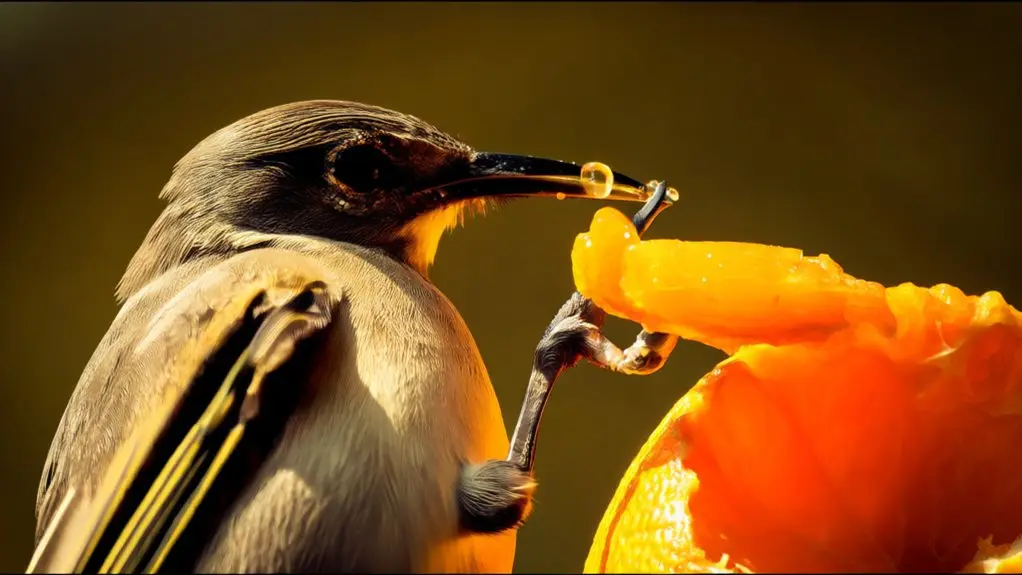
You can safely offer fresh oranges to many bird species. They provide essential hydration and nutrients that support energy needs, especially during migration and nesting. Just make sure to always remove the peels and avoid processed fruits to reduce pesticide and additive risks.
Serving ripe orange slices in shaded feeders and replacing them regularly helps maintain freshness and bird health. Watching how the birds behave while feeding and keeping things clean guarantees positive outcomes. It’s really about making sure they get the best experience.
If you’re curious, explore further to understand the ideal serving methods and the specific benefits for different bird species. It’s pretty fascinating once you dive into it!
Are Oranges Safe for Birds to Eat?
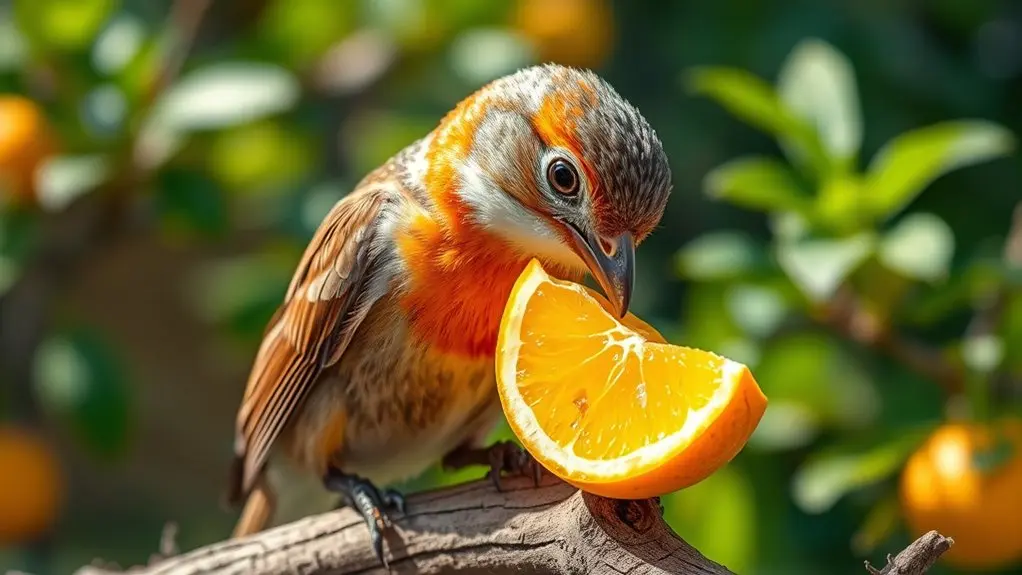
Although oranges contain high acidity and sugar levels that can upset some birds’ digestion if eaten excessively, they’re generally safe for most backyard birds when given in moderation.
Oranges are safe for most backyard birds when offered in moderation despite their acidity and sugar content.
You should always provide fresh, unspoiled fruit to avoid health issues caused by mold or spoilage.
When offering oranges, make certain you remove the peels, as they may contain pesticide residues and compounds harmful to birds.
Cooking safety applies here too. Never give processed or flavored orange products, since additives can be toxic.
Rinsing fruit thoroughly can reduce pesticide concerns but doesn’t eliminate all risks.
Remember, moderation is key because excessive consumption may cause digestive upset.
Which Bird Species Love Oranges Most
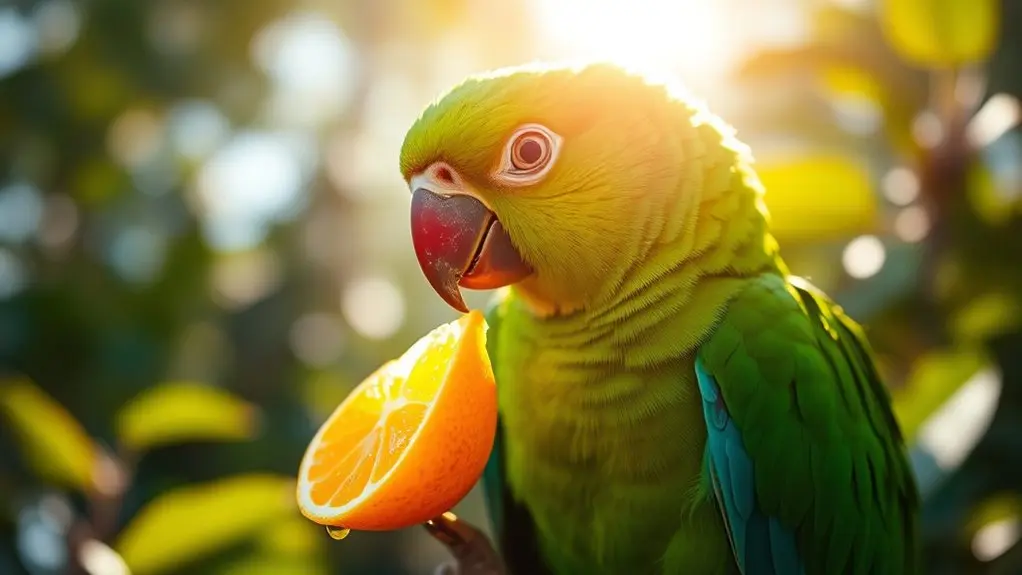
Understanding which bird species are most attracted to oranges can help you tailor your feeding efforts effectively. Orioles, especially Bullock’s Orioles, show strong affinity for orange slices during their nesting behaviors. Western Tanagers, identifiable by their orange facial markings, consume oranges primarily during migration.
Black-Headed Grosbeaks, with robust beaks, feed on oranges in summer, supplementing their diet alongside seeds and jelly. House Finches and Rose-breasted Grosbeaks also frequent orange feeders, often influenced by observing other birds.
| Species | Season | Behavior Focus |
|---|---|---|
| Bullock’s Oriole | Nesting | High orange preference |
| Western Tanager | Migration | Fruit consumption |
| Black-Headed Grosbeak | Summer | Mixed diet feeding |
These patterns align closely with species-specific bird migration patterns and nesting behaviors. It’s pretty interesting how their feeding habits match up with their life cycles, right?
Why Birds Are Attracted to Oranges
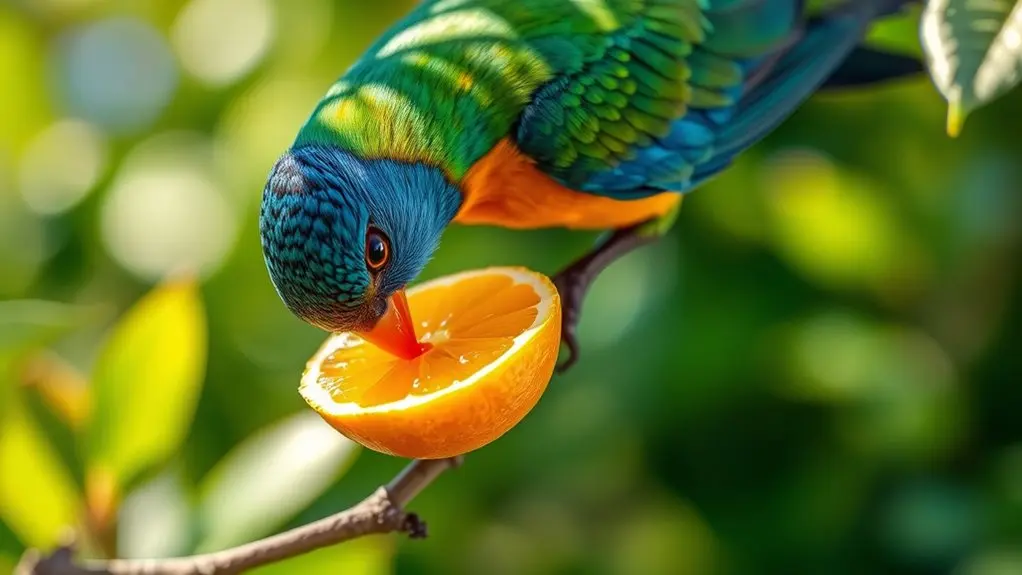
Because oranges display a bright, vivid color that signals ripeness, birds quickly identify them as a potential food source. This color attraction is vital, as the vivid orange hue stands out against foliage, guiding fruit-eating birds like orioles and tanagers.
Plus, the scent lure emitted by ripe oranges plays a big role in attracting birds. Their olfactory senses pick up the sweet aroma linked to nutrient-rich food, which is pretty clever. The mix of visual and scent cues helps birds find a high-energy snack, especially during busy times like migration or nesting.
On top of that, the juicy, soft texture of oranges encourages pecking and eating. It provides essential hydration and calories, which birds definitely need.
Oranges in Birds’ Natural Diets
When you observe tropical and subtropical bird species like orioles and tanagers, you’ll notice that oranges form a significant part of their natural diet. Birds such as Baltimore and Bullock’s orioles exhibit clear citrus preferences, frequently selecting ripe oranges in their habitats.
Oranges provide essential nutritional benefits, including vital sugars and nutrients, which support energy demands during migration and breeding.
Additionally, fruit-eating species like waxwings and grosbeaks naturally consume citrus fruits during seasonal fruiting periods. This behavior indicates that oranges are a reliable food source, offering both hydration and calories.
Understanding these dietary patterns helps clarify how oranges contribute to avian nutrition in the wild, emphasizing their role beyond mere attraction to taste or color.
When Is the Best Time to Offer Oranges?
Although birds may consume oranges year-round, offering them during spring yields the greatest benefits for attracting and supporting fruit-eating species.
Seasonal feeding with oranges early in the season coincides with the arrival of orioles and tanagers at their breeding grounds, facilitating migration support and energy replenishment.
You should continue providing oranges throughout summer, as they promote nesting success and supply essential nutrients for raising young.
During late spring and early fall migration periods, oranges become a crucial energy source for traveling birds, enhancing their endurance.
Regularly replenishing oranges during these peak times maximizes their effectiveness in supporting bird populations.
How to Serve Oranges to Birds Safely
To serve oranges to birds safely, you should slice the fruit into halves or wedges and securely skewer them on hooks, branches, or snag poles to guarantee easy access.
Considering bird migration and seasonal variations, fresh fruit must be replaced regularly to avoid spoilage and mold, which can threaten avian health.
Place feeders in visible, sheltered locations to enhance attraction and monitor consumption patterns aligned with migratory and seasonal feeding behaviors.
Replace fresh oranges every 1-2 days in summer; every 2 days in spring.
Avoid dried or dehydrated oranges, as birds lose interest.
Position feeders near trees or on deck rails for visibility.
Clean and disinfect feeders regularly to prevent disease.
Remove moldy or rotting fruit promptly to ensure safety.
Signs Birds Are Eating Too Many Oranges
Properly serving oranges to birds involves careful monitoring not only of how often you replace the fruit but also of the birds’ reactions to its consumption. Signs birds are eating too many oranges include drooping wings and lethargy, likely due to excessive sugar intake. You may also observe digestive issues such as diarrhea, indicating dietary imbalance.
An increase in fruit-related droppings or seed dispersal around feeders signals overconsumption. From a bird feeding etiquette standpoint, maintaining variety in their diet is *vital* to prevent preference solely for oranges.
Also, fruit spoilage indicators like visible mold or rotting fruit suggest neglected freshness, which can attract pests and harm birds.
Monitoring these signs helps you adjust feeding practices. This way, you ensure birds receive a balanced, healthy diet without risks linked to eating too many oranges. It’s all about keeping things fresh and varied for their well-being.
Keeping Orange Feeders Clean and Fresh
Since orange feeders provide a moist environment that’s perfect for mold and bacterial growth, you should clean them every few days to keep birds healthy. Proper feeder placement can really help reduce contamination by minimizing exposure to rain and debris.
Seasonal maintenance is key. During warmer months, replace oranges every 1-2 days to keep them fresh. In cooler seasons, changing them every 2 days works just fine.
To keep feeders clean and fresh, follow these simple steps:
- Remove moldy or rotting fruit right away to stop diseases from spreading.
- Wash feeders thoroughly with soap and water before refilling.
- Use clean tools during maintenance to avoid contamination.
- Check oranges regularly and toss any spoiled or fermented fruit.
- Put feeders in a well-ventilated spot to reduce moisture buildup.
Keeping up with this routine ensures a safe feeding environment for birds all year long.
Alternatives to Oranges for Fruit-Loving Birds
While oranges serve as a popular fruit choice for many bird species, offering a variety of alternatives can enhance dietary diversity and attract different birds to your feeders. Apples, grapes, berries, cherries, and melons provide natural, nutritious options with distinct nutritional benefits that support avian health.
Birds like orioles, thrashers, and waxwings often prefer these fruits during peak ripening seasons.
Orioles, thrashers, and waxwings favor these fruits when they are at their ripest.
You can also offer dried fruits such as raisins and cranberries, soaked beforehand to improve palatability. To maintain fruit preservation and avoid spoilage, avoid fruits with added sugars, seasonings, or preservatives, which could harm birds.
Placing a mix of fresh fruits on platform feeders or as whole windfalls encourages a diverse bird population and promotes a healthy, balanced diet.
Frequently Asked Questions
Can Orange Peels Be Harmful to Birds?
Yes, orange peel ingestion can cause bird peel toxicity due to essential oils and compounds harmful to birds. You’ll want to avoid feeding peels and offer only peeled fruit to minimize health risks effectively.
It’s better to be safe and keep the peels away from your feathered friends. Birds can be sensitive to certain substances that are perfectly fine for us. So, sticking to just the fruit is a smart move.
Do Oranges Affect Bird Migration Patterns?
Like a gentle breeze guiding wings, oranges offer nutritional benefits during migration, but they don’t considerably alter bird migration patterns. Seasonal impacts may cause minor timing shifts, yet natural instincts primarily drive their journeys.
How Do Birds Digest the Sugars in Oranges?
You rely on bird enzymes in the crop and gizzard to break down sugars in oranges, enabling efficient sugar absorption. This process provides rapid energy, supporting activities like flight, foraging, and raising your young efficiently.
It’s pretty neat how these enzymes work together to make sure you get the most out of the fruit you eat. The energy you get helps you stay active and alert all day long. Plus, it keeps you strong for all those busy bird tasks!
Can Feeding Oranges Attract Unwanted Pests or Predators?
You might notice ants swarming and wasps buzzing near your feeder. Feeding oranges can cause pest attraction.
This also raises predator risks, drawing raccoons or cats. So, you should clean regularly to minimize these issues effectively.
Are There Any Vitamins in Oranges That Specifically Benefit Birds?
You’ll find vitamins A and C in oranges that enhance birds’ nutrient absorption and support immune health. These nutrients align with many birds’ dietary preferences, promoting better skin, feathers, eyesight, and overall robustness efficiently.
Birds really benefit from these vitamins because they help keep them in great shape. Plus, vitamin C is known to boost their immune system, which is super important for their daily health. So, feeding oranges to birds can be a tasty way to help them stay strong and vibrant.
Conclusion
You can safely offer oranges to many bird species, but moderation is key to avoid digestive issues. Birds are naturally drawn to the fruit’s vibrant color and nutrients, making it a valuable occasional treat. Always serve oranges fresh and clean to prevent bacterial growth.
Remember, feeding birds too many oranges is like giving them a citrus overload of epic proportions. By balancing their diet and maintaining clean feeders, you’ll support their health effectively.