
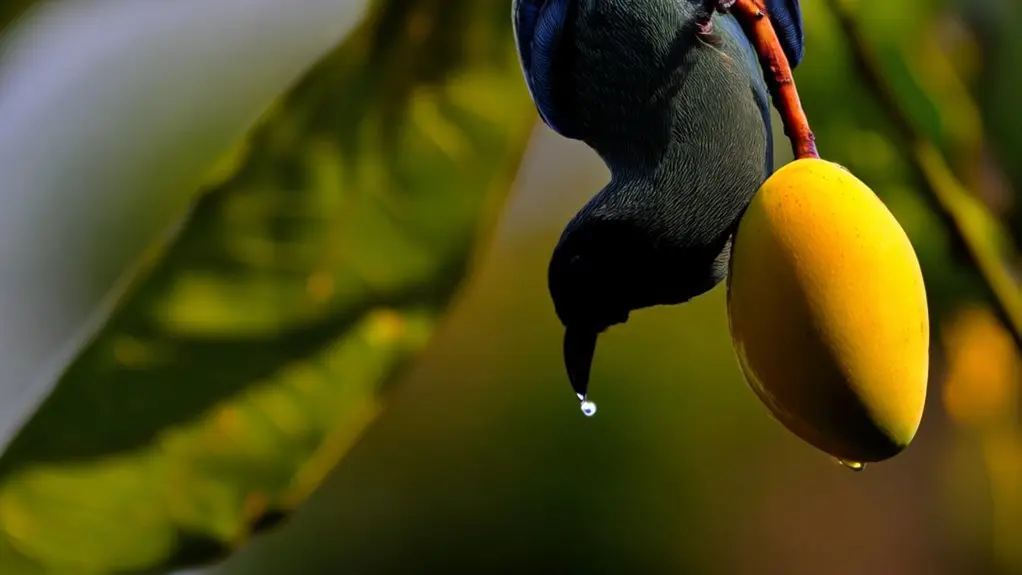
You can safely offer your bird fresh mango by thoroughly washing, peeling, and removing the pits. The pits contain toxins and choking hazards, so it’s important to take them out.
Mango provides essential Vitamin A, antioxidants, and energy. But you should give it in moderation, about 10-15% of their diet. This helps prevent any digestive upset.
Avoid giving your bird the skin because it might have pesticides. And never feed dried or sugared mango.
Keep a close eye on your bird after feeding mango to catch any adverse reactions early. It’s all about careful preparation and portioning to keep your bird healthy and happy.
Can Birds Eat Mango Safely?
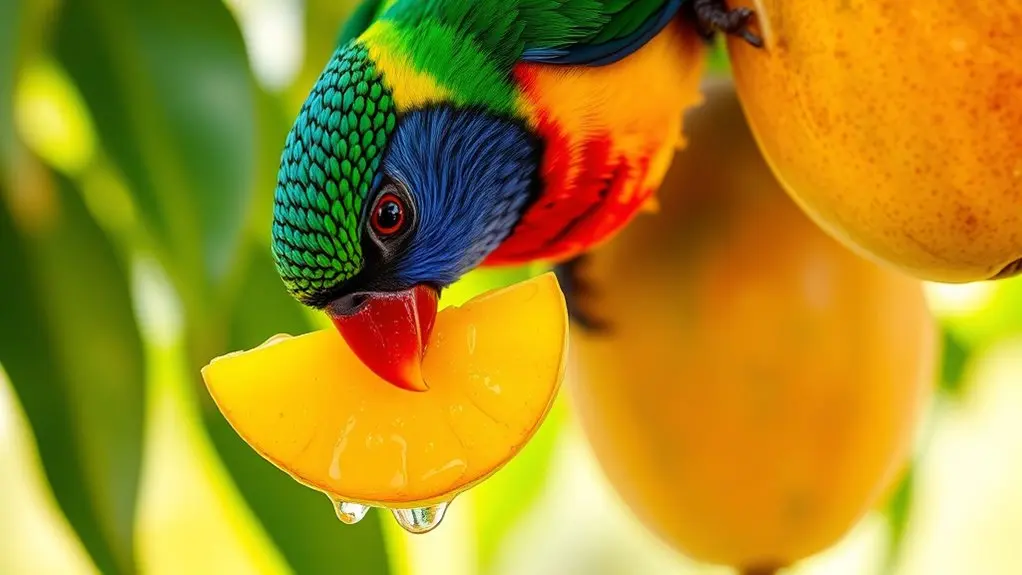
How can you safely include mango in your bird’s diet? First, understand that mango tree growth influences the seasonal availability of fresh fruit. This often coincides with bird migration patterns when wild birds naturally consume mangoes.
To feed your bird safely, always wash the mango thoroughly to eliminate pesticides and chemicals, especially if it’s not organic. Peel the skin and remove the pit completely to avoid toxins.
Serve mango in moderate portions, no more than 10-15% of their daily intake, to prevent digestive upset.
Avoid dried mango or fruit with added sugars and preservatives, as these can harm your bird.
Nutritional Benefits of Mango for Birds
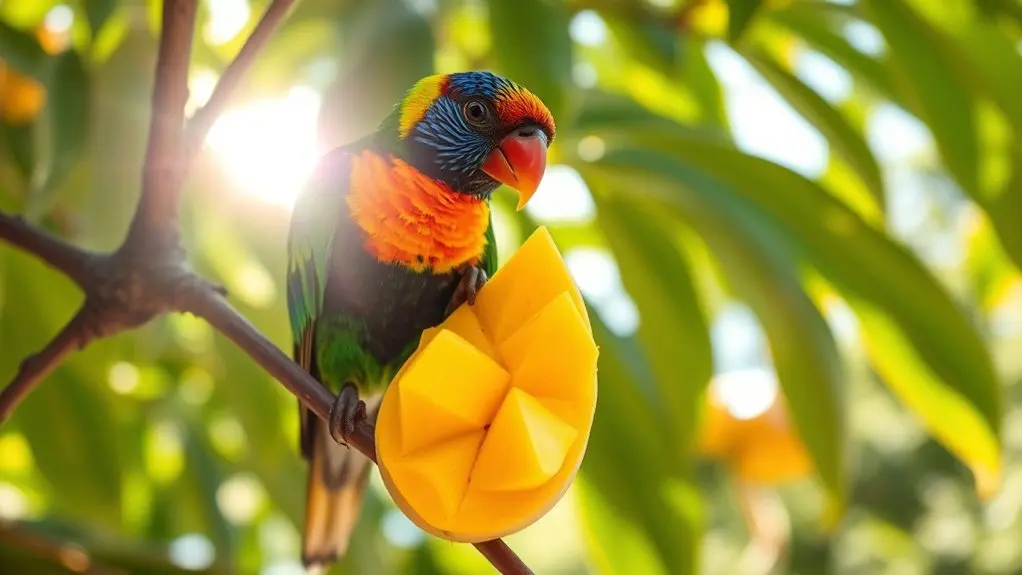
Including mango in your bird’s diet provides more than just a tasty treat; it delivers a range of valuable nutrients that support avian health. Mango is rich in Vitamin A, which is essential for maintaining healthy vision, feather quality, and immune function. The antioxidants in mango help reduce oxidative stress, which can boost your bird’s overall cellular health and longevity.
Plus, mango contains dietary fiber that promotes efficient digestion and supports gastrointestinal health by regulating gut motility. The natural sugars in ripe mango offer a quick energy boost, which is especially beneficial for active birds.
To get the most out of these nutritional benefits, make sure the mango is fully ripened and free from pesticides or chemicals. Adding mango thoughtfully to your bird’s diet can enhance its vitality and well-being with these essential nutrients.
How to Prepare Mango for Your Bird
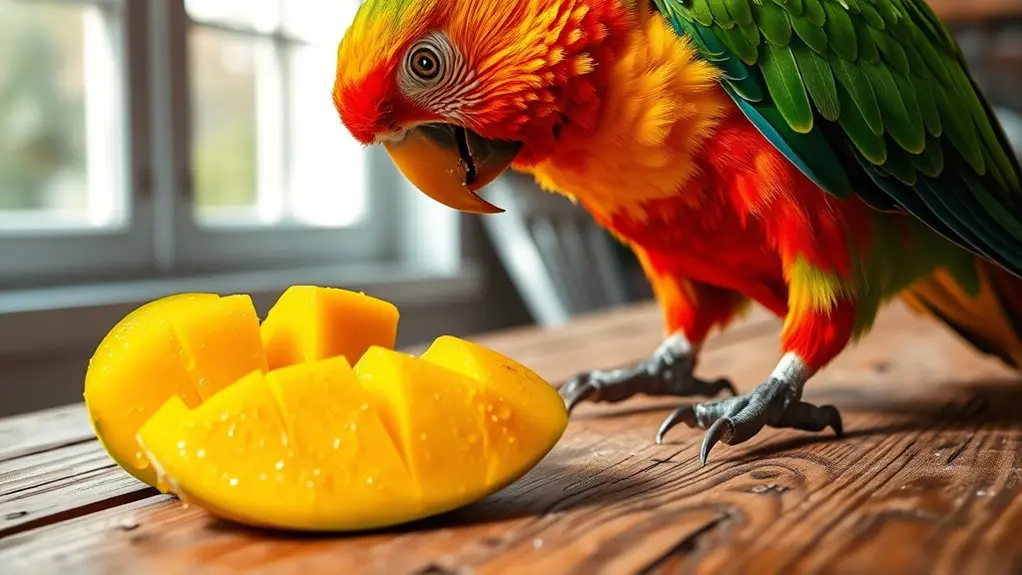
Before offering mango to your bird, you should thoroughly wash the fruit to remove any pesticides or chemical residues that could harm your pet.
Thoroughly wash mangoes to eliminate pesticides and protect your bird’s health before feeding.
Select mangoes exhibiting ideal ripeness, as underripe fruit may cause digestive upset.
After washing, peel the mango to eliminate potential irritants present in the skin, especially if the fruit isn’t organic.
Carefully remove the pit to avoid choking hazards and toxic exposure.
Cut the ripe mango into small, manageable pieces tailored to your bird’s size to make eating easier and safer.
Serve fresh mango in appropriate portions, and keep an eye on how often you feed it to prevent overfeeding and digestive issues.
Make sure to remove any uneaten mango within 2-3 hours to minimize bacterial growth.
This helps keep your bird healthy and safe during feeding sessions.
How Much Mango Should You Give Your Bird?
You should limit mango to about 10-15% of your bird’s daily diet to avoid any digestive problems. The portion size really depends on your bird’s species and size.
For example, macaws can handle 1-2 tablespoons, while finches only need small cubes. Just be sure to adjust the amount carefully.
Also, it’s a good idea to remove any uneaten fruit after a few hours to keep it fresh and safe for your feathered friend.
Appropriate Portion Sizes
Although mango is a nutritious treat, you should limit its portion size to guarantee your bird’s health. Proper mango ripeness ensures ideal nutrient availability and reduces digestive upset. Following bird feeding etiquette, offer mango in small, manageable pieces to avoid choking.
Mango should comprise only 10-15% of your bird’s daily diet, tailored to its species and size. Remove uneaten mango after 2-3 hours to prevent bacterial growth.
| Bird Size | Portion Size | Serving Style |
|---|---|---|
| Large Parrots | 1-2 tablespoons | Sliced or diced |
| Medium Birds | 1 tablespoon | Small cubes |
| Small Birds | 1-2 small cubes | Tiny cubes |
Careful portioning supports balanced nutrition and safety, reflecting responsible bird feeding etiquette. Just keep these tips in mind, and your feathered friend will thank you!
Species-Specific Feeding
Proper portioning of mango varies markedly depending on your bird’s species and size, reflecting differences in metabolism and dietary needs. When feeding mango, consider mango ripeness and your bird’s dietary preferences to guarantee safety and nutrition.
Follow these guidelines:
Large parrots like macaws and cockatoos can consume 1-2 tablespoons of ripe mango daily, while smaller birds require only 1-2 small cubes.
Limit mango to 10-15% of the daily diet to avoid overfeeding and maintain nutritional balance.
Serve mango in bite-sized pieces to reduce choking hazards and remove leftovers within 2-3 hours to prevent bacterial growth.
Risks and Precautions When Feeding Mango
When you feed mango to your bird, make sure to remove the pit completely to avoid any choking hazards or exposure to toxins.
It’s really important to peel the mango and wash it thoroughly to get rid of any pesticide residues that might irritate your bird.
Also, keep an eye on the portion size because too much mango can upset your bird’s digestion.
Just a little bit goes a long way!
Mango Pit Dangers
Since mango pits contain compounds toxic to birds, you need to make sure to remove them completely before offering mango. The toxicity comes from chemical compounds in the seed that can harm a bird’s gastrointestinal tract.
Also, the pit’s size and hardness can be a choking hazard for your bird. So, it’s really important to be careful.
To keep your bird safe, follow these precautions:
- Remove the mango pit completely. Never let your bird get even small fragments because they can cause blockages or damage in the gut.
- Don’t give your bird any part of the hard seed. Chewing or swallowing it might lead to dental injuries or digestive problems.
- Keep an eye on your bird when feeding mango to make sure it doesn’t accidentally swallow any pieces of the pit.
Skin and Pesticides
After removing the mango pit to prevent toxicity and choking hazards, you should also think about the risks that come with the mango skin. Mango peel can hold pesticide residues that are harmful to birds if they eat it. Even organic mangoes need peeling to cut down on exposure to leftover chemicals.
Washing the mango thoroughly helps get rid of surface pesticides, but peeling gives that extra layer of protection. It’s safest to feed only the flesh, which not only avoids risks but also provides the best nutritional benefit.
| Aspect | Risk Level | Precaution |
|---|---|---|
| Mango peel | High | Peel before feeding |
| Pesticide residues | Toxic to birds | Wash thoroughly, then peel |
| Organic mango skin | Moderate | Still peel for safety |
| Mango flesh | Safe | Feed after pit and skin removal |
| Nutritional value | Flesh > Skin | Focus on flesh feeding |
Portion Control Importance
Although mango offers valuable nutrients, you must feed it in moderation to prevent digestive upset and excessive weight gain because of its high sugar content. Proper portion sizes and feeding frequency are really important to keeping your bird healthy.
Here are some essential guidelines to help you out: Adjust portion sizes based on your bird species. Small birds can have 1-2 small mango cubes. Larger parrots shouldn’t get more than 1-2 tablespoons daily.
Make sure to serve mango that’s peeled and cut into pieces that fit your bird’s size. Also, always remove pits and skin to avoid choking hazards and pesticide exposure.
Don’t forget to take away any uneaten mango after 2-3 hours. This helps prevent bacterial growth and spoilage, which could harm your bird.
Keep an eye on your bird after feeding mango to catch any adverse reactions early. That way, you can step in quickly if something doesn’t seem right, helping your bird stay happy and healthy.
Incorporating Mango Safely Into Your Bird’s Diet
When you introduce mango into your bird’s diet, you should always peel the fruit thoroughly to eliminate pesticide residues and minimize skin irritation. After mango harvesting, verify the fruit is fresh and ripe, as unripe mango can upset your bird’s digestive system.
Wash the mango well before peeling to further reduce chemical exposure.
Cut mango into appropriately sized pieces to suit your bird’s dietary needs, removing the pit completely to avoid choking hazards and toxins.
Serve mango as a treat or supplement, limiting it to 10-15% of the daily diet to maintain nutritional balance.
Remove any uneaten mango within 2-3 hours to prevent bacterial growth.
Observe your bird closely after feeding to detect any adverse reactions.
It’s always best to prioritize moderation and safety when incorporating mango into their diet.
This way, your feathered friend can enjoy this tasty treat without any problems.
Wild Birds Feeding on Mango Trees
Beyond domestic settings, mango trees play a significant role in supporting wild bird populations. During mango harvesting seasons, wild birds such as red-winged parrots, lorikeets, and bowerbirds rely heavily on mangoes for nutrition.
You’ll notice these birds feeding at specific times, mainly early morning or late afternoon, maximizing the fruit’s availability.
Some species prefer unripe mangoes, especially those high on the tree, while others consume the soft, ripe flesh. Fruit bats often knock down mangoes, making them accessible to ground-feeding birds.
Mango trees provide essential energy-rich food during bird migration, supporting long-distance travel.
Understanding this interaction highlights how mango trees are crucial in sustaining diverse wild bird species throughout their life cycles. It’s pretty amazing how these trees support so many birds all year round!
Why Mango Seeds and Skin Matter for Bird Safety
Because mango seeds are hard and contain potential toxins, you should never let birds consume them to avoid choking hazards and toxic exposure. Seed toxicity poses serious health risks, as toxins can leach from the seed if ingested. Completely removing the mango pit is vital to guarantee bird safety.
Additionally, mango skin can compromise skin safety due to pesticide residues or natural irritants. If the mango isn’t organic, peeling the fruit before feeding is essential. Thoroughly washing mangoes further reduces chemical residues that might harm birds.
Although mango leaves are non-toxic, they offer little nutritional value and aren’t recommended as food.
Frequently Asked Questions
Can Mango Scent Attract Unwanted Pests to Bird Feeders?
Yes, mango scent can cause pest attraction at bird feeders. When fruit spoilage occurs, it releases strong aromas that draw ants, flies, and wasps. This can increase the risks of infestation and disrupt the feeding environment for birds.
It’s something to watch out for if you’re using mango or other fruit-scented feeders. Keeping the area clean and removing spoiled fruit quickly can help keep those unwanted pests away. That way, the birds get to enjoy the feeder without any interruptions.
Do Different Bird Species Prefer Mango Over Other Fruits?
You’ll find bird dietary habits influence fruit preferences. Parrots favor mango for its soft flesh and vitamins, while nectar-feeders prefer flowers.
Smaller birds enjoy mango’s sweetness, but preferences vary based on species’ feeding adaptations and nutritional needs. It really depends on what each bird is built to eat and what their bodies need to stay healthy.
How Does Mango Consumption Affect Bird Breeding Behaviors?
You’ll find mango nutritional benefits support bird breeding behaviors by enhancing hormone regulation and energy levels. However, you shouldn’t overfeed mango, as excess sugar can impair bird digestive health and disrupt reproductive success.
It’s all about balance when feeding mango to birds. A little goes a long way in keeping them healthy and in good breeding condition. Just remember, too much sweetness isn’t always a good thing for their system.
Are There Specific Times of Year Mango Is Best for Birds?
You should offer mango during peak mango ripening in late spring to summer, aligning with bird migration patterns. This timing guarantees birds receive ideal nutrients and energy.
It supports migration and breeding through fresh, nutrient-rich fruit intake. Giving mango at these times really helps birds stay healthy and strong. So, it’s a win-win for both you and the birds!
Can Mango Juice Be Used as a Bird Training Reward?
You can use mango juice as a bird training reward if it’s natural, diluted, and unsweetened. Mango’s nutritional benefits support bird dietary needs. Just be sure to avoid excess sugar to prevent health issues like obesity or digestive upset.
Conclusion
Feeding mango to your bird is like offering a sunbeam. It’s bright and nourishing but needs careful handling. You can safely share this fruit by peeling it and removing the seeds.
This way, your feathered friend gets the vitamins and antioxidants without any risk. Just remember, moderation is key. Too much mango can upset their digestive balance.
By following these simple precautions, you’ll enrich your bird’s diet thoughtfully. This supports their health while keeping them safe from potential hazards.