
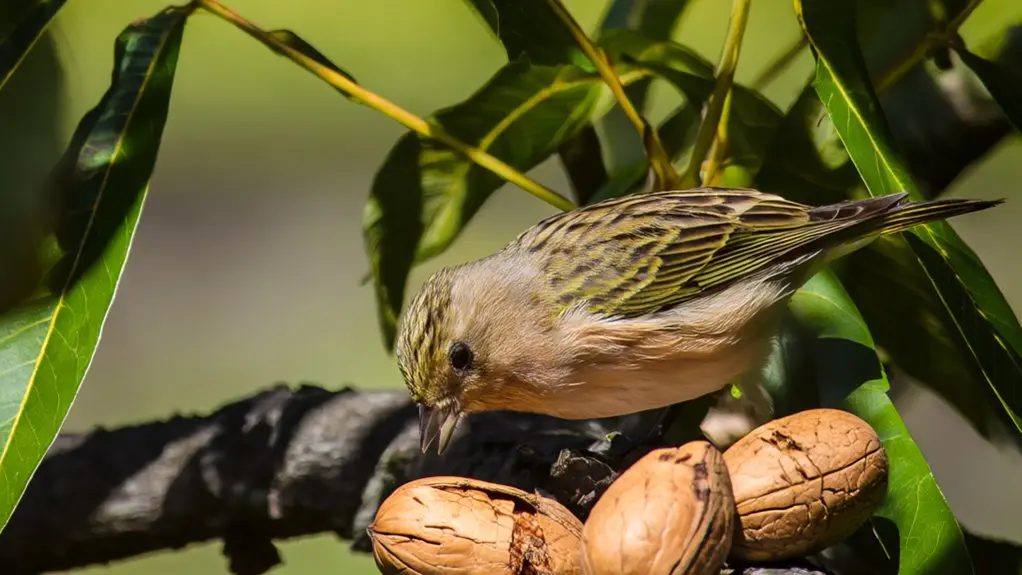
You can safely offer pecans to many backyard birds since these nuts are rich in fats and nutrients essential for energy, especially in colder months. Birds like woodpeckers, jays, and cardinals actively consume pecans, cracking them open or storing pieces.
To feed pecans responsibly, crush or chop them and use feeders that limit squirrel access while ensuring freshness through proper storage. If you want to support birds effectively, understanding feeding techniques and precautions is key.
Can Birds Eat Pecans? Why They Love This Nut
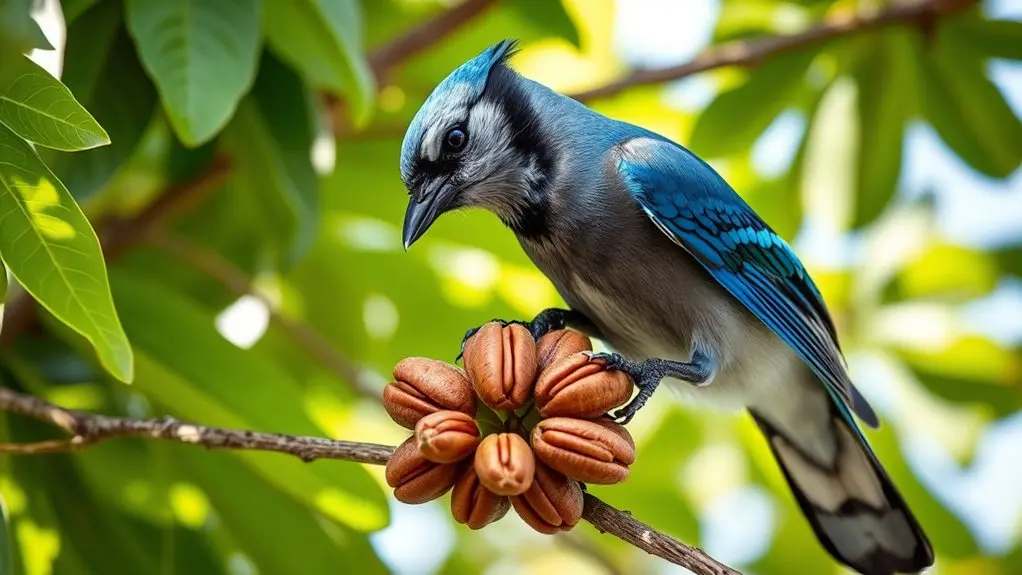
Although many nuts attract wildlife, pecans stand out as a favorite among birds like woodpeckers, jays, and chickadees because of their high-fat content. This fat provides essential energy that birds really need. You’ll often see these birds showing clear preferences for pecans, ranking them just behind black walnuts in popularity.
Pecans are a top choice for birds like woodpeckers and jays due to their rich, energy-packed fats.
The nutritional benefits of pecans are pretty impressive. They supply crucial fats that support birds’ metabolic needs, especially when the weather turns colder.
In fact, birds sometimes even risk predation to get to these nuts, which shows just how valuable they are.
When you’re feeding birds, crushed pecans work best. They help reduce competition from squirrels and are easier for small birds to eat.
Knowing what birds prefer and understanding the nutritional value of pecans can help you provide a natural, energy-rich food source that wild birds really benefit from.
Birds That Love Eating Pecans: Common Species
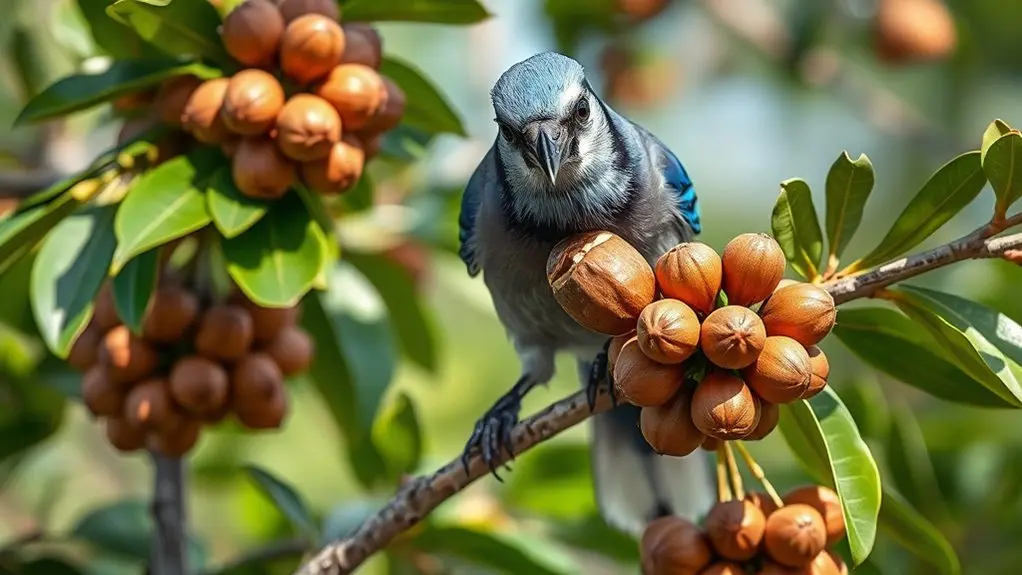
When you observe birds feeding on pecans, you’ll notice certain species dominate this activity due to their specialized behaviors and dietary needs. Woodpeckers and jays, with their strong beaks, crack open pecans to access the high-fat interior. This is essential during bird migration for energy.
Nuthatches and chickadees often stash pecan pieces, showing off their food storage habits. The vibrant feather colors of cardinals and blue jays really stand out, especially since they rely on pecans more in the colder months.
Pecans rank as the second favorite nut among wild birds, which says a lot about how important they’re nutritionally.
- Woodpeckers and blue jays crack whole pecans.
- Nuthatches and chickadees store pecan pieces.
- Cardinals rely on pecans during winter.
- Feather coloration varies among these species.
- Bird migration increases pecan consumption.
How to Feed Pecans Without Attracting Squirrels
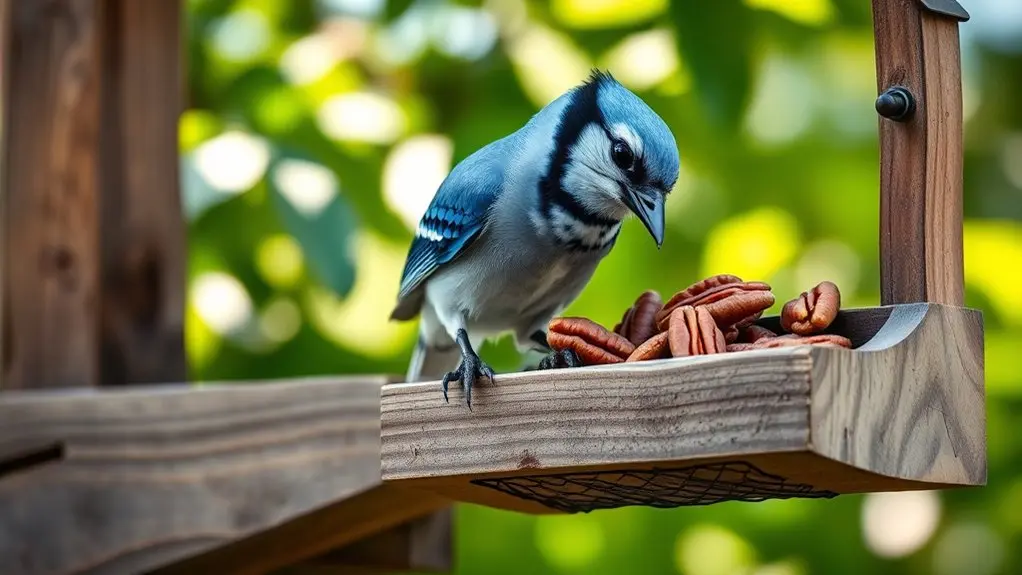
If you want to keep squirrels from raiding your pecans, try offering crushed pecans instead of whole ones. Squirrels don’t find crushed nuts as appealing, so they’re less likely to show up.
Also, avoid throwing pecans on the ground because that tends to attract more squirrels and creates competition with the birds you want to feed.
A good trick is to use platform feeders that are designed to keep mammals out. This way, the pecans stay mostly for the birds, and you won’t have to worry about those pesky squirrels stealing the snacks.
Crushed Pecans Preferred
Since whole pecans tend to attract squirrels, feeding birds with crushed pecans offers a more targeted approach that limits unwanted visitors. Crushing pecans helps birds digest them better by breaking down hard shells and making nutrients easier to access.
This method also cuts down on squirrel nut harvesting because smaller pieces aren’t as appealing for hoarding.
You can mix crushed pecans into suet cakes or seed blends to keep squirrels away while giving birds energy-dense food they love. Just be sure to store pre-crushed pecans properly to keep them fresh and prevent spoilage. That way, you’re making sure the food stays safe and tasty for the birds.
- Crushed pecans reduce squirrel attraction compared to whole nuts
- Smaller pieces improve nutrient absorption during bird digestion
- Limits squirrel nut harvesting by decreasing hoarding appeal
- Ideal for mixing into suet cakes or seed blends
- Proper storage preserves freshness and food safety
Avoid Ground Scattering
Although feeding pecans directly on the ground may seem convenient, it considerably increases the chances of attracting squirrels that hoard and deplete the supply quickly. Ground scattering encourages squirrels to access, store, and consume pecans rapidly, undermining your efforts to feed birds.
To enhance squirrel prevention, avoid scattering whole pecans on the ground. Instead, crush or chop pecans before offering them, which deters squirrels from hoarding large quantities.
Additionally, promptly cleaning leftover shells and uneaten nuts minimizes ground scent trails that attract squirrels. By reducing ground scattering and maintaining a clean feeding area, you create an environment favoring birds over squirrels.
This strategy effectively balances feeding pecans to birds while limiting squirrel interference and guarantees a more sustainable and controlled feeding experience. It’s a simple change that makes a big difference in who gets to enjoy your pecans.
Give it a try and see how it works for you!
Use Platform Feeders
Reducing ground scattering sets the stage for more controlled feeding methods, such as using platform feeders. These feeders support birds during migration and nesting habits by providing accessible nutrition without encouraging ground foraging that attracts squirrels.
To minimize squirrel interference, offer crushed or chopped pecans instead of whole nuts.
Position feeders in open areas with little cover to discourage squirrel approach. You can also use squirrel-proof or weight-activated feeders.
These allow small birds to feed freely while blocking squirrels.
Freezing pecans before use preserves freshness and prevents rancidity, ensuring safe consumption.
- Crushed pecans ease consumption for small birds
- Open placement limits squirrel access
- Weight-activated feeders selectively permit bird feeding
- Frozen storage maintains nut quality
- Controlled feeding supports migratory and nesting energy needs
Best Ways to Offer Pecans to Backyard Birds
When you’re offering pecans to backyard birds, it’s best to go with crushed or chopped nuts. This makes it easier for the birds to eat and helps keep those pesky squirrels away.
Whole pecans tend to attract bigger animals, so cracking them beforehand is a smart move—it lets the smaller birds feed safely without competition.
Plus, if you store your pecans in the freezer, they stay fresh longer and won’t spoil, especially when the weather is warm. That way, your feathered friends always have a tasty, fresh treat to enjoy!
Crushed Versus Whole
Since feeding backyard birds requires balancing accessibility and deterrence, choosing between crushed and whole pecans considerably affects which species you’ll attract and how effectively they can consume the nuts. Crushed pecans eliminate the need for nut cracking and shell removal, making them ideal for small birds like chickadees and finches.
Whole pecans, however, invite larger birds capable of shell removal but also risk squirrel attraction. Consider these points:
- Crushed pecans simplify feeding for small birds, increasing consumption efficiency.
- Whole pecans can be scattered or placed in platform feeders to attract larger species.
- Nut cracking by birds is necessary for accessing whole pecan kernels.
- Using crushed pecans reduces feeder damage caused by large birds.
- Proper storage in the freezer preserves pecan quality for both forms.
Choose based on your target bird species and feeder design. It really depends on what kinds of birds you want to see and how you set up your feeder.
Avoiding Squirrel Attraction
Choosing between crushed and whole pecans directly influences not only which bird species visit your feeder but also the likelihood of attracting squirrels.
Whole pecans have tough shells that squirrels can easily carry off. They also have a keen sense of smell, so they quickly detect whole nuts nearby.
Crushed pecans cut down on this problem because they’re less portable and don’t seem like intact food to squirrels.
To keep squirrels away even more, try putting pecans in enclosed or specialized feeders that limit their access.
Also, avoid scattering whole nuts on the ground. This tends to attract squirrels and bigger birds like crows, which can scare off the smaller backyard birds you want to see.
Using feeders that take advantage of squirrels’ weaker scent detection, while keeping in mind how tough pecan shells are, helps you feed songbirds without encouraging unwanted squirrel visits.
It’s all about finding the right balance so the birds benefit and the squirrels don’t take over.
Storage And Freshness
To preserve pecans’ nutritional value and appeal for backyard birds, you need to store them properly and monitor their condition regularly. Improper storage can lead to rancidity or mold, which can be risky, especially if birds or people nearby have nut allergies. You also want to consider any dietary restrictions when introducing pecans to your bird feeders.
Here’s how to optimize storage and freshness:
Store pecans in the freezer to prevent spoilage and keep their nutrients intact. Offering cracked or crushed pecans makes them easier for birds to eat and can help deter squirrels.
Keep pecans dry and avoid any damp conditions to stop mold from growing. Buying pre-crushed pecans from reputable sources is a good idea to ensure quality.
Make sure to inspect pecans regularly for any signs of discoloration or rancidity before feeding them to your birds. These simple steps help guarantee safe, nutritious treats for your backyard visitors.
How to Store Pecans to Keep Them Fresh for Birds
Although pecans are a nutritious treat for birds, improper storage can lead to rancidity and mold growth, which can compromise their safety and quality.
Pecans are healthy for birds, but poor storage can cause rancidity and mold, affecting their quality and safety.
For the best nut preservation, you should store pecans in an airtight container and place them in the freezer. This method keeps heat and moisture away, helping pecans stay fresh for up to a year.
If freezing isn’t an option, just keep the pecans in a cool, dark place or refrigerate them to extend their shelf life.
You’ll want to avoid leaving pecans out at room temperature, especially if it’s warm or humid, since that encourages mold growth.
Make it a habit to regularly check pecans for any signs of spoilage, like musty odors or mold, before feeding them to your birds.
Following these simple tips will help keep pecans fresh, safe, and nutritious for your feathered friends.
Mistakes to Avoid When Feeding Pecans to Birds
When feeding pecans to birds, you must avoid several common mistakes that can harm both the birds and your local ecosystem. Improper pecan harvesting and feeding practices can disrupt bird migration patterns and local wildlife balance. Here are key points to contemplate:
Avoid scattering whole, unshelled pecans on the ground to prevent attracting squirrels and aggressive birds like crows. Never offer whole pecans to small birds; crack or crush them to reduce choking risks.
Store pecans properly in the freezer to prevent rancidity, especially during warm weather.
Refrain from feeding pecans exhibiting mold, mustiness, or off smells to protect birds from toxins. Don’t rely solely on pecans; provide a varied diet to avoid nutritional deficiencies during bird migration.
These practices ensure safe, nutritious feeding aligned with natural behaviors. Following them can help keep the birds healthy and your local ecosystem balanced.
Frequently Asked Questions
Can Pecans Benefit Baby Birds or Only Adults?
You’ll find pecans benefit baby birds when chopped during pecan harvesting, aiding energy for bird foraging. Properly prepared pecans support growth, but only in manageable pieces, ensuring safe consumption and ideal nutrition for nestlings.
It’s important to chop them up because whole pecans can be tough for babies to handle. When broken into smaller bits, pecans become a great energy source that helps little birds gain strength. So, yes, pecans can help baby birds too, not just adults!
Are Pecans Safe for Birds With Dietary Allergies?
You shouldn’t give pecans to birds with dietary allergies without caution. Even pecan shells in bird seed mixtures might trigger reactions. Always introduce pecans gradually and consult an avian vet to guarantee safety and monitor responses carefully.
It’s better to be safe than sorry when it comes to your bird’s health. Taking these steps helps avoid any nasty surprises and keeps your feathered friend happy and healthy.
How Do Pecans Compare to Other Nuts for Bird Nutrition?
You’ll find pecans offer higher fat and protein than many nuts, aiding energy without nut toxicity if fresh.
Proper nut harvesting prevents rancidity, making pecans a superior nutritional choice compared to walnuts or almonds for birds.
Can Feeding Pecans Influence Bird Migration Patterns?
You’ll find that feeding pecans can alter migration triggers, as studies show birds consuming high-fat nuts like pecans may change timing by up to 20%. Their nut preferences directly impact energy storage and migration patterns.
It’s pretty interesting how what birds eat can shift when they decide to move. So, offering pecans might actually nudge their internal clocks a bit. This kind of change can have a real effect on their journey.
Do Pecans Attract Any Bird Predators or Pests?
Yes, pecan shelling can attract pests like squirrels and raccoons during bird foraging, increasing predator presence. This means you might see more of these critters around your feeding area.
This heightened activity around feeders may indirectly expose smaller birds to predation risks, so it’s something to keep in mind. You’ll want to manage pecan feeding carefully to keep the little birds safe.
Conclusion
You can definitely share pecans with your feathered friends, but doing it right matters. Imagine you set out pecans in a squirrel-proof feeder and noticed blue jays returning daily. They thrive on this nutrient-rich snack without competition.
This shows how careful feeding supports bird health and behavior. By understanding which species enjoy pecans and managing storage and presentation, you create a balanced environment that benefits birds without unintended consequences.