
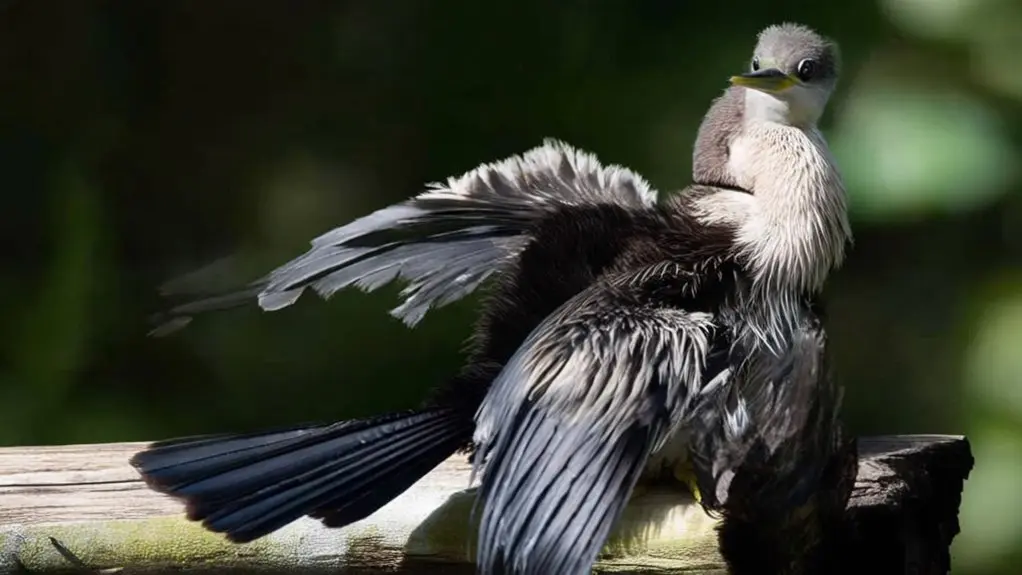
You can help birds recover from broken wings, but full healing depends on fracture severity, proper bone alignment, and professional care. Small fractures might heal naturally, yet improper healing often impairs feather regrowth essential for flight.
Complex injuries or internal damage reduce recovery chances markedly. Professional treatment supports proper healing, reduces pain, and restores mobility, increasing survival.
Understanding causes, treatment, and recovery factors reveals why some birds regain flight while others face lasting impairment. It all comes down to the right care and the nature of the injury.
Can Birds Heal Broken Wings on Their Own?
Although some small, simple fractures in young or healthy birds might heal on their own, most birds won’t recover from broken wings without professional care. You should understand that natural healing rarely achieves proper bone alignment or stabilization, which is essential for restoring flight.
Without medical intervention, improper healing can impair feather replacement, necessary for aerodynamic function. This disruption also affects nesting behavior, as flight ability is critical for foraging and protecting offspring.
Attempting to let a bird recover unaided often results in chronic pain or permanent disability, reducing survival chances. Wildlife rehabilitators use splints and X-rays to guarantee precise bone repair, promoting correct feather regrowth and allowing the bird to resume normal behaviors like nesting.
What Causes Broken Wings in Birds?
Understanding how birds sustain wing fractures helps clarify why professional care is necessary for recovery. You’ll find that broken wings often result from collisions with windows, vehicles, or hard surfaces. Predation or attacks by cats and other animals also cause fractures.
Bird wing fractures commonly stem from collisions or animal attacks, underscoring the need for expert care.
Additionally, young birds may suffer injuries from falls out of nests or from high perches. Sudden impacts during flight, such as hitting power lines or branches, further contribute to wing damage.
Human-related accidents like trapping or mishandling add to these causes.
To recover, birds need more than just bone healing. Feather replacement and muscle repair are essential for restoring flight function.
Recognizing these causes helps you appreciate the complexity involved in treating broken wings effectively.
How Serious Are Different Types of Broken Wing Fractures?
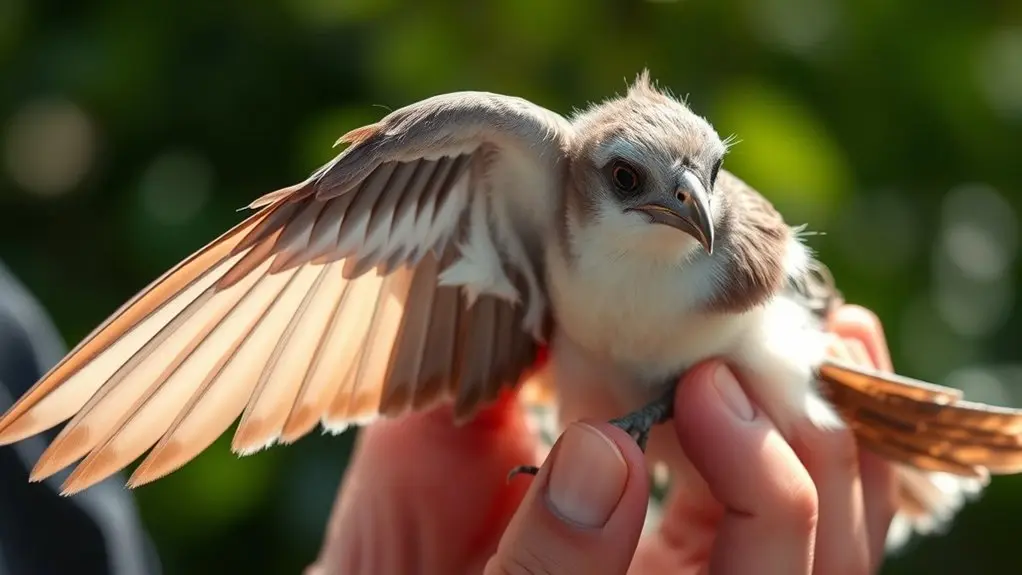
When you examine broken wing fractures in birds, you’ll find that their seriousness depends on factors like bone alignment, fracture location, and the extent of tissue damage.
Simple, non-displaced fractures with proper alignment often heal faster and pose minimal risk to feather damage or muscle injuries.
However, displaced or compound fractures, where bone fragments pierce the skin, increase the risks of infection and extensive soft tissue trauma.
Fractures involving major wing bones such as the humerus or radius vary in recovery time.
Internal fractures near the shoulder or chest usually cause prolonged impairment.
Muscle injuries that come with these fractures can further hinder mobility.
Feather damage also makes it harder for the bird to fly after recovery.
Ultimately, the complexity of the fracture dictates whether full restoration is possible or if permanent impairment will persist.
It really depends on how severe and complicated the break is.
Benefits of Professional Care for Broken Wings
The complexity of a bird’s wing fracture often demands specialized intervention to optimize healing and functional recovery. When you rely on professional care, trained rehabilitators use research-based splinting and medication techniques that promote proper bone alignment and reduce infection risk. Their expertise also enables early detection of internal injuries, which can impede healing if unnoticed.
Additionally, professionals facilitate feather replacement, which is vital for flight restoration and insulation. Without this, a bird’s nesting behavior may suffer, affecting reproductive success.
Studies confirm that birds treated by licensed rehabilitators show higher survival and release rates than those receiving informal care.
Birds under licensed rehabilitators’ care have significantly better survival and release outcomes than those given informal treatment.
By entrusting a broken-winged bird to experts, you considerably increase its chances of regaining full mobility and returning to natural behaviors essential for survival. It really makes a difference to have someone who knows exactly what they’re doing.
How Wildlife Rehabilitators Treat Broken Wings
Since proper treatment is essential for recovery, wildlife rehabilitators start by thoroughly evaluating the bird’s wing to determine the fracture’s location and severity. They use radiographs to guide the application of immobilizing splints or bandages, sometimes reinforced with toothpicks for stability. You’ll notice they minimize handling to reduce stress, provide pain relief, and guarantee controlled nutrition.
Feather replacement is monitored closely, as regrowth impacts flight and nesting behavior post-recovery. Success hinges on injury severity, treatment timing, and adherence to protocols.
| Treatment Step | Purpose | Tools/Methods |
|---|---|---|
| Evaluation | Locate fracture | Radiographs |
| Immobilization | Stabilize wing | Splints, bandages |
| Pain management | Reduce discomfort | Medication |
| Nutrition control | Support healing | Specialized diet |
| Monitoring | Feather regrowth, behavior | Observational reports |
What to Do If You Find a Bird With a Broken Wing
Proper care from wildlife rehabilitators especially improves recovery chances for birds with broken wings, but immediate steps you take upon finding an injured bird can influence its outcome.
First, gently secure the bird using a cloth or gloves to prevent further injury. Place it in a ventilated box lined with soft materials, keeping the environment dark, quiet, and warm.
Avoid attempting to straighten the wing or offering food and water, as improper handling risks additional harm.
Promptly contact a licensed wildlife rehabilitator, since specialized care is essential for proper bone healing and subsequent feather replacement. This care also supports natural nesting behavior, which is vital for the bird’s survival and successful reintegration into the wild.
Your timely, careful actions greatly impact recovery success. So, take a deep breath and handle the bird gently—you’re already making a big difference.
Common Mistakes When Helping Injured Birds
Although your intentions may be good, mishandling injured birds often leads to unintended consequences that worsen their condition. When you handle a bird without proper training, you risk causing additional stress or making a broken wing worse. Improper restraint can cause internal injuries, and incorrect feeding methods might lead to choking or drowning.
Trying to replace feathers or bandage a bird without expertise can interfere with its natural nesting behavior and slow down recovery. Birds need precise feather replacement for flight, so messing with this can permanently affect their ability to forage and reproduce.
Also, if you don’t seek professional help quickly, the bird’s chances of healing go down. That’s why it’s so important to recognize these mistakes. Your role should really be about minimizing harm and getting wildlife specialists involved, since they understand bird physiology and behavior.
Signs a Bird May Not Recover From a Broken Wing
When you observe a bird with a broken wing, certain signs can clearly indicate whether recovery is unlikely. If the bird can’t lift the wing or move its feathers, especially during feather replacement phases, this immobility suggests severe muscular or neurological damage.
Persistent pain, visible bleeding, or deformities at the injury site further imply non-recoverable trauma.
X-rays revealing multiple fractures or internal damage beyond repair confirm poor prognosis.
Additionally, if the bird fails to resume normal nesting behavior or can’t perch and fly despite treatment, recovery chances diminish considerably.
Prolonged stress exposure and inability to regain wing mobility also point to irreversible injury.
Monitoring these factors helps you assess whether the bird’s wing can heal or if permanent impairment is inevitable. It’s important to keep an eye on these signs to know when a bird might need more specialized care or if sadly, it won’t recover.
How to Support a Bird’s Recovery After Treatment
To support a bird’s recovery after treatment, you need to create an environment that minimizes stress and encourages healing. Provide a quiet, dark, and warm space with soft bedding to promote feather regeneration and reduce energy expenditure.
Create a calm, warm, and dark space with soft bedding to support bird healing and feather regrowth.
Observe nesting behavior closely; allowing the bird to engage in this natural activity can support psychological well-being during recovery.
Keep the enclosure secure and limit handling to prevent injury. Avoid loud noises or predators that may trigger stress responses.
Following rehabilitation guidelines carefully for feeding, hydration, and activity restrictions will help maximize bone and tissue repair.
Make sure to regularly monitor the bird for signs of progress or any complications. Work closely with professionals to adjust care protocols as needed.
This systematic approach fosters ideal healing while supporting essential physiological processes like feather regrowth and behavioral recovery.
When Can’t Birds Fly After a Broken Wing?
You won’t see a bird flying until its wing fracture heals. This healing process can take weeks, depending on how severe the damage is.
Sometimes, complex breaks or internal injuries make it hard for the bird to fully recover its ability to fly.
It’s important to remember that if the treatment isn’t done properly, it can cause permanent damage. That’s why professional care is essential for any chance the bird has at regaining flight.
Severity Of Wing Damage
Although some birds can recover from minor wing fractures, severe damage often prevents flight restoration. When multiple bones are shattered or the primary bones like the humerus or radius/ulna suffer extensive fractures, the chances of regaining flight diminish considerably.
Damage to wing musculature or the shoulder joint further complicates recovery, as these structures are essential for controlling wing movement and generating lift. Even if the bones heal, extensive soft tissue injuries, such as torn ligaments and tendons, can restrict mobility and prevent proper wing function.
Feather damage also plays a role. Feathers need to remain intact and aligned for effective aerodynamics.
Healing Time Expectations
The extent of wing damage directly impacts how long a bird remains unable to fly after injury. Healing time varies widely, depending on fracture location and severity. You’ll notice that wing flexibility and feather regeneration are vital during recovery.
Typically, birds can’t fly until bone healing and soft tissue repair restore function. Keep in mind:
- Minor fractures heal in several weeks, allowing gradual wing motion.
- Severe breaks near the shoulder or keel bone may require months or might never fully heal.
- Post-treatment immobilization and veterinary care influence recovery duration and success.
Even after bones mend, reduced wing flexibility or incomplete feather regeneration can delay flight resumption. Birds often remain grounded until strength and coordination return. This ensures a safer passage back to flight.
Understanding these timelines helps you gauge realistic healing expectations.
Impact On Flight Ability
When exactly a bird can fly again after breaking its wing depends a lot on how bad the fracture is and where it’s located. Right after the injury, birds usually can’t fly because of pain and damage to their wing structure. They need proper medical care, which might include immobilization or even surgery, to start healing. This recovery can take anywhere from weeks to months.
Even once the bone has healed, the bird might still struggle to fly if the wing doesn’t heal perfectly or if there’s some deformity. You’ll probably notice the bird perching differently as it gets used to its limited movement.
Growing new feathers is also super important because they help restore the wing’s shape and aerodynamics, which are key for flying.
For more complicated breaks, birds often need special rehab to get back to flying. And sometimes, despite all efforts, a bird might never fully fly again. In those cases, lifelong care might be needed, or humane euthanasia might be considered to prevent suffering.
Frequently Asked Questions
What Types of Birds Are Most Likely to Survive a Wing Fracture?
You’ll find small, hardy birds like sparrows most likely to survive wing fractures because their rapid feather replacement and resilient flight capability support healing. Young birds and species with simple breaks also recover better, regaining flight effectively.
It’s kind of fascinating how their bodies just bounce back faster. These birds don’t just heal; they get back to flying in no time. So, when it comes to wing fractures, size and age really do matter.
How Long Does It Typically Take for a Bird’s Wing to Heal?
Wondering how long it takes for a bird’s wing to heal? Typically, it’s 4 to 8 weeks, including feather regrowth and flight rehabilitation.
You’ll need patience and careful care to guarantee proper recovery and strength regain. It’s a process, but with the right attention, birds can get back to flying strong.
Can a Bird With a Healed Wing Return to Its Normal Activities?
Yes, once feather regeneration completes, you’ll guide the bird through flight rehabilitation to rebuild strength. Although many regain most abilities, some show reduced agility or stamina.
It’s important to keep a close eye on the bird to make sure it can safely return to its normal activities. With careful observation, you can help the bird transition back smoothly.
Are There Any Long-Term Effects After a Bird Recovers From a Broken Wing?
You might think a bird instantly resumes flawless migration, but broken wings often cause lasting flight inefficiencies. Even with feather regeneration, subtle stiffness limits maneuvering, affecting survival and challenging their natural migratory patterns over time.
It’s not just about looking healed on the outside. Birds may struggle with quick turns or strong winds, which can make finding food and avoiding predators harder. So, while they do recover, the impact can stick around longer than you’d expect.
What Materials Are Used to Immobilize a Bird’s Broken Wing During Healing?
You’ll use soft materials like cotton or foam to cushion the wing, thin splints for stabilization, and medical tape for securing. These help support feather replacement and wing strengthening during healing. They make sure the wing stays properly immobilized without cutting off circulation.
It’s important to be gentle when applying these materials. You want to keep the wing still but also comfortable for the bird. That way, healing can happen smoothly without causing extra stress.
Conclusion
You can’t ignore how serious a broken wing is. It needs professional care, patience for healing, and proper aftercare. Birds might heal naturally, but without expert help, problems can come up.
When that happens, their mobility suffers, and their chances of survival go down. Understanding fractures, spotting the signs, and supporting recovery really makes a difference.
By doing all that, you give these delicate creatures the best shot at flying again, thriving, and living free in their natural skies.