
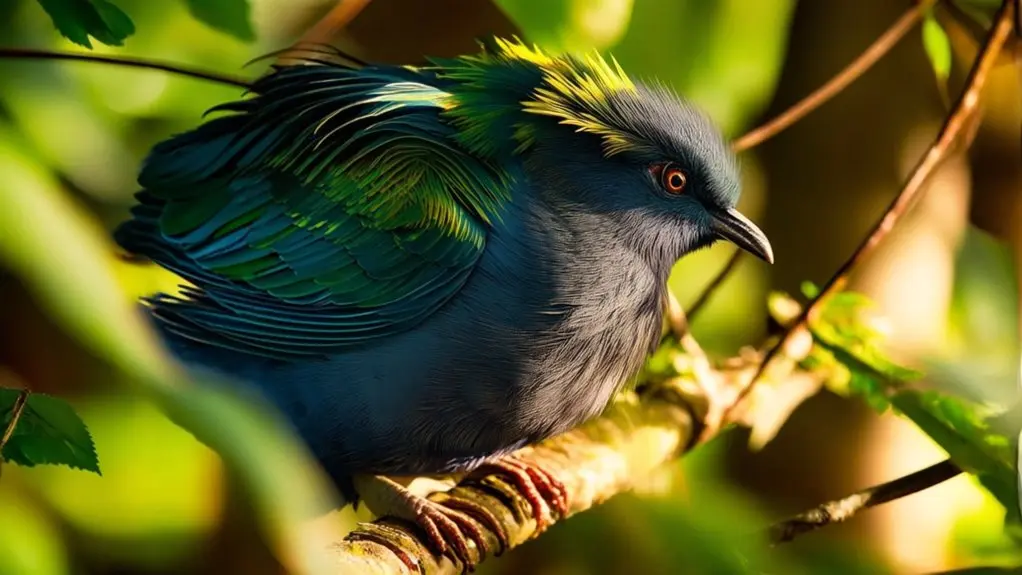
Yes, birds can regrow feathers through a natural moulting process that replaces old plumage with new growth from healthy feather follicles. This regeneration depends on intact follicles, proper nutrition, hydration, and low stress levels.
However, severe follicle damage from trauma, infections like circovirus, or scarring can permanently prevent regrowth. Supporting your bird with balanced diets and a calm environment promotes recovery and vibrant feathers.
Understanding these factors reveals why some feathers may not return fully. So, keeping your bird healthy and stress-free really makes a difference in how well their feathers grow back.
Can Birds Regrow Feathers?
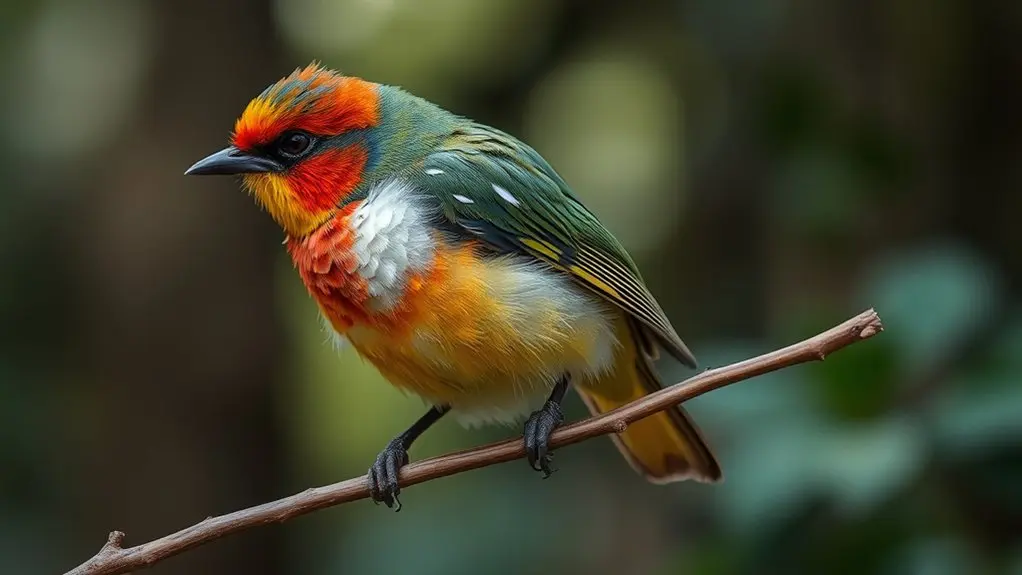
Although feather loss may seem permanent, birds can regrow feathers through a natural process called moulting, which typically happens annually or seasonally. This process guarantees the restoration of feather coloration essential for camouflage, mate attraction, and species recognition.
You should understand that feather regrowth relies heavily on the health of the bird’s follicles; any damage can delay or prevent new feathers from emerging. Furthermore, moulting often coincides with migration patterns, timing feather replacement to optimize flight efficiency and energy conservation during long journeys.
Proper nutrition, adequate vitamins, and a low-stress environment support follicle function and feather regeneration. The speed of regrowth varies depending on the bird’s overall health and the cause of feather loss, but moulting remains a reliable biological mechanism enabling birds to maintain their plumage integrity.
What Causes Feather Loss and Regrowth Issues in Birds?
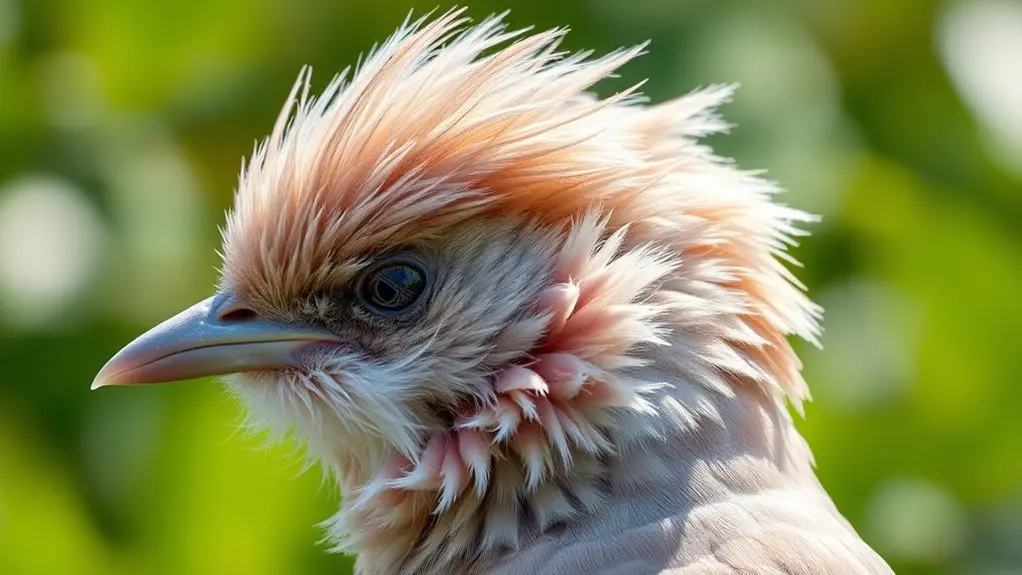
Feather regrowth depends on the integrity of feather follicles, but various factors can disrupt this process and cause abnormal feather loss. Viral infections like circovirus and polyomavirus damage follicles, impairing regrowth and altering feather color. This can affect mate attraction and camouflage.
Bacterial and fungal skin infections further hinder feather development, potentially leading to patchy or malformed plumage. Physical injuries may cause permanent follicle damage, preventing regrowth of critical feathers essential for maintaining flight ability.
Stress and illness also trigger irregular molting, which makes feather loss worse. To support healthy regrowth, you need to guarantee proper nutrition, minimize stressors, and seek veterinary care. Without these interventions, the bird’s flight ability and plumage quality may deteriorate, impacting survival and behavior.
How Do Birds Naturally Regrow Feathers?
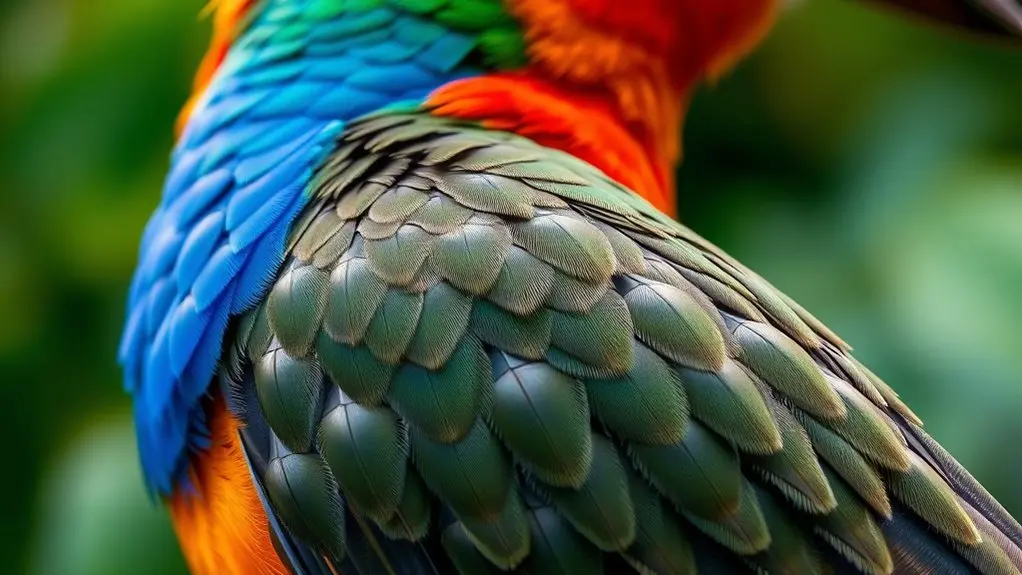
When birds molt, they actively shed old plumage to make way for new growth. This process is regulated by specialized follicles in their skin. These follicles kickstart feather regrowth by producing keratin, the main protein that forms the feather structure.
Molting happens in carefully timed cycles, usually once or twice a year. During this time, old feathers are replaced in an orderly way.
New feathers start as small buds that grow and push through the skin.
As the feathers develop, they form the intricate barbs and barbules that mature feathers have. This precise process helps birds keep their feathers in top shape for flying, staying warm, and showing off.
Understanding molting shows how birds manage to replace feathers without losing essential functions while they regrow.
Why Does Nutrition Matter for Feather Regrowth?
Because your bird’s body requires specific nutrients to regenerate feathers effectively, providing a well-balanced diet is crucial for successful feather regrowth. Proper nutrition supports molting cycles by supplying the energy and biochemical precursors needed for feather follicle regeneration.
A balanced diet fuels feather regrowth by providing essential nutrients and energy for molting and follicle health.
Nutrient deficiencies can impair feather coloration and slow regrowth, potentially causing lasting follicle damage. To optimize feather health, ensure your bird’s diet includes:
- Biotin, zinc, and vitamin A for keratin synthesis and pigmentation
- A diverse mix of seeds, vegetables, fruits, and pellets for all-encompassing nutrients
- Adequate hydration to maintain cellular function during molting cycles
- Sufficient protein to build feather structure
- Consistent nutrient intake to promote rapid, vibrant feather replacement
Feeding your bird right isn’t just about keeping them full — it’s about giving them what they need to look and feel their best. So, keep those nutrients coming regularly and watch those feathers flourish!
How Does Stress Affect Feather Regrowth?
You’ll find that stress really messes with the molting process. It can cause birds to start plucking their own feathers and even weaken their immune system.
This combination ends up slowing down how quickly their feathers grow back.
Often, things like sudden changes in their environment or loud noises can trigger this stress response.
When that happens, feather loss can get even worse.
So, managing these stress factors is super important.
It helps the feather follicles recover properly and encourages healthy regrowth.
Stress Impact On Molting
Although molting is a natural process, stress can seriously disrupt feather regrowth by speeding up feather loss and blocking new feather production. When you see a stressed bird, you’ll notice strange molting patterns and dull feather colors. This usually means the feathers aren’t renewing properly.
Stress affects the health of feather follicles and can delay the normal molting cycle. That leads to uneven regrowth and sometimes patchy feathers.
Here are some key ways stress impacts molting:
- Premature or rapid feather shedding that messes up molting patterns
- Blocking new feather growth, which delays regrowth
- More feather plucking, causing bare or damaged patches
- Weakened feather follicles that reduce regrowth success
- Changes in feather color that show poor feather quality
Environmental Factors And Stress
When environmental factors trigger stress in birds, they release hormones that directly inhibit new feather growth, disrupting the natural regrowth cycle. This hormonal response delays molting cycles, impairing the replacement of damaged feathers.
Chronic stress often leads you to witness increased preening or feather plucking, which further obstructs feather regeneration.
Stress also compromises the bird’s immune system, reducing its ability to support proper feather pigmentation and structure during regrowth.
Sudden changes like loud noises or habitat disruptions make things worse, causing additional feather loss and prolonging recovery.
To promote healthy feather regrowth, including vibrant pigmentation and timely molting cycles, you need to provide a stable, enriched environment that minimizes stress.
This helps support the bird’s physiological capacity for feather renewal.
Which Infections Can Stop Feather Regrowth?
Because certain infections directly damage feather follicles, they can effectively halt feather regrowth in birds. Unlike genetic mutations or hormonal imbalances, which influence feather growth internally, infections cause physical damage to the follicle structure, impeding regeneration.
You should be aware of specific infectious agents that can stop feathers from regrowing. Viral infections like circovirus and polyomavirus destroy follicular cells.
Bacterial skin infections induce inflammation, impairing follicle function.
Yeast infections cause tissue damage around follicles, disrupting growth.
Chronic infections can cause permanent follicle damage, leading to lifelong feather loss.
Prompt diagnosis and treatment are essential to restore follicular health and regrowth potential.
Understanding these infections helps you manage feather loss and supports effective recovery strategies in affected birds. It’s important to catch these issues early so your bird has the best chance to heal and grow its feathers back.
When Does Follicle Damage Prevent Feathers From Growing Back?
How do you determine if follicle damage will stop feathers from growing back? The key is to evaluate how well the feather follicles can regenerate after injury or infection. Minor damage usually means the follicles can recover and produce new feathers.
But if the trauma or infection is severe, like with circovirus, it can permanently destroy the follicles and stop them from regenerating. Scarring caused by the trauma plays a big role too. When scarring is extensive, it messes up the follicle’s structure and prevents new feathers from growing.
On top of that, untreated bacterial skin conditions can make follicle damage worse, leading to permanent bald patches. So basically, when follicle destruction and scarring go beyond a certain point, feathers just won’t regrow.
Understanding how bad the follicle damage is can help you figure out if feather regrowth is still possible or if it’s permanently affected.
How Can You Support Your Bird’s Feather Recovery?
You can help your bird recover its feathers by making sure it has a balanced diet packed with all the essential nutrients. This means offering a mix of seeds, vegetables, fruits, and pellets.
It’s important to keep things consistent and reduce stress, too. A steady routine, plenty of natural light, and some mental stimulation really make a difference when it comes to feather regrowth.
Also, giving your bird some time outside the cage every day and plenty of safe activities keeps its feathers in good shape and supports healthy growth. Little things like these can go a long way in helping your bird feel comfortable and look its best.
Nutritional Support Essentials
When supporting your bird’s feather recovery, providing a balanced diet rich in seeds, vegetables, fruits, and high-quality pellets delivers essential nutrients that promote healthy feather growth. Proper nutrition influences feather coloration and enhances molting cycles. This ensures feathers regenerate with strength and vibrancy.
You should focus on incorporating mineral blocks or cuttlebone for calcium and minerals crucial to feather structure. Also, make sure your bird has consistent access to fresh water to support metabolic processes involved in regrowth.
Supplementing vitamins A, D, E, and biotin can help stimulate skin health and new feather formation. At the same time, avoid nutritional deficiencies that impair feather quality and delay molting cycles.
Offering a varied diet is important to maintain balanced nutrient intake. This is critical for prime feather coloration and regeneration.
These nutritional essentials precisely support your bird’s natural ability to regrow feathers efficiently.
Stress Reduction Techniques
Although feather regrowth largely depends on nutrition, minimizing stress plays an equally critical role in the recovery process. You can support your bird’s feather recovery by providing a consistent, calm environment that reduces stress-induced behaviors like feather plucking.
Maintaining a regular daily routine and avoiding sudden changes helps your bird feel secure, which is essential for proper feather coloring and overall feather quality.
Guarantee adequate natural light and a quiet, sheltered space to decrease environmental stressors that may hinder feather regrowth. Additionally, use background noise such as soft music to create a soothing atmosphere.
Mental stimulation through toys and interaction also prevents boredom-related stress, which can negatively affect flight mechanics by compromising feather integrity during regrowth.
These measures collectively promote ideal feather recovery and functional flight restoration. Taking these steps really makes a difference in how well your bird bounces back.
Environmental Enrichment Benefits
Because environmental enrichment directly influences both mental and physical health, it plays a crucial role in supporting your bird’s feather recovery. Ideal enrichment reduces stress and stimulates natural behaviors, which are essential for restoring vibrant feather color and normal flight patterns.
To promote effective feather regrowth, focus on these key strategies:
- Provide diverse toys and puzzles to encourage mental stimulation and reduce stress.
- Maintain natural light cycles to regulate hormones integral to moulting.
- Offer regular bathing or misting to keep feathers clean and hydrated.
- Create a calm, stable environment to prevent stress-induced feather plucking.
- Supply a nutrient-rich diet with vitamins and minerals essential for feather development.
Frequently Asked Questions
Can Birds Regrow Feathers After Plucking by Humans?
Yes, birds can regrow feathers after plucking if the follicles stay healthy. Feather coloration and quality restore over weeks. This helps birds a lot.
It’s important because feathers aid in migration by ensuring aerodynamic efficiency. They also provide proper insulation, which is critical for survival and flight performance. So, keeping those feathers in good shape really matters!
Do All Bird Species Regrow Feathers at the Same Rate?
You won’t find all bird species regrowing feathers at the same rate since feather coloration and migratory behaviors influence molting speed. Some birds adapt faster to seasonal changes, while others molt more gradually for survival.
It’s pretty interesting how different factors play a role in this. So, the way a bird migrates or its feather color can actually change how quickly it grows new feathers. Pretty cool, right?
How Long Does It Take for a Single Feather to Regrow?
Like a knight awaiting new armor, you’ll see a single feather regrow in 2 to 3 weeks. This timing depends on how often the bird molts.
Feather pigmentation also plays a role. It affects keratin development and coloration during the complex regrowth process. So, it’s not just about time, but also about how the feather forms and looks.
Can Molting Patterns Indicate a Bird’s Health Status?
Yes, molting cycles reveal your bird’s health. Irregular patterns or abnormal feather coloration often signal stress, illness, or nutritional issues.
Keeping an eye on these changes can really help you catch infections, parasites, or environmental problems early on. It’s a great way to stay on top of your bird’s well-being.
Are There Specific Vitamins Best for Promoting Feather Regrowth?
Think of dietary supplements as a toolkit for feather maintenance. You’ll want biotin, vitamin A, and omega-3s to rebuild feathers efficiently.
Use balanced multivitamins cautiously. Avoid excess fat-soluble vitamins to prevent toxicity. It’s all about finding the right balance to keep those feathers healthy and growing.
Conclusion
You can absolutely count on birds to regrow feathers, often as reliably as the sun rises. However, factors like poor nutrition, stress, infections, or follicle damage can severely hinder this process. Understanding these causes helps you support your bird’s natural recovery.
By providing ideal care and addressing health issues promptly, you’ll give your feathered friend the best chance to restore their plumage fully and swiftly. This way, their resilience shines through every molt.