
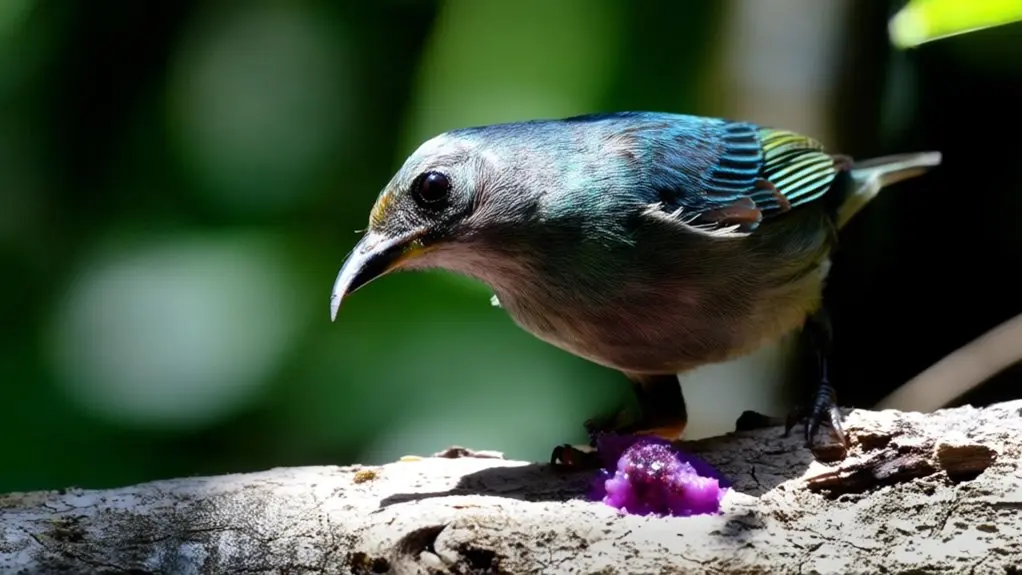
You can see birds poop purple, but it’s almost always due to their diet, such as eating pigmented berries rich in anthocyanins, not natural pigments or illness. Birds don’t produce purple pigments biologically, so purple droppings usually reflect recent food intake.
Environmental factors rarely cause this color. If you notice persistent purple feces along with other symptoms, it might be a good idea to have a vet check your bird.
Understanding what causes purple droppings helps you interpret bird health and ecological changes better. It’s pretty interesting how what birds eat can change the color of their droppings, right?
Why Don’t Birds Normally Poop Purple?
Although you might expect a variety of colors in bird droppings, birds normally don’t poop purple because their digestive and excretory systems don’t produce pigments that result in that color. The hues you see in bird feces generally range from white to brown or green, influenced by diet and digestive health.
Bird droppings rarely appear purple since their digestive systems don’t produce pigments of that color.
Even though bird migration often exposes them to diverse foods, their droppings rarely reflect unusual pigments like purple.
Feather coloration, influenced by diet and genetics, doesn’t correlate with the pigments excreted in droppings.
Purple feces would suggest abnormal pigments or blood, which is rare and typically signals health issues.
Essentially, the biological processes governing digestion and excretion in birds simply don’t generate the purple pigments needed to color their droppings that way.
What Causes Unusual Bird Poop Colors?
You might notice your bird’s droppings change color after it eats certain foods. That’s because diet directly influences the color of their poop.
For example, when birds eat berries or foods with artificial dyes, these pigments can show up in their droppings.
So, if you ever see unusual colors like purple in your bird’s poop, it’s usually just what they’ve been eating.
Understanding this can help you figure out why those unexpected colors pop up now and then.
Diet Influences Poop Color
When birds eat foods rich in pigments, like berries that have anthocyanins, their droppings can temporarily turn unusual colors such as purple. This color change is a direct reflection of what they recently ate and is completely harmless. It’s just a natural result of how their bodies digest those pigments.
During migration, birds come across all kinds of different foods, which can lead to changes in the color of their poop.
Nesting also plays a role because birds might eat more pigment-rich fruits found near their nesting sites to get the nutrients they need.
Sometimes, artificial dyes in bird foods can change poop color too. So, if you see purple or other odd colors in bird droppings, don’t worry. It mostly just shows what the bird has been eating, especially during migration or nesting times.
Impact Of Food Pigments
Bird poop colors can reveal a lot about what birds recently consumed, especially when their diet includes pigments from natural or artificial sources. Unusual colors, such as purple, arise from ingesting berries, fruits, or processed foods containing blue or purple dyes. These pigments pass through the digestive system, temporarily tinting droppings.
Sometimes, medications or supplements with artificial coloring may also alter fecal appearance. Understanding these color changes helps interpret bird feather pigmentation and may relate to nesting behaviors. It’s pretty interesting how diet influences both physical traits and reproductive success.
| Food Source | Pigment Type |
|---|---|
| Berries | Natural blue/purple |
| Fruits | Natural pigments |
| Processed foods | Artificial dyes |
| Medications | Synthetic coloring |
| Supplements | Artificial pigments |
How Bird Diets Affect Bird Poop Color
Although many factors influence the appearance of avian droppings, diet plays a primary role in determining their color. As you observe birds through various bird migration patterns, you’ll notice how shifts in available food sources affect fecal pigmentation.
Birds consuming berries rich in anthocyanins, pigments also responsible for vibrant feather coloration, often produce darker or purplish droppings.
On the other hand, insectivorous birds generate lighter, more uniform feces because their diet lacks pigmented fruits.
Seasonal changes in fruit availability directly impact these color variations, reflecting the dynamic nature of avian diets.
Understanding these dietary influences helps you interpret bird droppings more accurately and connect feeding behavior with fecal characteristics during migration and breeding periods.
Can Environmental Factors Turn Bird Poop Purple?
You might notice purple bird droppings and wonder what’s behind that unusual color. Often, it happens because birds have been eating foods that contain purple pigments.
But sometimes, the color change could be due to exposure to environmental dyes or pollutants.
Knowing these factors can help you figure out whether the purple color is natural or if it’s related to contamination.
Diet Influence On Color
When you observe an unusual purple hue in bird droppings, it often signals the intake of foods rich in dark pigments like anthocyanins found in berries or fruits. These dietary components can directly influence feces coloration, especially during specific periods linked to bird migration patterns and nesting behaviors when birds consume abundant fruit.
Consider these key points:
- Birds eating berries or dark fruits ingest anthocyanins, which may tint their droppings purple.
- During migration, dietary shifts increase pigment-rich food intake, affecting feces color.
- Nesting behaviors often coincide with localized feeding on colorful fruits, further influencing droppings.
While diet plays a crucial role, environmental factors rarely cause lasting purple feces. So, understanding these influences helps clarify why purple droppings appear occasionally rather than persistently.
Environmental Pigment Effects
While environmental factors can influence many aspects of bird health, they rarely cause bird droppings to turn purple. Bird feces typically show colors like white, green, brown, or black, and these colors mainly depend on diet and species.
The purple color in droppings usually comes from eating pigmented compounds, like anthocyanins found in some berries.
Environmental contamination, like chemicals or pollutants, rarely gives a purple hue unless those substances have pigmented dyes that pass directly into the feces.
No natural environmental process is known to make bird droppings distinctly purple.
Are Purple Bird Droppings a Sign of Illness?
Although purple bird droppings can sometimes result from harmless dietary pigments or medications, they may also indicate underlying health issues. When you observe purple droppings, consider these key points for bird health and potential medical diagnosis:
- Dietary Causes: Consumption of pigmented berries or certain supplements can cause harmless discoloration.
- Medication Effects: Some medications may alter droppings’ color, including purple hues.
- Illness Indicators: Sudden or persistent purple droppings, especially with lethargy or abnormal behavior, might signal internal bleeding or other health problems.
If purple droppings persist, you should consult a veterinarian promptly. A professional medical diagnosis is essential to rule out poisoning or serious illnesses and ensure your bird’s well-being.
Monitoring droppings provides valuable insight into bird health.
How to Spot and Handle Abnormal Bird Poop
Purple droppings may signal health concerns, but recognizing and managing various abnormal bird feces requires careful observation and proper handling. Changes in droppings can be linked to bird migration patterns or nesting behaviors, which influence diet and stress levels. To spot abnormalities, observe color, consistency, and frequency.
If droppings are persistently unusual, consult a veterinarian to rule out disease or poisoning. Always wear gloves and disinfect surfaces when handling droppings to prevent pathogen transmission.
| Observation Aspect | Handling Recommendation |
|---|---|
| Color (e.g., purple) | Wear gloves, avoid direct contact |
| Consistency (runny/solid) | Use disinfectant on affected areas |
| Frequency (persistent changes) | Seek veterinary advice |
| Environmental context (migration/nesting) | Monitor for related health stressors |
Careful monitoring helps catch toxins or illness affecting birds early on.
Myths About Purple Bird Poop
If you’ve ever heard that bird droppings can be purple, you should know this claim doesn’t align with avian biology. Bird migration patterns and nesting behaviors influence diet and environment, but they don’t cause purple poop.
Here are three key myths debunked:
- Purple droppings indicate health problems. In reality, normal bird poop varies from white to dark due to uric acid and digested food, but purple isn’t typical.
- Bird species naturally produce purple poop. No species is known to do this. Unusual colors may appear due to diet or environment, but rarely purple.
- Purple poop results from bird migration. Migration affects diet but doesn’t cause purple coloration.
Understanding these myths helps you interpret bird droppings accurately without misinformation. It’s always good to know what’s normal so you don’t get confused by unusual claims.
What Purple Bird Poop Means for Pets and Wildlife
When birds eat berries or fruits that are rich in anthocyanins, their droppings often turn purple. This change in color usually points to shifts in their diet, which can affect pets and wildlife nearby.
It can also signal changes in bird migration or how urban habitats provide different food sources.
Purple bird poop itself isn’t harmful, but it shows that birds have eaten pigmented plants that might impact digestion.
Pets and local wildlife that eat the same berries could face risks if those fruits have toxins or irritants.
Keeping an eye on purple droppings helps you notice changes in what birds are eating and how they’re using their habitat.
This can give early warnings about effects on the ecosystem.
Frequently Asked Questions
Can Certain Bird Species Naturally Produce Purple Poop?
You won’t find bird species naturally producing purple poop. Such coloration rarely occurs and doesn’t indicate typical bird health or feather coloration.
Purple droppings usually result from diet or external factors, not natural physiology. So, if you see purple poop, it’s likely something the bird ate or an environmental influence, not a natural trait.
Does Purple Bird Poop Affect the Environment or Plants?
You won’t find purple bird poop rewriting urban bird populations’ impact or bird migration patterns. Its effect on plants is minimal, mostly nutrient-rich waste, unless artificial dyes cause harm.
It’s basically nature’s fertilizer, not an environmental game-changer. So, no need to worry too much about the purple color—it’s mostly harmless in the grand scheme of things.
How Long Does Purple Coloring Last in Bird Droppings?
You’ll find purple coloring in bird droppings lasts from hours to a day, influenced by bird health and color variation. Sunlight, rain, and surface type degrade pigments, so the vivid hue fades relatively quickly under natural conditions.
Basically, the color doesn’t stick around for too long. It’s kind of like a temporary marker that nature washes away pretty fast. So if you see bright purple spots, they’re likely fresh.
Can Bird Poop Color Help Identify Specific Bird Diets?
You’ll find bird coloration in droppings reveals dietary impacts. About 30% of birds show color changes linked to food pigments.
Are There Any Cultural Beliefs About Purple Bird Droppings?
You won’t find cultural symbolism tied to purple bird droppings. Myth debunking shows no widespread beliefs connect this color to luck or spirituality.
Such droppings aren’t significant in folklore or cultural traditions globally. So, if you come across purple bird droppings, there’s no special meaning behind them in cultural terms.
Conclusion
You might think purple bird poop is a mysterious splash of color from nature’s palette, but it’s usually a sign of something unusual. Just like a red flag waving in a storm, purple droppings often signal dietary quirks or health issues in birds.
By understanding these colorful clues, you can better care for your feathered friends and protect wildlife. Keep your eyes sharp—nature’s messages are rarely just for show.