
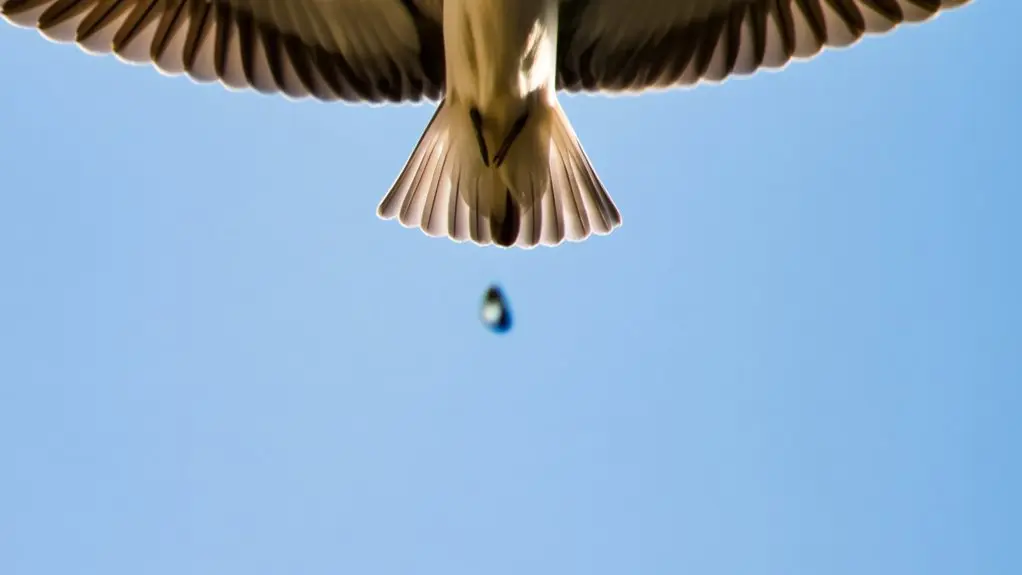
Yes, birds can poop while flying thanks to their unique cloaca, which combines digestive, urinary, and reproductive functions. This allows precise waste release mid-air, helping them stay light and agile for quick maneuvers and energy-efficient flight.
Different species vary in this behavior, influenced by factors like wing health and experience. Understanding this reveals how birds maintain flight performance and cleanliness.
Exploring further uncovers how anatomy, behavior, and training all play essential roles in this surprising ability. It’s pretty fascinating how everything works together to keep birds flying smoothly.
How Birds’ Anatomy Enables Mid-Flight Pooping
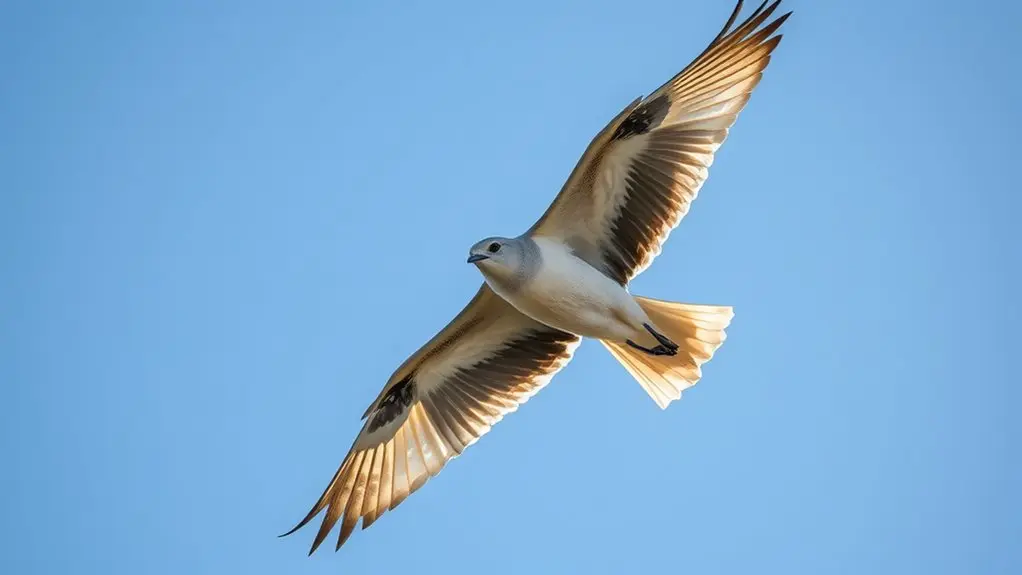
Although you mightn’t often notice, birds possess a unique anatomical feature, a single cloaca that combines their digestive, urinary, and reproductive tracts. This setup enables them to excrete feces and uric acid simultaneously while flying. It’s a pretty efficient system.
Birds have a unique cloaca that efficiently combines waste and reproductive functions, enabling mid-flight excretion.
The cloaca stores uric acid until muscular contractions trigger its release mid-flight. The bird’s body position and lightweight pneumatic bones help with this process. Such coordination allows for precise timing, often linked to takeoff or landing.
Managing waste during flight is super important because birds rely on feather waterproofing to keep flying efficiently. They also want to avoid added weight from moisture.
After excretion, birds use beak grooming to clean their feathers and maintain aerodynamic integrity.
This interplay between anatomy and behavior ensures birds can fly unhindered while managing waste seamlessly. It’s a great example of an evolutionary adaptation that’s essential for their survival and mobility.
What Is the Cloaca and Why It Matters for Bird Waste
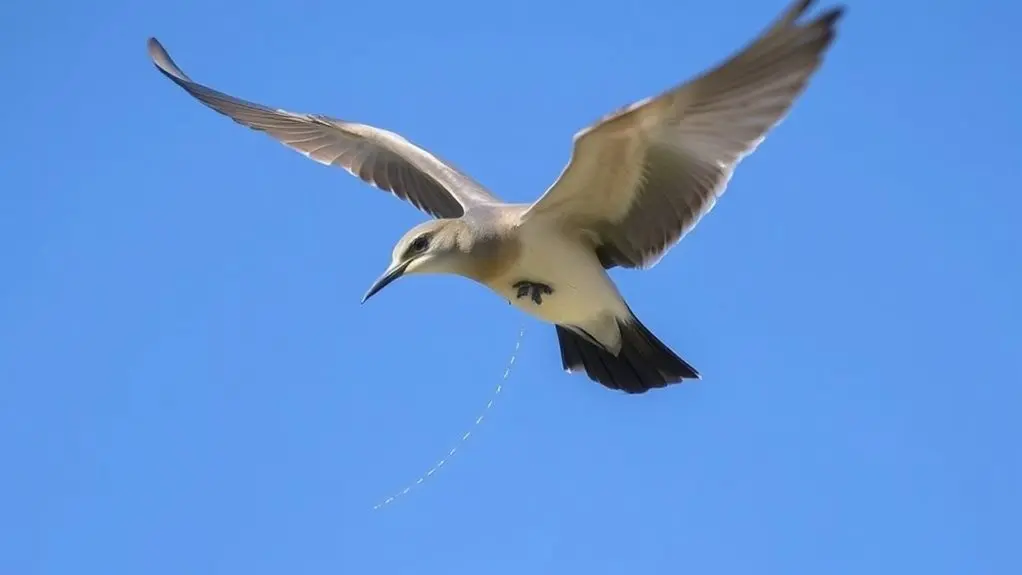
When you watch a bird handling its waste, you’re actually seeing the cloaca in action. The cloaca is a special part of a bird’s anatomy that works as a single opening for both excretion and reproduction. This means urine, feces, and egg-laying all happen through the same exit point, which really simplifies things.
This clever design helps birds keep their feathers clean by allowing precise waste expulsion. That way, waste doesn’t get on their feathers, which is super important for staying ready to fly.
The cloaca also plays a big role when birds are nesting. By controlling when and how waste is released, birds keep their nests tidy and lower the chance of diseases spreading to their babies.
Because the cloaca combines several body systems into one opening, it helps birds save weight. This is a big deal since carrying less weight makes flying easier.
Plus, it lets birds get rid of waste while in flight without messing up their aerodynamics or hygiene. So, knowing about the cloaca really helps you understand how birds stay clean and successfully reproduce at the same time.
Why Birds Poop Mid-Flight to Stay Light and Agile
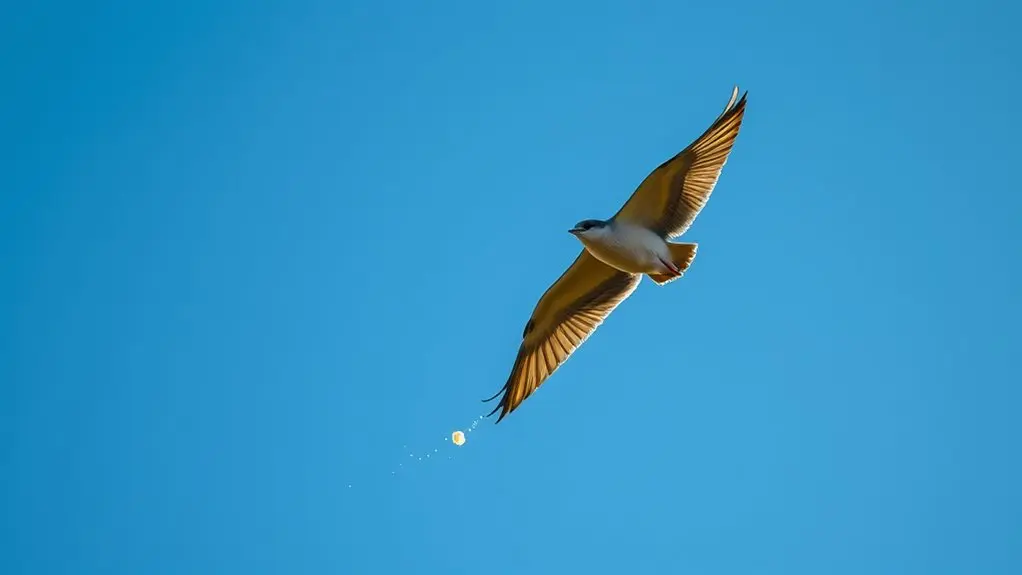
You’ll notice that birds often poop while they’re flying. They do this to lighten their load, which helps them stay quick and agile in the air.
Dropping that extra weight is super important when they need to make sharp turns or speed up, like when escaping predators or weaving through tricky landscapes.
It’s pretty amazing how this behavior shows how birds have evolved to manage their weight perfectly for efficient flight.
Weight Reduction Benefits
Since maintaining ideal body weight is essential for flight efficiency, birds often poop mid-air to shed excess mass rapidly. This rapid weight reduction enhances their ability to sustain flight with less energy expenditure.
When you observe birds, you’ll notice that pooping at takeoff or during flight helps them stay light and agile, which is vital for escaping predators and foraging.
This behavior also supports feather waterproofing by preventing soiling near the nest, which is crucial for nesting habits.
Key weight reduction benefits include quick expulsion of uric acid and waste through the cloaca to minimize body mass. It also helps conserve energy by reducing drag and increasing flight endurance.
Plus, maintaining feather cleanliness guarantees waterproofing and effective nesting. This evolutionary adaptation optimizes flight performance and survival.
Flight Agility Enhancement
How do birds maintain such impressive agility during flight? They poop mid-flight to quickly shed unnecessary weight, allowing for enhanced maneuverability and rapid response to threats. This defecation process optimizes their body mass, which is vital for sustaining efficient flight performance.
As birds mature, they gain better control over when to release waste. This helps maintain flight precision during complex aerial maneuvers. It’s pretty fascinating how they manage that.
Interestingly, feather coloration often correlates with nesting habits, influencing a bird’s need for agility. Birds that nest in exposed areas tend to have brighter feathers and rely more on agile flight to evade predators.
Evolutionary Adaptations Explained
Although it might seem incidental, birds pooping mid-flight is an essential evolutionary adaptation that optimizes their body weight for enhanced agility and energy efficiency. By expelling waste through the cloaca, birds quickly shed excess weight, improving maneuverability and stamina during flight.
The separation of uric acid from fecal matter prevents water retention, reducing mass without compromising hydration. This adaptation supports key behaviors tied to survival, such as maintaining vibrant feather coloration by minimizing energetic costs related to excess weight.
It also enhances nesting behaviors that require rapid, agile flights to gather materials and evade predators. Plus, it facilitates quick, energy-efficient escapes in predator-rich environments.
Understanding this evolutionary mechanism shows how waste management intricately supports avian physiology and ecology. It ensures birds remain light, agile, and efficient in their aerial lifestyle.
How Pooping Behaviors Vary Across Bird Species
When you observe different bird species, you’ll notice that their pooping behaviors vary considerably depending on their anatomy and ecology. For instance, swallows and swifts frequently defecate during flight, a behavior linked to their aerial lifestyle and rapid wingbeats.
In contrast, parrots and larger terrestrial birds generally only poop when stationary, likely due to their heavier bodies and nesting habits.
Feather coloration can indirectly reflect ecological roles. Species with bright plumage may adopt specific pooping timing to avoid soiling their feathers, which impacts mating displays. It’s kind of interesting how that works, right?
Additionally, birds flying at high altitudes or long durations exhibit more controlled defecation. They often time waste release around flight periods to optimize energy and maintain flight efficiency.
These variations really highlight how species-specific adaptations influence pooping behavior across birds.
How Often Do Birds Poop During Flight and What Affects It
Because pooping during flight serves important physiological and behavioral functions, birds regulate the frequency and timing of this activity based on several factors.
You’ll notice that migration patterns influence how often birds poop in flight, as long-distance flyers tend to optimize waste release to maintain flight efficiency.
Feather waterproofing also plays a role. Birds avoid pooping mid-flight if it risks soiling their feathers, which could impair insulation and flight.
Younger birds poop more frequently due to less control and training, while adults manage timing better.
Key factors affecting pooping frequency include age and flight experience, with younger birds pooping more often.
Environmental triggers such as approaching landings or rest stops also matter.
Behavioral adaptations like learned commands or instinctive waste release before landing come into play too.
Can Young or Inexperienced Birds Control Pooping During Landing?
You might’ve noticed that young or inexperienced birds often can’t control their cloaca very well when they land, which means they poop more accidentally. It’s pretty normal for them to have less precision at first.
But as they spend more time flying and practicing, their coordination gets better. With training and repeated experience, they gradually learn how to manage waste release more accurately during landings.
Inexperience Affects Pooping Control
Although adult birds typically exhibit precise control over their cloacal muscles during flight and landing, young or inexperienced birds often lack this coordination. This results in more frequent or accidental pooping during landings.
This limited control stems from underdeveloped muscle coordination and timing necessary to manage waste release effectively.
Feather coloration and nesting habits indirectly influence this process. Juvenile birds with distinct plumage or specific nesting environments may experience varied developmental rates in motor skills.
Consider these factors affecting pooping control in inexperienced birds:
- Clipped wings reduce flight and landing coordination, increasing accidental pooping.
- Immature muscle control leads to unintentional release of uric acid during landings.
- Nesting habits impact exposure to training opportunities that improve cloacal control.
Understanding these details helps explain why inexperience affects pooping control during landing.
Flight Coordination Develops Gradually
When young birds take their initial flights, they often lack precise control over when they release waste during landing. This limited coordination is due to their developing muscle strength and timing mechanisms, which improve with age and experience.
As you observe, feather coloration often signals maturity, correlating with enhanced pooping control.
Nesting habits also influence this development. Species that nest in confined spaces tend to have young that gradually refine their flight and waste management skills to avoid soiling the nest.
Inexperienced birds may involuntarily poop during or immediately after landing, reflecting their ongoing neuromuscular development.
Over time, through repeated flights, you’ll notice young birds gain better coordination. This enables them to regulate waste release more effectively during landing, minimizing accidental droppings near nests or on perches.
It’s all part of their natural growth and learning process.
Training Improves Landing Accuracy
Because young or inexperienced birds often struggle to control their cloaca during landings, they tend to poop more frequently at these moments. Training improves landing accuracy by enhancing coordination and timing, which helps birds manage pooping better.
You’ll notice that as birds practice, their nesting instincts sharpen, allowing them to protect feather durability by avoiding messy landings.
Training involves using gradual commands and designated perches to develop control, reinforcing consistent landing behavior to improve cloacal timing, and encouraging precision to minimize feather damage and maintain cleanliness.
With experience, birds learn to regulate pooping during flight and landings, reducing accidents. This improvement is critical for young birds, as it supports feather durability essential for efficient flight and aligns with their natural nesting instincts to keep their environment clean.
How Wing Clipping Affects Pooping and Flight Control
Since wing clipping changes how a bird flies, you’ll notice it reduces their overall control. This directly affects their ability to manage pooping during flight and landings. When wings are clipped, the bird’s coordination and balance take a hit.
That makes it harder for them to time when to poop just right. Because of this, you might see more accidental pooping while they’re flying or right after they land.
Plus, clipped wings mess with the bird’s natural ability to control their cloacal muscles. This means poop release becomes less predictable.
Birds with unclipped wings can usually get pretty good at controlling when they poop. But clipped birds have a tougher time with that coordination.
Training Pet Birds to Poop on Command: Tips and Techniques
Although birds naturally control their elimination based on physiological cues, you can train pet birds to poop on command by applying consistent cues and positive reinforcement. Understanding your bird’s diet and nesting habits helps predict their bathroom timing, which improves training effectiveness.
Establish a regular schedule for bathroom breaks and pair it with a designated perch or location.
Use verbal praise or gentle scratches instead of treats to avoid encouraging waste retention. Set consistent cues, such as a specific word or gesture, to signal when to poop.
Reinforce elimination in the designated spot promptly to strengthen the association.
Also, monitor your bird’s diet to anticipate natural pooping rhythms and adjust training accordingly. This approach requires patience and gradual progress.
It’s all about helping your bird have better control over when and where they poop.
Why Pooping Mid-Flight Is a Sign of Healthy Bird Behavior
When you observe a bird pooping mid-flight, you’re witnessing a natural physiological process that reflects its health and efficiency. During bird migration or urban nesting, birds eliminate waste mid-air to reduce body weight, enhancing flight control and endurance. This behavior indicates strong muscular coordination and a well-functioning digestive system synchronized with activity levels.
| Aspect | Significance | Indication of Health |
|---|---|---|
| Weight Reduction | Improves flight efficiency | Muscular control and fitness |
| Digestive Function | Timely waste elimination | Proper cloaca operation |
| Activity Synchronization | Aligns bodily processes with flight | Overall physiological health |
Such efficient regulation during flight shows how adaptable and healthy birds really are in different environments. It’s pretty impressive when you think about how their bodies manage everything so smoothly while on the move.
What Pet Owners Should Know About Managing Bird Pooping
If you keep pet birds, understanding their pooping habits is essential for maintaining cleanliness and health in your home. Birds often release waste during flight, especially when startled or landing. This reflects natural behaviors like those seen during bird migration. Managing this requires training and environmental control to prevent messes.
Consider these strategies:
- Use designated perches to encourage pooping in controlled areas.
- Establish timing routines aligned with your bird’s natural elimination patterns.
- Train your bird to hold or release waste on command, especially if wing clipping affects flight control.
Also, note that feather coloration and maturity influence coordination. This helps improve control over pooping during landings.
Proper management supports your bird’s well-being and maintains your living space’s hygiene effectively.
Frequently Asked Questions
Do Birds’ Poops Serve Any Ecological Purpose?
You’ll find birds’ droppings support ecological balance by recycling nutrients and aiding seed dispersal. Despite careful feather hygiene and complex flight mechanics, they efficiently release waste midair, enriching soil and controlling pathogens in various habitats.
Birds have this neat way of keeping things tidy while still doing their part for nature. Their poops don’t just vanish—they actually help plants grow and keep the environment healthy. It’s pretty cool how something so simple plays a big role in the ecosystem.
Can Bird Droppings Spread Diseases to Humans?
Bird droppings, like avian camouflage hiding threats, can carry pathogens harmful to you. While feather waterproofing repels moisture, it doesn’t block disease spread. You should avoid contact to reduce infection risks from contaminated surfaces or inhaled dust.
It’s pretty surprising, but those droppings can actually be a real health hazard. So, it’s best to stay clear and keep things clean whenever you spot them around. Taking simple precautions can go a long way in keeping you safe.
How Does Bird Diet Influence the Consistency of Their Poop?
You’ll notice a bird’s diet impacts poop consistency by affecting digestive efficiency and nutrient absorption. Watery fruits lead to moist droppings, while dry seeds produce solid feces. This happens because of differences in nutrient breakdown and water retention.
Are There Differences in Pooping Habits Between Wild and Captive Birds?
You might think wild birds poop like a waterfall mid-flight, but they actually balance feather cleanliness and flight hygiene differently than captive birds. They adapt their pooping habits to unpredictable environments versus controlled feeding schedules.
Wild birds have to be more flexible because they don’t know when or where they’ll eat next. Captive birds, on the other hand, have set feeding times, so their pooping can be more predictable. It’s all about adjusting to their surroundings and needs.
How Do Birds Avoid Soiling Their Nests During Flight?
You’ll notice birds avoid soiling nests during flight by controlling waste release, preserving flight efficiency and feather maintenance. Their nervous system delays excretion until landing, ensuring nest cleanliness without compromising aerodynamic performance or feather condition.
It’s pretty clever, right? By holding off until they land, birds keep their nests clean and stay in top flying shape at the same time. This way, they don’t have to worry about messy nests or damaged feathers while they’re up in the air.
Conclusion
You might think birds would hold it until they land, but their anatomy and survival tactics say otherwise. Pooping mid-flight isn’t just a messy quirk. It’s a finely tuned biological strategy that keeps them agile and light.
So, next time you see a bird drop a surprise “gift” from above, remember: it’s not careless. It’s science in motion, ensuring birds stay healthy and airborne with impeccable precision.