
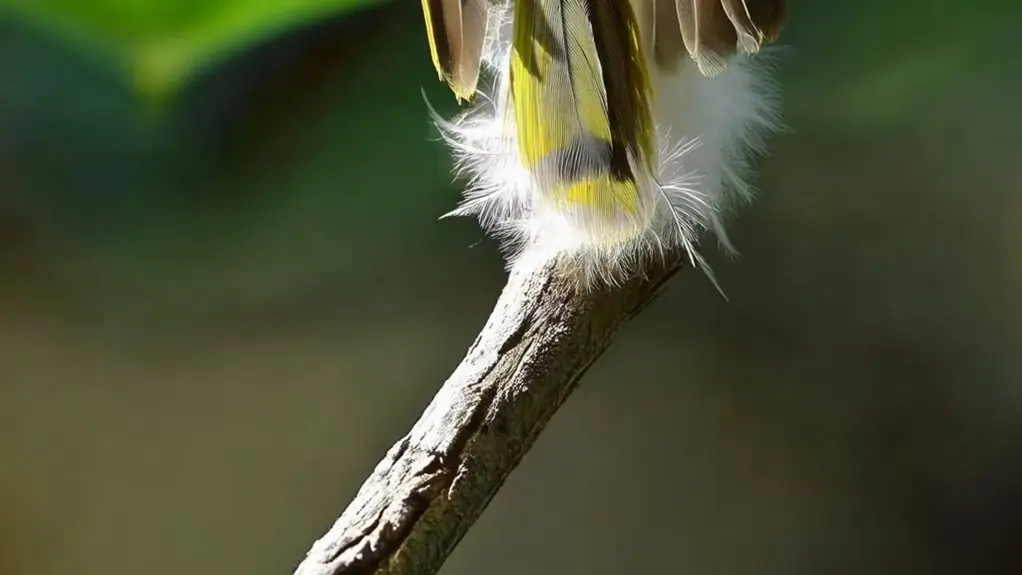
You can count on most birds to regrow lost tail feathers through a precise biological process powered by healthy feather follicles. When a tail feather is lost, stem cells activate within follicles, leading to new feather development that restores flight and signaling functions.
However, the speed and success of regrowth depend on species, nutrition, and overall health. Some birds like goldcheeks renew feathers remarkably fast. But injuries or poor conditions can delay or even prevent reggrowth.
It’s pretty fascinating to explore these factors and see how tail feathers regenerate so effectively.
Tail Feather Growth and Its Importance
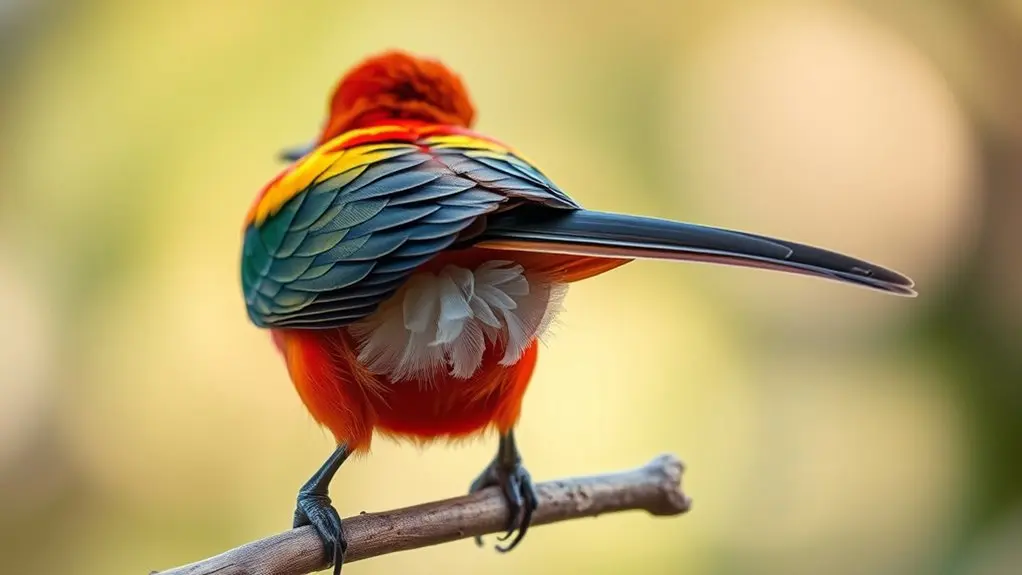
Although tail feathers may seem simple, they play an essential role in a bird’s survival by aiding flight, balance, and communication. These feathers grow from specialized follicles at their base, composed of keratin, and exhibit distinct feather pigmentation important for signaling and species recognition.
You should know that tail feather replacement aligns with molt cycles, a crucial physiological process ensuring feathers are renewed systematically. If the follicles remain intact after loss or damage, regrowth proceeds.
However, follicle injury can halt or delay this process.
Some species, like goldcheeks, demonstrate rapid regrowth within two weeks, which really shows the adaptive significance of tail feather renewal. Understanding this growth mechanism highlights how indispensable tail feathers are for a bird’s mobility and social interaction.
What Happens Biologically When Birds Lose Tail Feathers?
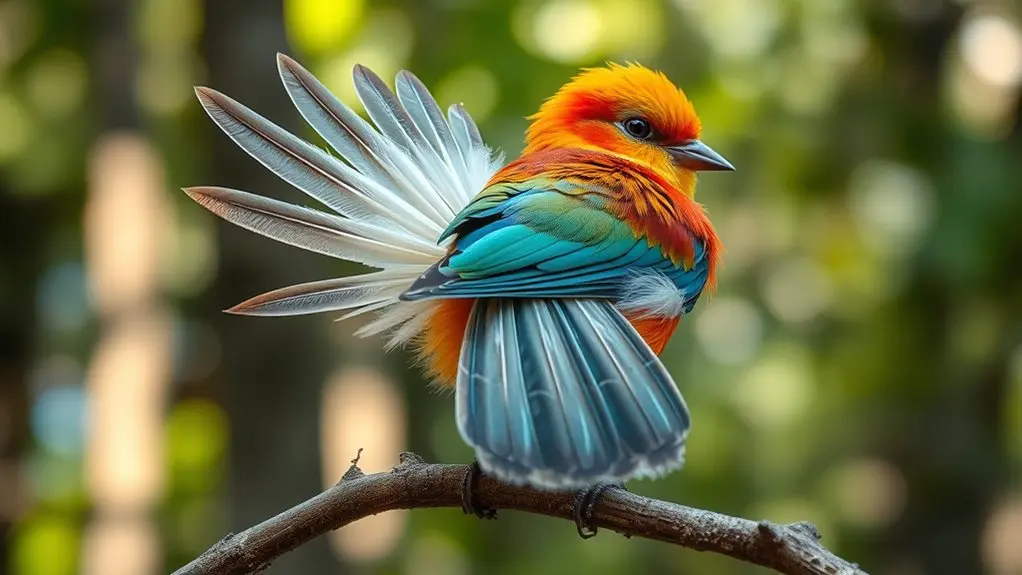
When birds lose their tail feathers, the intact feather follicles beneath the skin activate a complex biological process to start regrowth. Stem cells within these follicles multiply, forming new feather structures that will eventually come through the skin.
This regeneration depends on the follicle’s integrity and the bird’s overall health, nutrition, and energy availability.
As the new feathers grow, their pigmentation cells restore feather coloration, which is critical for species identification and camouflage.
Also, regrowing tail feathers gradually bring back the aerodynamic balance essential for precise flight mechanics. Without fully developed tail feathers, birds have a harder time maneuvering and staying stable during flight.
Usually, this biological renewal kicks off within weeks, letting the bird regain full functionality once the new feathers mature and fit seamlessly with the existing plumage.
Causes and Limits of Tail Feather Regrowth
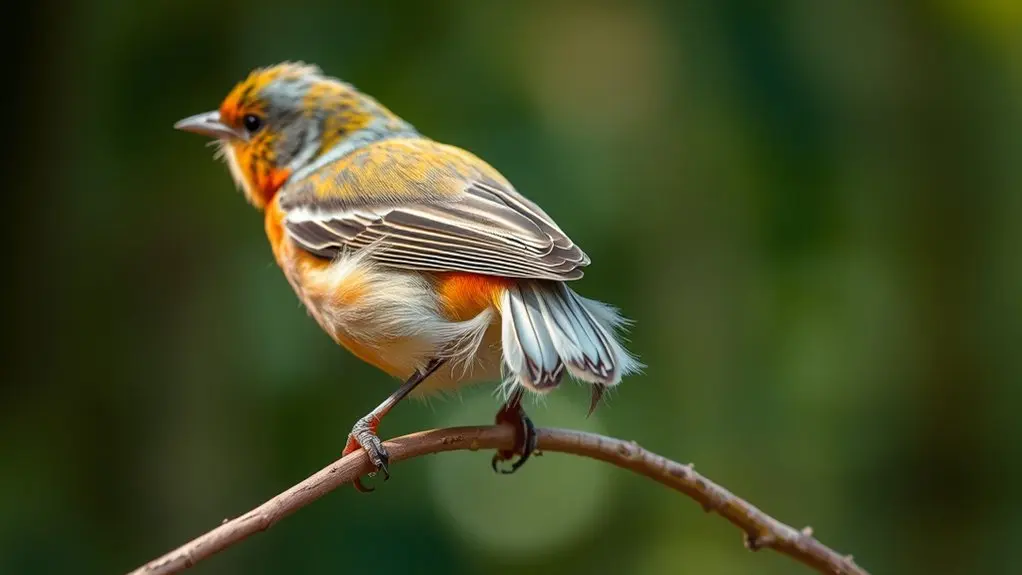
Since tail feather regrowth relies heavily on intact feather follicles, any trauma or physical injury that damages these structures can halt the regeneration process entirely. When follicles sustain damage from predator attacks or accidents, new tail feathers may never develop.
Tail feather regrowth depends on healthy follicles; damage from injury can stop new feathers from growing.
You should also consider that proper nutrition and energy are essential; deficiencies can notably delay or prevent regrowth.
The extent of feather loss and follicle integrity directly affect whether and how quickly tail feathers return. Additionally, feather coloration can vary during regrowth, sometimes differing from the original hues due to changes in pigment deposition.
Migration patterns influence regrowth timing as well; birds preparing for long flights prioritize feather regeneration to maintain aerodynamic function.
Species like goldcheeks showcase rapid regrowth, but not all birds share this capacity. So, it really depends on the bird’s species and overall condition when it comes to how fast and well their tail feathers grow back.
Why Feather Follicles Matter for Tail Feather Regrowth
Because feather follicles serve as the growth centers for tail feathers, their condition directly determines whether new feathers can develop after loss. You need to understand that intact follicles enable proper feather density and influence molt patterns essential for regrowth. Damage to follicles can halt or delay feather replacement, affecting overall tail function.
Here’s the deal: if follicles are healthy, tail feathers can grow back quickly and fully. But if they’re damaged, things get tricky. Partial damage means feathers come back slower and not as completely. Severe damage? That might mean some feathers never grow back at all.
| Follicle Condition | Feather Density | Molt Pattern | Regrowth Outcome |
|---|---|---|---|
| Intact | High | Regular | Rapid, complete regrowth |
| Partially Damaged | Reduced | Irregular | Delayed, incomplete |
| Severely Damaged | Low | Disrupted | Permanent loss |
| Healthy | Ideal | Predictable | Efficient regrowth |
How Bird Health and Nutrition Influence Tail Feather Regrowth
To help your bird regrow its tail feathers, it’s important to give it a balanced diet packed with vitamins, minerals, and essential fatty acids. These nutrients play a big role in keeping the feather follicles healthy, which is key for new tail feathers to grow in properly.
If your bird isn’t getting the right nutrition, the follicles can’t work as they should. As a result, your bird won’t have enough energy to produce new feathers.
Nutrition’s Role In Regrowth
Although tail feather regrowth depends on multiple factors, nutrition plays a vital role in ensuring healthy and timely regeneration. You need to provide birds with adequate vitamins A, D, E, and biotin to support feather follicle function, which directly impacts regrowth quality.
Deficiencies in these nutrients can delay feather regeneration, affecting feather coloration and compromising the bird’s ability to display vibrant plumage essential for mating and nesting behaviors.
A high-quality diet rich in protein and energy fuels rapid, complete regrowth, especially during energy-demanding periods like breeding seasons.
Seasonal fluctuations in food availability influence how birds allocate resources toward feather regeneration.
Without proper nutrition, feather follicles weaken, and tail feathers may regrow slowly or incompletely.
This not only impairs physical function but also affects the visual signals necessary for reproductive success.
Health Impact On Follicles
Nutrition directly influences the condition of feather follicles, which serve as the foundation for tail feather regrowth. When you guarantee a bird receives adequate vitamins and minerals, you support follicle health, enabling them to regenerate tail feathers effectively.
Poor health or nutritional deficiencies weaken follicles, disrupting molt cycles and potentially altering feather pigmentation due to incomplete or abnormal feather formation. If follicles sustain damage from illness or injury, they may lose the ability to produce new feathers, halting regrowth permanently.
Maintaining a balanced diet and proper veterinary care is essential, as these factors sustain follicle integrity throughout molt cycles. By prioritizing health, you help preserve follicle function, ensuring proper feather pigmentation and successful tail feather regeneration.
Energy Levels And Feathers
Because feather regrowth demands substantial metabolic resources, a bird’s energy levels play a critical role in the regeneration of tail feathers. You need to guarantee the bird receives adequate nutrition rich in proteins, vitamins A and biotin, and sufficient calories to support follicle health and feather production.
Deficiencies or chronic illness reduce energy reserves, impeding regrowth and potentially altering feather coloration due to compromised pigment synthesis. During molting or seasonal shifts, energy prioritizes essential functions, slowing tail feather regeneration. This delay can affect flight mechanics, as incomplete tail feathers reduce stability and maneuverability.
Which Birds Regrow Tail Feathers the Fastest?
How quickly can different bird species regrow their tail feathers? Small songbirds like goldcrests and finches lead in rapid regrowth, sometimes restoring tail feathers within two weeks. This happens because they’ve highly active feather follicles and efficient cellular regeneration.
Small songbirds like goldcrests and finches can regrow tail feathers in as little as two weeks.
During songbird migration, keeping vibrant feather coloration is really important. So, swift regrowth helps ensure they’ve ideal flight and display capabilities.
Young birds, especially during breeding seasons, tend to regrow feathers faster than adults. This supports their energy demands and aerodynamic needs.
Larger birds, on the other hand, experience slower regrowth due to less active follicles and more complex feather structures.
Understanding these differences shows how species-specific physiology and ecological pressures affect tail feather regeneration speed. It’s pretty essential for survival and reproductive success in migratory songbirds.
Supporting Your Bird’s Tail Feather Regrowth
To support your bird’s tail feather regrowth, it’s important to provide a diet packed with essential nutrients like biotin and vitamin A. These nutrients play a big role in keratin synthesis, which is key for strong, healthy feathers.
You’ll also want to protect the follicle area from any physical damage. Keeping this area safe helps maintain tissue integrity, so your bird’s feathers can grow in properly.
And don’t forget about stress — controlling it and making sure your bird gets enough energy, especially during molting, really sets the stage for healthy feather regrowth. Taking these steps makes a big difference!
Nutrition For Feather Growth
Ensuring your bird receives proper nutrition plays a vital role in promoting efficient tail feather regrowth. Key vitamins A, D, E, and biotin support keratin synthesis, which directly impacts feather coloration and structural integrity during molt cycles.
A balanced diet of high-quality pellets, fresh fruits, and vegetables provides essential proteins and calcium, which are crucial for timely feather regeneration.
Deficiencies in these nutrients can delay or compromise the development of new tail feathers. Plus, omega-3 fatty acids enhance cellular health in feather follicles, helping to promote stronger, more vibrant feathers.
Consistent access to clean water also optimizes metabolic functions necessary for feather synthesis.
By maintaining this precise nutritional regimen, you greatly increase the likelihood of successful, healthy tail feather regrowth. This way, your bird’s plumage stays robust through each molt cycle.
It’s all about giving your feathered friend the best chance to look and feel great!
Preventing Follicle Damage
Since feather follicles are the source of new tail feathers, protecting them from damage is essential for successful regrowth. You must handle your bird gently and avoid physical trauma to the tail area. Injured follicles can’t regenerate feathers, which directly affects feather coloration and integrity.
Maintaining a safe environment free from hazards reduces the risk of follicle injury caused by predators or accidents. Proper nutrition supports follicle resilience, but you should also promptly address any signs of tail trauma to prevent permanent damage.
Healthy follicles ensure accurate regeneration, which is critical for maintaining migration patterns that rely on ideal feather structure and coloration. By safeguarding follicles, you support your bird’s ability to regrow functional tail feathers efficiently and maintain essential behaviors tied to their survival.
Frequently Asked Questions
Do Tail Feathers Regrow Differently in Wild Versus Captive Birds?
You’ll notice tail feathers regrow faster in wild birds. This is influenced by their migration patterns and natural molting cycles. These factors help preserve vibrant feather coloration.
On the other hand, captive birds’ feather regrowth tends to be slower. Their feathers often appear duller too. This happens because they live in limited environments and experience altered physiological cues.
Can Tail Feather Regrowth Affect a Bird’s Mating Success?
You hold the key to social signaling. Tail feather regrowth directly influences mating success by restoring vivid feather coloration and symmetry.
This visual cue signals health, boosting your chances to attract mates and reproduce effectively. It’s pretty fascinating how something as simple as feather regrowth can make such a big difference. So, keeping those tail feathers in top shape really pays off!
Are There Any Risks if a Bird’s Tail Feathers Don’T Regrow Properly?
Yes, if a bird’s tail feathers don’t regrow properly, you risk impaired feather coloration that can affect mate attraction. This can really mess with their chances of finding a partner.
It also disrupts nesting behaviors, which can reduce their reproductive success. On top of that, birds become more vulnerable to predators because their flight and balance get compromised.
How Does Climate Impact the Timing of Tail Feather Regrowth?
You’ll find climate adaptation directly affects tail feather regrowth timing by influencing hormone cycles and energy use. Warmer climates speed regrowth and may enhance feather coloration, while colder conditions delay regrowth and dull feather vibrancy.
It’s pretty interesting how the environment can change the bird’s body clock. When it’s warm, birds tend to bounce back faster with their feathers. But in cold weather, everything slows down a bit, including how bright their feathers look.
Can Human Handling Delay or Damage Tail Feather Regrowth?
By Jove, yes! You can delay tail feather regrowth through rough handling. This kind of treatment harms follicles that are essential for pigmentation. It also impairs tail feather functions like flight and balance.
Gentle care helps preserve their scientific integrity and keeps regrowth timing on track. So, it really pays to be kind when handling those feathers!
Conclusion
So, can birds regrow tail feathers? The answer isn’t as simple as you might think. While many birds can regenerate these crucial feathers, the process hinges on healthy follicles, proper nutrition, and overall well-being.
But here’s the twist. Some species regrow faster, and others struggle under certain conditions. Understanding these nuances could change how you support your feathered friend’s recovery.
Stay curious. Nature’s secrets are often more complex than they first appear.