
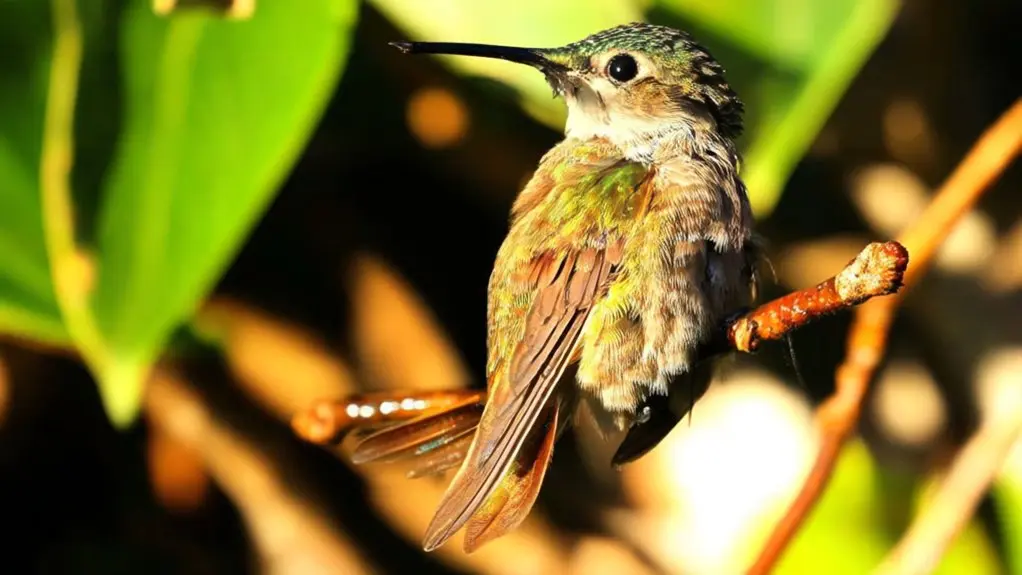
You can trust that birds actively regulate their body temperature through specialized physical traits like feather insulation, bare skin patches, and beak cooling. They use behaviors such as panting, wing spreading, and water-related actions like bathing and urohidrosis to dissipate heat.
Their bodies tolerate higher internal temperatures briefly to conserve water and energy. These combined adaptations allow them to survive extreme temperatures effectively.
Explore further how these remarkable strategies keep birds cool and balanced in changing environments.
How Birds Regulate Their Body Temperature
Although birds maintain a high and stable body temperature, they actively regulate it through a combination of physical adaptations and behavioral strategies. Feather insulation plays a vital role by trapping air close to the skin, minimizing heat loss in cold environments and preventing overheating in warmth. You’ll notice some birds adjust their feather positioning to modulate this insulation effect.
Nest placement also plays a key role in thermoregulation. Birds strategically build nests in shaded, ventilated areas or near water sources to reduce thermal stress on themselves and their offspring. By choosing locations that optimize ambient temperature, birds guarantee better temperature control.
These combined strategies allow you to see how birds effectively maintain homeostasis, balancing heat retention and dissipation without solely relying on physiological cooling methods. It’s pretty clever how they manage all this with simple behaviors and physical traits.
Physical Adaptations That Keep Birds Cool
You’ll notice that many birds have bare skin patches on their legs, face, and feet. These areas increase surface area, which helps them get rid of heat more efficiently. It’s pretty clever how these thin, featherless legs boost blood circulation and promote passive cooling.
Some birds even take it a step further with behaviors like urohidrosis. That’s when they wet their legs to help cool down through evaporation. It’s like their own natural cooling system in action!
Bare Skin Cooling
When temperatures rise, birds rely on bare patches of skin located on their legs, face, and feet to efficiently lose heat through radiation and conduction. Unlike feather insulation, which traps heat to maintain warmth, these unfeathered areas allow for rapid heat transfer to the environment.
Birds can increase blood flow to these regions, swelling the skin to expand surface area and enhance cooling efficiency.
This adaptation is crucial when nest shading and other behavioral methods fall short in extreme heat. By directing heat away from insulated feather-covered parts, birds maintain thermal balance effectively.
You’ll notice this physical trait is especially pronounced in species inhabiting hot climates, illustrating a precise evolutionary solution that complements feather insulation and nest shading to regulate body temperature.
Heat Dissipation Features
How do birds efficiently shed excess heat in scorching environments? They rely on specialized heat dissipation features that complement feather insulation, which primarily retains warmth.
Birds have bare skin patches on their legs, face, and feet, areas without feather insulation, enabling direct heat transfer to the environment. These featherless regions increase surface area for heat loss, and swelling in these patches further expands this area, enhancing cooling.
Long, thin legs, especially in wading birds, help with efficient heat dissipation. Plus, beak thermoregulation plays an essential role. The vascularized beak acts like a radiator, releasing excess heat without compromising insulation elsewhere.
These physical adaptations work together to help birds regulate their body temperature precisely. This way, they maintain thermal balance even during extreme heat conditions.
It’s pretty cool how nature has equipped them to handle the heat!
Body Temperature Flexibility During Extreme Heat

Although regulating body temperature is essential for survival, many bird species allow their internal temperature to rise by up to 5°C above normal during extreme heat. This process is called hyperthermia. It’s a genetic adaptation that helps birds survive by reducing water loss through evaporative cooling.
Smaller birds tend to show greater temperature variation, while larger birds keep their temperature more stable. It’s pretty interesting that birds can tolerate near-lethal temperatures—like 46 to 47°C—at least for short periods. They do this to offset the energetic costs of living in dry, hot environments.
However, this strategy isn’t without risks. It can cause cellular and oxidative stress, which could be harmful if prolonged.
| Bird Size | Temperature Flexibility | Max Tolerated (°C) | Adaptive Benefit |
|---|---|---|---|
| Small | High | 46–47 | Water conservation |
| Medium | Moderate | 45–46 | Energy savings |
| Large | Low | 44–45 | Stability under heat stress |
| All Sizes | Genetic adaptation | Up to +5°C rise | Enhances evolutionary survival |
How Birds Use Water To Stay Cool
Why do birds often seek out water sources during hot weather? They use water to dissipate excess heat by bathing or swimming, transferring body heat to the cooler water. This process effectively lowers their internal temperature despite the insulating properties of their feather insulation, which normally conserves heat.
After bathing, birds open their wings and fluff feathers to enhance air circulation, promoting evaporative cooling. Even at high flight altitudes, where air temperature drops, heat generated from exertion means they need effective cooling once they land.
Some species also use urohidrosis, letting evaporation from moisture on their legs cool their bodies. Seeking lakes, rivers, or birdbaths is a critical thermoregulatory behavior. It helps birds maintain stable body temperatures in varying environmental conditions without messing with their physiological functions.
Behavioral Cooling Strategies Birds Use
You’ll notice that birds use several clever behavioral strategies to cool down. For example, they often take advantage of water by bathing or even submerging themselves in cool water. It’s a simple but effective way to lower their body temperature.
They also tend to rest or take naps during the hottest parts of the day. This helps reduce the amount of metabolic heat their bodies produce, so they don’t get as warm.
On top of that, birds use some interesting behaviors like urohidrosis and gular fluttering. These actions boost evaporative cooling but don’t require a lot of energy, making them pretty efficient ways to stay cool.
Water-Based Cooling Methods
How do birds effectively cool down when temperatures soar? They use water-based cooling methods by bathing or swimming in water bodies. This behavior allows heat to transfer away from their bodies through conduction and evaporation.
When submerged, birds take advantage of the cooling properties of water, which helps lower their core temperature efficiently. After bathing, they spread their wings and fluff their feathers. This disrupts feather insulation, letting in more airflow to boost evaporative cooling.
Some species also cool off by dipping their beaks in water. Since their beaks are rich in blood vessels, this helps them lose heat effectively.
Providing access to shallow water sources like birdbaths or ponds is really important for supporting these natural ways of managing heat.
These water-based behaviors are smart and effective strategies birds use to handle heat stress when temperatures get extreme.
Resting And Napping
Besides using water to shed excess heat, birds also rely on behavioral adjustments like resting and napping to regulate their body temperature. During the hottest parts of the day, you’ll notice birds reducing activity, often retreating to shaded areas to minimize internal heat production.
Napping, particularly brief power naps seen in species like cedar waxwings, conserves energy and helps avoid heat stress during peak temperatures.
These resting behaviors are essential components of their thermal regulation strategy. Additionally, preening rituals and nesting behaviors often coincide with these periods of inactivity. This allows birds to maintain feather condition and safeguard their nests while minimizing heat exposure.
Urohidrosis And Fluttering
When temperatures soar, some bird species use urohidrosis, a unique behavioral cooling strategy. They excrete on their legs to help evaporative heat loss. This method is common in vultures and enhances thermoregulation by using the moisture on their long legs to maximize heat dissipation, even though it can smell a bit.
Birds also combine this with fluttering. That means rapid wing movements that increase airflow and promote cooling. This works alongside feather insulation, which helps retain and release heat as needed. Plus, beak evaporation contributes to thermal regulation by losing moisture.
All these behaviors work together to keep the bird’s body temperature within safe limits. It’s pretty clever how they manage heat in different ways to stay comfortable.
| Behavior | Mechanism | Emotional Impact |
|---|---|---|
| Urohidrosis | Evaporation on legs | Surprising yet effective |
| Fluttering | Wing movement for airflow | Dynamic and urgent |
| Feather Insulation | Heat retention and release | Protective and adaptive |
| Beak Evaporation | Moisture loss via beak | Ingenious and essential |
How Birds Release Excess Heat To Avoid Overheating
Although birds lack sweat glands, they efficiently release excess heat through specialized behaviors and physiological adaptations. You’ll notice them panting or performing gular fluttering, which increases airflow and evaporation. This is crucial for heat dissipation.
Some species spread their wings or expose bare skin patches on their legs and face, which helps enhance heat loss by expanding surface area. Water bathing and submerging in cool water also speed up heat release through conductive cooling.
Feather insulation is essential for temperature regulation during cold weather or migration triggers. Birds can fluff their feathers to adjust heat retention or loss.
Plus, sunbathing raises feather temperatures to about 160°F (71°C), helping passive heat dissipation and pest control.
These clever mechanisms allow birds to avoid overheating, even though they don’t have sweat glands. It’s pretty amazing how they manage to stay cool!
How You Can Help Birds Stay Cool In Summer
While birds use several natural strategies to regulate their body temperature, human intervention can really help them during extreme heat. You can boost their cooling by thinking about feather colors and where they nest. Lighter feather colors reflect heat, and shaded nests help reduce heat stress.
To help birds this summer, you should provide shallow birdbaths with 1-2 inches of clean water for evaporative cooling. Plant native trees and shrubs to create shaded spots that keep things cooler. Make sure to clean and refill water sources regularly so birds have safe places to drink and cool off.
Also, try to keep outdoor activity to a minimum during the hottest parts of the day. This helps avoid disturbing birds that might already be struggling with the heat while nesting.
These simple actions work hand in hand with birds’ natural ways of staying cool, helping them keep their body temperature safe during heatwaves.
Frequently Asked Questions
Do All Bird Species Regulate Body Temperature the Same Way?
You won’t find all bird species regulating temperature identically. Feather insulation and nest thermoregulation vary widely. This influences how each species adapts to environmental conditions through unique physiological and behavioral mechanisms.
How Does Bird Body Temperature Compare to Mammals?
You might think birds run hotter just because of feather insulation, but their body temperature actually exceeds mammals’ by about 1-4°C. This happens thanks to higher metabolic heat production and unique adaptations for precise thermoregulation.
It’s pretty cool how birds manage their body heat so effectively, isn’t it? These special traits help them stay comfortable no matter the weather.
Can Bird Body Temperature Regulation Affect Migration Patterns?
Yes, your bird’s thermal adaptation and feather insulation directly influence migration patterns by managing heat loss and energy use. Efficient temperature regulation helps maintain stamina, enabling longer flights and better survival in fluctuating climates during migration.
It’s pretty interesting how these factors work together, right? When birds keep their body temperature steady, they can save energy and avoid overheating or getting too cold. This balance makes those long migrations more doable and less stressful.
Are Newborn Birds Able to Regulate Their Body Temperature?
Imagine a newborn chick like a fragile seedling. You can’t expect it to survive cold winds alone.
Newborn birds rely on nest insulation and lack feather insulation. So, they can’t regulate their body temperature independently yet.
Does Climate Change Impact Birds’ Temperature Regulation Abilities?
Yes, climate change challenges your bird adaptive strategies by increasing climate variability. This forces birds to tolerate higher temperatures and alter behaviors.
But prolonged heat and habitat changes can overwhelm their thermoregulation. That threatens their survival and distribution.
Conclusion
You’re like a guardian of a delicate balance when you help birds stay cool in summer. These feathered creatures expertly regulate their body temperature through physical adaptations, water use, and behavior. They act like living thermometers.
Understanding their cooling strategies lets you support them in extreme heat. This helps prevent overheating and ensures their survival. By offering water and shade, you become the essential breeze that keeps their internal systems humming efficiently in a warming world.