
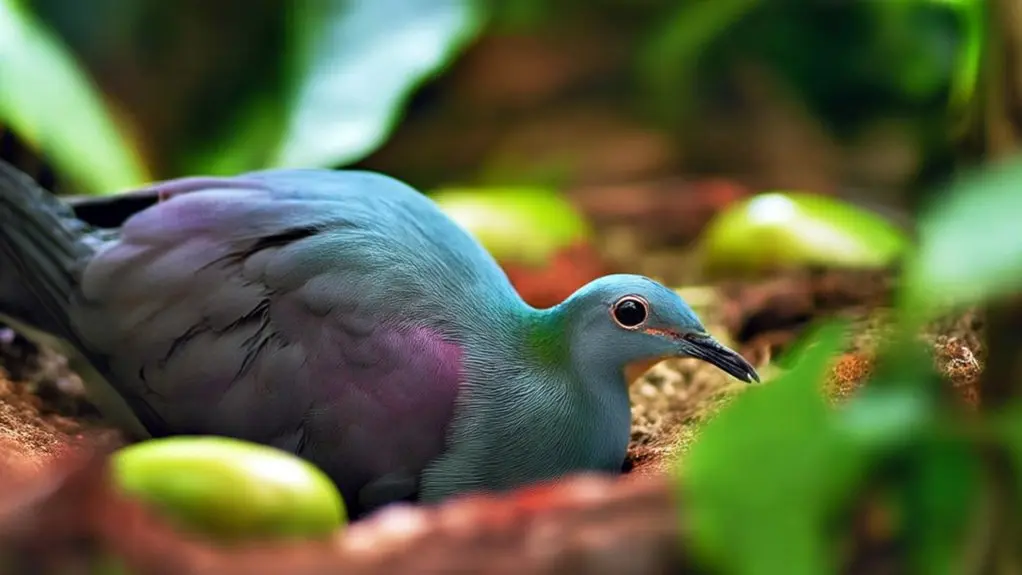
Yes, birds can reproduce asexually through parthenogenesis, where offspring develop from unfertilized eggs containing only maternal DNA. This rare process has been confirmed mainly in captive turkeys and chickens, and naturally in endangered California condors, even when mates are present. Genetic testing shows nearly identical maternal lineages, which challenges the old belief that birds rely only on sexual reproduction.
However, biological constraints and hormonal triggers limit how often this happens. Still, exploring these unusual cases helps us learn more about avian reproduction and could have potential for conservation efforts.
How Does Asexual Reproduction Work in Birds?
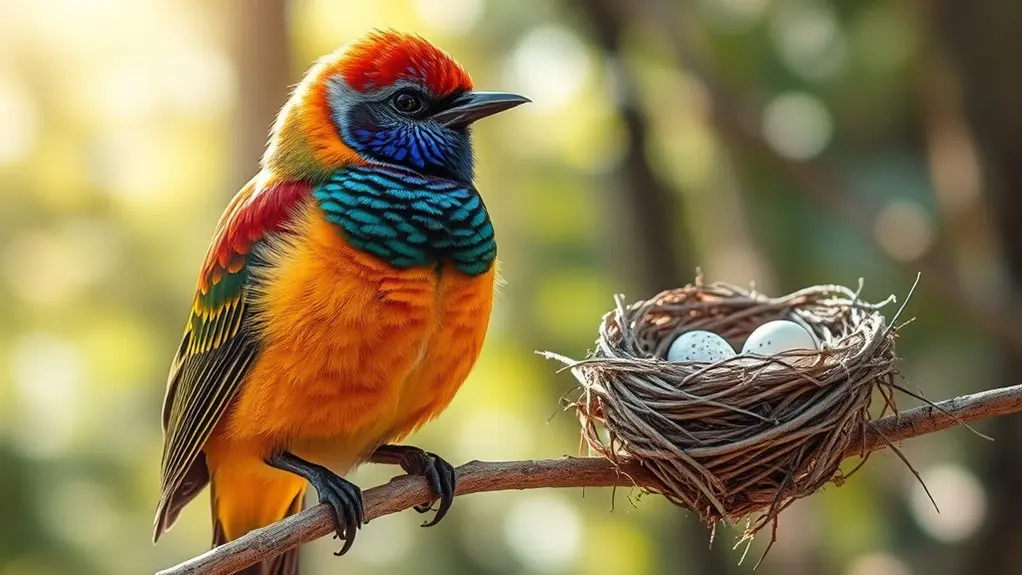
Although asexual reproduction is rare in birds, it occurs through parthenogenesis, where a chick develops from an unfertilized egg without any genetic input from a male. In this process, egg development initiates without fertilization, relying on genetic duplication or rearrangement within the egg’s nucleus to provide the full complement of DNA necessary for embryogenesis.
A chick can develop from an unfertilized egg through genetic duplication in rare avian parthenogenesis.
This duplication guarantees the offspring inherits only maternal genetic material, bypassing the need for sperm contribution. You’ll find that parthenogenetic embryos often show abnormal sex chromosome patterns, which can affect viability.
Despite its rarity, this mechanism demonstrates that birds can occasionally produce offspring asexually, challenging traditional reproductive paradigms.
Understanding egg development and genetic duplication in parthenogenesis offers insight into these unusual reproductive events. It’s pretty fascinating to see how nature finds a way, even when it seems unlikely.
Why Is Asexual Reproduction Rare in Birds?

You’ll find that genetic limitations in birds actually restrict asexual reproduction because their reproductive systems rely on fertilization to produce viable offspring. In other words, birds need the combination of genetic material from two parents to create healthy young.
Plus, sexual reproduction offers evolutionary advantages by promoting genetic diversity. This diversity is really important for survival and helps birds adapt to changing environments over time.
On top of that, there are specific hormonal triggers and biological constraints that regulate how birds reproduce. These factors make asexual reproduction pretty uncommon in avian species.
Genetic Limitations in Birds
Because birds depend heavily on sexual reproduction to maintain genetic diversity, their biology limits the occurrence of asexual reproduction. You should understand that genetic diversity is vital for healthy populations, and birds’ reproductive anatomy supports this necessity.
Several genetic limitations restrict parthenogenesis in birds. First, birds have unique reproductive anatomy, including a single functional ovary, which reduces parthenogenetic potential.
Then, their chromosome configuration and genetic makeup complicate the development of viable offspring from unfertilized eggs.
Also, bird eggs have a specialized structure that depends on fertilization processes not easily bypassed.
Plus, asexual reproduction often produces non-viable eggs or genetically abnormal offspring, which limits how often it happens naturally.
All these factors together make asexual reproduction extremely rare and biologically constrained in birds.
Evolutionary Advantages Of Sexuality
Understanding the biological constraints on asexual reproduction in birds leads naturally to examining why sexual reproduction dominates their life cycle.
Sexual reproduction promotes genetic diversity, which grants birds evolutionary benefits by enhancing adaptability and resilience to environmental changes.
When birds reproduce sexually, their offspring inherit varied gene combinations. This increases their survival odds against diseases and shifting conditions.
In contrast, asexual reproduction produces genetically identical offspring, which limits variation and reduces evolutionary potential.
This lack of genetic diversity makes bird populations more vulnerable to environmental stresses.
Additionally, birds’ complex reproductive anatomy and behaviors further restrict the feasibility of asexual reproduction evolving.
Evolutionary pressures consequently favor sexual reproduction because it sustains genetic diversity, which is critical for long-term survival and adaptation in dynamic ecosystems.
You can see why asexual reproduction remains rare among birds.
Hormonal Triggers And Constraints
Although asexual reproduction might seem advantageous for some species, birds rely heavily on hormonal signals triggered by mating behaviors to regulate their reproductive cycles. Hormonal regulation creates reproductive constraints that make asexual reproduction rare in birds.
Here’s why:
Luteinizing hormone surges, essential for ovulation, typically require male presence and copulation to kick things off. Birds also lack mechanisms for egg activation without fertilization, which limits parthenogenesis.
Plus, a specific hormonal environment has to be in place for successful reproduction, and asexual processes rarely meet those conditions.
When asexual reproduction does happen, it’s often because of abnormal hormonal regulation or genetic mutations that bypass the usual controls. These constraints show how evolution favors sexual reproduction to keep genetic diversity going through hormonally regulated processes.
How Does Genetic Testing Uncover Asexual Reproduction?

When you analyze the DNA of offspring, genetic testing can pinpoint asexual reproduction by revealing that the chick inherited genetic material solely from its mother, without any paternal contribution.
Through DNA analysis, scientists examine genetic markers to confirm the absence of paternal alleles, which indicates parthenogenesis. The detection of sex chromosomes, such as ZZ in birds, further supports asexual reproduction, as these chromosomes arise from unfertilized eggs.
By comparing the genetic profiles of offspring with potential mates, you can verify whether paternal DNA is present or not. Genetic testing offers definitive proof by identifying the lack of genetic variation expected in sexual reproduction.
This shows that the offspring are genetically identical or nearly identical to the mother, confirming asexual reproduction.
What Are the Known Cases of Asexual Reproduction in Birds?
You’ll mostly find documented cases of parthenogenesis in captive birds, like domestic turkeys and chickens. In these cases, females produce offspring without any male fertilization.
Interestingly, the California condor is a rare example of natural asexual reproduction, where there have been confirmed instances of offspring coming from a female-only lineage.
There have also been occasional observations in finches and pigeons, but successful hatchlings from asexual reproduction are still really uncommon.
Documented Bird Parthenogenesis
Several documented cases confirm that asexual reproduction, or parthenogenesis, occurs in birds, albeit extremely rarely. This phenomenon involves egg development without male fertilization, challenging the norm that birds require sexual reproduction.
You should note: Parthenogenesis has been confirmed in species such as turkeys, chickens, finches, and pigeons. Genetic testing shows offspring inherit only maternal DNA, which limits genetic diversity.
Many reported eggs failed to hatch, but some, like the California condor cases, produced live chicks.
These rare events show that under specific conditions, birds can reproduce asexually despite the usual need for fertilization. Understanding these cases gives us insight into the flexibility of avian reproduction and what it means for genetic diversity within populations.
Rare Species Examples
Documented cases of parthenogenesis in birds provide a foundation for understanding which species exhibit this rare reproductive strategy. You’ll find that domestic turkeys and chickens have produced offspring without male fertilization, though such cases remain sporadic.
In 2008, finches showed asexual reproduction, but their eggs didn’t hatch, limiting insights into its impact on traits like feather coloration.
Pigeons have exhibited this phenomenon since 1924, yet their eggs also failed to develop.
Remarkably, the California condor represents the first confirmed natural asexual reproduction in a critically endangered species. This could potentially influence migration patterns and genetic diversity.
How Did California Condors Reproduce Asexually Despite Having Mates?
Although California condors typically reproduce sexually, researchers discovered that some chicks were produced asexually despite the presence of potential mates. This challenges assumptions about mating behavior and egg fertilization in these birds.
Genetic testing revealed these offspring contained only maternal DNA, confirming asexual reproduction.
Here’s what you need to know: condors engaged in normal mating behavior, yet some eggs developed without male genetic input. Asexual reproduction happened independently at different times, not just as a one-time anomaly.
Also, having males around didn’t stop asexual egg fertilization, which means there are alternative reproductive pathways. These findings suggest asexual reproduction might be an underrecognized mechanism even in species thought to rely solely on sexual reproduction.
This precise evidence really changes how we think about reproductive flexibility in California condors.
Why Asexual Reproduction Matters for Endangered Birds
When endangered birds face scarce mating opportunities, asexual reproduction offers an essential alternative to sustain their populations. This reproductive mode can boost reproductive success when mates are limited, allowing species like California condors to increase numbers despite challenges.
However, genetic diversity may decline without sexual recombination. So, understanding and monitoring asexual reproduction is critical for conservation strategies.
| Aspect | Importance |
|---|---|
| Reproductive success | Enables population growth without mates |
| Genetic diversity | Requires monitoring to prevent inbreeding risks |
| Conservation strategies | Informs breeding programs using asexual reproduction |
| Population recovery | Accelerates rebounds in mate-scarce environments |
You can help protect endangered birds by supporting research that balances asexual reproduction’s benefits with genetic health. It’s all about finding the right balance to keep these species thriving.
Frequently Asked Questions
What Is the Typical Mating Behavior of Birds?
You’ll observe birds engaging in courtship displays and vocalizations during mating, often after bird migration. Males compete through dances or songs, while females choose mates.
Then, nest building follows, ensuring a safe environment for offspring development. It’s really fascinating to see how these behaviors all work together in the mating process.
How Long Do Birds Incubate Their Eggs?
You’ll find bird egg incubation ranges from 10 to 80 days, depending on species. During this period, bird nurturing involves turning eggs regularly to maintain even warmth. This helps ensure proper embryo development and maximizes hatching success.
It’s pretty fascinating how attentive birds are during this time. They keep the eggs cozy and safe, giving their future chicks the best start possible.
What Role Does Courtship Play in Bird Reproduction?
You see bird song and mating dances side by side, each signaling readiness and genetic fitness. Courtship synchronizes reproduction, reinforces pair bonds, and triggers hormonal responses. This ensures both partners are primed for successful fertilization and offspring viability.
How Do Birds Care for Their Hatchlings?
You’ll see birds use strong parental instincts, building nests to protect their hatchlings, incubating eggs carefully, and feeding chicks frequently. They also guard nests diligently and teach survival skills, ensuring hatchlings develop properly and stay safe.
Birds really put in the effort to keep their little ones safe and healthy. It’s impressive how much they do just to make sure their babies grow up strong.
Are There Any Birds That Lay Eggs Without Fertilization?
Imagine a rare spark in nature: some birds, like domestic turkeys, exhibit avian parthenogenesis. This means they produce unfertilized eggs that develop into offspring without male DNA.
Though these chicks often face survival challenges due to genetic limitations, it’s still a fascinating process to see in action. Nature sure has some surprising tricks up its sleeve!
Conclusion
You now see that while asexual reproduction in birds is rare, it plays a vital role in their survival, especially for endangered species like California condors. Genetic testing reveals these rare events, showing nature’s resilience.
Remember, “where there’s a will, there’s a way,” even in biology’s most unlikely scenarios. Understanding this phenomenon helps you appreciate how birds adapt and persist. It also offers hope for conservation efforts in the face of genetic challenges.