
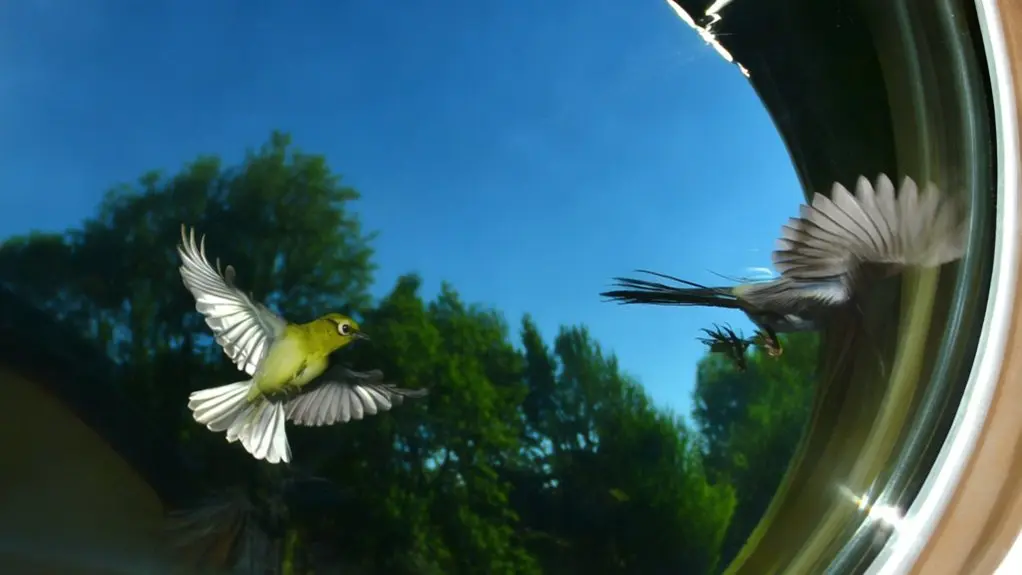
You can’t count on birds to recognize glass windows as barriers because they see reflections of sky and vegetation, not the solid surface. Their advanced color and UV vision causes them to misinterpret glass as open space, leading to frequent collisions.
Using UV-reflective patterns and properly spaced external markers can make glass visible to birds by providing essential visual cues. Understanding these causes and solutions helps improve bird safety and reduces impact risks effectively.
Why Birds Can’t Recognize Glass as a Barrier
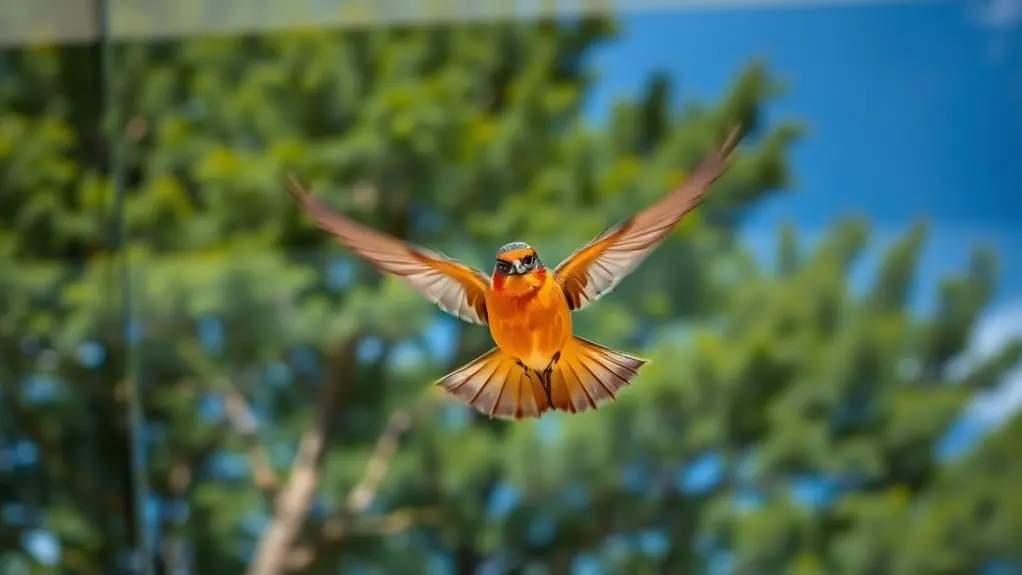
Although glass appears solid to you, birds can’t recognize it as a barrier because their visual system processes reflections rather than the transparent surface itself. Your glass perception relies on visual recognition cues like window frames or door handles, which birds lack.
So, they interpret reflections of sky, trees, or vegetation on the glass as open space or habitat. This happens because their visual recognition mechanisms don’t detect clear, transparent surfaces as obstructions.
Unlike humans, birds don’t process the physical presence of glass but rather the reflected images it shows. This difference in how they see glass causes birds to collide with windows at high speeds.
They mistake reflected environments for open pathways instead of solid barriers. Understanding this helps explain why birds fail to notice glass in their surroundings.
What Birds See When They Look at Glass
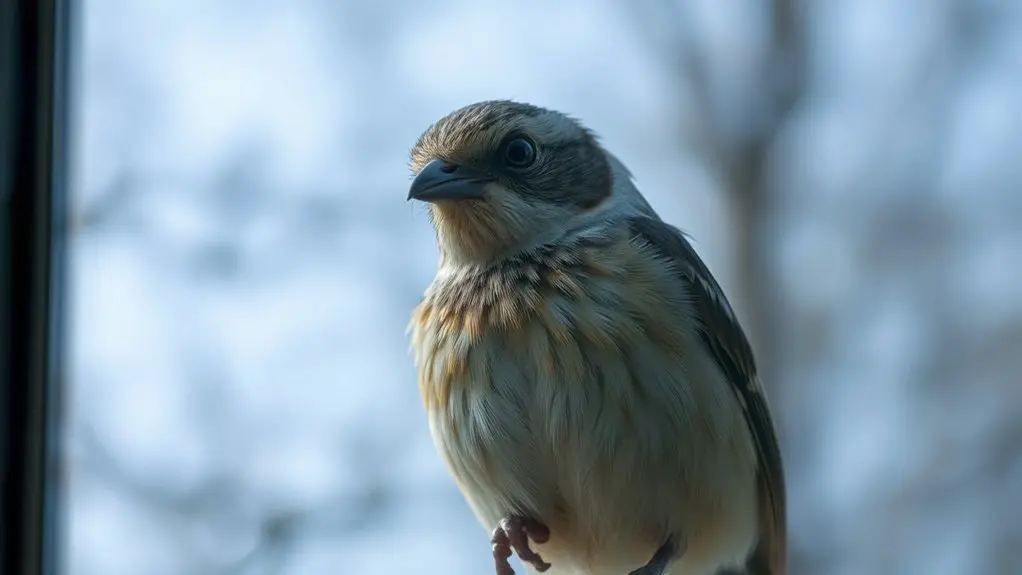
When birds approach glass, their eyes don’t see the transparent barrier itself. Instead, they capture a complex array of reflections that mimic natural environments. Because of their advanced color perception, birds often interpret these mirrored images of sky, trees, and vegetation as open, navigable space.
Unlike humans, birds don’t perceive glass as a solid obstacle. This causes them to fly toward what looks like habitat or sky. It’s a kind of visual trick caused by the lack of distinct patterns or textures on glass surfaces that would usually signal a barrier.
So, birds rely heavily on these reflected visual cues, which can lead to misjudgments during flight.
Knowing what birds actually see helps explain why collisions happen. It also highlights why we need to design glass that breaks up these misleading reflections.
How Ultraviolet (UV) Vision Helps Birds Avoid Glass
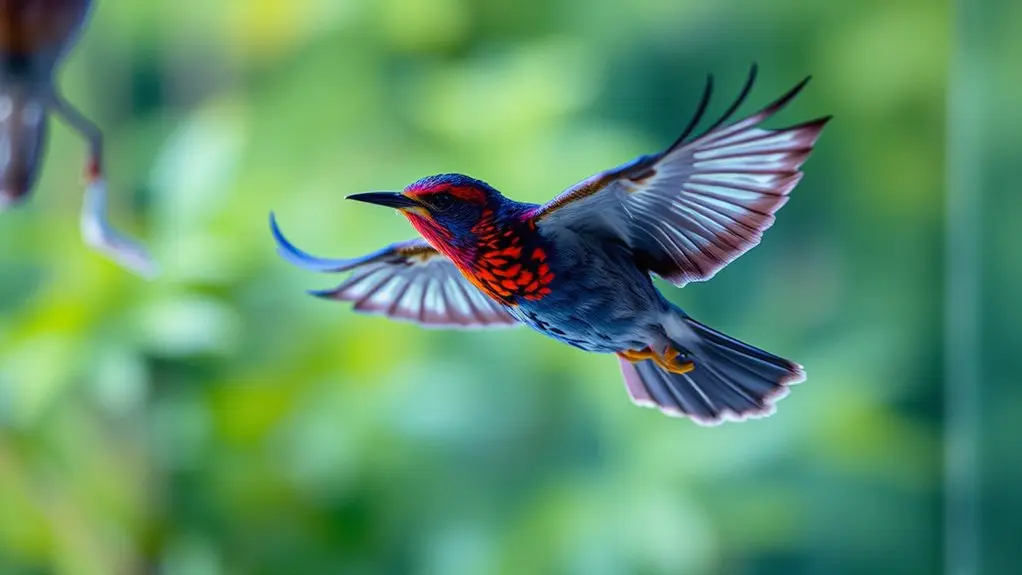
Because some songbirds can see ultraviolet (UV) light, they get a big advantage when it comes to spotting glass surfaces. These surfaces reflect UV patterns that we humans just can’t see. This sensory adaptation boosts their color perception, helping them notice UV-reflective markings on glass that would otherwise look transparent or just reflective to us.
These UV cues really cut down on collisions by making windows stand out in their visual world. Plus, bird-safe window films use UV-reflective patterns that birds can see but people can’t. This clever trick takes advantage of their UV vision to keep birds safe.
The presence of UV light in the environment, especially during certain daylight hours, makes this ability even stronger. By seeing UV wavelengths, birds can tell glass apart from open air.
It’s a great example of how their color perception and sensory adaptations help them navigate and survive.
When Do Bird Collisions Happen Most: and Why?
Bird collisions with windows peak during spring and fall migration seasons. Fall is especially risky because both adult and inexperienced juvenile birds are on the move. Migration timing matches these seasonal patterns, which means more collisions happen as large groups of birds travel unfamiliar routes.
Window collisions peak in spring and fall when migrating birds, especially juveniles, navigate unfamiliar routes.
Collisions happen all year round, especially near bird feeders and in urban areas. But the peak times show when birds are most vulnerable. You might find it interesting that daytime collisions are actually more common than nighttime ones, which goes against what many people think.
Migratory birds are at higher risk during dawn and dusk. The changing light and visual confusion make it harder for them to see glass barriers.
Knowing these timing patterns helps explain why collision rates change and highlights how important migration and seasons are in bird-window collisions.
How Reflections and Lighting Increase Collision Risk
Although glass windows may appear solid to us, their reflective and lighting properties create deceptive illusions that increase collision risks for birds. Light reflection off glass surfaces mirrors sky, trees, and vegetation, leading to illusion creation that tricks birds into perceiving open space or habitat.
At night, interior lights shining through windows further exacerbate risks by attracting and disorienting migrating birds.
Dark-colored glass and transparent corners compound this effect, generating confusing visual pathways that hinder birds’ ability to detect barriers. Bright reflections and complex lighting patterns make windows appear as safe flight routes or escape paths.
During migration periods, these combined factors considerably elevate the likelihood of collisions.
Easy Ways to Make Glass Visible to Birds
You can really cut down on bird collisions by putting visual markers—like decals or patterns—right on the outside of your glass. Just make sure these markers are spaced no more than two inches apart to make them easy for birds to see.
It’s super important to place them on the outside because birds see glass differently than we do. Markers on the inside usually don’t help much, so focusing on the exterior is key.
Effective Visual Markers
When you apply visual markers directly to the exterior surface of glass, you considerably enhance its detectability for birds, reducing collision risk. Effective visual markers rely on strong color contrast and adequate pattern density to break up glass reflections and transparent areas.
You can implement these methods to improve bird safety:
- Use decals or stickers spaced approximately 2 inches apart, ensuring dense patterns that birds can easily perceive.
- Apply UV-reflective films or paints that exploit birds’ UV sensitivity, increasing window visibility without obstructing human views.
- Install external screens or physical barriers, such as netting or parachute cord curtains, to disrupt reflections and provide tactile cues.
Exterior Placement Importance
Because bird deflectors and visual markers lose much of their effectiveness when placed inside, installing them on the exterior surface of windows is essential for reducing bird collisions. Exterior placement ensures these deterrents break up reflections directly, creating a visible barrier 2–4 inches from the glass.
This positioning markedly enhances birds’ ability to recognize windows as obstacles, preventing fatal strikes. Although interior placement may preserve your interior aesthetics and simplify window cleaning, it diminishes the markers’ visibility to birds due to glare and reflection interference.
For maximum protection, apply visual markers or deflectors outside, balancing safety with maintenance needs. Proper exterior installation disrupts large reflective surfaces, making glass unmistakably visible to birds and reducing collision risks effectively.
Bird-Friendly Window Solutions That Prevent Collisions
You can really cut down on bird collisions by putting up exterior deflectors with patterns spaced no more than 2 inches apart. These patterns break up the reflections that often confuse birds.
Plus, using UV-reflective materials helps birds see the windows more clearly, even though humans hardly notice them. It’s a smart way to protect birds without messing with how your windows look.
Effective Exterior Deflectors
Although glass windows often appear invisible to birds, installing exterior deflectors can considerably reduce collisions by making the surface more detectable. These deflectors interrupt reflections, addressing critical issues observed in bird flight patterns and window reflection analysis.
You’ll find that exterior placement is superior because it directly alters the visual cues birds rely on outside the glass.
To optimize effectiveness, guarantee deflectors are spaced 2–4 inches apart to disrupt continuous reflections effectively. They should also be designed to mimic natural cues visible to birds, reinforcing barrier recognition.
It’s best to combine them with other bird-friendly designs to reduce collisions by up to 90%.
UV-Reflective Pattern Benefits
Exterior deflectors improve bird safety by altering visual cues on the glass surface, but integrating UV-reflective patterns offers an additional layer of protection. These patterns leverage birds’ UV vision, making windows visible through specific pattern design that enhances color contrast invisible to humans.
By applying UV-reflective markings, you decrease bird-window collisions by up to 70%, as birds detect and avoid the glass more effectively.
Since UV light perception varies among species, combining UV-reflective patterns with other deterrents maximizes prevention. Importantly, UV-patterned glass maintains natural light transmission and aesthetics for humans while providing critical visual cues for birds.
When you select bird-friendly window solutions, prioritize pattern design that balances high color contrast in UV wavelengths to ensure maximum visibility and collision reduction.
Frequently Asked Questions
Do All Bird Species Have the Same Ability to See Glass?
You won’t find all bird species with the same ability to see glass because their visual acuity and feather adaptation differ. This affects how clearly they perceive reflective surfaces and barriers. Especially those with UV sensitivity.
Can Indoor Plants Attract Birds to Windows?
Like a moth to a flame, indoor plants can attract birds by mimicking natural cues tied to their feather colors and nesting habits.
You’ll notice birds drawn to windows with plants, which can increase the risk of collisions.
It’s kind of surprising how much these little green friends can influence bird behavior, right? Just something to keep in mind if you want to keep your feathered visitors safe.
Are There Specific Times of Year With Higher Bird-Window Collisions?
You’ll notice higher bird-window collisions during seasonal migration, especially in fall, as reflective surfaces confuse migrating birds. These reflections mimic open sky or habitat, increasing collision risks during peak movement periods in spring and fall.
Birds just don’t see the glass and think it’s a clear path. This is why those times of year are especially risky. So, it’s a good idea to be extra cautious with windows during these seasons.
Do Bird Collisions Cause Significant Population Declines?
You should know over 1 billion birds die yearly from window collisions. Urban lighting and reduced predator awareness increase risks, causing significant population declines, especially in migratory species.
These birds are vulnerable to repeated, often fatal impacts on survival rates. It’s a serious problem that affects their numbers more than many realize. The combination of factors makes it tough for these birds to thrive.
Can Birds Recognize Glass After Repeated Collisions?
You won’t find birds recognizing glass after repeated collisions because their behavior relies on visual cues. Reflective surfaces confuse them, preventing learning. So, they keep striking glass despite multiple impacts and no improved avoidance.
It’s kind of sad, really. Birds don’t seem to connect the dots that glass is a barrier. They just see a reflection or a clear path and go for it again. Even after hitting it several times, they don’t get better at avoiding it.
Conclusion
Think of glass windows as invisible walls to birds, blending sky and trees into a deceptive mirror. You can be their guide, breaking this illusion with UV patterns or decals that signal danger. By understanding how birds perceive these barriers, you help transform glass from a silent threat into a visible boundary.
Your actions bridge nature and architecture, making sure windows become safe portals rather than deadly traps. It’s all about helping birds see what we often miss. A little effort can make a big difference in keeping them safe.