
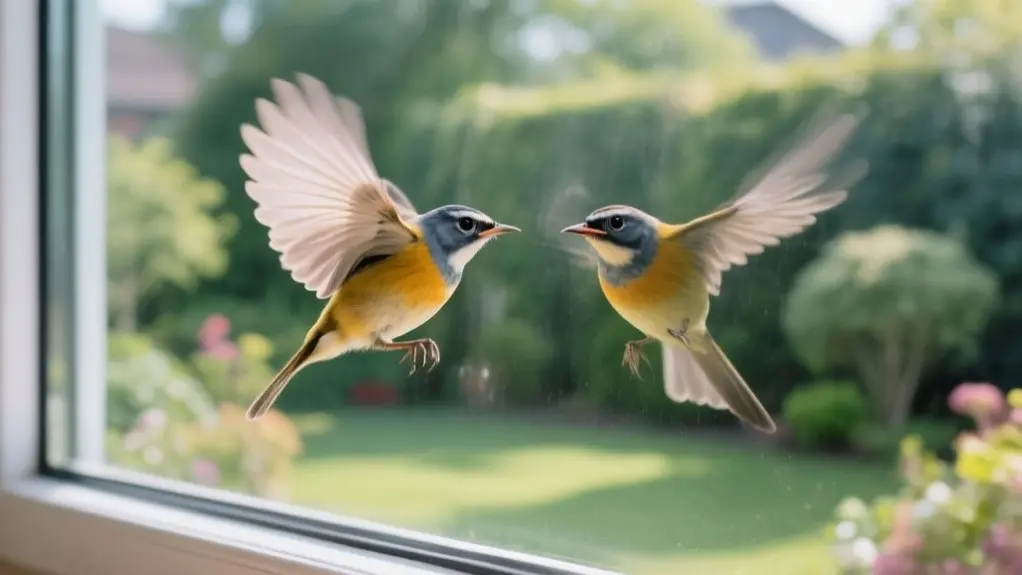
You can’t rely on birds to see glass because their vision treats reflections and transparency as open air, leading to frequent collisions. Glass mimics natural surroundings like sky and trees, confusing their perception. This is especially true during breeding or migration when territorial instincts peak.
Dirt or pollen on glass further reduces visibility, increasing the risk. Certain species like blue jays and cardinals are particularly prone to strikes. Understanding these interactions reveals why and when collisions occur.
It also shows how you can help prevent them. Pretty interesting, right?
Why Birds Struggle to See Glass Clearly
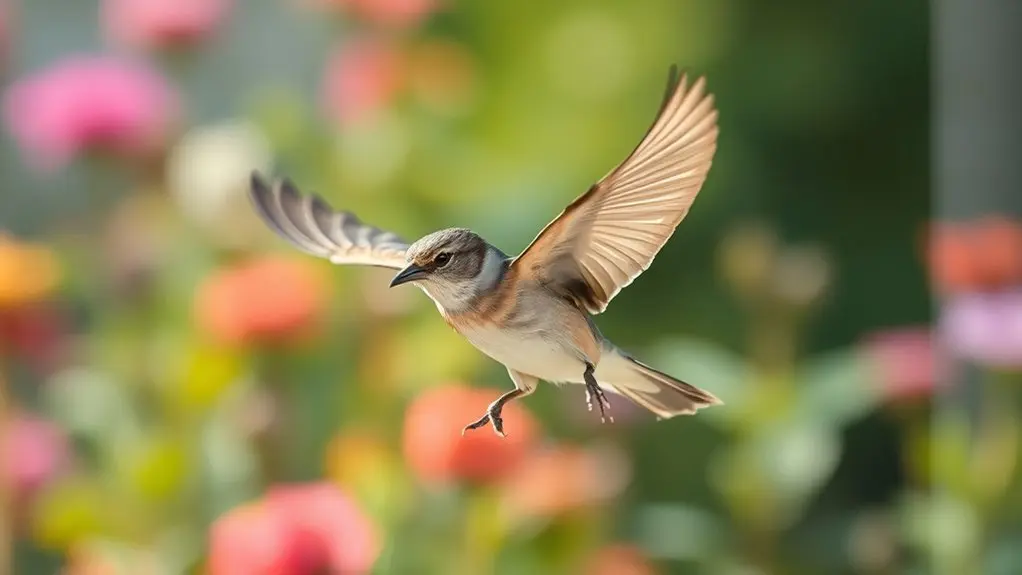
Although glass appears invisible to you, birds often can’t detect it because it mimics open space. This makes it difficult for them to recognize it as a barrier.
Your feather camouflage relies on blending into natural surroundings, but glass messes with this by reflecting sky and vegetation. This reflection confuses a bird’s visual perception.
Their eyes interpret reflections as continuous habitat, not solid objects. When pollen, dirt, or residue obscures glass transparency, it makes recognition even harder. Sometimes, this actually increases the risk of collisions.
Many species also struggle to tell glass apart from open sky or foliage. This is especially true during breeding season when birds are extra alert and rely heavily on visual cues.
Understanding this helps explain why birds’ natural perception, evolved for the outdoors, fails when they encounter transparent, reflective glass surfaces.
How Reflections Trick Birds Into Collisions
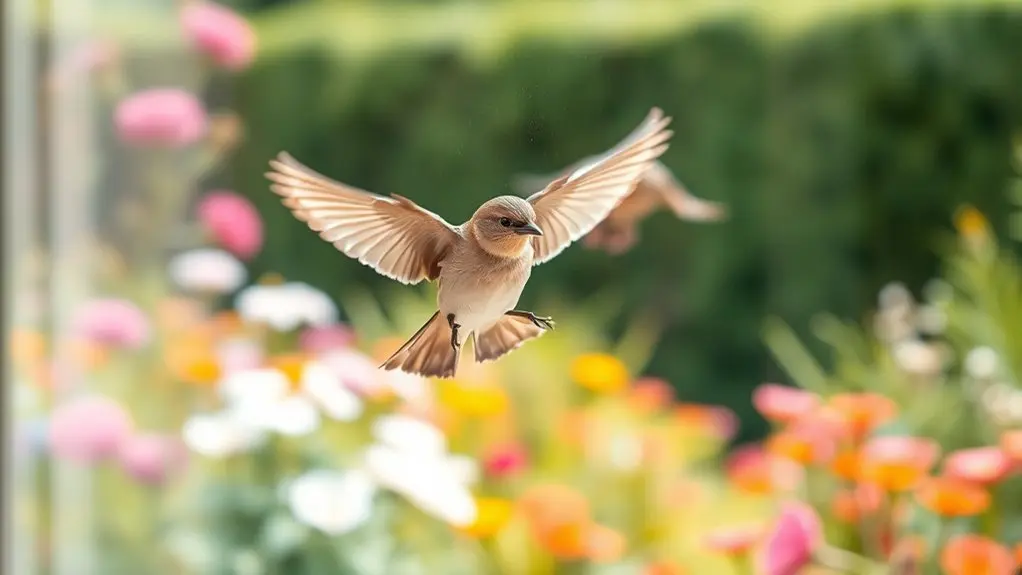
When birds encounter glass surfaces, reflections of sky, trees, or other natural elements create convincing illusions that trick their visual system into perceiving open space or habitat. These reflection illusions generate visual confusion, causing birds to misinterpret glass as a continuation of their environment.
You’ll notice that bright, shiny windows amplify this effect, making glass appear like open sky or dense foliage. Birds often mistake their own reflections for rivals or potential mates, triggering aggressive or territorial responses that increase collision risk.
This leads them to repeatedly strike windows, unable to recognize the invisible barrier. The combined effect of habitat mimicry and self-reflection results in a persistent misjudgment of space.
Basically, glass surfaces become hazardous obstacles rather than transparent panes in a bird’s perceptual world.
When and Why Bird Collisions Increase
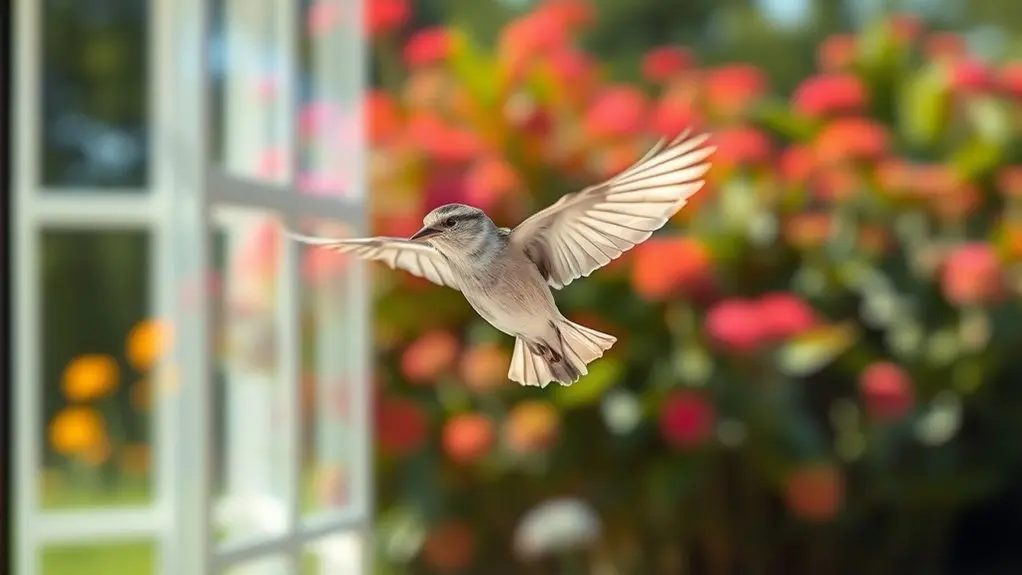
Because birds become more territorial and active during breeding season, collisions with windows spike as they aggressively confront reflections they mistake for rivals or mates. Glass transparency confuses their visual perception, making it difficult to distinguish real birds from reflections.
You’ll notice collision rates also rise during migration, especially at night when artificial lighting attracts birds toward reflective surfaces. Additionally, dirt or pollen buildup on glass reduces visibility, increasing strikes.
Key factors increasing collisions include:
- Breeding season aggression triggered by territorial instincts.
- Migration periods intensified by nocturnal artificial lighting.
- Large, highly reflective glass surfaces mimicking open habitat or rivals.
- Obscured glass transparency due to environmental debris impairing visual perception.
Understanding these patterns helps you identify when windows pose the greatest risk to birds.
Which Bird Species Are Most at Risk of Window Strikes?
You’ll notice that species like blue jays, cardinals, wood thrashers, and bluebirds are the ones most commonly involved in window strikes. It’s largely because of their territorial and breeding behaviors.
These behaviors make them more likely to attack reflections they see on glass surfaces.
During breeding season, things get even more intense. These birds become especially vulnerable since they’re aggressively defending their territories.
They often mistake their reflections for rival birds, which leads to more window strikes.
Common Collision Species
Several bird species show a higher incidence of window collisions, with blue jays, wood thrashers, cardinals, and bluebirds frequently involved. Their feather coloration and migration patterns influence their vulnerability. Reflective glass often mirrors the environment or the birds themselves, causing confusion and strikes.
Here are key collision-prone species:
1. Blue jays
Their vivid blue feathers and territorial behavior increase risks.
2. Wood thrashers
Larger size and specific flight patterns make them more susceptible.
3. Cardinals
Bright red plumage combined with migration and territorial habits heighten collisions.
4. Bluebirds
Their colorful feathers and seasonal movements expose them to reflective surfaces.
Understanding these species’ behaviors helps you predict and mitigate window strike risks effectively.
It’s pretty useful to know this if you want to keep our feathered friends safe.
Breeding Season Vulnerability
When breeding season arrives, territorial bird species such as blue jays, cardinals, and wood thrashers increase their aggressive behaviors. This causes a spike in window strike incidents. Their feather adaptations, designed for agility and display, help them fly fast but don’t protect them from glass collisions.
During this time, species like bluebirds and mockingbirds focus intensely on defending their territory and finding mates. This focus makes them less aware of reflective surfaces around them.
Migration patterns also play a role because many birds pass through unfamiliar areas in spring, which increases the risk of collisions.
Studies confirm that window strike peaks line up with nesting and territorial behaviors in spring and early summer.
You’ll notice that highly visual, territorial birds aggressively attack reflections, mistaking them for rivals. That’s why breeding season is their most vulnerable time for window strikes.
Signs Birds Have Hit Your Windows
Although birds may fly swiftly and skillfully, they sometimes collide with windows, leaving behind clear signs of impact. You can identify these collisions by observing feather evidence and bird footprints on or near the glass. These signs help confirm that a bird has struck the surface.
Look for these indicators:
- Feather evidence, blood, or tissue marks on windows, which reveal physical impact.
- Bird footprints or smudges on dusty window surfaces, showing contact.
- Dead or stunned birds found beneath windows, signifying recent collisions.
- Bird debris, such as feathers or droppings, accumulated near windows, indicating frequent hits.
Monitoring these signs lets you see if your windows might be a hazard to local bird populations. It’s a simple way to help protect the birds around you.
Easy Ways to Prevent Bird-Window Collisions
Noticing signs that birds have hit your windows highlights the need for effective prevention strategies. You can reduce collisions by disrupting glass transparency, which often misleads birds’ visual perception.
Applying bird-safe decals or stickers makes windows more visible, breaking up reflections that mimic open sky or habitat.
Bird-safe decals enhance window visibility by disrupting reflections that resemble sky or natural surroundings.
Adding visual barriers or patterned window films further prevents birds from mistaking glass for open space or rival birds.
Regular window cleaning enhances clarity but also minimizes confusing reflections caused by dirt or residue.
During migration seasons, turning off or dimming exterior lights reduces attraction and disorientation caused by illuminated glass surfaces.
Community Strategies to Reduce Bird-Window Collisions
Because bird-window collisions often occur in densely populated areas, community involvement plays a crucial role in reducing these incidents. Birds’ avian vision is adapted to detect obstacles, but the high glass transparency of modern windows often deceives them.
To counter this, your community can implement effective strategies:
- Install bird-safe decals or visual markers that disrupt glass transparency, aiding birds in recognizing barriers.
- Organize window cleaning and install physical barriers to reduce reflections that confuse birds.
- Promote awareness campaigns encouraging residents to retrofit buildings with bird-friendly modifications.
- Adjust seasonal lighting by dimming or turning off lights during migration to lower bird attraction.
These steps might seem small, but together they can make a big difference. Getting everyone involved makes the community safer for our feathered friends.
Frequently Asked Questions
Do Birds Have Different Vision Abilities Compared to Humans?
You have to understand that birds’ eye structure includes four color receptors, letting them perceive ultraviolet light. Their feather adaptations also aid flight and rapid obstacle detection.
This makes their vision far more complex and refined than yours. It’s pretty amazing how different their world looks compared to what we see!
Can Glass Coatings Improve Bird Safety Without Affecting Visibility?
You can improve bird safety by applying durable glass surface coatings that don’t affect your view. These coatings take into account bird migration patterns and use UV patterns that birds can detect. This helps reduce collisions without compromising the durability of the glass surface or human visibility.
It’s pretty cool because while birds see these UV patterns, humans don’t, so your view stays clear. Plus, the coatings are designed to last, so you don’t have to worry about frequent reapplications. Overall, it’s a smart way to keep birds safe and maintain the look and function of your glass.
How Do Nocturnal Birds Perceive Glass Surfaces?
You’ll find nocturnal birds often misinterpret reflective surfaces, causing visual illusions that obscure glass. Their low-light vision hinders detecting transparency, making it tough for them to recognize glass as a barrier during nighttime flight.
It’s kind of like they see a mirror instead of a window, which can be really confusing. So, these birds might fly right into glass without realizing it’s there. It’s all because their eyes aren’t built to handle reflections or clear surfaces well when it’s dark outside.
Are There Specific Times of Day When Birds Are More Cautious?
You know what they say: “Forewarned is forearmed.” During bird migration, dawn and dusk make birds more cautious.
On the other hand, urban bird behavior shows increased risk midday and at night. That happens because of less vigilance and the effects of artificial lighting. Makes sense, right?
Can Pet Birds Recognize Glass Inside Homes?
You won’t find pet birds reliably recognizing glass inside homes, since urban reflections confuse them. Unlike wild birds during migration, they lack experience interpreting these surfaces. This increases collision risks without visual cues or training to perceive barriers.
It’s kind of tricky for them because they don’t get the same natural practice as wild birds do. So, unless they’re taught or given hints, they might fly right into windows or mirrors. It’s something to be mindful of if you have pet birds indoors.
Conclusion
You might think birds see glass like you do, but they don’t. They often perceive reflections as endless sky or habitat, which leads to fatal collisions. These strikes spike during migration when birds are most vulnerable.
Species like warblers and hummingbirds are particularly at risk. By spotting telltale marks and using simple prevention methods, you can save countless birds from smashing into your windows. It’s not an exaggeration to say every window you protect could be a lifesaver for thousands.