
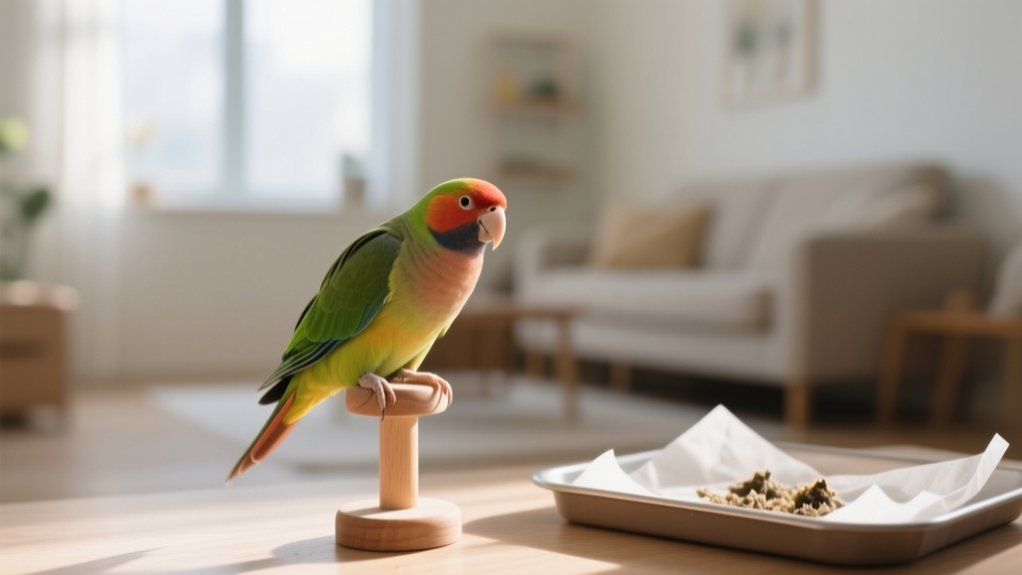
You can potty train your bird, but it’s important to respect its natural bathroom habits and avoid forcing it to hold waste. That can actually harm its health. Birds poop frequently and usually give signals before going, so timing and patience are key.
Focus on positive reinforcement and regular cleaning instead of trying to control things too strictly. If your bird shows any stress or discomfort, it’s a good idea to reconsider the training for its well-being.
Understanding the right approach helps guarantee a safe and compassionate routine for both of you. Just take it slow and pay attention to your bird’s needs.
Is Potty Training Safe for Birds?
Although potty training might seem like a convenient way to manage your bird’s waste, it can pose serious health risks. Birds aren’t biologically built to hold their droppings for long periods, and forcing them to do so can cause prolapses and infections.
When you encourage your bird to only eliminate in specific spots, you disrupt its natural habits, which often leads to stress.
The discomfort and potential medical issues far outweigh the benefits of a trained bathroom routine. Instead of pushing your bird to hold in waste, focus on regular cleaning and adjusting their environment to minimize mess.
This approach respects your bird’s health and well-being, ensuring they stay comfortable and safe without unnecessary strain or risk.
How Do Birds Naturally Go to the Bathroom?
You might notice that birds tend to go to the bathroom several times an hour. They often give little hints, like bobbing their tails, right before they do it.
They usually pick certain spots, driven by instinct, to keep their space tidy. Knowing these natural habits can really help if you’re trying to potty train your bird and want to work with their rhythms.
Natural Pooping Frequency
Since birds often eat foods high in water content, they tend to poop frequently. This usually happens every 15 to 30 minutes depending on their species and size. Understanding this natural rhythm can help you care for your feathered friend with empathy.
Keep in mind, birds don’t usually hold their poop long, except during breeding or unusual stress. Their bathroom habits happen spontaneously and involuntarily, so timing is unpredictable.
Diet heavily influences frequency. More water means more frequent eliminations. Observing their pooping patterns gives insight into their health and well-being.
Pre-Poop Body Language
Birds give clear signals before they go to the bathroom, and learning to recognize these can make caring for them much easier. You’ll notice many birds squat, back up slightly, or bob their bodies before pooping. Some may even become very still or appear more relaxed right before they release.
These consistent pre-poop behaviors are key to anticipating their needs without stressing them. By paying close attention, you can intervene gently and manage droppings effectively.
Understanding this natural body language helps you support your bird’s comfort while avoiding any pressure or punishment. Observing these cues lets you respond appropriately, creating a safer, more compassionate environment for your feathered friend.
It really makes a difference when you know what to look for. So, keep an eye on those little signals—they’re your best guide!
Preferred Pooping Locations
While your feathered friend might seem random in their bathroom habits, they usually pick specific spots to relieve themselves. These are places that feel safe and comfortable. Understanding their preferred pooping locations helps you support their natural behavior and keep things clean.
Here’s what you need to know:
- Birds often choose perches or areas they associate with comfort and safety.
- Many parrots prefer to poop on designated perches or outside the cage. They usually avoid favorite humans or toys.
- Some species instinctively avoid soiling their preferred perches to reduce contamination.
- Birds typically defecate when relaxed or after eating, which helps keep their pooping spots consistent.
What Are Your Bird’s Pre-Poop Signals for Potty Training?
If you pay close attention, you’ll notice your bird giving subtle signals before it needs to go. Watch for behaviors like crouching, backing up, or shifting tail feathers. These often indicate an imminent bathroom break.
Your bird might also lean forward or squat just before pooping. Some birds even shake or produce specific vocalizations as a pre-poop cue.
By consistently observing these unique behaviors, you can predict when your bird is about to relieve itself.
Recognizing these signals helps you manage accidents more effectively and reduces the need for correction or punishment.
Being attentive and respectful of your bird’s natural body language creates a trusting environment.
This is essential for successful potty training and your bird’s well-being.
How to Time and Set Up Potty Training Sessions
Since timing is essential for success, you’ll need to observe your bird’s natural toileting schedule carefully. Birds vary widely. Some go every few minutes, others less often, so tailor your approach accordingly.
To set up effective sessions, follow these steps:
- Track when your bird typically needs to go and note the intervals.
- Set a timer to prompt you to bring your bird to the potty area just before these times.
- Consistently place your bird on the designated spot, like a perch or paper-lined area, right before the timer sounds.
- Wait patiently for your bird to go, then immediately praise and reward to reinforce the behavior.
Adjust timing as needed to align with your bird’s habits. This way, sessions stay positive and productive.
How to Manage Accidents Without Stressing Your Bird
Managing accidents calmly plays a crucial role in successful potty training for your bird. When accidents happen, avoid punishment and use positive reinforcement to keep your bird calm and confident.
Keep cleaning supplies within reach, and disinfect areas promptly to reduce odors and maintain a healthy environment.
Cover furniture and floors with washable or disposable materials to simplify cleanup and protect your home.
Pay close attention to your bird’s body language, which helps you anticipate accidents and minimize stress for both of you.
Remember, patience and consistency are key because accidents are a normal part of the learning process.
By approaching these moments with understanding and care, you’ll foster a trusting relationship that supports your bird’s potty training progress.
Just take it step by step, and you’ll both get there together.
Practical Tips for Handling Bird Messes at Home
Though bird messes are inevitable, you can take practical steps to keep your home clean and comfortable. Start by designating a specific toileting area lined with paper, making droppings easy to spot and remove.
Protect your furniture by covering it with blankets or towels, which you can swap out regularly to prevent odors.
Consider bird shirts or shawls to safely contain droppings without stressing your bird.
Finally, use physical barriers or create zones to limit where your bird can go, reducing mess spread.
- Line floors or cages with absorbent paper for quick cleaning.
- Cover furniture with washable fabrics to shield surfaces.
- Use bird attire to manage droppings on the go.
- Change covers frequently to maintain hygiene and freshness.
These steps keep your home sanitary while respecting your bird’s comfort. It’s all about making things easier for you and your feathered friend.
When Is It Time to Rethink Potty Training?
You’ll want to keep an eye out for signs that potty training might be stressing your bird or causing health problems, like if it’s holding in droppings for too long.
If you notice your bird seems uncomfortable or starts acting differently, that’s a good clue to rethink your approach.
The most important thing is your bird’s well-being, so sometimes it’s better to focus less on training and more on letting natural habits take over.
Health Risks Awareness
Because birds naturally need to relieve themselves frequently, holding in droppings for potty training can lead to serious health risks like infections and prolapsing. You should be aware of these key signs indicating it’s time to reconsider potty training:
- Persistent discomfort or signs of distress in your bird.
- Noticeable buildup of heat or odor around holding areas.
- Changes in droppings frequency or consistency suggesting digestive issues.
- Behavioral signs of stress linked to withholding natural elimination.
Forcing your bird to hold droppings goes against its natural instincts and can create internal complications. So, it’s really important to prioritize your bird’s health by watching out for these warning signs and adjusting your approach accordingly.
Compassionate care means recognizing when potty training might actually do more harm than good. Just keep your bird’s well-being front and center, and you’ll know what to do.
Behavioral Challenges Emergence
When your bird starts holding in droppings for over 24 hours or shows signs of stress and discomfort, it’s a clear signal that the potty training approach needs reevaluation. This behavior can lead to serious health risks, such as infections or prolapsing.
If your bird consistently refuses to use designated areas or has frequent accidents, it may be suppressing its natural elimination instincts, which is unhealthy.
Notice if your bird’s happiness or health declines, like increased odor or medical issues, as these are red flags. Behavioral problems that arise from forcing potty training suggest it’s time to prioritize natural toileting patterns.
Frequently Asked Questions
Can All Bird Species Be Potty Trained Equally Well?
You can’t potty train all bird species equally well. Larger parrots like cockatoos respond better.
Small birds or those with strong instincts, like lovebirds, often resist training. That’s usually because of their natural toileting behaviors and how often they go. It just makes it harder for them to catch on.
How Long Does It Typically Take to Potty Train a Bird?
It typically takes you a few days to several weeks to potty train your bird, depending on its personality and your consistency. With patience and routine, you’ll see noticeable progress within two to four weeks.
Just remember, every bird is different, so don’t get discouraged if it takes a little longer. Stick with it, and you’ll get there!
What Are the Best Rewards for Encouraging Potty Training?
You’ll want to use small, healthy treats like millet or fruit slices as rewards. Combine them with consistent verbal praise right after your bird pottys to reinforce positive behavior effectively and compassionately.
It really helps to keep the rewards quick and simple. That way, your bird connects the treat with the good behavior faster. Plus, mixing treats with kind words makes training feel more encouraging and less like a chore.
Can Potty Training Improve My Bird’s Overall Behavior?
Of course, your bird’s behavior won’t magically improve overnight. But potty training can actually reduce stress and mess. This makes your feathered friend calmer and more cooperative.
It also helps boost your bond through patience and consistent routines. With time, you’ll likely notice positive changes in how your bird acts. So, it’s definitely worth giving it a try!
Are There Any Health Risks Associated With Potty Training?
Yes, potty training can cause health risks like infections and prolapsing because birds may hold in droppings too long.
It’s safer to manage messes naturally, respecting their biological needs and well-being.
Taking it slow and paying attention to their comfort helps keep them healthy and happy.
Conclusion
Potty training your bird can be safe and rewarding when done with patience and care. Did you know that studies show up to 60% of bird owners successfully train their pets to go in designated spots? By recognizing your bird’s signals and setting consistent routines, you reduce mess and stress for both of you.
Remember, if it’s not working, it’s okay to rethink your approach. Your bird’s comfort and well-being always come first. So take your time and be gentle with the process. You’ll both benefit from the effort.