
Yes, some birds are truly poisonous, carrying toxins like batrachotoxin in their skin, feathers, and tissues. These toxins can harm you or your pets if touched or ingested. Unlike venomous animals that inject toxins actively, poisonous birds rely on passive toxicity acquired mainly from their diet, often toxic insects or microbial symbionts.
Their bodies have evolved ways to safely store these poisons and avoid self-harm. It’s pretty fascinating how they manage that. Understanding this unique defense reveals a lot about their ecology and evolution.
How Are Bird Poisons Different From Venomous Animal Toxins?
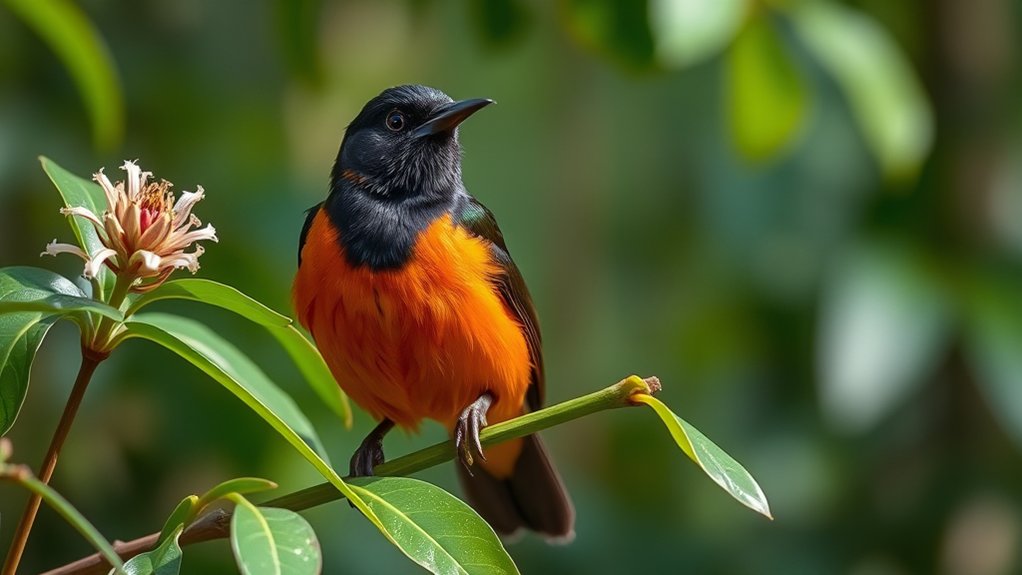
Although both poisonous birds and venomous animals use toxins for defense, their methods and mechanisms differ fundamentally. You’ll find that poisonous birds contain toxins in their skin, feathers, or tissues, which can cause harm if touched or ingested.
In contrast, venomous animals actively inject toxins through specialized apparatus like fangs, stingers, or spurs.
You don’t need to worry about any delivery mechanism with poisonous birds; their toxicity is passive and constant.
Interestingly, the toxins in these birds often come from their diet, serving primarily as defense.
Venomous animals, however, produce or store venom not just for defense but also for hunting.
So, the key difference is that venomous animals have evolved structures to inject venom actively, while poisonous birds rely on passive toxicity without specialized delivery.
It’s pretty fascinating how nature has come up with such different strategies, isn’t it?
Which Birds Are Poisonous and Carry Toxins?
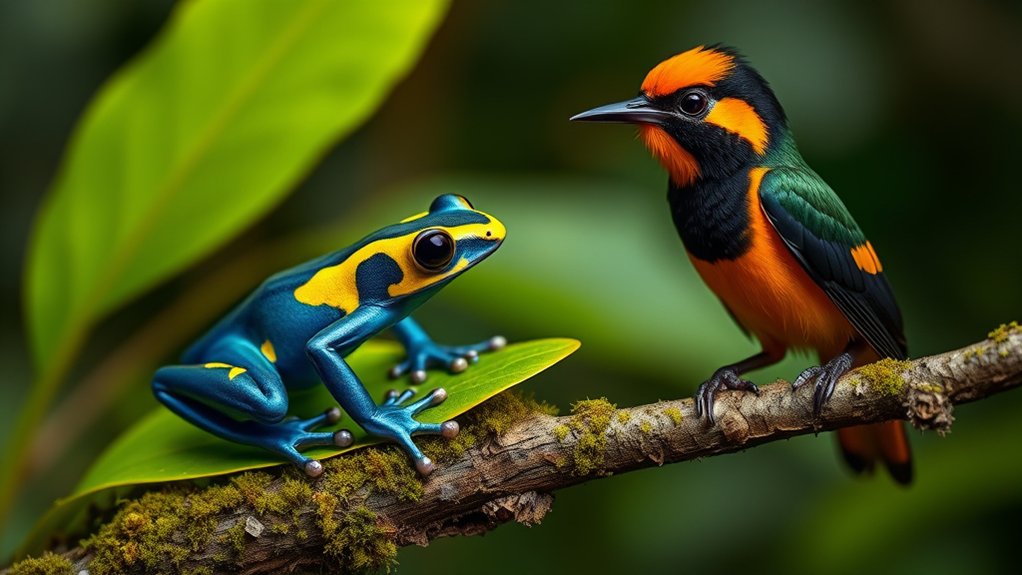
When you examine poisonous birds, you’ll find that several species from Papua New Guinea, such as the hooded pitohui and blue-capped ifrita, carry potent toxins like batrachotoxin in their skin and feathers. These toxins are stored within muscles and viscera, making the birds toxic to touch or ingestion.
Other birds, like some Australian pigeons and African geese, contain toxins after consuming specific plants or insects. While primarily endemic to New Guinea, toxic birds also appear in North America and Europe with different toxin types.
| Bird Species | Toxin Type | Emotional Impact |
|---|---|---|
| Hooded Pitohui | Batrachotoxin | Awe at natural defense |
| Blue-capped Ifrita | Batrachotoxin | Caution and respect |
| Australian Pigeons | Fluoroacetate | Surprise at adaptation |
| African Geese | Blister beetle toxin | Curiosity about nature |
How Do Poisonous Birds Acquire Their Toxins?
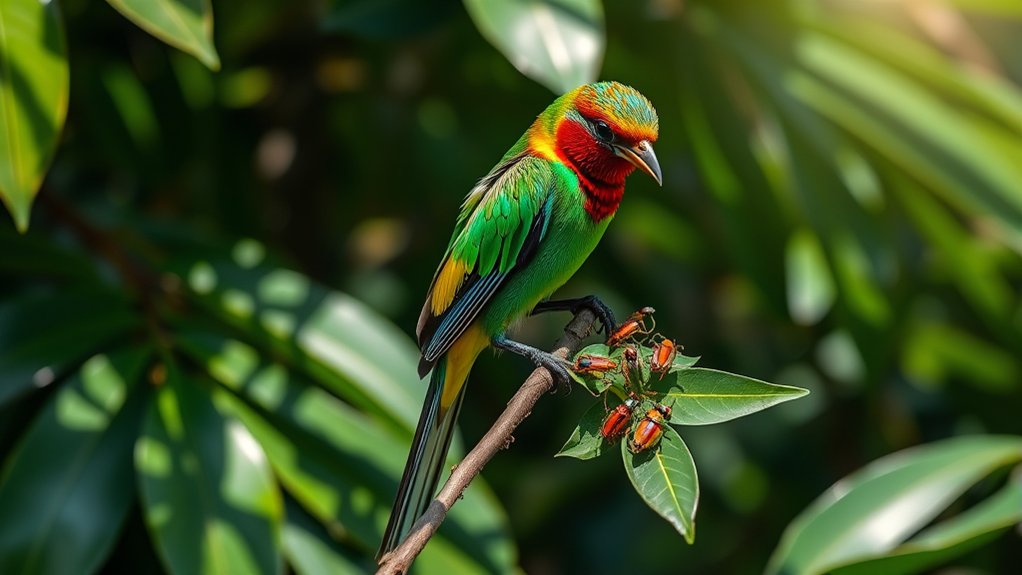
You get a clear picture of how poisonous birds pick up their toxins by looking closely at what they eat, mainly toxic insects such as Choresine beetles. It’s pretty interesting to see how their diet plays a big role in this process.
Then, you also find out about the part microbial symbiosis plays in helping these birds acquire toxins. It’s not just about eating toxic bugs; there’s a whole other layer involving tiny microbes working alongside the birds.
What’s really fascinating is that these birds don’t actually make the toxins themselves. Instead, they store or sequester them in their bodies.
This whole process shows just how complex the way toxins build up in their tissues and feathers really is.
Dietary Sources Of Toxins
Since poisonous birds like the hooded pitohui and blue-capped ifrita don’t produce toxins themselves, they must acquire these compounds through their diet. You’ll find that their primary toxin source is insects, particularly Choresine beetles, which contain batrachotoxins.
Although these birds sequester toxins in muscles, viscera, and skin, analyses show that insects and fruits in their diet often lack detectable toxins directly. This suggests the toxins originate from microorganisms associated with their prey rather than the prey alone.
So, when you observe these birds, understand that they accumulate toxins by consuming specific insects that harbor toxin-producing microbes. These microbes then allow the birds to store potent chemicals for defense.
This dietary sequestration mechanism is fundamental to their poisonous nature.
Microbial Symbiosis Role
Although poisonous birds like pitohuis and ifrits don’t produce batrachotoxins themselves, they get these powerful chemicals through a complex relationship involving microbial symbiosis. You’ll find that these toxins come from microbes linked to their diet, mainly toxin-harboring insects such as Choresine beetles.
Here’s how microbial symbiosis plays a key role: birds eat insects that carry toxin-producing bacteria or fungi. These symbiotic microbes make batrachotoxins inside the prey organisms.
Then, birds indirectly gather toxins by eating prey with these microbial partners.
This setup lets birds safely build up toxins without poisoning themselves. Understanding this microbial connection is crucial to see how poisonous birds obtain batrachotoxins. It really shows the intricate ecological interactions behind their toxicity.
Toxin Sequestration Mechanisms
When poisonous birds like Pitohui and Ifrita consume toxic insects such as Choresine beetles, they actively sequester batrachotoxins into specific tissues, including muscles, viscera, and deep skin layers. This sequestration indicates an internal storage mechanism rather than external toxin application.
Researchers suggest that these birds might also acquire toxins via microbial symbiosis, akin to pufferfish obtaining tetrodotoxin, though dietary intake remains the primary source.
The toxins’ localization in essential tissues supports their role in defense. Phylogenetic evidence points to recent, independent evolution of sequestration abilities across bird lineages.
Current studies focus on identifying transporter proteins responsible for toxin uptake and sodium channel mutations that confer resistance to batrachotoxins, allowing birds to harbor these potent compounds without self-poisoning.
Understanding these mechanisms clarifies how poisonous birds effectively use toxins for survival. It’s fascinating to see how evolution has equipped them with both the means to store toxins safely and to defend themselves against predators.
This ongoing research sheds light on the complex relationship between diet, genetics, and survival strategies in these unique birds.
How Do Poisonous Birds Use Their Toxins for Defense?
If you encounter a poisonous bird, you’ll find its toxins serve as a highly effective defense mechanism against predators. These toxins, like batrachotoxins, concentrate in the bird’s skin, feathers, or eggs, making them unpalatable or harmful.
Poisonous birds use toxins in their skin, feathers, and eggs to effectively deter predators.
Here’s how poisonous birds use their toxins for defense:
They deter predators by causing skin irritation or numbness upon contact or ingestion. Toxins make their feathers and skin distasteful, discouraging attacks. Eggs and chicks often carry toxins, protecting vulnerable offspring from predation.
This chemical defense reduces predation risk, improving survival in natural habitats. So, these toxins really help poisonous birds stay safe and thrive in the wild.
How Do Poisonous Birds Protect Themselves From Their Own Poisons?
Because poisonous birds like the hooded pitohui and blue-capped ifrita actively sequester potent toxins such as batrachotoxins from their diet, they must have special ways to avoid poisoning themselves. These birds have evolved mutations in their sodium channels that make the toxins ineffective. This prevents the toxins from messing with their nerve and muscle functions.
They also probably produce toxin-binding proteins that act like biological sponges. These proteins help soak up or neutralize batrachotoxins within their tissues. The toxins, which mainly come from eating toxic beetles, are safely transported to the birds’ skin and feathers without causing any harm.
What Risks Do Poisonous Birds Pose to Humans and Pets?
If you happen to touch poisonous birds like the Hooded Pitohui, you might experience skin irritation or numbness. It’s not just touching that’s risky—if you ingest their tissues, it can cause severe symptoms, including paralysis.
Pets and livestock aren’t safe either. If they eat these toxic birds, they could face gastrointestinal problems and neurological issues. Although these kinds of exposures don’t happen very often, it’s important to get prompt medical or veterinary help to avoid serious health problems.
Human Health Effects
How do poisonous birds affect human and pet health? Exposure to toxins from these birds, while rare, can pose serious risks. You might experience skin irritation, numbness, or burning after contact with their feathers or skin.
Ingesting their toxins can cause severe symptoms, including nausea, vomiting, paralysis, or even death. Keep in mind these key points:
- Skin contact with poisonous birds can lead to localized irritation or numbness.
- Consuming toxins like batrachotoxins results in systemic toxic effects.
- Children and pets face higher poisoning risks due to accidental ingestion or contact.
- Certain species’ flesh, such as Spur-winged Geese, may induce gastrointestinal and systemic toxicity if eaten.
Pet Exposure Dangers
Although encounters with poisonous birds are uncommon, they still pose significant risks to both humans and pets. This is especially true through direct contact or ingestion.
Birds like the Hooded Pitohui and Blue-capped Ifrita have batrachotoxins in their feathers and skin. These toxins can cause skin irritation, numbness, or burns when touched.
If you handle or feed these birds, you increase the risk of transferring toxins. Pets, especially small or curious ones, are vulnerable if they ingest toxic feathers or tissues. This can lead to severe poisoning or even death.
So, it’s really important to keep an eye on your pets and avoid letting them come into contact with these birds.
In humans, exposure might cause neurological symptoms and allergic reactions. Pets often show rapid toxic responses, which can be quite serious.
To stay safe, avoid direct interaction with these birds and monitor your pets closely. This helps minimize the health hazards linked to poisonous avian species.
Why Are Poisonous Birds an Important Evolutionary Mystery?
Because poisonous birds exhibit complex chemical defenses rarely seen in avian species, they pose a significant evolutionary puzzle. You have to consider how these birds independently evolved toxicity, which challenges the traditional views about avian defense.
Their ability to sequester potent toxins like batrachotoxin and resist their effects reveals unique evolutionary pathways.
Also, the presence or absence of toxicity in certain lineages shows how flexible this trait can be in different ecological contexts. When you study poisonous birds, you get insight into some pretty fascinating things.
For example, you learn about selective advantages in avoiding predators and parasites. You also discover mechanisms of molecular resistance to toxins and how chemical defense strategies evolved convergently across species.
Plus, you see how diet and microbial symbiosis influence toxin acquisition.
All of this deepens your understanding of evolutionary biology and the complexity of adaptation in birds. It’s a mystery that really highlights how diverse and surprising evolution can be.
Frequently Asked Questions
Can Poisonous Birds Lose Their Toxicity in Captivity?
Yes, you’ll observe poisonous birds lose toxicity in captivity because they’re not consuming toxin-containing insects. Their toxicity depends on diet-derived toxins, so without those sources, their toxin levels decline considerably or vanish entirely over time.
It’s kind of like when you stop eating something that makes you taste a certain way—eventually, that effect fades. So, in captivity, these birds just don’t have access to the same toxic insects, and their poison levels drop. Makes sense, right?
Do Poisonous Birds Have Natural Predators Unaffected by Their Toxins?
You might imagine poisonous birds are utterly invincible, but some specialized predators have evolved resistance to their toxins. While rare, these natural predators can consume such birds without harm.
It’s pretty fascinating how this shows evolutionary arms races in ecosystems. Predators and prey keep adapting to each other in surprising ways. Nature really knows how to keep things interesting!
How Do Toxins Affect the Birds’ Mating and Social Behavior?
Toxins influence your mating by signaling health, deterring predators, and affecting mate choice. They enhance nest protection, reduce parasites, and shape social hierarchy.
All of these things work together to improve your reproductive success and social interactions within your species. It’s pretty interesting how something like toxins can play such a big role in your life!
Are There Any Medicinal Uses for Bird-Derived Toxins?
You might think bird toxins are just deadly poisons, but you’ll find they’re powerful tools in medicine. Researchers harness these compounds to develop painkillers, neuroprotective agents, and targeted cancer treatments. They carefully modify them for safe human use.
It’s pretty amazing how something so dangerous can be turned into something that helps people. Scientists are always looking for new ways to use these toxins to improve treatments and save lives. So, bird toxins aren’t just scary—they’re also promising.
Can Non-Poisonous Birds Develop Toxicity Through Diet Changes?
Yes, you can observe non-poisonous birds developing toxicity by ingesting toxic insects or plants. These birds sequester harmful compounds in their tissues, altering their toxicity depending on dietary changes and available toxic prey or food sources.
It’s pretty interesting how what they eat can change their own chemical defenses. So, if their diet includes more toxic items, they can become more poisonous themselves. On the other hand, if those toxic foods aren’t around, the birds might lose that toxicity over time.
Conclusion
As you observe these rare birds, imagine toxins woven into their feathers like invisible armor. These are silent defenders against predators. Unlike venomous stings, their poisons are passive, absorbed through diet and carefully managed within.
This delicate biochemical balance not only protects them but also challenges our understanding of evolution’s complexity. Appreciating these poisonous birds invites you to explore nature’s subtle strategies. It’s a reminder of how much remains hidden in the vibrant tapestry of wildlife.