
Yes, birds can be scared to death because extreme fear or stress can trigger fatal physiological responses like heart failure and respiratory collapse. Sudden loud noises, visual shocks, or hazards like strings can cause panic. This panic increases their heart rate and breathing effort to dangerous levels.
Prolonged stress also weakens their immune system and can lead to overheating. It’s important to recognize early signs of stress and use gentle handling to prevent life-threatening situations.
Understanding these factors will help you better protect your bird’s health and safety. It’s all about being attentive and caring in the right way.
Can Stress Really Kill Your Bird?
Although stress is often overlooked, it can directly lead to fatal outcomes in birds by causing heart failure or respiratory collapse. When your bird experiences extreme stress, its heart rate and respiratory effort spike, potentially triggering a heart attack, especially if underlying health issues exist.
Prolonged exposure to stressors, such as entanglement or loud noises, compromises your bird’s immune system, leaving it vulnerable to illnesses. Stress can also cause overheating and labored breathing, which may rapidly become life-threatening.
Recognizing stress signs early and minimizing stressors is essential for preventing these outcomes.
Common Triggers of Panic Attacks and Fear in Birds?
When birds encounter sudden loud noises or unexpected environmental changes, they often experience panic attacks characterized by immediate distress and heightened physiological responses. You’ll notice that triggers like abrupt lighting changes, unfamiliar animals, or sudden darkness provoke intense fear and flight responses.
Understanding these triggers helps you minimize stress and safeguard your bird’s well-being.
| Trigger Type | Examples | Bird Response |
|---|---|---|
| Auditory stimuli | Fireworks, construction noise | Panic, flight |
| Visual stimuli | Bright flashes, sudden darkness | Startle, anxiety |
| Environmental change | Moving cage, new objects | Disorientation, fear |
| Social stimuli | Unfamiliar people or animals | Stress, escape attempts |
| Natural phenomena | Thunderstorms | Heightened vigilance, panic |
Recognizing these factors is essential for reducing your bird’s panic episodes. So, keeping an eye out for these triggers can really make a difference in your bird’s comfort and safety.
How Strings and Other Hazards Cause Bird Stress
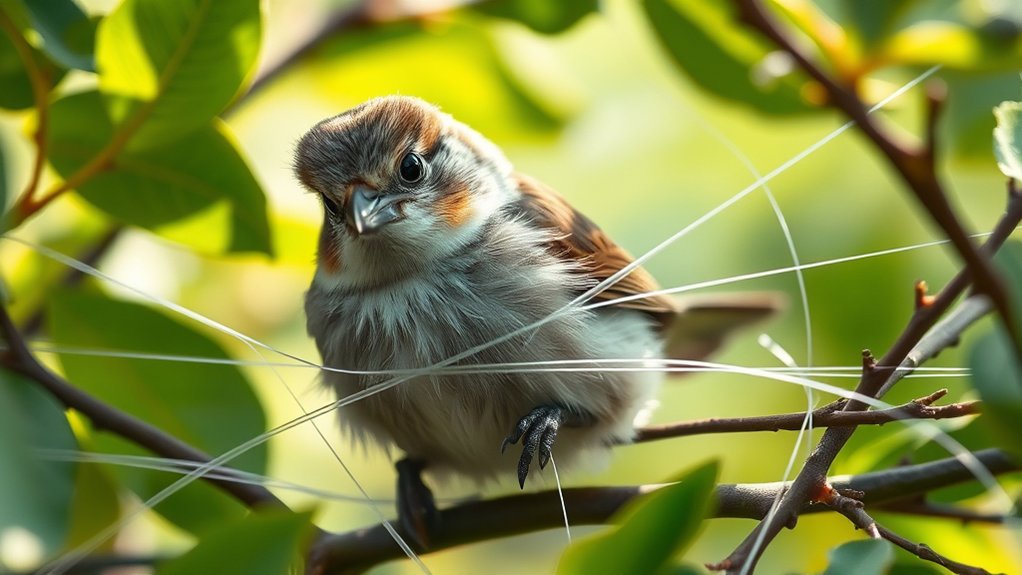
Besides sudden noises and environmental changes, physical hazards like strings pose significant risks to birds by causing stress and health problems. When a bird gets caught or tangled in a string, it feels immediate distress that can make its heart race and breathing harder. Even if you don’t see the bird struggling, just the chance of getting tangled can stress it out underneath the surface.
This kind of stress can weaken a bird’s health over time. Being stuck or restricted by strings for a long time leads to physical discomfort and can stop the bird from doing the things it normally would to stay healthy and happy.
This ongoing stress can even increase the chance of sudden health problems, like unexpected death.
How to Handle Your Bird Without Causing Stress or Breathing Problems
Handling your bird carefully reduces the risk of stress and breathing difficulties, which can happen if you grip too tightly or restrict chest movement. Always use a loose, supportive hold that prevents suffocation while letting the bird’s chest expand freely for proper breathing.
Avoid sudden movements and loud noises since these can trigger fear and panic, which might cause respiratory distress. Speak softly and use slow, deliberate gestures to keep things calm and relaxed.
Keep an eye on your bird’s behavior while handling it. If you notice signs of stress or labored breathing, it’s best to put the bird back in a quiet, safe space right away so it can recover.
How Heat and Stress Can Harm Your Bird
Although birds can tolerate a range of temperatures, exposure to excessive heat considerably increases their risk of heat exhaustion and heatstroke. When your bird overheats, stress impairs its respiratory and cardiovascular systems, raising the likelihood of fatal complications.
Elevated body temperature during stress accelerates organ damage and can cause rapid health deterioration.
A spike in heart rate under heat stress may trigger sudden cardiac events, which are potentially lethal. To protect your bird, maintain a cool, well-ventilated environment, especially during warm weather or stressful situations.
Preventing overheating is essential, as birds’ physiological sensitivity to heat makes them vulnerable to swift declines in health.
Your attentive care can minimize heat-induced stress and safeguard your bird’s wellbeing. So, keeping an eye on the temperature and making sure your bird stays comfortable really does make a big difference.
Key Signs Your Bird Is Stressed or in Danger
When you observe sudden changes in your bird’s behavior or physiology, these can be critical indicators of stress or danger. Birds often conceal stress signs until conditions become severe, so vigilance is essential.
Physically, rapid breathing, trembling, loss of appetite, and feather plucking are key signals.
Watch for rapid breathing, trembling, loss of appetite, and feather plucking as vital signs of stress in birds.
Behaviorally, excessive biting, aggression, or withdrawal suggest distress. Acute stress may show up as sudden startle responses or pronounced fearfulness.
Also, changes in vocalization patterns, like increased screaming or unusual silence, can indicate elevated stress levels.
Recognizing these signs promptly lets you assess your bird’s condition objectively. This helps determine if immediate intervention is necessary to prevent further harm or even fatal outcomes.
Keeping an eye on these indicators helps maintain your bird’s health by spotting stress before it escalates dangerously.
How to Reduce Bird Stress and Keep Your Bird Safe
Noticing signs of stress in your bird means it’s time to implement strategies that reduce its anxiety and promote safety. First, minimize sudden loud noises and bright lights. These stimuli can trigger panic.
Maintain a stable environment by establishing consistent daily routines and avoiding frequent cage relocations. This helps keep your bird calm.
You can also add toys and mirrors to the cage to prevent boredom-induced anxiety behaviors.
Cover the cage at night and during potentially stressful events to create a secure atmosphere. This reduces night frights and panic attacks.
And don’t forget to engage in regular, gentle handling to build trust and decrease fear.
All these steps together help lower your bird’s stress levels. That way, you’re promoting its well-being and keeping it safe in the best way possible.
Frequently Asked Questions
Can Different Bird Species React Differently to Fear?
Yes, you’ll find different bird species react uniquely to fear due to genetic and environmental factors. Smaller, prey-oriented birds respond more intensely, while larger species manage stress better.
That said, persistent threats can still cause severe reactions. So, it really depends on the bird and the situation.
Are There Any Breeds More Prone to Stress-Induced Death?
You’ll find that sensitive breeds like cockatiels face up to a 30% higher risk of stress-induced health issues. These birds’ emotional sensitivity makes them more prone to fatal reactions from acute fear or chronic stress exposure.
It’s really important to understand how stress can impact these little guys. When they get scared or anxious, their bodies can react in ways that might be dangerous. So, keeping their environment calm and stable is key to their health.
Can Medication Help Calm a Severely Frightened Bird?
Yes, medication can help calm a severely frightened bird by reducing panic and stress responses. You should only use anxiolytics or sedatives under strict veterinary supervision to guarantee safety.
It’s important to combine medication with environmental and behavioral strategies. This way, you’re addressing the root causes, not just the symptoms. Taking a well-rounded approach works best for your bird’s well-being.
How Quickly Can a Bird Recover After a Panic Episode?
You know what they say: time heals all wounds. A bird can recover from a panic episode within minutes to hours, depending on stress severity.
This happens when you provide gentle handling, a calm environment, and minimize disturbances. It really helps them settle down faster. Just giving them space and quiet can make a big difference.
Does Age Affect a Bird’s Vulnerability to Stress-Related Death?
Yes, age affects a bird’s vulnerability to stress-related death. Older birds have weakened organ function and reduced resilience, making them less able to recover from stress.
In contrast, younger birds generally withstand stress more effectively. So, you could say that age really plays a big role in how birds cope with stressful situations.
Conclusion
You might think a bird’s fear could shatter the sky, but stress truly can threaten your bird’s life. By recognizing common triggers like strings and heat, and handling your bird carefully to avoid panic or breathing issues, you’ll considerably reduce its risk.
Watch for signs of stress diligently, because timely action can prevent serious harm. Staying informed and attentive ensures your bird’s well-being, keeping it safe from the silent dangers of overwhelming fear.