
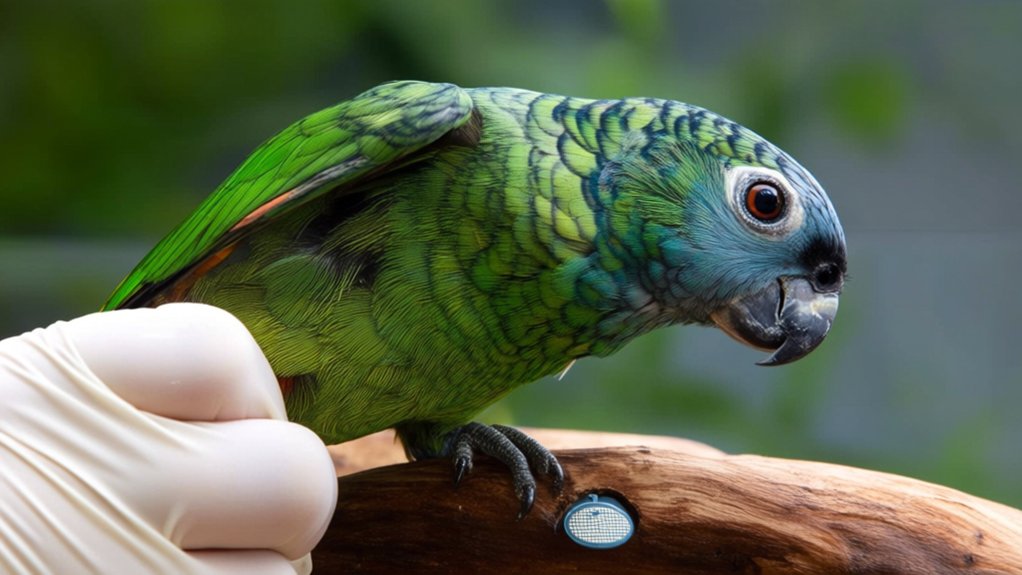
You can microchip birds safely by having a veterinarian inject a tiny electronic chip beneath their skin, usually in the chest area. Larger birds like macaws handle standard chips, while small species need miniaturized versions and expert placement.
This permanent ID helps with ownership verification and recovery if your bird goes missing. The procedure is minimally invasive but requires professional skill to avoid complications.
Understanding microchipping details guarantees you protect both your bird and your rights. It’s a smart way to keep your feathered friend safe.
How Bird Microchipping Works: Procedure and Placement
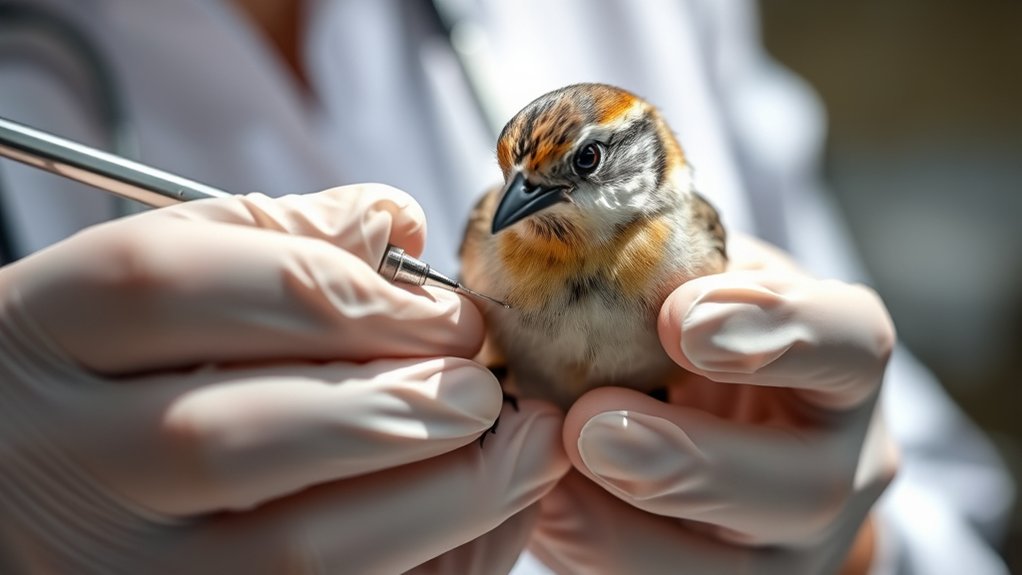
Although the idea may seem complex, bird microchipping is actually a straightforward procedure. It involves injecting a tiny electronic chip beneath the bird’s skin, usually in the pectoral muscle or subcutaneous tissue.
Bird microchipping is a simple process of implanting a tiny chip under the bird’s skin for identification.
The chip contains a unique ID number, which a specialized scanner reads to identify the bird.
The injection site is typically the chest area, chosen carefully to minimize stress and injury. The procedure is minimally invasive and often done without anesthesia. However, sedation might be necessary for larger or more sensitive birds.
Before implantation, you need to prepare the site properly and identify anatomical landmarks accurately. This helps guarantee safe and successful placement.
Being precise reduces complications and ensures the chip works well as a permanent identification method.
Which Birds Can Be Microchipped: Species and Size Guide
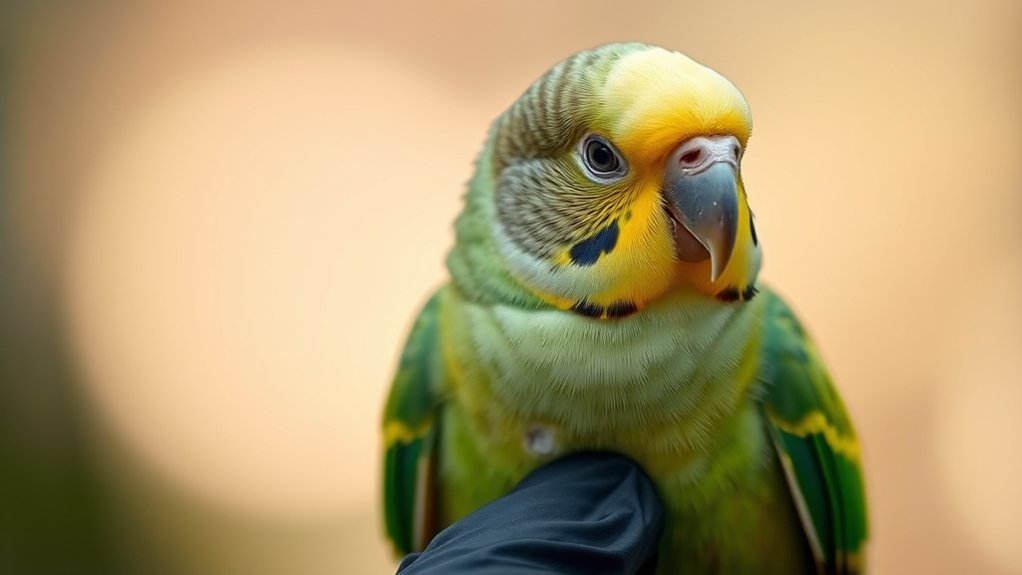
When determining whether a bird can be microchipped, you need to consider its species and size carefully. These factors directly influence chip compatibility and placement options.
Larger species like macaws and cockatoos can usually accommodate standard-sized microchips, which are typically implanted in the pectoral muscle or just under the skin.
On the other hand, smaller birds such as canaries and finches need miniaturized chips because of their delicate anatomy. Placement of the chip is adjusted accordingly by a veterinarian to make sure it’s done safely.
Not all birds are good candidates for microchipping. Very small or fragile species mightn’t have enough tissue to safely host a chip.
In the end, your vet will evaluate the bird’s size, species, and anatomy to decide on the right chip size and where to implant it. This way, the procedure stays safe and effective for your feathered friend.
Why Microchipping Birds Protects Owners and Pets
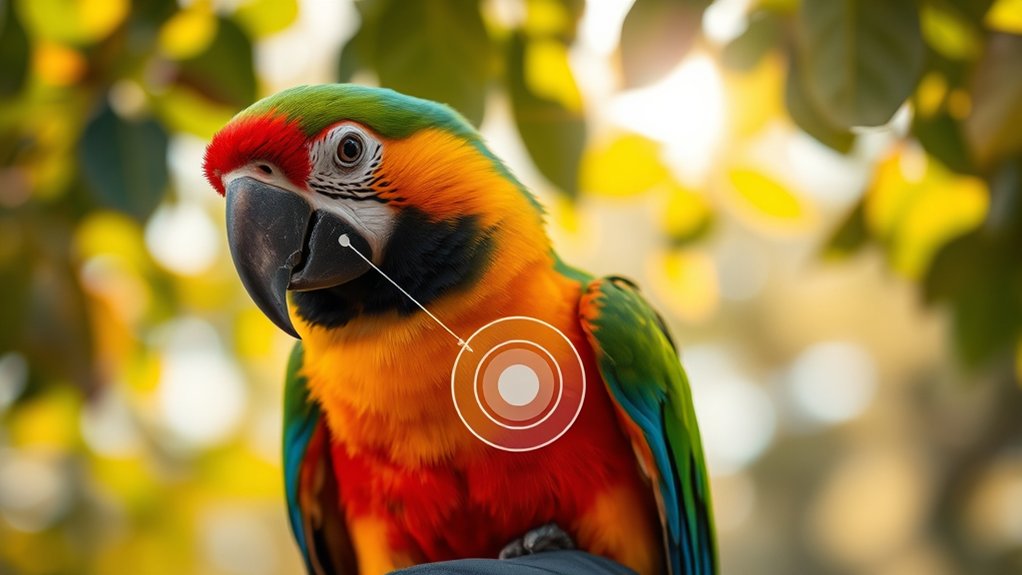
When you microchip your bird, you’re creating a permanent link between your pet and your identity. This is super important for proving you own your bird. Each chip has a unique ID that gets registered in a secure database.
So, if your bird ever escapes or goes missing, this ID helps get them back to you quickly. It’s a simple way to make sure there’s no question about who your bird belongs to.
Ownership Verification Benefits
How can you conclusively prove ownership of your bird in situations where disputes arise or the bird goes missing? Microchipping provides undeniable proof by implanting a permanent, unique identification number linked to your details in a secure database.
This method offers reliable, scientific verification, which courts and authorities can access to resolve ownership conflicts, especially with exotic or stolen birds.
Unlike external tags, microchips can’t be removed or tampered with, ensuring continuous proof of ownership. Registering your bird’s microchip information guarantees that ownership records remain accessible when needed, protecting your legal rights.
This permanent identification system safeguards both you and your bird, minimizing ambiguity in ownership claims.
It also supports precise resolution in legal or recovery scenarios without relying on physical appearance or temporary markers. So, with microchipping, you get peace of mind knowing your bird is protected no matter what happens.
Enhanced Lost Bird Recovery
Beyond establishing ownership, microchipping plays a crucial role in enhancing the recovery of lost birds. When your bird goes missing, scanners quickly read the microchip’s unique ID, allowing immediate access to your registered contact information. This rapid identification dramatically increases the likelihood of reunion, minimizing separation time.
Unlike physical tags, the microchip remains permanently implanted and unalterable, guaranteeing consistent identification even if external markers are lost or removed.
Plus, the microchip’s unique code provides indisputable proof of ownership, which helps deter theft and resolve disputes.
For exotic or legally regulated species, microchipping lets authorities verify compliance with wildlife regulations efficiently.
Risks and Challenges of Bird Microchipping
Although microchipping offers valuable benefits for bird identification, it carries inherent risks and challenges that you must carefully consider. The procedure can induce stress and discomfort, especially if performed by inexperienced personnel. Improper implantation may cause injury or infection, compromising your bird’s health.
Additionally, some species are anatomically unsuitable. Their small size increases the risk of harm or ineffective chip placement. You’ll also need to commit to regular monitoring and scans to verify the microchip’s functionality, which adds ongoing maintenance.
Importantly, microchipping isn’t appropriate for every bird. Individuals with health issues or heightened sensitivity may experience adverse effects. Ensuring a qualified professional performs the procedure and evaluating your bird’s suitability are essential steps to mitigate these risks and optimize outcomes.
How Bird Microchipping Proves Ownership and Legal Rights
Since bird microchipping links a unique identification number to a registered database, it provides undeniable proof of ownership that can be accessed quickly and reliably. This technology serves as critical evidence in legal disputes, establishing rightful ownership and aiding authorities in recovering stolen or exotic birds.
The registered data often includes your contact details, which makes the legal process move faster and smoother. More and more, microchipping is being recognized in legal frameworks. It acts as a permanent, tamper-proof identification method, which really helps reinforce your ownership rights.
| Feature | Importance | Legal Impact |
|---|---|---|
| Unique ID Number | Confirms individual bird | Key evidence in disputes |
| Registered Owner Info | Enables owner verification | Assists recovery efforts |
| Permanent ID | Resistant to tampering | Legally recognized proof |
Costs and Maintenance of Bird Microchips
When you decide to microchip your bird, you’ll typically pay between $20 and $50 for the procedure. The exact cost depends on the veterinarian and your location. The microchip itself is designed to last a lifetime, so you won’t need to replace it or do any routine maintenance once it’s implanted.
That said, it’s important to have your bird scanned regularly during vet visits. This helps confirm the chip is still functional and readable.
While the implantation cost is mostly a one-time thing, you might come across annual registration fees for the microchip database. These fees are usually around $10 to $20.
Other than that, ongoing expenses are minimal and mostly related to routine health check-ups. So overall, maintaining a bird microchip is pretty low-key. It’s a cost-effective and reliable way to make sure your bird has permanent identification.
Bird Microchip Registration and Verification
You start the registration process by entering the microchip’s unique ID along with your contact details into a centralized database. It’s a straightforward step that sets everything in motion.
When you need to verify a bird’s identity, you simply scan the chip with an RFID reader. This retrieves the unique ID and helps confirm ownership quickly and easily.
Having access to accurate, up-to-date information in the database is key. It makes identification fast and reliable, especially during recoveries or when the bird needs veterinary care.
Registration Process Steps
Completing the registration process involves several critical steps to guarantee your bird’s microchip is properly linked to your contact information. First, you must submit the bird’s unique microchip ID, species, and identifying details to a designated database.
Next, provide your accurate contact information and proof of ownership, typically through an online portal or in-person registration.
Some databases offer lifetime registration, while others require annual renewal or updates if your contact details change. This systematic approach assures the microchip serves as a reliable identifier.
Adhering strictly to these steps establishes a verifiable link between the microchip and your data.
This connection is essential for the chip to function effectively in reuniting you with your bird if it goes missing. So, following the process carefully really pays off in the long run.
Verifying Microchip Information
Although microchipping your bird is only the first step, confirming the microchip information guarantees the chip’s effectiveness as a reliable identification tool. To verify, you’ll scan the microchip with a specialized reader to retrieve its unique ID number.
Then, you cross-reference this number with the registered database to confirm ownership details and accuracy.
Keep in mind that proper registration is essential; unregistered chips can’t be matched to any owner data. You should regularly update the registration to maintain current contact information. This is critical if your bird goes missing.
Verification typically occurs during routine veterinary visits or when a lost bird is found and scanned. This process guarantees that the microchip serves as a dependable method of identification throughout your bird’s life.
Database Importance and Access
How does a microchip guarantee your bird can be reliably identified and returned if lost? It relies on registering the chip’s unique ID alongside your contact information in a centralized database.
Authorized personnel, such as veterinarians or animal control, scan the microchip and retrieve your details swiftly, enabling prompt reunification.
Maintaining current contact data in the database is vital. Outdated information reduces recovery chances.
Many organizations provide secure online portals where you can verify or update your bird’s registration anytime.
Access to these databases is deliberately limited to protect your privacy. Only verified professionals can obtain sensitive information.
This system creates a scientifically sound, efficient mechanism that considerably improves the likelihood of recovering your lost bird through reliable identification and data management.
Frequently Asked Questions About Bird Microchipping
Why consider microchipping your bird? It provides a permanent identification method that’s vital for recovery if your bird gets lost. The chip is a tiny electronic device injected under the skin, usually in the chest, and it contains a unique ID number linked to your contact details in a secure database.
Not all species are suitable for microchipping. However, miniature chips are available that accommodate small birds like canaries and finches. The procedure is safe when performed by an experienced veterinarian and causes minimal discomfort.
After implantation, regular scans during check-ups make sure the chip stays functional and correctly positioned. Using a scanner, professionals can quickly retrieve the ID number, which helps with prompt identification.
This technology really boosts your bird’s safety and gives you peace of mind.
Frequently Asked Questions
Can Microchips Affect a Bird’s Health Long-Term?
Microchips rarely affect your bird’s long-term health since they’re small, inert implants that integrate with tissue. You might notice brief swelling, but trained professionals guarantee safety.
Regular monitoring prevents any adverse effects over your bird’s lifetime. So, overall, it’s a pretty safe procedure that helps keep your feathered friend secure.
How Often Should a Bird’s Microchip Be Scanned?
You should scan your bird’s microchip at least once a year during veterinary check-ups to guarantee proper function and placement, using a compatible scanner.
Scan immediately if you suspect loss or need to verify identity. It’s a simple step that can save a lot of stress later on. Keeping up with regular scans helps make sure everything is working as it should.
Are There Any Alternatives to Microchipping Birds?
Yes, you can use leg bands, tattoos, or GPS trackers as alternatives to microchipping birds. These options do offer ways to identify your bird, which is great.
However, they don’t have the same permanence as microchips. They’re also not as tamper-proof, which means they can be altered or lost more easily. Plus, unlike microchips, they lack universal readability, so not everyone can scan or recognize them.
Because of these reasons, they tend to be less reliable for permanent identification. But depending on your needs, they might still work well!
Can Microchips Be Removed or Replaced if Needed?
Sure, you can’t just yank a bird’s microchip like pulling feathers. Removal or replacement requires a vet’s minor surgery.
It’s rare and usually reserved for complications or updates. These chips are designed to last a bird’s lifetime, so most birds won’t need it changed.
Does Microchipping Interfere With a Bird’s Natural Behavior?
No, microchipping doesn’t interfere with your bird’s natural behavior. When implanted correctly under the skin or muscle, it avoids sensory or motor disruption. This means your bird can fly, perch, and behave normally.
There’s no distress or behavioral changes caused by the chip. So, you can rest easy knowing your feathered friend won’t be affected by the microchip in any way.
Conclusion
Microchipping your bird is like giving it a digital fingerprint that’s unique and permanent. When you understand the procedure, which species it suits best, and how to register the chip, you’re really protecting your feathered friend and your legal rights.
There are some risks and costs involved, sure. But honestly, the benefits of having clear identification and proof of ownership far outweigh those downsides.
With the right care and proper verification, microchipping becomes a reliable way to safeguard your bird’s future. It also gives you peace of mind as an owner, knowing your pet is properly identified.