

Yes, birds can cause allergies through proteins in their feathers, dander, saliva, and droppings. You can inhale or touch these allergens, which might trigger reactions.
Certain species, especially powder-down birds like cockatoos and African greys, produce higher allergen levels. This can increase your risk of respiratory symptoms or skin reactions.
Managing exposure by cleaning regularly, using air filtration, and choosing low-dander birds can improve safety. If you notice breathing difficulties or persistent symptoms, it’s important to get a medical evaluation.
Understanding these risks helps you protect your health effectively.
What Causes Bird Allergies?
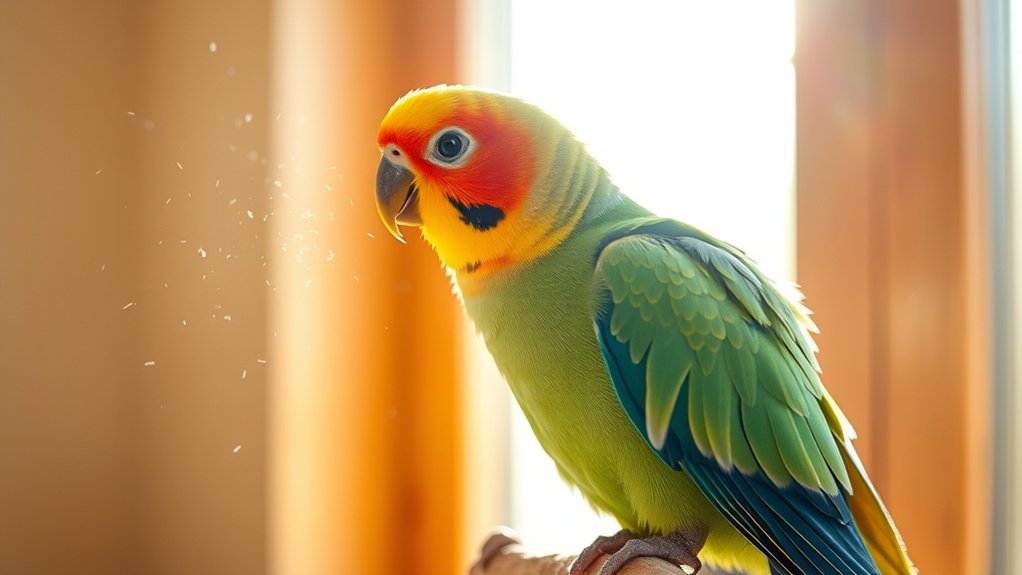
Although bird allergies come from different sources, the main triggers are proteins found in feathers, dander, saliva, and droppings. When you’re around birds, tiny flakes of skin from their feathers float in the air, which increases your exposure to allergens.
Bird allergies mainly stem from proteins in feathers, dander, saliva, and droppings that float in the air.
When birds preen, they spread saliva that contains allergenic proteins. You can inhale these particles or get them on your skin without even realizing it.
Droppings also carry proteins that set off immune responses. When disturbed or dried, these droppings release particles into the air that can bother you.
It’s good to know that allergens tend to be more concentrated in bird species with dense feathers or those that produce powder down, a fine, powdery substance.
Getting a handle on where these allergens come from can help you spot potential risks. That way, you can manage your exposure better and reduce allergic reactions when you’re around birds.
Common Symptoms of Bird Allergies

When you come into contact with bird allergens, your body might respond with a range of symptoms that affect your respiratory system, skin, and eyes. You could experience sneezing, nasal congestion, and itchy, watery eyes as some of the first signs.
Your skin can also react, causing hives or making eczema worse if you’re sensitive to bird dander. Respiratory symptoms often include wheezing, difficulty breathing, and a persistent cough that sometimes feels like asthma.
In more severe cases, long-term exposure to bird proteins can lead to lung inflammation, such as hypersensitivity pneumonitis.
It’s really important to recognize these symptoms early, especially if you’re around birds or their environment a lot. That way, you can prevent things from getting worse and get the right medical help when you need it.
Bird Species That Trigger Bird Allergies

You should know that certain bird species, like African grey parrots and cockatoos, produce high levels of powder down. This can really increase allergen exposure.
On the other hand, birds such as lovebirds and pionus parrots generate less dust, so they tend to be better options for people with allergies.
That said, even low-dander birds like finches and canaries can still trigger reactions in sensitive individuals.
High-Allergen Bird Species
Since certain bird species produce more allergenic particles than others, identifying high-allergen birds is essential for managing bird-related allergies. Birds like cockatoos, African grey parrots, and budgerigars produce significant powder down and dander, which can exacerbate respiratory symptoms.
These fine feather dust particles increase allergen exposure, especially in sensitive individuals. You should be aware of these species if allergy management is a priority.
Regular cage cleaning and HEPA filtration help reduce allergen buildup but won’t eliminate risks entirely.
| Bird Species | Allergen Type | Allergy Impact |
|---|---|---|
| Cockatoo | Powder down, dander | High |
| African Grey Parrot | Powder down, dander | High |
| Budgerigar | Powder down, dander | Moderate to high |
| Canary | Low dander | Low |
| Finch | Low dander | Low |
Low-Dander Bird Options
Although bird allergies can pose significant challenges, selecting low-dander species like canaries, finches, lovebirds, and pionus parrots can considerably reduce allergen exposure. These birds produce fewer airborne allergens due to minimal feather shedding and lower powder down production.
You can further minimize allergen presence by maintaining consistent bathing routines and performing regular cage cleaning.
It’s important to spend time with these birds before adopting to evaluate your specific allergic responses, as individual sensitivities vary.
Opting for these species offers a practical strategy to keep pet birds while managing allergy risks effectively.
Powder-Down Birds Impact
While some bird species produce minimal allergens, others generate significant airborne particles that can worsen allergy symptoms. Powder-down birds, like cockatoos and African grey parrots, produce fine, dusty feathers containing proteins. These proteins become airborne and can trigger respiratory reactions in sensitive individuals.
This powder is released continuously as these birds groom themselves, so it leads to persistent environmental exposure. If you handle or clean around these birds regularly, your contact with these allergens goes up, raising the risk of worse symptoms.
The excessive shedding of dust particles from powder-down birds can build up over time and make allergic responses more intense.
If you suffer from bird allergies, it’s a good idea to avoid or limit contact with these species. Doing so helps reduce your exposure and keeps your respiratory health in better shape.
Understanding these risks helps you manage your environment and allergy symptoms more effectively.
How Bird Allergies Differ From Other Allergies
When you encounter bird allergies, you’ll find they differ considerably from more common allergies like those caused by pollen or dust. Bird allergens come from proteins in feathers, dander, saliva, and droppings. These often trigger severe respiratory issues such as hypersensitivity pneumonitis.
Bird dander is made up of microscopic skin flakes and feather sheath fragments. It tends to be more persistent compared to typical pet allergens. Symptoms may include intense lung inflammation and wheezing, which you rarely see in other allergies.
Repeated exposure can worsen reactions, especially with parrots. So, if you spend a lot of time around birds, it’s important to be aware of these risks.
| Allergy Type | Source of Allergen | Common Symptoms |
|---|---|---|
| Bird Allergy | Feathers, dander, saliva, droppings | Lung inflammation, wheezing |
| Pollen Allergy | Plant pollen | Sneezing, itchy eyes |
| Dust Allergy | Dust mites, particles | Nasal congestion, coughing |
How to Reduce Bird Allergens in Your Home
Since bird allergens can linger in your home environment, it’s essential to implement targeted cleaning and air purification strategies to reduce exposure. Regularly clean and disinfect bird cages, accessories, and surrounding areas using natural agents like white vinegar or baking soda to prevent allergen buildup.
Use HEPA air purifiers in living spaces to effectively capture airborne dander, feathers, and dust. Designate bird-free zones, particularly in bedrooms, to minimize allergen exposure during sleep.
When cleaning cages or handling birds, wear masks and gloves to avoid inhaling or transferring dander. Also, make sure to wash your hands and face frequently after contact with birds or their habitats to prevent allergen spread to other areas.
These measures help maintain a safer environment for allergy-sensitive individuals. It’s all about creating a cleaner, healthier space where everyone can breathe easier.
Simple Tips to Protect Yourself From Bird Allergies
Implementing effective strategies to reduce bird allergens in your home lays the groundwork for protecting yourself from allergic reactions. Regularly clean bird cages and accessories using natural disinfectants like vinegar or baking soda to minimize allergen buildup.
Employ HEPA air purifiers to filter airborne dander and dust particles effectively.
When handling birds or cleaning cages, wear masks and gloves to reduce inhalation of allergens. Designate bird-free zones, especially in bedrooms, and ventilate living spaces frequently to decrease allergen concentration.
Additionally, consider selecting low-dander bird species such as canaries and finches to lessen allergic risks.
When to See a Doctor About Bird Allergies
If you notice severe respiratory symptoms like wheezing or trouble breathing after being around birds, it’s important to get medical help right away.
Also, if you have persistent skin irritation, red eyes, or if your symptoms keep getting worse even after trying home remedies, that’s a good reason to see a doctor sooner rather than later.
It really helps to keep track of when and how you’re exposed to birds, along with the symptoms you experience.
Sharing this info with your healthcare provider can make it easier for them to figure out what’s going on and find the best way to manage your allergy.
Recognizing Severe Symptoms
How can you tell when bird allergy symptoms require urgent medical attention? If you experience difficulty breathing, swelling of the face or throat, or fainting after bird exposure, seek emergency care immediately.
Persistent wheezing, rapid heartbeat, and chest tightness also indicate severe reactions. Anaphylaxis, a life-threatening allergic response, demands prompt intervention with epinephrine and medical evaluation. Call emergency services without delay if you suspect such symptoms.
| Symptom | Action Needed |
|---|---|
| Difficulty breathing | Emergency medical attention |
| Swelling (face/throat) | Immediate evaluation |
| Rapid heartbeat/chest tightness | Call emergency services |
Recognizing these signs early can be lifesaving. Don’t hesitate to get professional help.
When To Seek Help
When should you see a doctor about bird allergies? Seek medical attention if you experience severe respiratory symptoms such as difficulty breathing, wheezing, or chest tightness after bird exposure.
Visit a healthcare professional promptly if persistent skin rashes, hives, or allergic conjunctivitis don’t improve with initial self-care.
If your allergy symptoms worsen despite environmental controls and medication, consult your doctor to adjust treatment.
Immediate emergency care is essential if you develop signs of anaphylaxis, including facial or throat swelling, dizziness, or loss of consciousness.
Even if you’re unsure whether your symptoms stem from bird allergies, schedule a medical evaluation for appropriate testing and personalized treatment recommendations.
Early intervention can prevent complications and help you manage symptoms more effectively. Don’t wait to get help if things aren’t improving!
Preparing For Vet Visit
Because bird allergies can escalate unpredictably, preparing thoroughly for a veterinary visit guarantees you receive targeted care.
You should schedule a visit if symptoms worsen or don’t improve with environmental adjustments. And if you experience severe respiratory distress or persistent skin and eye irritation, seek immediate medical advice.
Allergy testing can clarify if bird allergens are the cause, which helps create a tailored management plan.
| Symptom | When to See a Doctor | Recommended Action |
|---|---|---|
| Worsening symptoms | Persistent or severe | Schedule veterinary or allergist visit |
| Respiratory distress | Difficulty breathing or wheezing | Seek immediate medical attention |
| Skin rashes | Persistent despite management | Consult healthcare professional |
| Eye irritation | Ongoing or worsening | Seek medical evaluation |
| Daily life interference | Symptoms affect routine | Develop a personalized plan |
Frequently Asked Questions
Can Bird Allergies Develop Later in Life?
Yes, you can develop bird allergies later in life. Repeated exposure to bird dander, feathers, or droppings can trigger allergic responses. This is especially true as your immune system changes with age.
These changes can increase your susceptibility over time. So, even if you’ve never had issues before, it’s possible to develop an allergy down the road. It’s all about how your body reacts to what it encounters.
Are Bird Allergies Hereditary?
About 30% of allergy cases show familial links, so if your family has allergies, you’re more likely to develop bird allergies too. Your immune system’s sensitivity, influenced by genetics and environment, shapes this hereditary tendency.
It’s kind of like your body’s reaction is passed down in a way, but it’s not just genes. Where you live and what you’re exposed to also play a big role in whether you actually develop bird allergies. So, having a family history increases your chances, but it’s not a guarantee.
Do Bird Allergies Affect Children Differently Than Adults?
Yes, bird allergies affect children differently. Their developing immune systems can heighten sensitivity, causing more frequent and severe symptoms.
You should monitor exposure closely, especially if your child has asthma or existing respiratory issues. This helps manage risks more effectively. Just keep an eye on how they react and take steps to protect them.
Can Bird Allergies Cause Skin Rashes?
Like a telegram from the past, yes, bird allergies can cause skin rashes. You’ll notice red, itchy, swollen areas where feathers or dander contact your skin.
Repeated exposure worsens symptoms, so protect and clean diligently. It’s important to pay attention to these signs early on. That way, you can avoid more serious reactions down the line.
Is Allergy Testing Accurate for Bird Allergies?
Allergy testing for bird allergies isn’t perfectly accurate. You’ll rely on skin prick or specific IgE blood tests, but results can vary.
It’s best to combine test outcomes with your clinical history. That way, you get a more reliable diagnosis and the right management plan.
Conclusion
Bird dander, dust, and droppings can definitely spark sneezing, sniffles, and skin sensitivities. While some species stir stronger symptoms, understanding allergens helps you handle health hurdles.
To minimize misery, maintain meticulous cleaning and mindful measures. Monitor your reactions and seek specialist support swiftly if symptoms worsen. Staying savvy and safe guarantees you can savor bird companionship without suffering.
Remember, recognizing and reducing risks is your reliable route to relief.