
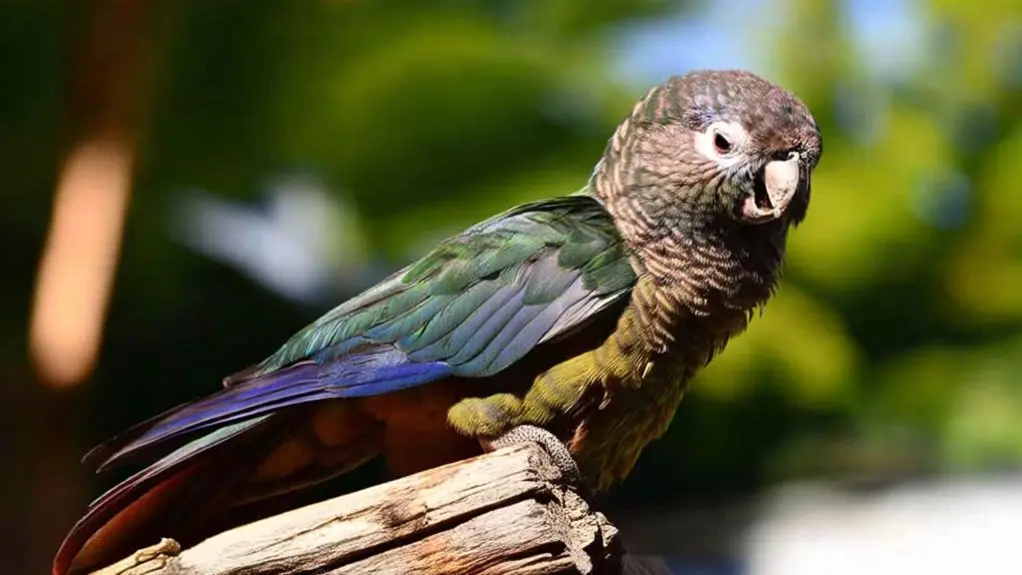
You might think birds really talk, but they don’t speak like humans do. Parrots produce sounds using a syrinx, which lets them mimic voices with remarkable flexibility. They can even create two sounds at once.
Their vocalizations mainly serve social bonding rather than true language comprehension. While some species link words to objects, most mimicry is just sound copying without understanding meaning.
You’ll discover how this intricate vocal ability supports communication and what it means for interacting with these birds. It’s pretty fascinating once you dig into it!
How Parrots Produce Sounds and Mimic Human Speech
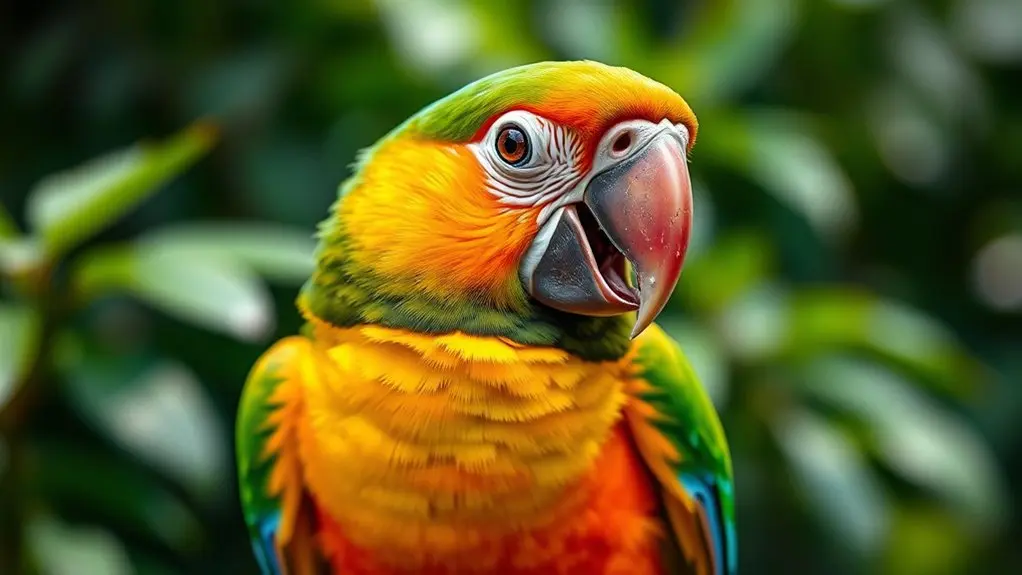
Although parrots don’t have vocal cords like humans, they produce sounds using a special voice box called the syrinx. This gives them precise control over a wide range of vocalizations.
You’ll find that this structure allows for remarkable vocal flexibility, helping them create diverse song variations.
The syrinx’s unique anatomy lets parrots produce two different sounds at the same time. This boosts their ability to mimic complex auditory patterns, including human speech.
By controlling vocal muscles and airflow, parrots can replicate repeated sounds with high accuracy.
This vocal flexibility supports their skill in imitating calls and words very precisely. But even though parrots mimic human speech convincingly, their vocalizations mainly serve social bonding purposes rather than true language comprehension.
It really highlights how their syrinx is specialized for sound production.
What Parrots’ Mimicry Reveals About Their Communication
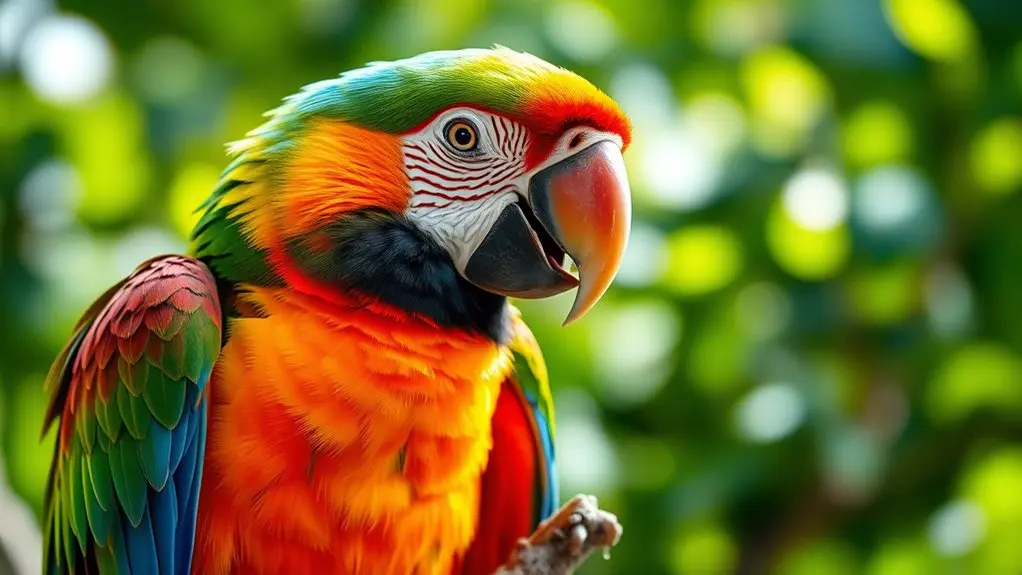
Parrots’ ability to mimic sounds, including human speech, goes beyond mere repetition and reveals insights into their communication strategies. Their vocal flexibility allows them to replicate a wide range of sounds, adapting vocalizations to different social contexts. This mimicry functions primarily as social signaling, helping parrots establish and maintain bonds within their groups.
While parrots don’t necessarily understand language like humans, their capacity to modify calls based on situational cues indicates a nuanced use of vocal signals. Their complex vocal anatomy and brain structures support this sophisticated communication, reflecting advanced cognitive and social abilities.
Do Parrots Understand the Words They Say?
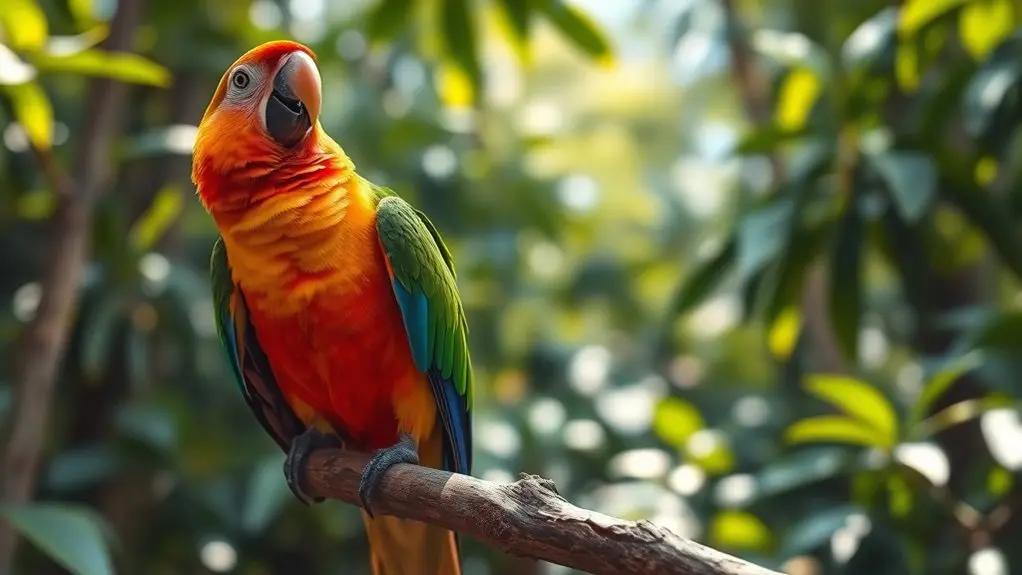
When you hear a parrot repeat words, it often mimics sounds without really grasping their meaning. It’s mostly just echoing frequent noises it hears in its environment. This behavior is called vocal learning, and it lets parrots copy a variety of sounds, including human speech.
But that doesn’t necessarily mean they understand the words. Research on species like African grey parrots shows they can link certain words to objects or actions, which suggests some limited understanding.
True cognitive recognition means using words flexibly in different situations. That ability is pretty rare in parrots, though some individuals can do it. Most parrots’ speech is more about social mimicry than actual comprehension.
Real-Life Examples of Parrots Using Speech in Context
If you observe African grey parrots, you’ll notice they sometimes use words appropriately within specific contexts, like when they’re requesting items or answering questions. This behavior shows advanced parrot cognition and vocal learning that goes beyond just mimicry.
For example, parrots have been documented to request specific objects by name when prompted. They also respond accurately to questions about color or shape.
Plus, they modify their vocalizations based on situational cues, which suggests they’ve contextual awareness.
These examples provide clear evidence that some parrots use speech meaningfully. They associate words with objects or situations instead of just repeating sounds blindly.
This really highlights the cognitive complexity involved in how parrots learn to speak.
Can Parrots Be Taught to Understand Language?
Observing parrots use words appropriately raises the question of whether they can truly grasp language concepts. Research on parrot cognition reveals that some species, particularly African grey parrots, exhibit vocal learning beyond mere mimicry. They associate specific words with objects or actions, demonstrating basic understanding.
You’ll find that parrots modify vocalizations contextually, indicating comprehension of situational meaning. However, most parrots repeat words without grasping their significance, suggesting limited language comprehension.
Achieving human-like understanding demands extensive training and social interaction, which enhances cognitive processing and vocal learning.
Why Social Bonding Drives Parrots to Mimic Human Voices
Because parrots are highly social animals, they mimic human voices primarily to establish and maintain social bonds. This vocal learning behavior enables them to perceive humans as part of their flock, responding to social cues that signal acceptance and trust.
Parrots mimic human voices to build social bonds, seeing people as part of their flock through trust and acceptance.
When you interact with a parrot, it uses mimicry to reinforce your connection, similar to how it communicates with fellow parrots in the wild.
You can observe this through:
- Parrots adopting human phrases to maintain social cohesion in solitary environments.
- Increased mimicry when parrots recognize humans as social companions.
- Use of vocal mimicry as a communication tool to strengthen relationships.
Caring for and Interacting With Talking Parrots
When you consistently engage with talking parrots using positive reinforcement, they learn to mimic words and phrases more effectively. To support this learning, maintain a balanced parrot diet rich in fruits, vegetables, and seeds, ensuring ideal cognitive function.
Your cage design should provide ample space, perches, and enrichment toys to stimulate mental activity and prevent boredom.
Regular social interaction and communication are essential, as parrots naturally mimic frequently heard sounds. Employ training techniques like the model/rival method to help your parrot associate words with context, enhancing comprehension.
Frequently Asked Questions
Which Bird Species Other Than Parrots Can Mimic Human Speech?
You’ll find that Hill Mynahs, European Starlings, Indian Ringneck Parakeets, Northern Mockingbirds, and lyrebirds exhibit advanced bird vocalization and avian intelligence. This enables them to mimic human speech with remarkable clarity and contextual understanding.
These birds aren’t just repeating sounds; they actually grasp the context of what they’re mimicking. It’s pretty fascinating how some species can communicate in ways that feel almost human.
How Long Do Parrots Typically Live in Captivity?
You’ll find parrots live like timeless melodies, typically 20-50 years in captivity, depending on species and care. Their bird song and avian intelligence thrive longer with proper diet, veterinary care, and stimulating environments.
With the right attention, these birds can be lifelong companions. It’s really about giving them what they need to stay happy and healthy. So, if you’re thinking of having a parrot, be ready for a long-term friendship!
Can Parrots Recognize Their Own Names When Called?
Yes, parrots recognize their own names through behavioral training and vocal imitation. When you consistently use their names, they start to associate the sound with themselves.
They respond accurately because of learned social cues and cognitive recognition mechanisms. It’s pretty amazing how smart they are! With patience, they really get the hang of it.
What Is the History of Parrots as Pets?
You’d think bird migration sparked parrots’ pet history, but humans domesticated them for their avian diet and intelligence.
Ancient Egyptians prized parrots, valuing them as exotic companions. They blended nature’s marvel with human fascination and care.
Pretty cool how these birds captured attention way back then, right?
Are There Any Health Risks Associated With Keeping Talking Parrots?
Yes, you face health risks like psittacosis from talking parrots. Their feeding habits and cage cleanliness directly impact bacterial growth and allergens.
Keeping their environment clean is key. Regular cleaning and a proper diet help reduce disease transmission and respiratory issues for you.
Conclusion
While parrots don’t engage in human conversation as we do, their remarkable mimicry offers a window into their social world and cognitive abilities. When you listen to a talking parrot, you’re witnessing a complex interplay of sound production and social bonding rather than true language comprehension.
Caring for these feathered companions means appreciating their unique way of connecting. It reminds us that communication extends beyond words into the subtle art of companionship.