
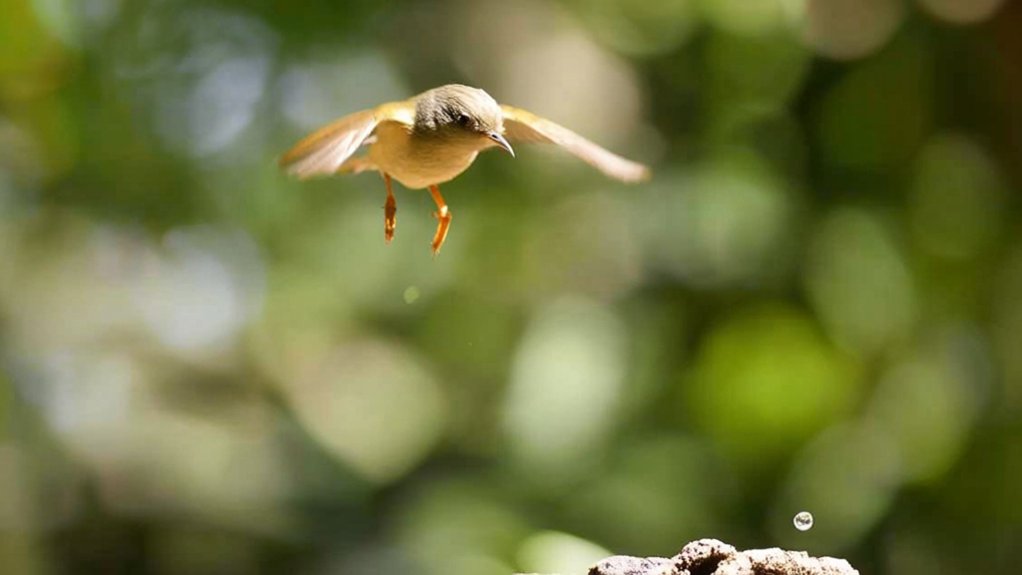
You can’t expect birds to control when they poop, as it’s an involuntary reflex triggered by pressure in their cloaca, not by conscious muscles. While some species show basic directional control, they don’t precisely aim their droppings.
Bird poop consists mainly of uric acid and digestive waste, which hardens and sticks to surfaces. They defecate frequently throughout the day, sometimes even mid-flight. This can pose health and environmental risks.
Understanding their behavior and waste composition helps you manage these impacts more effectively. It’s all about knowing what to expect from our feathered friends.
How Much Control Do Birds Have Over When They Poop?
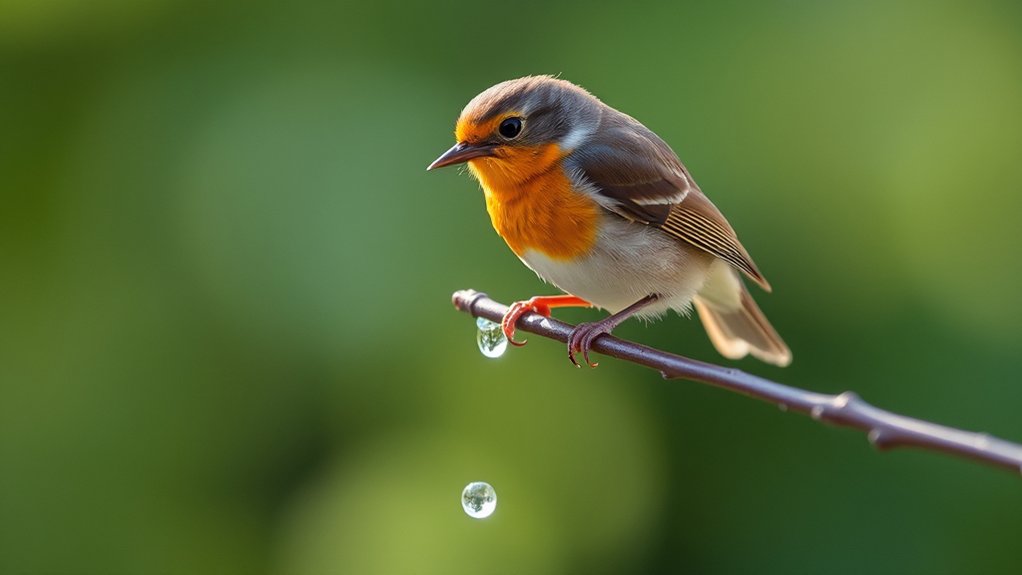
Although you might assume birds can choose when to poop, they generally lack voluntary control over the timing of defecation. Defecation in birds is an involuntary reflex triggered by pressure in the cloaca, a chamber that serves as the exit for digestive and urinary waste.
Because birds don’t have a muscular sphincter to hold waste, they can’t deliberately delay or initiate pooping.
Birds lack a muscular sphincter, so they cannot consciously delay or start defecation.
Most birds defecate multiple times daily, often during resting or perching periods, without conscious regulation. Some species, like blue-footed boobies, can control the direction of their droppings for purposes such as territorial signaling, but this control doesn’t extend to timing.
While certain observations suggest birds may sense when they need to defecate and position themselves accordingly, this behavior isn’t considered voluntary control over the act’s timing.
Can Birds Aim Their Poop Intentionally?
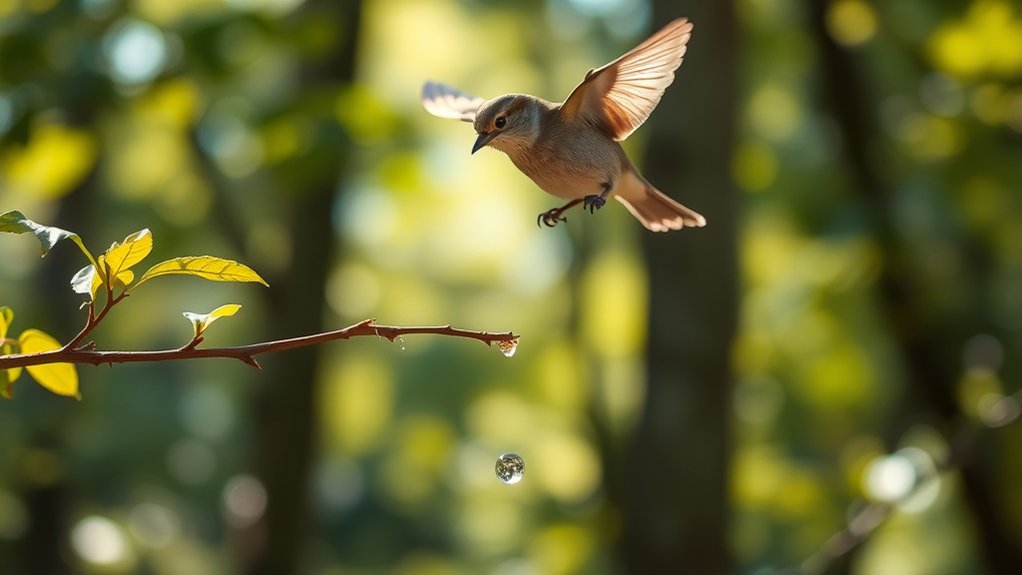
While most birds lack voluntary control over exactly when they defecate, some species have developed the ability to direct the trajectory of their droppings. For example, blue-footed boobies can aim their poop to mark territory or communicate, demonstrating a degree of intentional control.
However, the majority of birds defecate involuntarily, driven by internal cloacal pressure, which limits precise aiming.
Some birds exhibit instinctual behaviors, such as defecating away from nests or perches. This suggests a basic directional control rather than deliberate targeting.
What Is Bird Poop Made Of, and Why Does It Harden?
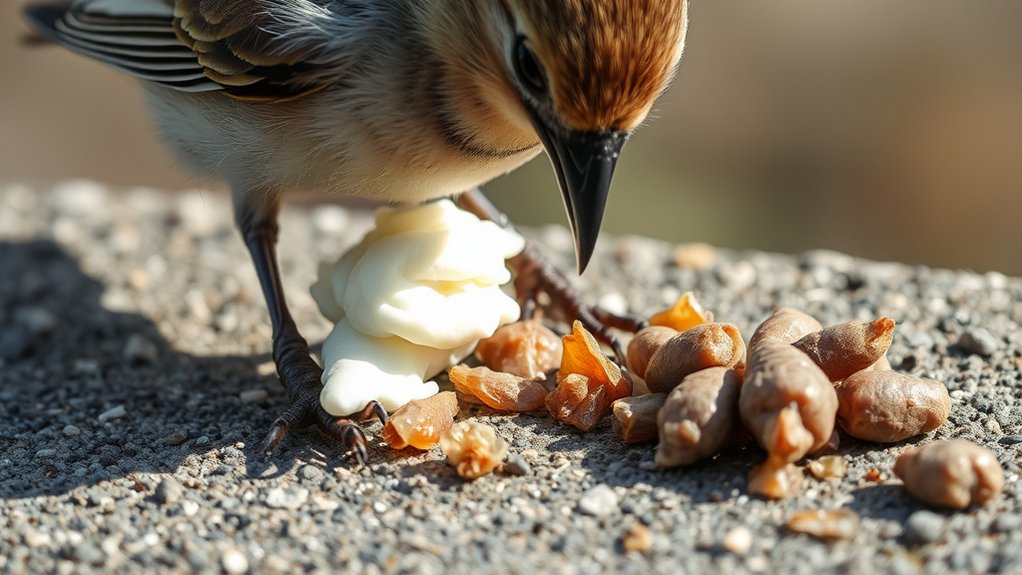
You’ll notice that bird poop is mostly made up of uric acid mixed with digestive waste, which creates a paste-like texture. Because there’s so much uric acid, the droppings tend to harden and stick firmly to surfaces as time goes on.
Composition Of Bird Excretion
Because birds don’t have a bladder, their bodies get rid of nitrogenous waste mainly as uric acid. This uric acid is a white, paste-like substance that mixes with digestive feces in the cloaca before it’s expelled. It’s pretty unique and comes from birds adapting their metabolism to save water.
See, uric acid isn’t very soluble compared to urea, so it forms a semi-solid paste rather than liquid urine. When this paste mixes with fecal matter and is expelled, it creates a compound that hardens once it hits a surface.
Here are some key points about bird excretion composition. Uric acid’s chemical nature makes droppings solidify and stick tightly to surfaces. Also, because birds don’t have a bladder, the waste moves directly from the kidneys to the cloaca.
So, the mixture of feces and uric acid shows both digestive waste and nitrogenous byproducts.
All of this explains why bird droppings look paste-like and are so tough.
Causes Of Poop Hardening
How does bird poop become so stubbornly hard and difficult to remove? The key lies in its high uric acid content, a paste-like substance that crystallizes when it’s exposed to air and surfaces.
Unlike other animal wastes, bird droppings combine uric acid with fecal matter. But it’s the uric acid’s chemical makeup, which has low water solubility, that mainly causes the hardening.
As uric acid dries, it forms crystalline, cement-like deposits that stick firmly to surfaces. This makes removal pretty challenging. The crystallization basically cements the waste in place, creating a hardened residue unique to birds.
Understanding this process helps explain why bird droppings often look more solid and resist being cleaned off compared to other animals’ excretions. It’s all about the science behind why they’re so durable and persistent on different surfaces.
What Role Does the Cloaca Play in Bird Poop Elimination?
Although it might seem simple, the cloaca plays a complex and essential role in bird poop elimination by acting as the single exit point for both digestive waste and reproductive fluids. You should understand that the cloaca contains muscular sphincters that regulate waste passage, though birds have limited voluntary control over defecation.
Inside the cloaca, uric acid and fecal matter mix before being expelled. Pressure buildup within the cloaca influences when waste is released.
Key facts include:
- The cloaca serves as a common outlet for digestive and reproductive systems.
- Muscular control is involuntary but indispensable for timing waste elimination.
- Waste mixing occurs internally, combining uric acid with fecal material before excretion.
This structure is fundamental to understanding the involuntary nature of bird poop elimination.
When and How Often Do Birds Typically Poop?
You’ll notice that birds typically poop multiple times a day, but how often really depends on the species, their size, and what they’re eating.
Most of the time, they don’t even think about it—it just happens because of internal pressure, not because they’re consciously controlling it.
And interestingly, birds can poop both while they’re flying and when they’re resting.
Knowing these patterns can help you understand just how often and when birds usually eliminate waste.
Pooping Frequency Variations
When do birds typically poop, and how often does this occur throughout the day? Birds show quite a bit of variation in how often they poop, and it really depends on their size and activity levels.
For example, small birds like pigeons might only poop once a day. But other birds can go more often, sometimes every 10 to 15 minutes when they’re active. Larger birds, like chickens, tend to poop less frequently but produce bigger droppings, usually about once every 24 hours.
Most birds don’t have much control over when they poop. It just happens involuntarily when their cloaca is full. You’ll often notice birds poop the most in the morning after not eating overnight.
That said, their pooping patterns also depend on what they eat and how active they’re during the day. So, just remember: small birds poop more often but in smaller amounts, while big birds go less often but leave bigger waste behind.
Also, how often they poop links closely to how active they’re and when they eat. Makes sense, right?
Timing And Triggers
Because birds lack voluntary control over defecation, their pooping happens as a reflex triggered by internal pressure in the cloaca. You’ll notice they typically poop multiple times daily. Though smaller species like pigeons may only do so once a day.
This frequency depends on their digestion and activity levels. Birds often defecate most frequently in the morning after waking, but the timing can vary with feeding and digestive processes.
The reflex is involuntary, kicked off by digestive cues rather than conscious decisions.
Whether perched or in flight, birds tend to release waste to conserve energy and keep their nests clean. Understanding these timing and triggers really shows how bird defecation is instinctual, driven by physiological pressures instead of voluntary control.
Flight Versus Rest
How often do birds defecate during flight compared to rest? Birds typically poop more frequently after overnight waste builds up, mainly in the morning. They defecate both while perched and in flight, but they don’t control the timing voluntarily.
Flight demands high energy, so birds often prefer to poop while perched to reduce weight and conserve energy. During rest or sleep, birds usually don’t defecate unless disturbed or just waking up.
Key points to contemplate: Birds defecate during active periods or when cloacal pressure increases, not at fixed times. Mid-flight defecation is common due to a lack of voluntary control.
Resting birds normally avoid pooping unless waking or disturbed, releasing waste shortly afterward.
What Health Risks Do Bird Droppings Pose to Humans?
Although bird droppings might seem harmless, they pose considerable health risks to humans due to the wide range of pathogens they carry. You should be aware that bird feces can harbor over 60 diseases, including histoplasmosis, a serious lung infection that can be fatal.
Fungi and bacteria from droppings can become airborne, increasing your risk of respiratory infections.
Additionally, pathogens such as Salmonella and E. coli can contaminate your food and water through contact with contaminated surfaces. Bird droppings also often contain ectoparasites like mites and mosquitoes, which can transmit other diseases to you.
If you experience prolonged exposure to these contaminated droppings, especially in crowded areas, your chance of disease transmission rises considerably.
This really underlines the importance of avoiding contact and keeping things clean. So, it’s best to be cautious around bird droppings and make sure you maintain good hygiene to protect yourself.
How Do Bird Droppings Affect Homes and Public Spaces?
When bird droppings accumulate on buildings and public areas, they cause significant structural and environmental problems. You’ll notice that the uric acid in these droppings corrodes roofing materials, paint, and other surfaces. This leads to costly damage over time.
In public spaces, large amounts of droppings create slip hazards and increase the risk of disease transmission. Contaminated areas near homes attract pests like flies and rodents, which only adds to health concerns.
Uric acid causes corrosion and permanent staining on various surfaces. Accumulated droppings pose physical slip hazards in public areas. Droppings attract pests, increasing disease-carrying vectors near buildings.
To protect your property and public health, regular cleaning and the strategic use of bird deterrents are essential. It’s definitely worth staying on top of these issues to keep your spaces safe and looking good.
How Do Birds Keep Their Nests and Themselves Clean?
Because maintaining a clean environment is critical for their survival, parent birds actively remove or consume feces from their nests to protect their chicks from disease. You’ll notice many species, like swallows and bluebirds, defecate away from nest boundaries to minimize contamination. They also select perching sites strategically to avoid soiling their nests.
Some birds, such as hoopoes and parrots, use feces defensively but still keep their immediate nesting areas clean.
| Bird Species | Feces Management Behavior | Purpose |
|---|---|---|
| Swallows | Defecate away from nest edges | Prevent nest contamination |
| Bluebirds | Remove feces from nests | Protect chicks from pathogens |
| Hoopoes | Use feces as a defense mechanism | Territorial signaling |
| Parrots | Clean nesting area actively | Maintain hygiene |
How Can You Manage Bird Droppings Around Your Property Safely?
Managing bird droppings around your property requires consistent effort and some smart strategies to keep health risks and property damage at bay. You should clean bird feeders and the areas around them regularly. This helps cut down on bacteria and fungi that can be harmful.
It’s a good idea to place feeders away from spots where people gather a lot. That way, you limit the chance of droppings ending up in high-traffic areas. Plus, using physical barriers or netting can stop birds from roosting in places where you don’t want them, which helps prevent waste buildup.
Some key strategies include installing roof overhangs or awnings to keep droppings away from entrances and outdoor furniture. When cleaning up, make sure to wear protective gear and keep good hygiene to avoid getting exposed to diseases.
You can also use deterrents like netting around nests to discourage birds from roosting nearby.
Frequently Asked Questions
Do Different Bird Species Have Varying Poop Control Abilities?
Yes, you’ll find different bird species exhibit varying poop control abilities. Some can aim or time defecation, especially larger or territorial birds.
Many small species, however, have minimal voluntary control over their droppings. It’s pretty interesting how this varies across birds, isn’t it?
Can Diet Influence How Often Birds Poop?
You might think diet doesn’t affect bird poop frequency, but it does. High-fiber or water-rich foods speed digestion, increasing droppings.
Sudden diet changes cause temporary irregularities as the digestive system adapts. It’s all about how the bird’s body handles what it eats. So, what they munch on really makes a difference!
How Do Baby Birds Learn to Control Their Pooping?
You learn that baby birds gradually develop pooping control through muscle and nervous system maturation. This process is aided by parents who remove waste, which keeps the nest clean and hygienic.
This parental behavior also helps chicks associate resting or perching with the timing of their pooping. So, over time, the young birds get better at controlling when they go. It’s pretty interesting how nature works!
Are Some Birds Better at Hiding Their Droppings?
Yes, some birds are better at hiding their droppings. You’ll notice species like woodpeckers and raptors defecate away from nests.
Others instinctively choose concealed spots to reduce predator detection efficiently. It’s kind of like they know where to keep things out of sight. This helps keep their nests safer.
Does Stress Affect a Bird’s Pooping Habits?
Yes, stress affects a bird’s pooping habits by either increasing urgency due to adrenaline or suppressing defecation altogether.
You’ll notice more frequent or irregular droppings during stressful events or environmental changes. It’s pretty common for birds to react this way when they feel uneasy or threatened. So, if your bird’s poop pattern suddenly changes, stress might be the reason.
Conclusion
You can understand how birds control their poop by recognizing their limited but purposeful elimination, their ability to aim selectively, and the biological role of the cloaca. It’s pretty interesting how they manage this naturally.
You can also acknowledge the composition and frequency of their droppings, the health risks they might pose, and the impact on your property. Knowing this helps you stay informed about what’s going on around you.
When it comes to managing bird droppings safely, you can use cleaning methods, preventive measures, and good sanitation practices. This way, you make sure both your environment and the birds stay healthy and clean.