
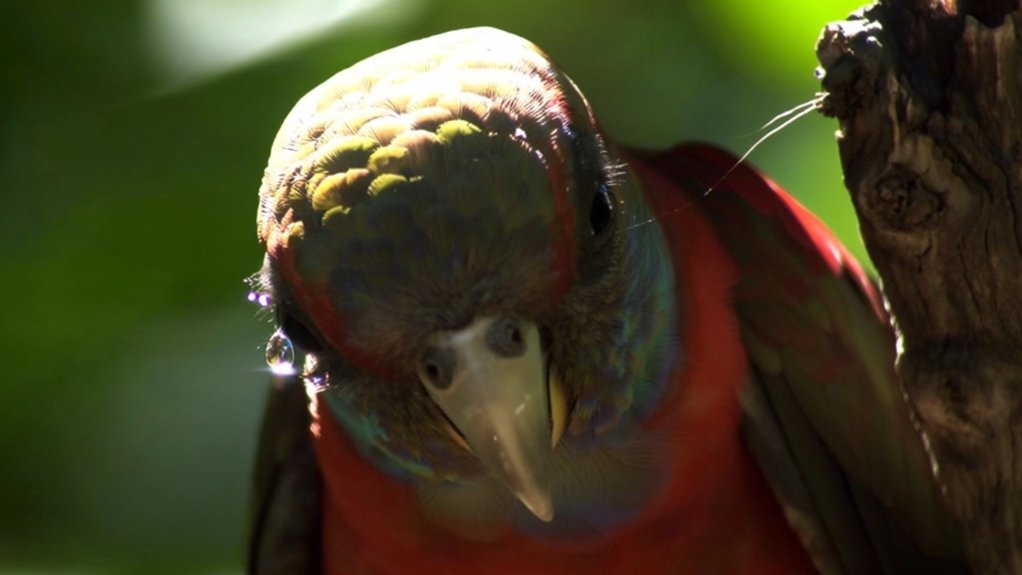
Yes, birds do produce tears, but these tears serve important biological roles rather than emotional expression. Their lacrimal glands secrete tear fluid to lubricate, protect, and nourish the eyes. This helps remove dust and debris while keeping the eyes moist.
You might see visible tears in some species, especially when they’re under environmental stress. But birds don’t shed tears from feelings like humans do. It’s more about keeping their eyes healthy and functioning well.
Learning how environmental factors affect tear composition tells us a lot about their eye health and how they adapt to their surroundings. So, while birds can cry tears, it’s not about emotions but about survival and care for their eyes.
How Do Birds Produce Tears?
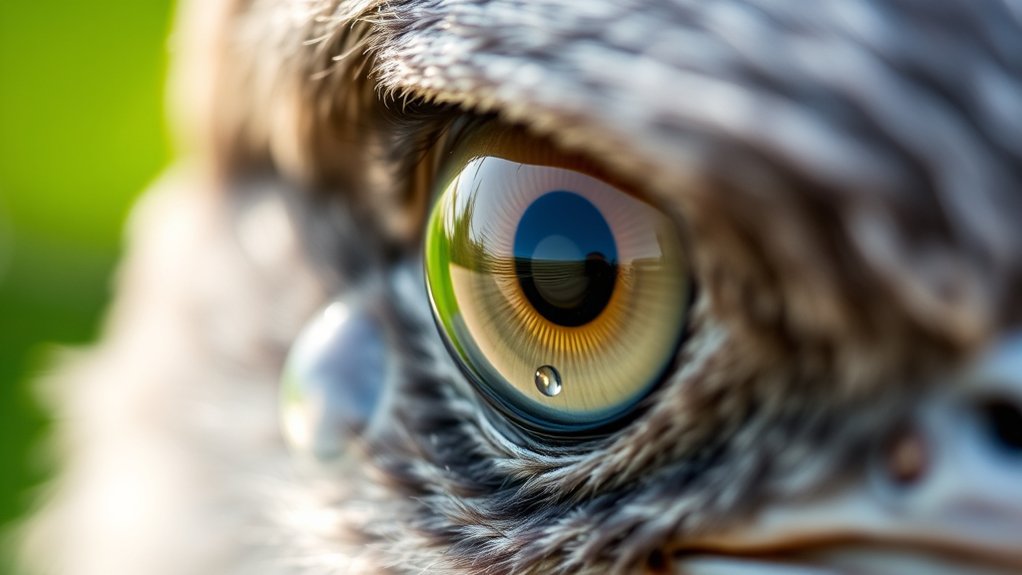
Although birds don’t cry tears for emotional reasons like humans, they produce tears through specialized lacrimal glands that secrete fluid to keep their eyes moist and protected. You’ll find that these glands release a tear fluid composed of water, electrolytes, proteins, and urea, similar to those in humans and many animals.
When your bird experiences eye irritation, dryness, or environmental challenges like dust or wind, tear production increases as a physiological response to maintain ocular health. Unlike humans, birds don’t shed tears to express emotions or social cues. Instead, their tears primarily serve to lubricate the eyes and protect the cornea from damage.
The quantity and composition of tears can vary among species, especially in aquatic birds adapted to wet environments. But their fundamental function remains consistent.
What Bird Species Produce Visible Tears?
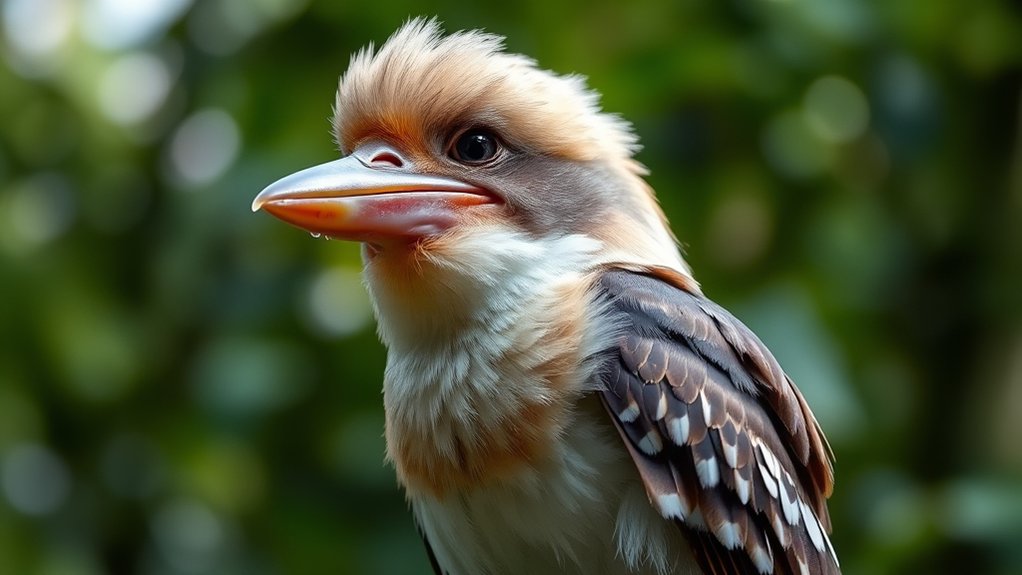
When you observe certain bird species like barn owls and some seabirds, you may notice visible tears around their eyes, especially under conditions that increase tear production. These birds have functional tear glands that secrete basal and reflex tears to keep their eyes moist and protect the surface.
Unlike mammals, birds generally don’t shed emotional tears. So, visible tears mainly show physiological responses.
Birds living in aquatic or humid environments, like seabirds, tend to have more noticeable tears because of increased exposure to moisture and irritants.
Also, the crystallization patterns of dried tears in birds are different from those in mammals, which points to differences in their composition.
What Are the Main Functions of Bird Tears?
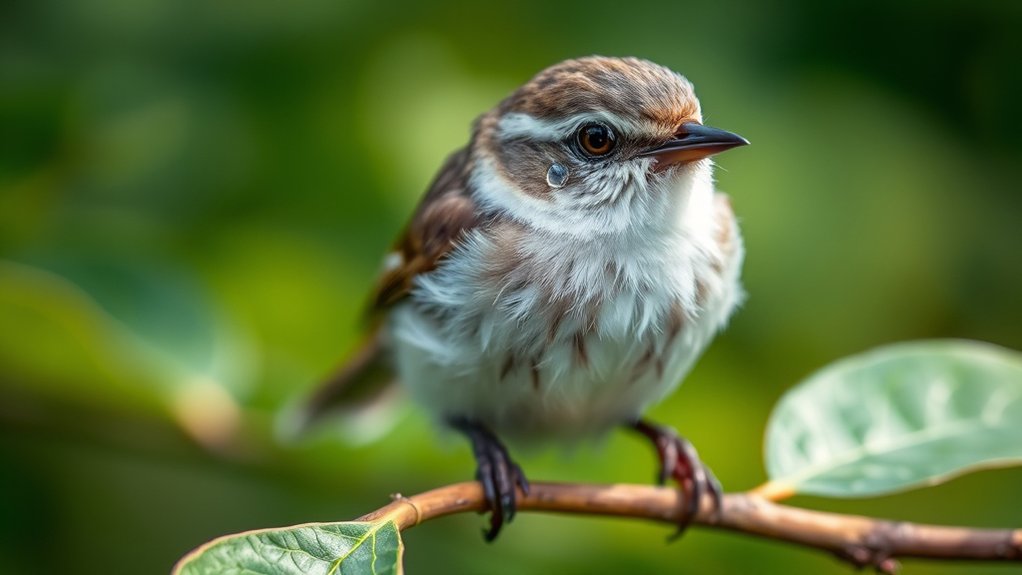
Visible tears in birds don’t just indicate moisture. They perform several essential functions that help maintain eye health. You’ll find that bird tears lubricate the eye surface, flush out debris, and deliver indispensable nutrients like sodium, calcium, and proteins.
These components nourish the cornea and conjunctiva, supporting cellular function. Plus, the biochemical makeup of tears can vary in some species, reflecting environmental adaptations. For instance, aquatic birds exhibit higher protein and urea concentrations.
Understanding these functions gives you insight into avian ocular physiology and health monitoring.
| Function | Description |
|---|---|
| Lubrication | Maintains moisture and reduces friction in the eye |
| Debris Removal | Flushes out dust and small particles |
| Nutrient Supply | Delivers essential ions and proteins to eye tissues |
| Adaptation | Adjusts tear composition based on environment |
| Health Indicator | Tear crystallization patterns reveal eye health status |
How Bird Tears Protect Eyes From Environmental Irritants
Because bird tears contain a complex mix of water, electrolytes, proteins, and urea, they form a protective film that shields the eyes from environmental irritants. This film traps and washes away dust, debris, and particles that could otherwise damage the delicate corneal surface.
You can see that the tear composition mirrors human tears in maintaining ocular health, yet specific adaptations exist. For example, some bird species have elevated urea concentrations, which help enhance tear stability in dusty or salty habitats.
Crystallization patterns of dried bird tears further show their role in eye protection by maintaining moisture and preventing desiccation. When you consider all these factors, it’s clear that bird tears provide a dynamic barrier. They actively defend the eyes against environmental stressors and help preserve visual function.
Can Birds Really Cry Emotional Tears?
The question of whether birds can cry emotional tears has intrigued both scientists and bird enthusiasts alike. Scientific evidence indicates that emotional tears are unique to humans and haven’t been conclusively observed in birds.
While birds do produce tears, these serve primarily to protect and lubricate their eyes rather than express emotions.
Certain species, such as magpies and crows, display mourning behaviors accompanied by tear-like secretions. But researchers haven’t confirmed these as emotional tears.
Studies consistently show no clear link between tear production and emotional states in birds.
Why Birds Don’t Use Tears as Emotional Signals
You should know that birds produce tears mostly to keep their eyes lubricated and protected. It’s not really about expressing emotions.
Their tears and the way their bodies work just don’t support the idea of crying as a way to show feelings. In fact, science hasn’t found any connection between tears and emotions in birds.
Biological Tear Functions
Although birds produce tears through specialized glands, these secretions serve primarily to protect and hydrate their eyes rather than to communicate emotions. You should understand that bird tears consist of basal and reflex tears, which maintain ocular moisture and cleanse the eye surface.
Unlike humans, birds lack the physiological mechanisms and biochemical composition, such as specific proteins and hormones, associated with emotional tears.
When bird tears dry, their crystallization patterns differ from human tears, reflecting unique chemical properties unsuited for emotional signaling. Scientific analysis confirms these tears function strictly in physiological roles, ensuring eye health, rather than expressing social or emotional states.
Absence Of Emotional Signaling
Because birds evolved along a different physiological path than mammals, they lack the mechanisms required to produce tears linked to emotional states. Unlike humans, birds don’t have tear ducts influenced by emotional stimuli, which means their tears serve only basal and reflexive functions for eye health.
Scientific studies show no evidence of emotional tear shedding in birds, indicating they rely on other signals, like body language and vocalizations, for emotional communication. You can see the distinctions clearly:
| Feature | Mammals (Humans) | Birds |
|---|---|---|
| Tear production type | Basal, reflex, emotional | Basal, reflex only |
| Tear ducts linked to emotion | Yes | No |
| Emotional tear shedding | Present | Absent |
| Communication method | Tears, vocal, body language | Vocal, body language |
| Scientific evidence | Confirmed | None |
Chemical Differences Between Bird and Human Tears
How do bird tears differ chemically from human tears? Bird tears contain water, sodium, calcium, chloride, urea, and proteins, similar to human tears when it comes to electrolyte composition. However, species like owls and sea turtles show higher concentrations of urea and proteins. This reflects biochemical adaptations to their environments.
You’ll notice that while the electrolyte profiles overlap, the crystallization patterns of dried bird tears differ a lot from humans. This indicates distinct biochemical properties.
These chemical differences suggest that bird tears are tailored more to physiological and environmental needs rather than the emotional signaling found in human tears.
How Tear Production Affects Bird Eye Health
Understanding the chemical makeup of bird tears reveals their role beyond simple lubrication, directly influencing eye health. You’ll find that bird tears, containing water, sodium, calcium, urea, chloride, and proteins, maintain eye hydration while shielding against environmental irritants.
When tear production is adequate, it prevents infections by flushing out debris and microorganisms, ensuring clear vision. Importantly, variations in tear composition, such as elevated urea and protein levels in aquatic or habitat-specific birds, enhance protection against unique environmental stressors.
Monitoring crystallization patterns of dried tears can also help you assess eye health and detect potential diseases. So, consistent tear production is essential for preserving the structural integrity and function of bird eyes across diverse species and habitats.
How Environment Shapes Bird Tear Composition
You’ll notice that bird tear composition directly reflects their environment. Electrolyte and protein levels adjust depending on the habitat’s demands.
For example, birds living in aquatic settings have tears rich in urea and proteins, which help manage salt and moisture balance.
On the other hand, those in arid regions optimize their tears to retain hydration better.
These adaptations really show how environmental factors shape tear chemistry and, in turn, influence eye health across different species.
Environmental Influence On Tears
Although bird tear composition varies widely, environmental factors play an essential role in shaping their chemical makeup. If you examine birds in aquatic habitats, you’ll notice elevated urea and protein levels in their tears. These are adaptations that protect their eyes from constant water exposure and contaminants.
In humid environments, birds produce tears with electrolyte concentrations comparable to humans. Yet, their tear crystallization patterns differ markedly due to environmental conditions. It’s pretty interesting how these differences show up.
Pollution and habitat destruction also influence tear fluid composition. This can potentially impair eye health and tear film stability.
This can respond accordingly when environmental conditions shift, affecting tear production rates and chemistry.
This reflects ecological health and adaptive mechanisms. Understanding these influences helps you appreciate how closely bird tear composition associates with their surrounding environment rather than being fixed biologically. It’s a great example of nature’s adaptability.
Habitat Adaptations In Birds
Because birds face diverse environmental challenges, their tear composition adapts to support eye function specific to their habitats. Aquatic birds have higher urea and protein levels in tears, protecting against salinity and waterborne irritants.
In contrast, birds in arid environments produce tears rich in hydration and dust-protective elements.
Electrolyte levels remain stable across species, yet environmental exposure influences tear crystallization patterns. This helps adjust protective functions accordingly.
These adaptations ensure eye health despite varying habitat stresses. It’s pretty amazing how birds’ tears change to keep their eyes safe no matter where they live.
What Future Research Could Reveal About Bird Tears?
As researchers develop more advanced imaging and biochemical analysis tools, they’ll be able to investigate whether birds produce emotional tears similar to those found in mammals or if their tear production serves primarily physiological functions.
Future studies could focus on analyzing the biochemical composition of bird tears to identify stress-related or emotional markers.
They might also observe behavioral cues in conjunction with tear production to determine correlations with emotional states.
And conducting comparative research across various bird species and habitats could help assess ecological influences on tear production.
Such research will clarify if bird tears function beyond just ocular health, potentially revealing emotional complexity.
Enhanced imaging and sampling techniques will allow precise detection of tear types and their triggers, advancing our understanding of avian physiology and behavior.
This could really change how we interpret emotional expression in birds.
Frequently Asked Questions
Do Birds Have Tear Ducts Similar to Humans?
Yes, birds have tear ducts similar to humans, though less complex. You’ll find small openings called puncta that drain tears, helping lubricate and protect their eyes. This keeps their eyes clean and supports overall eye health effectively.
Can Bird Tears Indicate Illness or Injury?
Yes, bird tears can indicate illness or injury. When you notice excessive tearing, discharge, swelling, or cloudiness, it often signals eye irritation or infection.
Keeping an eye on these changes helps you understand what’s going on with your bird’s health. It’s a good way to catch problems early and get your feathered friend the care they need.
How Do Birds Clean Their Eyes Without Tears?
You’ll find birds clean their eyes using Harderian glands that secrete lubricating fluids. These glands help keep their eyes moist and protected.
They also use blinking, preening, and sometimes wiping with their beak or feet. This combo effectively removes debris without relying on emotional tears.
Are Bird Tears Visible to the Naked Eye?
You might expect to see bird tears easily, but they’re rarely visible to the naked eye since they evaporate quickly or are absorbed.
Only during irritation or infection do tears become noticeable, revealing their presence scientifically. So, most of the time, you won’t catch a glimpse of them. It’s kind of like how we don’t always see our own tears unless something’s wrong.
Do Environmental Pollutants Affect Bird Tear Production?
Yes, environmental pollutants affect bird tear production by increasing reflex secretion to flush irritants, altering tear composition, and impairing gland function.
You’ll notice these changes can raise the risk of eye infections and stress in birds. It’s like their eyes have to work overtime just to stay clean and healthy.
Conclusion
You might picture a bird perched silently, eyes gleaming with moisture. But it’s not from sorrow. Instead, it’s from a complex tear system that protects its vision.
Birds produce tears that are chemically different from ours. These fluids play important roles in keeping their eyes healthy and defending against irritants.
Unlike human tears, bird tears don’t show feelings. They respond to environmental needs instead. It’s interesting to see how evolution shapes biology differently across species. This invites more research into the unique functions of bird tears.