
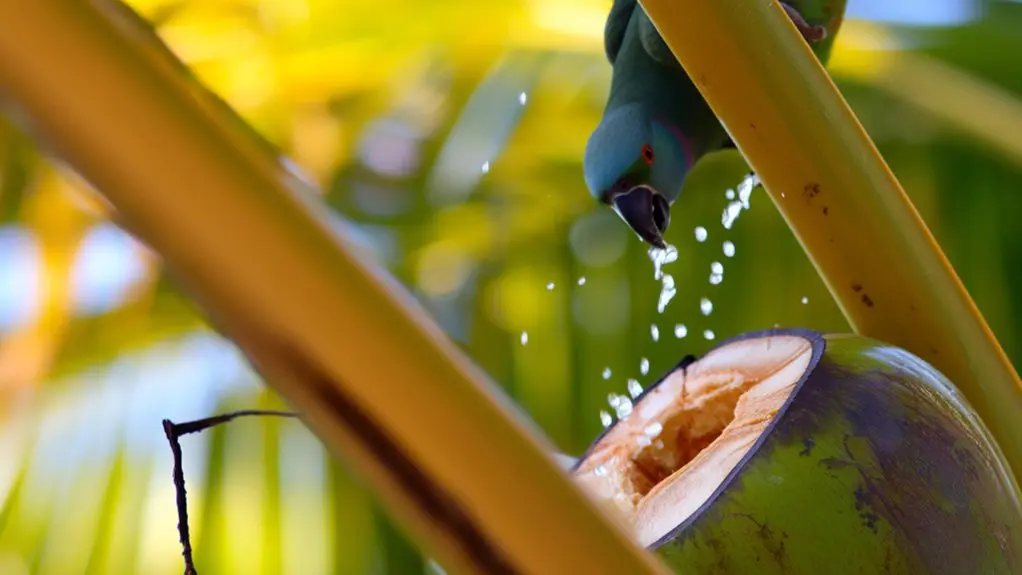
You can give birds coconut water in small amounts since it offers natural electrolytes like potassium and sodium that support hydration and energy. However, too much can cause digestive upset, electrolyte imbalances, or metabolic issues, especially if your bird has health concerns.
Always offer it sparingly, watch for any signs of sensitivity, and never substitute fresh water with it. Understanding these details helps ensure your bird benefits safely and thrives under your care.
What Is Coconut Water: And Why Do Parrots Like It?
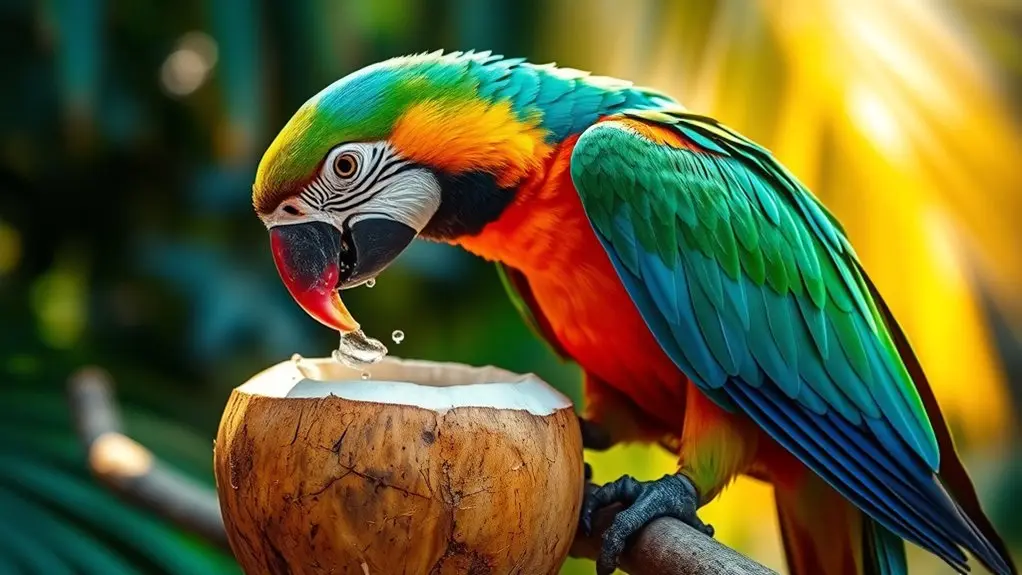
Although you mightn’t immediately associate parrots with tropical fruits, many of these birds are drawn to coconut water. It’s the clear, naturally hydrating liquid inside young green coconuts. This liquid is rich in electrolytes like potassium and sodium, which contribute to its slightly sweet taste.
Parrots find this natural sweetness appealing because it provides quick energy through natural sugars. But keep in mind, the high potassium content means you need to offer coconut water in moderation to avoid digestive upset.
Unlike the coconut meat, the water is generally safe for parrots, but it shouldn’t replace their regular fresh water intake.
Also, overconsumption may lead to diarrhea or sodium imbalance. So, it’s best to serve coconut water as an occasional treat rather than a daily beverage. Just a little goes a long way!
Nutritional Benefits Of Coconut Water For Parrots
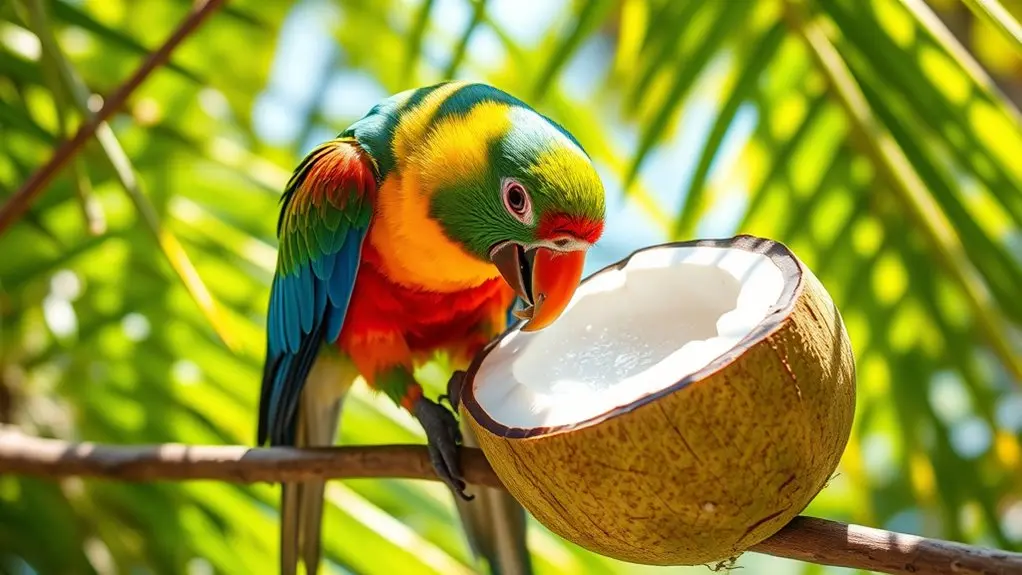
You’ll find that coconut water gives parrots essential hydration because it’s packed with water and electrolytes. This is especially handy after they’ve been active or when it’s warm outside.
Plus, the natural sugars in coconut water provide a quick energy boost.
On top of that, vitamins like B-complex and C in coconut water help support their immune system. Just remember, giving it in moderation is key.
That way, your parrot can enjoy all these benefits without any digestive issues.
Hydration And Energy
How does coconut water benefit parrots beyond simple hydration? It serves as a natural source of electrolytes, primarily potassium and sodium, which help maintain your parrot’s fluid balance and support muscle function and nerve health.
The natural sugars in coconut water provide a quick energy boost, making it useful as a hydrating treat after bouts of activity or mild illness. Due to its electrolyte composition, offering small amounts can aid in rehydration and recovery.
However, because of its relatively high sugar and sodium content, you should limit the quantity and frequency to avoid digestive upset.
Observing your parrot after giving coconut water will help guarantee it benefits their hydration and energy without adverse effects.
Vitamins And Minerals
Coconut water delivers a range of essential vitamins and minerals that can benefit your parrot’s overall health. Its nutrient profile supports critical physiological functions, contributing to muscle, bone, and immune system health. Consider these key components:
- Potassium (~600 mg per cup) enhances muscle function and nerve signaling, which are essential for your parrot’s mobility and responsiveness.
- Magnesium and calcium, though in smaller amounts, support bone integrity and metabolic enzymatic reactions.
- Natural electrolytes improve hydration status, especially after exercise or during recovery from illness.
- Vitamins B-complex and C help boost immune defenses and facilitate cellular metabolism.
While these nutrients do a great job replenishing lost elements, it’s best to offer coconut water in moderation. Too much could cause electrolyte imbalances that might affect your bird’s homeostasis. So, a little goes a long way!
How Coconut Water Helps Keep Your Parrot Hydrated
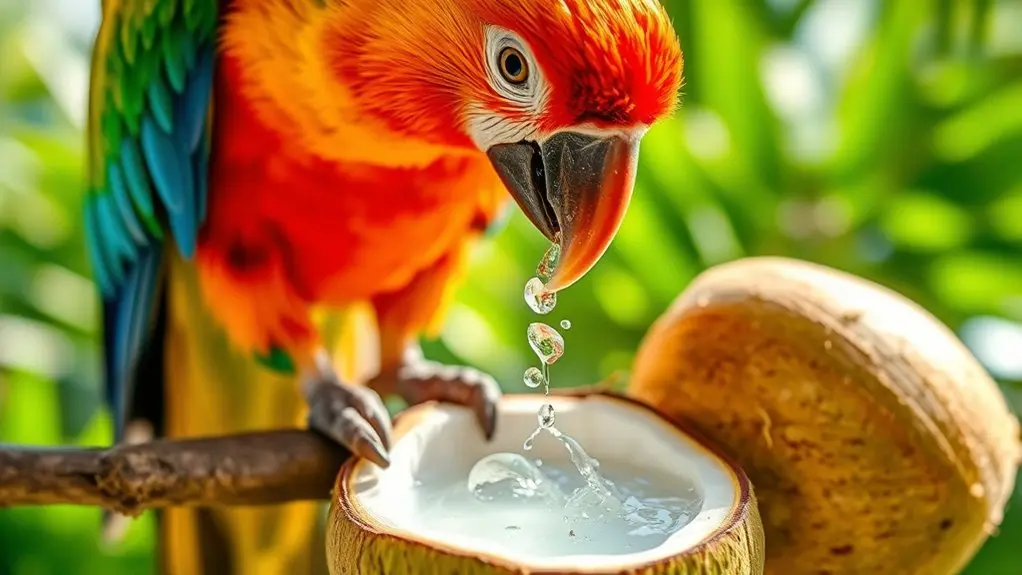
Although parrots naturally obtain water from their diet, providing coconut water can enhance their hydration by supplying essential electrolytes like potassium, sodium, and magnesium.
These electrolytes play a vital role in maintaining fluid balance and supporting nerve and muscle function in your parrot.
When your bird experiences heat or mild illness, these minerals help replenish losses from perspiration or physiological stress.
By offering unsweetened, additive-free coconut water in moderation, you support your parrot’s fluid intake without risking digestive upset or electrolyte imbalance.
However, it’s important to monitor the quantity, as excessive sugars and sodium may cause dehydration instead of preventing it.
Keep an eye on your parrot’s response so you can adjust the amount accordingly.
This way, coconut water effectively complements their hydration needs.
Health Risks Of Overfeeding Coconut Water To Parrots
While coconut water can support your parrot’s hydration, giving it in excessive amounts poses significant health risks. Overfeeding disrupts your bird’s delicate physiological balance, potentially leading to serious complications.
Here are four key risks to take into account:
First, excess potassium intake may cause hyperkalemia, which can impair heart and muscle function. The natural sugars in coconut water might lead to digestive upset and obesity when consumed too much.
Also, the high sodium content increases the risk of dehydration and stresses kidney function.
Electrolyte imbalances from overconsumption might cause lethargy, weakness, or abnormal heart rhythms.
Regularly exceeding safe amounts also raises the chance of metabolic disorders that can threaten your parrot’s long-term health.
So, you really need to monitor intake carefully.
That way, you can avoid these adverse effects and make sure your parrot benefits from coconut water without any harm.
When To Avoid Giving Coconut Water To Your Parrot
Because parrots have sensitive digestive and metabolic systems, you should avoid giving them coconut water under certain health conditions.
If your parrot has kidney or heart problems, the high potassium and sodium content in coconut water can worsen these issues by disrupting electrolyte balance and straining organ function.
Also, if your parrot is prone to insulin imbalances or obesity, it’s best to skip coconut water regularly. The sugar content might contribute to weight gain and metabolic disturbances.
Overconsumption can lead to dehydration or diarrhea by disturbing hydration balance.
So, to prevent these complications, don’t offer coconut water as a regular treat or in large amounts.
Instead, save it for rare, small sips.
And always keep an eye on your parrot’s health before introducing any new foods.
Safe Serving Amounts Of Coconut Water For Parrots
How much coconut water is safe for your parrot to consume? Given its high potassium and sugar content, you should only offer very small amounts.
To avoid digestive upset or electrolyte imbalances, keep servings minimal and infrequent.
Consider these guidelines: Limit portions to a few sips or up to one teaspoon per serving. Offer coconut water occasionally, not daily, to prevent overconsumption.
Also, keep an eye on your bird for signs of digestive issues like diarrhea after giving coconut water. It’s best to use it as a tiny supplement within a balanced diet rather than a regular treat.
How To Introduce Coconut Water To Your Parrot Safely
When you introduce coconut water to your parrot, start with just a few drops or a tiny sip to carefully monitor their reaction. Use only pure, unsweetened coconut water without additives. Offer small amounts, just a few sips weekly, to avoid excessive potassium intake.
Keep an eye on your parrot for any digestive upset or unexpected behavior. It’s always a good idea to check with an avian vet before adding coconut water regularly. This way, you can be sure it’s safe and suitable for your bird’s health.
| Step | Action | Purpose |
|---|---|---|
| 1 | Offer a few drops | Monitor initial reaction |
| 2 | Use pure coconut water only | Avoid harmful additives |
| 3 | Limit intake to small sips | Prevent potassium overload |
| 4 | Observe for digestive issues | Detect adverse effects |
| 5 | Consult avian vet | Confirm diet suitability |
Signs Of Coconut Water Sensitivity In Parrots
After introducing coconut water to your parrot, closely monitor its behavior and physical condition for any signs of sensitivity. Early detection is essential because parrots can react badly even to small amounts.
Watch out for these key indicators:
Watch closely for these key indicators to ensure your parrot’s safety with new foods.
- Diarrhea, vomiting, or abnormal stool consistency signaling digestive upset.
- Feather puffing and skin irritation indicating discomfort or an allergic reaction.
- Lethargy or decreased activity levels, which reflect systemic distress.
- Refusal to eat or drink, suggesting gastrointestinal discomfort or nausea.
If you notice any of these symptoms shortly after your parrot drinks coconut water, don’t wait. Consult a veterinarian immediately.
Acting quickly helps prevent complications and keeps your bird’s health stable. Watching for these signs will help you manage your parrot’s diet safely.
Best Alternatives To Coconut Water For Parrot Hydration
You should always prioritize fresh, clean water as the main way to keep your parrot hydrated. This helps avoid giving them too much sugar or electrolytes, which can be harmful.
If you want to mix things up a bit, unsweetened fruit and vegetable juices can be a nice supplement. Just remember to use them sparingly and in moderation.
Also, there are bird-specific electrolyte solutions available. These can be a great option to help maintain your parrot’s balance, but it’s best to use them only when your vet recommends it.
Safe Hydration Options
How can you guarantee your parrot stays properly hydrated without the risks associated with coconut water? Prioritize fresh, clean water changed daily to keep your bird healthy and hydrated.
You can also offer natural fruit and vegetable juices as occasional treats, just make sure they don’t have added sugars or preservatives.
If your parrot is ill or dehydrated, commercially formulated electrolyte solutions made specifically for birds are a safe and effective option.
Before introducing any new liquid, it’s a good idea to check with an avian veterinarian to make sure it’s safe and suitable for your parrot’s unique needs.
Here are some hydration options to consider:
- Fresh, clean water refreshed daily
- Unsweetened fresh fruit or vegetable juices (occasional)
- Commercial avian electrolyte solutions for medical needs
- Veterinary guidance before introducing new liquids
Nutrient-Rich Water Choices
While coconut water offers certain nutrients like potassium and natural sugars, its composition can disrupt your parrot’s digestive balance and hydration if given excessively.
Instead, provide fresh, clean, filtered water as the primary hydration source to maintain ideal electrolyte and fluid balance.
Occasionally, you can offer diluted fruit or vegetable juices in minimal amounts, but these should never replace water.
Specialized electrolyte solutions formulated specifically for birds are better alternatives when rehydration is necessary because they closely mimic avian electrolyte profiles.
Also, incorporating fresh fruits and vegetables with high water content, such as melons or cucumbers, naturally supports hydration.
Always consult an avian veterinarian before introducing any alternative liquids to make sure they suit your parrot’s unique hydration and nutritional needs.
This helps prevent potential imbalances or digestive issues.
Frequently Asked Questions
Can Baby Parrots Drink Coconut Water?
You shouldn’t give baby parrots coconut water because its high potassium and sugar can upset their digestion. This might cause diarrhea or dehydration.
It’s best to stick to avian-formulated water. And always check with a vet before introducing any new liquids to your baby parrot.
Does Coconut Water Affect a Parrot’s Feather Color?
Coconut water doesn’t directly change your parrot’s feather color, though its nutrients may temporarily brighten feathers. Overconsumption risks electrolyte imbalance, potentially harming feather health, so you should provide it only in moderation to support hydration safely.
Can Coconut Water Help Parrots During Molting?
You can use coconut water to help parrots during molting. It provides hydration, electrolytes, and energy, which are all important during this time.
Just be sure to moderate how much they drink. Keep an eye out for any digestive issues that might pop up.
And definitely check with an avian vet to make sure it’s safe and actually helpful for your bird.
Is Coconut Water Safe for Other Bird Species?
Yes, you can offer coconut water to many bird species cautiously. Its electrolytes help with hydration, which is great. But keep in mind, the high potassium content can cause digestive issues.
How Long Can Coconut Water Be Stored for Parrots?
You probably think coconut water lasts forever for your parrot, but nope. It’s best used within 24-48 hours after opening.
Make sure to store it cold and keep an eye out for any changes. Otherwise, your bird might end up with a microbial cocktail instead.
Conclusion
So, you’re thinking of turning your parrot into a tropical islander, sipping coconut water like it’s the nectar of the avian gods? While it’s a hydrating treat packed with nutrients, remember, too much can send your feathered friend on a dizzy, sugar-fueled flight.
Moderation is key; you’re not running a parrot beach bar. Observe closely, offer cautiously, and keep their hydration as balanced as their famously sarcastic squawks.