
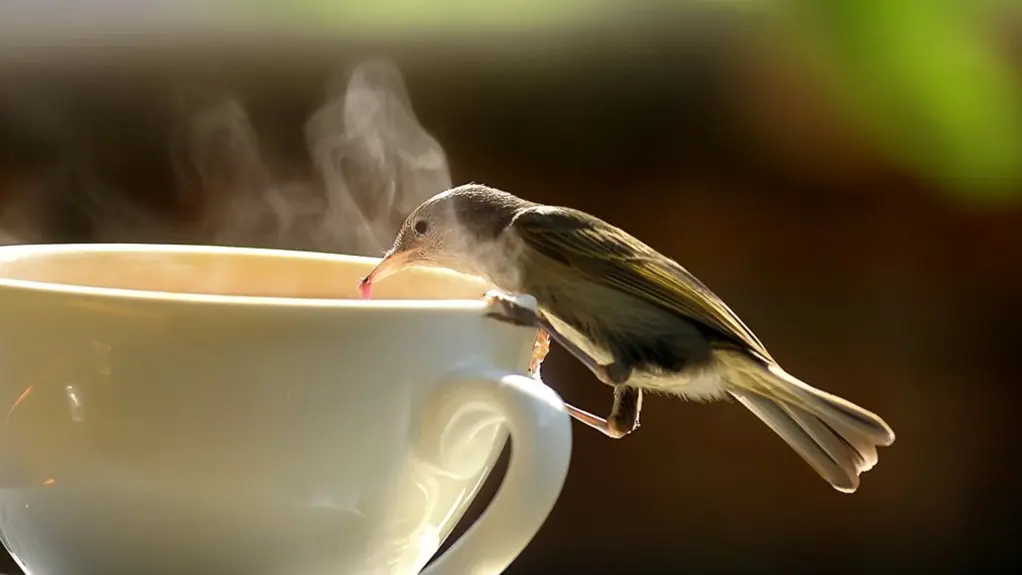
You shouldn’t give birds hot water because temperatures above 104°F (40°C) can cause serious burns and tissue damage in their delicate mouths and throats. Hot water may also discourage drinking, leading to dehydration and thermal shock risks.
Birds naturally prefer cool or lukewarm water to stay hydrated and regulate their body temperature safely. Understanding how to provide water at safe temperatures and recognize warning signs safeguards their health and comfort. Exploring these details will help you guarantee their well-being year-round.
Can Birds Safely Drink Hot Water?
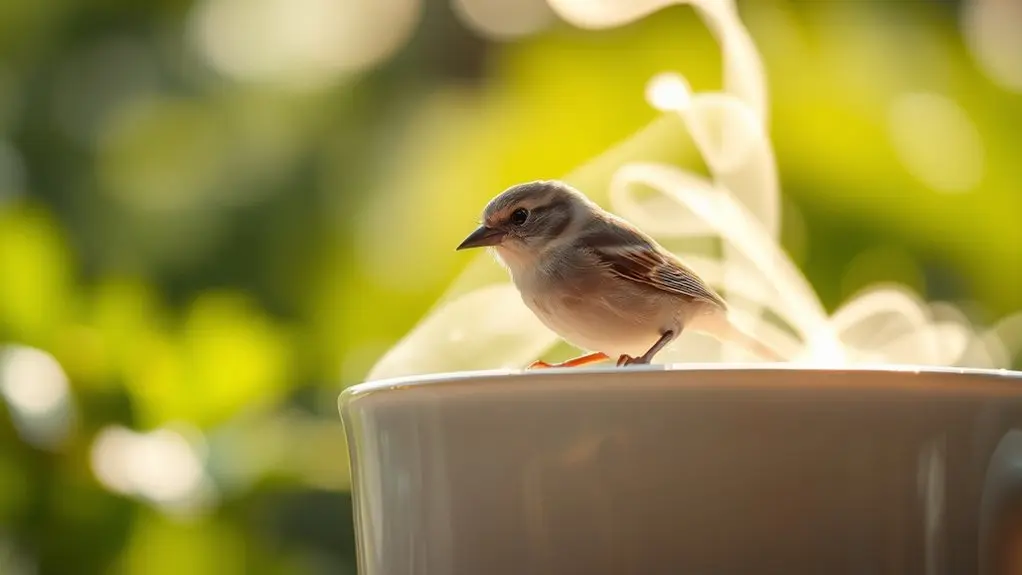
Although birds can drink hot water, you must guarantee the temperature is safe to prevent burns to their sensitive beaks and mouths. Extremely hot water can cause internal burns or thermal shock, which may lead to severe health complications or even death.
To avoid these risks, provide lukewarm or slightly warm water, as it closely mimics natural water temperatures and reduces stress, encouraging regular drinking behavior. It’s essential to monitor water temperature consistently, ensuring it doesn’t exceed safe limits.
How Birds Keep Their Cool Naturally
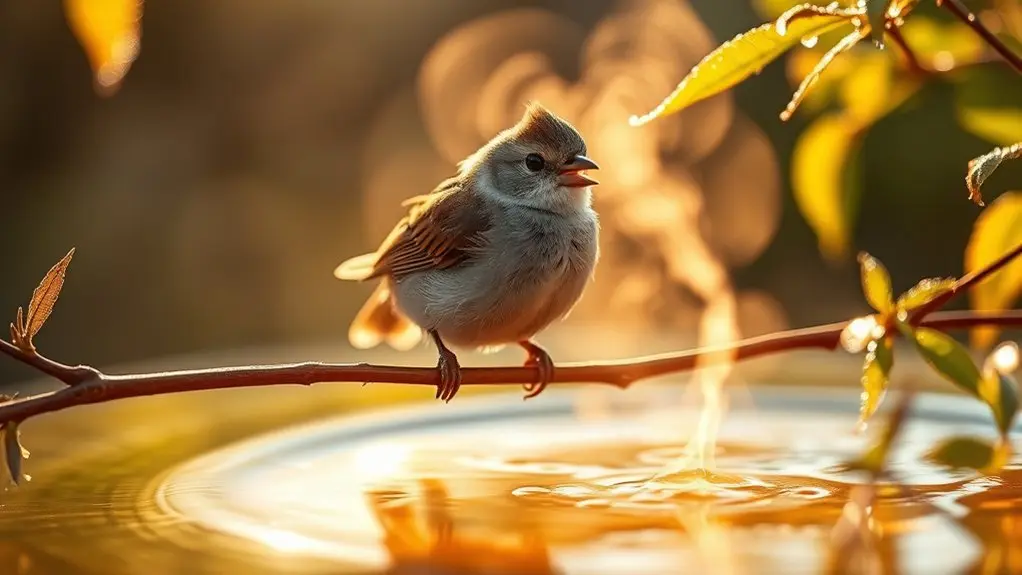
You’ll notice that birds use evaporative cooling techniques, like gular fluttering, to get rid of heat efficiently. It’s pretty fascinating how they do this.
They don’t just stop there, though.
They also regulate their temperature by changing their behavior — like finding shade, taking a bath, or slowing down their activity when it gets really hot. These little adjustments help them stay comfortable.
When you think about it, understanding these natural tricks really shows how birds keep their cool without depending entirely on their surroundings. It’s nature’s way of helping them maintain a good thermal balance.
Evaporative Cooling Techniques
Many bird species rely on specialized evaporative cooling techniques to regulate their body temperature in hot environments. One key method is gular fluttering, where birds rapidly move their throat membranes to enhance moisture evaporation, effectively dissipating excess heat. This process transfers heat from warm blood to the environment, maintaining thermal balance.
You’ll observe nocturnal insectivores like nighthawks and whip-poor-wills using this technique during hot nights. Cormorants, owls, and mourning doves also employ fluttering behaviors to cool down.
Gular fluttering involves open-mouth rapid throat vibrations. Moisture evaporates from throat membranes, lowering body temperature. Evaporative cooling relies on molecular heat transfer via moisture loss.
Multiple bird species use fluttering during heat stress for temperature regulation. It’s a simple yet effective way to beat the heat when things get warm.
Behavioral Temperature Regulation
When temperatures rise, birds actively engage in various behaviors to regulate their body heat and prevent overheating. You’ll notice them performing gular fluttering, which is rapidly vibrating their throat membranes while breathing with open mouths to enhance evaporative cooling.
Birds also adjust blood flow, directing warmer blood to peripheral areas to dissipate heat efficiently.
To further cool down, many species bathe or swim in water, absorbing its lower temperature to reduce their body heat. You might observe them fluffing their feathers and spreading wings to increase surface area, catching breezes that aid heat loss.
These strategies are finely tuned to environmental conditions.
This way, birds can maintain an ideal body temperature during hot weather without compromising their physiological balance. It’s pretty amazing how they manage it all, isn’t it?
Risks of Extremely Hot Water to Birds
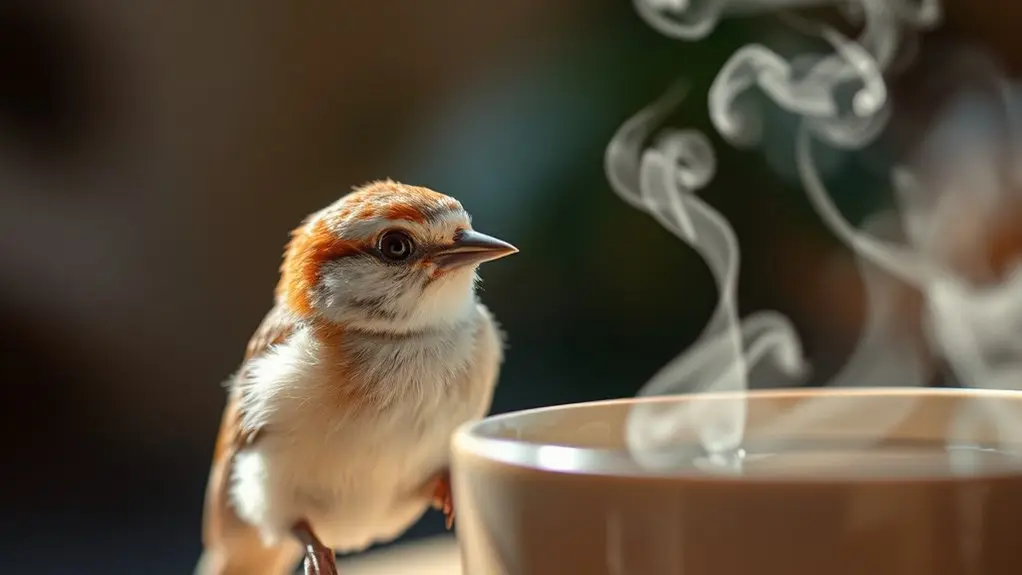
Although birds need water to survive, exposing them to extremely hot water poses serious health risks. When water exceeds safe temperatures (above 104°F or 40°C), it can cause thermal injuries and disrupt hydration.
Providing birds with water above 104°F risks thermal injuries and disrupts their hydration.
You should understand these key dangers:
Burns and tissue damage to the delicate mouth, throat, and digestive tract. Impaired hydration leading to dehydration or internal injuries. Avoidance behavior reducing water intake due to discomfort or pain.
Risk of thermal shock that may result in fatal or severe health complications. Providing water at appropriate temperatures is essential to prevent these adverse effects.
Using excessively hot water compromises a bird’s physiological functions, threatening their well-being and survival.
How to Spot If Hot Water Is Hurting Your Birds
If your bird hesitates to drink or shows signs of discomfort around its beak, these could indicate exposure to hot water. You should carefully observe for reluctance to drink, visible burns or redness around the mouth, and signs of oral distress.
Difficulty swallowing or lethargy may also signal scalding or burns caused by ingesting overly warm water. Hot water can damage delicate mouth and throat tissues, impairing normal feeding behavior.
To detect injury early, regularly check your bird’s behavior after drinking and inspect the beak area for abnormalities. Since birds are sensitive to water temperature, avoid offering water markedly above their body temperature to prevent tissue damage.
Prompt recognition of these signs allows you to mitigate harm and seek veterinary care if necessary. It’s better to be cautious and keep your bird safe by always providing water at a comfortable temperature.
Just a little extra care can make a big difference for your feathered friend.
Safe Ways to Provide Water to Birds Year-Round
Ensuring birds have access to water that’s both safe and appropriately tempered throughout the year supports their hydration and overall health. You need to regard environmental factors and bird safety when providing water sources. Maintaining cleanliness and temperature balance prevents health risks and encourages regular use.
Refill water daily with fresh, clean water to prevent bacterial growth and encourage drinking and bathing.
Use shallow, textured baths with gradual depth shifts to accommodate various bird species safely.
Position baths in partial shade to reduce water temperature and slow evaporation, especially during warm periods.
Introduce gentle water movement via drippers or small fountains to attract birds and minimize stagnation.
This little extra effort makes a big difference in keeping your feathered visitors happy and healthy all year round.
How to Safely Maintain Heated Birdbaths for Birds
When maintaining a heated birdbath, you should use thermostatically controlled heating elements to keep water from freezing without overheating.
Place a layer of small, non-slip stones at the bottom to prevent drowning and provide stable perching spots.
Regularly clean and monitor the water to avoid algae, bacteria, and ice buildup, which can harm bird health.
Position the birdbath in a safe location free from predators with nearby cover. This encourages more frequent visits from the birds.
Additionally, use nonmetallic covers or grilles over the heated bath to prevent feathers from freezing and reduce the risk of birds falling after bathing.
These precise measures help maintain a safe, functional heated birdbath that supports avian hydration and wellbeing throughout cold conditions.
Taking these steps makes sure your feathered friends stay healthy and happy during chilly weather.
Water Dangers You Should Watch Out For
You should know that hot water can actually cause burns or thermal shock to birds. It can damage their mouth tissues and even their internal organs.
Plus, when water gets too hot, it evaporates quickly, which means there’s less water available for them to drink. This can make dehydration a real risk.
Risks Of Hot Water
Although hot water might seem harmless, it poses several significant risks to birds that you should be aware of. Birds have delicate tissues, and exposure to hot water can result in serious injuries or health issues. You should understand these dangers to protect them effectively.
Burns or scalding can occur if birds drink or contact hot water, damaging their sensitive mouth and throat tissues. Sudden exposure may cause thermal shock, which can be fatal or severely harmful.
Hot water can cause feathers to freeze or stick together, impairing insulation and flight capabilities.
Birds may avoid hot water due to discomfort, increasing dehydration risks. Recognizing these risks is crucial for maintaining bird health and safety.
It’s important to keep this in mind whenever you’re around birds and hot water.
Preventing Water Hazards
How can you guarantee the safety of birds around water sources? First, always monitor the water temperature to ensure it’s not too hot, as extreme heat can cause thermal burns to a bird’s mouth and esophagus. Avoid using enclosed or heated containers that might retain excessive warmth.
Sudden exposure to hot water may shock birds, reducing their willingness to drink or bathe. Use temperature-controlled water sources, ideally at ambient or slightly warm temperatures, to prevent scalding injuries.
Regularly inspect birdbaths and feeders to detect and address any temperature fluctuations.
By maintaining safe water temperatures and minimizing thermal risks, you protect birds from harmful effects and assure they hydrate without injury or distress. This approach supports their health and encourages repeated visits to your water sources.
It’s really about keeping things comfortable and safe for our feathered friends.
Birds’ Preferences for Water Temperature
Because birds rely on water sources that mimic their natural environments, they typically prefer fresh, cool water over hot water for drinking. You’ll find that birds avoid hot water because it can cause thermal stress or burns to their sensitive beaks and respiratory tissues.
Birds prefer fresh, cool water to avoid thermal stress and protect their sensitive beaks and respiratory tissues.
Instead, they seek temperatures that don’t cause discomfort or tissue damage.
Even in winter, birds favor unfrozen, cool, or lukewarm water rather than hot. It’s all about what feels safe and comfortable to them.
Consider these key points about birds’ water temperature preferences:
- Birds’ beaks are highly sensitive to temperature extremes.
- Hot water risks causing burns or thermal injury.
- Cool water resembles natural sources found in their habitats.
- Avoiding hot water helps prevent respiratory irritation and stress.
Understanding these preferences helps you provide safe, suitable water for bird health. It’s a simple way to keep our feathered friends happy and healthy.
Using Water to Help Birds Cool Off in Summer
While birds generally avoid hot water for drinking because it can be harmful, water is still super important for helping them cool down in the summer. You can help by providing shallow water sources with textured surfaces. These surfaces encourage birds to bathe, which is a big part of how they stay cool.
Bathing helps birds lose heat through evaporation. When water soaks their feathers and skin, it absorbs the extra heat and then evaporates, cooling them off.
Birds usually steer clear of deep or slippery water because it’s risky and harder for them to use safely for cooling.
You might notice some birds fluttering or splashing in the water. These behaviors boost evaporation and help the birds regulate their body temperature better.
Making sure there’s easy, safe access to water for bathing really supports birds in beating the summer heat. It’s a key way they stay comfortable, alongside other methods like breathing out moisture.
Frequently Asked Questions
Can Certain Bird Species Tolerate Warmer Water Better Than Others?
Yes, you’ll find certain bird species tolerate warmer water better, especially those adapted to cold or desert climates. Their metabolic rates and environmental adaptations enable them to handle slightly higher temperatures without immediate harm.
It’s pretty interesting how these adaptations work. Birds from colder areas, for example, have evolved to manage heat in ways that others might not. So, when water temperatures rise, they can cope better than species not used to those conditions.
Does Drinking Hot Water Affect Bird Digestion or Metabolism?
Imagine pouring hot water into a delicate flower. Similarly, when you give birds hot water, it disrupts digestion and metabolism by damaging tissues. It also forces their bodies to expend extra energy cooling the liquid, which impairs their internal balance.
How Does Water Temperature Influence Bird Drinking Frequency?
You’ll notice birds drink more frequently with moderately warm water, as it’s comfortable and helps them stay hydrated.
On the other hand, very hot or cold water can discourage drinking. This might lead to dehydration and make it harder for birds to regulate their body temperature.
Can Birds Use Hot Water Sources for Bathing Safely?
You might wonder if birds can safely bathe in hot water. They can, but only if it’s gently warm, around 90-100°F.
Anything hotter risks burns, feather damage, and heat stress. That can really compromise their health and insulation. So, it’s best to keep the water comfortably warm, not hot.
Are There Natural Environments Where Birds Commonly Encounter Warm Water?
Yes, you’ll find birds regularly encountering warm water in geothermal regions like Yellowstone, tropical volcanic islands, and natural hot springs. These spots are pretty special because they offer consistent warm water sources.
Birds use these warm waters for hydration, bathing, and even to help regulate their body temperature. It’s kind of like a natural spa day for them! So, in these natural environments, warm water isn’t just common—it’s really important for the birds living there.
Conclusion
You shouldn’t let birds drink hot water, as it can cause serious harm, even though they’re naturally equipped to regulate their body temperature. It’s best to provide water that’s cool or at room temperature, especially during extreme weather.
Keep an eye out for signs of distress, and maintain heated birdbaths carefully to avoid hazards. When it comes to bird hydration, remember, prevention is better than cure. Ensuring safe water keeps your feathered friends healthy and thriving.