
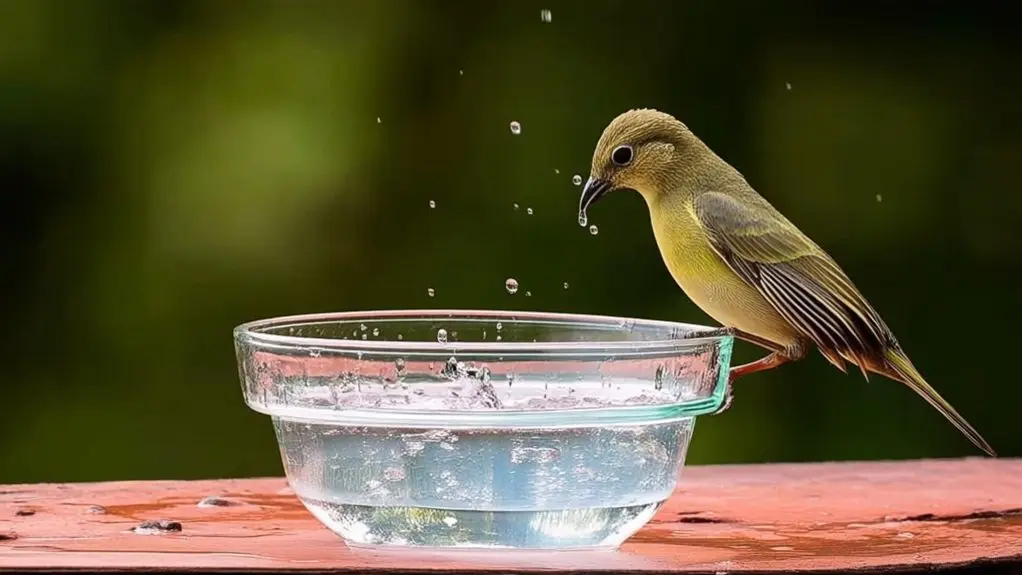
You can safely let birds drink chlorinated water as long as the chlorine levels stay low and well-managed, typically between 1-4 ppm. This range minimizes health risks like irritation or toxicity and mirrors standards used in pools for humans.
Birds often avoid high chlorine because of its taste and smell. So, keeping the chlorine balanced protects their health and encourages natural drinking habits.
Make sure to keep monitoring chlorine carefully to support both bird safety and water cleanliness. More details can help you find the right balance for these needs.
What Chlorine Does to Birds’ Health
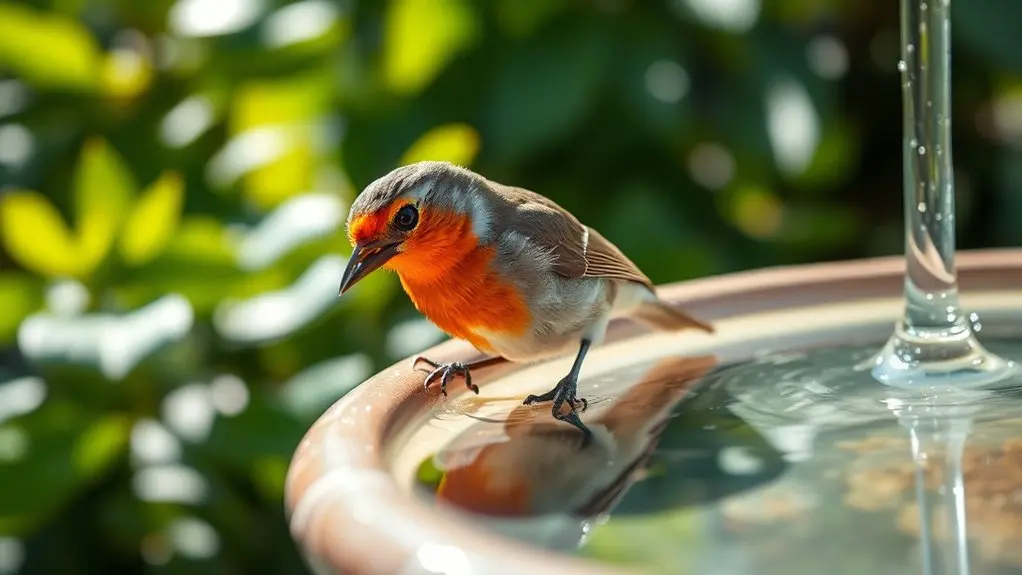
Although chlorine is commonly used to disinfect water, it can pose health risks to birds when ingested. You should know that chlorine irritates birds’ respiratory and gastrointestinal tracts, which can lead to discomfort and illness.
When chlorination levels are high, birds risk dehydration or toxicity from ingesting significant amounts.
Additionally, chlorine reacts with organic matter in water to form chloramine compounds, which are harmful to birds. While birds may tolerate low chlorine levels briefly, prolonged exposure can weaken their immune systems, making them more susceptible to disease.
To protect your birds, it’s essential to provide properly treated and dechlorinated water. This reduces health risks while ensuring they stay hydrated safely. Always consider water quality when caring for birds in your care.
Can Birds Safely Drink Chlorinated Tap Water?
You can safely give your birds tap water as long as it meets the same standards we use for drinking and has the right amount of chlorine. If you’re worried about the chlorine, just let the water sit out for a few hours. That helps some of the chlorine evaporate.
Another easy trick is to use a hose with a spray nozzle to aerate the water. This also lowers the chlorine levels.
These simple steps make the water safer for your birds while keeping them well hydrated.
Tap Water Safety
How safe is tap water for birds, especially when it contains chlorine? Generally, birds can drink tap water safely if it meets human consumption standards and doesn’t have harmful contaminants.
Chlorine in tap water is usually low enough not to harm birds, but it’s still important to provide fresh water daily.
To make sure it’s safe, fill low-sided dishes or bird baths so birds can easily get to the water. Regularly clean these containers with a stiff brush and rinse them well to prevent diseases from contaminated water.
If you live in an area where the tap water is highly chlorinated, letting the water sit for a few hours before offering it to birds can help reduce chlorine levels. This makes the water safer for them.
Chlorine Dissipation Methods
Ensuring that birds have access to safe drinking water often involves managing chlorine levels in tap water. While municipal tap water is generally safe, you can take simple steps to reduce chlorine before offering it to birds.
Consider these effective chlorine dissipation methods:
- Let the water stand uncovered for a few hours. This allows chlorine to naturally dissipate, making the water safer for birds.
- Use a hose with a spray nozzle to aerate the water, which speeds up chlorine evaporation.
- Regularly clean and change water containers to prevent buildup of chloramines and other harmful chemicals.
Safe Chlorine Levels for Birds
What chlorine levels are safe for birds to drink? Birds can tolerate chlorine concentrations similar to those in well-maintained swimming pools, typically between 1 and 4 parts per million (ppm).
Birds can safely drink water with chlorine levels typically found in well-maintained pools, around 1 to 4 ppm.
The CDC recommends maintaining pool chlorine levels within 2.0 to 4.0 ppm to guarantee human safety, and these levels are generally safe for birds as well.
Chlorine concentrations above 5 ppm may pose risks to wildlife, so it’s important to keep levels below this threshold.
If you provide tap water, letting it stand for a few hours helps dissipate excess chlorine, reducing potential harm.
Regular pool maintenance and testing help maintain chlorine within safe limits, protecting both humans and visiting birds.
Why Birds Avoid Chlorinated Water
You’ll notice birds often avoid chlorinated water. That’s because they’re really sensitive to its taste and smell.
Because of this sensitivity, they tend to look for other water sources that don’t have those chemical treatments.
Knowing this helps make sense of why birds act the way they do around chlorinated water. It’s all about their natural preferences.
Chlorine Taste Sensitivity
Why do birds often avoid drinking chlorinated water? Birds have a highly sensitive sense of taste that quickly detects chlorine’s chemical flavor. This strong, bitter taste generally discourages them from drinking chlorinated water regularly.
You should understand three key reasons why birds avoid it:
- Birds detect chlorine rapidly, which signals an unpleasant taste.
- Unlike humans, birds have lower tolerance for the bitter chemical flavor.
- Repeated exposure can lead to a learned aversion, causing birds to avoid chlorinated water altogether.
Because of this sensitivity, birds instinctively seek out alternative water sources to avoid the discomfort caused by chlorine’s taste. Recognizing this helps explain their behavior around treated water and highlights the importance of considering their taste sensitivity in water provision.
Alternative Water Preferences
Although chlorinated water is common in human consumption, birds actively avoid it because it irritates their respiratory and digestive systems. You’ll notice birds prefer natural water sources like ponds and streams. These sources lack chlorine and better match their natural habitats.
The strong chemical smell of chlorinated water signals danger to birds, prompting them to seek safer options. Plus, prolonged exposure to chlorine can disrupt beneficial bacteria in their digestive tract, which impacts their health.
Birds also favor water containing natural minerals without chemical treatments. This kind of water supports their physiological needs more effectively.
So, if you want to provide water for birds, consider offering untreated or filtered water to match their preferences and promote their well-being.
Chlorinated water simply doesn’t meet their natural requirements.
How Pool Care Keeps Birds Safe
When pool care maintains chlorine levels between 1 and 4 ppm, it creates an environment that’s generally safe for birds to drink from temporarily. Chlorine reacts with contaminants, forming chloramines that reduce harmful pathogens.
You can keep birds safe by regularly monitoring and adjusting chlorine and chemical levels to guarantee they stay within safe ranges. Cleaning the pool to remove organic matter like bird droppings is important too. Sunlight and chlorination help break down this matter, reducing disease risks.
Also, be sure to promptly remove any dead birds using proper protective equipment. This helps prevent the spread of disease. Taking these steps makes a big difference in keeping birds safe around your pool.
How to Provide Chlorine-Free Water to Birds
While properly maintained pools can offer temporary drinking spots for birds, providing chlorine-free water sources helps guarantee their safety over the long term. To do this, let tap water stand for 1-2 hours so chlorine can dissipate before offering it to birds.
Using a hose with a spray nozzle when filling bird baths speeds up this process by reducing chlorine levels.
Regularly clean and refill water dishes to avoid chlorinated water buildup. Incorporate natural water sources like ponds or shallow dishes to provide safe hydration.
In areas with high chlorine concentration, consider bottled or filtered water to ensure birds receive chemical-free drinking water.
These steps help uphold a safe environment and support bird health effectively. It’s a simple way to make sure our feathered friends stay happy and healthy!
What to Do If Birds Drink Chlorinated Water
If you notice birds drinking chlorinated water, don’t panic immediately. As long as the chlorine levels stay within safe limits, they’re unlikely to be harmed. However, you can take some steps to guarantee their safety and comfort.
Here’s what to do:
- Replace the water frequently with fresh, clean water that has been left to stand for a few hours. This allows the chlorine to dissipate naturally.
- Use a hose with a spray nozzle to aerate the water. This helps reduce chlorine concentration before offering it to birds.
- Clean bird baths regularly using a stiff brush and disinfectant. This prevents disease transmission and keeps the environment healthy.
Balancing Bird Care With Pool Cleanliness
Although maintaining a clean, well-chlorinated pool is essential for health and safety, you can still support local bird populations by managing water quality thoughtfully. Keep chlorine levels between 1-4 ppm to guarantee safety for humans and wildlife while preventing harmful bacteria buildup.
After swimming, let the pool sit for about an hour to allow residual chlorine to dissipate, reducing risks to birds. Use personal protective equipment when cleaning bird droppings or removing deceased birds to minimize disease transmission.
Also, consider installing deterrents and monitoring bird activity around your pool. These steps help you balance pool cleanliness with bird care effectively.
This way, you promote a safe environment for both your family and local wildlife without compromising pool hygiene.
Frequently Asked Questions
Can Chlorinated Water Affect Bird Feathers or Plumage?
Chlorinated water can affect bird feathers if exposure is frequent or prolonged, weakening protective oils and waterproofing. However, occasional contact usually doesn’t harm feathers, especially if water is properly maintained and chlorine levels stay safe.
Do Different Bird Species React Differently to Chlorinated Water?
You’ll find that 70% of small songbirds tolerate chlorinated water well. But larger waterfowl and sensitive species like hummingbirds react differently. They often show health signs due to prolonged exposure or chemical sensitivity.
It’s interesting how different birds handle the same water conditions in unique ways. So, if you’re thinking about bird care or habitat, it’s good to keep these differences in mind.
Is Bottled Water a Safer Alternative for Birds?
Yes, bottled water is a safer alternative for birds since it usually lacks harmful chlorine and additives. You should always check labels to confirm purity. This way, you provide your birds with clean, fresh hydration without chemical risks.
It’s a simple step but makes a big difference. Birds are sensitive, and avoiding harmful chemicals helps keep them healthy and happy. So, next time you’re picking water for your feathered friends, bottled water is a smart choice.
How Quickly Does Chlorine Evaporate From Standing Water?
Chlorine evaporates from standing water within 24 to 48 hours, especially if left uncovered. You can speed this up by increasing the surface area or exposing the water to sunlight and warmth.
Agitating the water also helps. This way, the chlorine reduces to safer levels faster. It’s pretty simple to do if you need the chlorine gone quickly.
Can Chlorinated Water Impact Wild Birds Near Urban Areas?
Imagine a subtle threat: chlorinated water can impact wild birds near urban areas if chlorine levels spike.
You should guarantee water sources are clean and refreshed regularly to protect these birds from irritation or health issues caused by excess chlorine.
Keeping an eye on chlorine levels helps keep the local wildlife safe and healthy. It’s a small step that makes a big difference.
Conclusion
You can cautiously consider chlorinated water for your birds, but clear care calls for chlorine-free choices. Chlorine’s chemical charm can challenge your feathered friends’ comfort and health, so safe sipping means selecting sanitized, simple solutions.
Stay savvy by supplying spotless, safe water while securing your pool’s purity. Balancing bird well-being with backyard brilliance ensures your avian allies thrive, turning your care into a clean, confident commitment.