
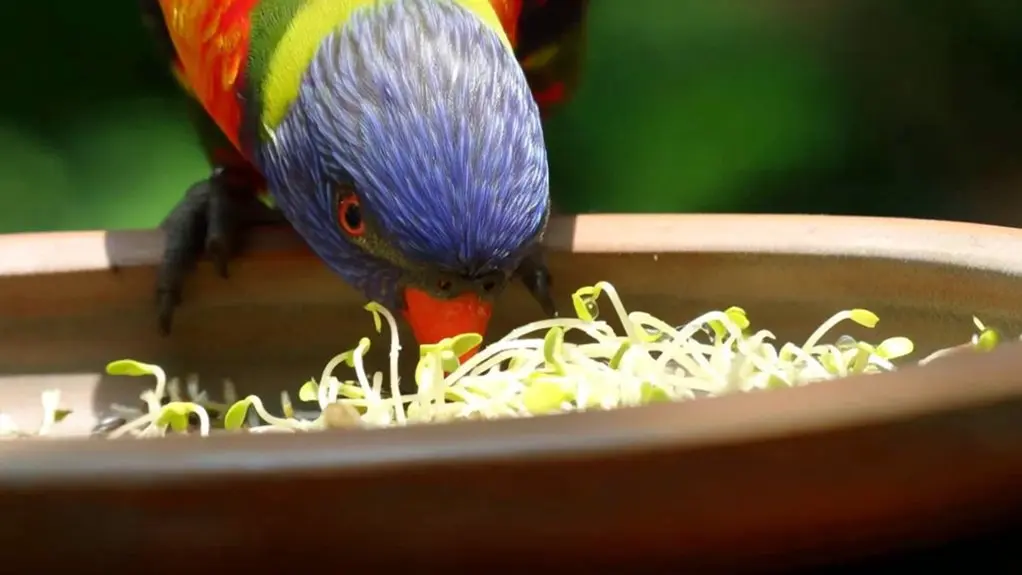
You can safely feed your bird alfalfa sprouts if you handle them properly by thoroughly rinsing with cold water and introducing them gradually in small amounts. Fresh, high-quality sprouts offer vitamins and fiber that support your bird’s health. Just make sure to avoid spoiled or large seeds to reduce bacterial risks like salmonella.
Some bird species tolerate sprouts better than others, so keep an eye on your pet when you first offer them. It’s always a good idea to monitor how your bird reacts.
Keep following best practices to guarantee safety and get the most benefits for your feathered friend.
Are Alfalfa Sprouts Safe for Birds to Eat?
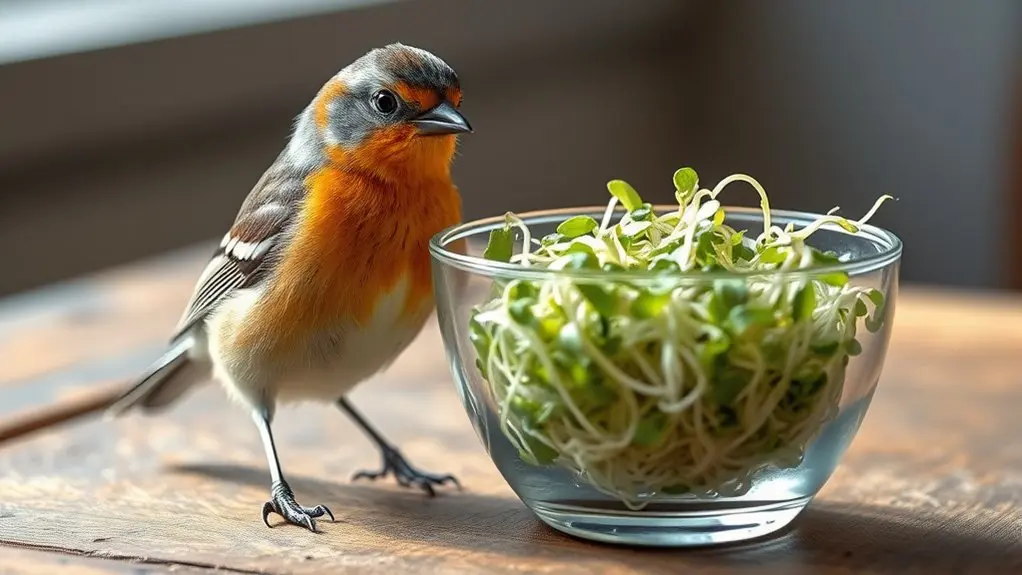
Although alfalfa sprouts are generally safe for birds to eat in moderation, you should make certain they’re fresh and thoroughly washed before offering them. Freshness ensures nutrient retention and reduces spoilage risks.
Alfalfa sprouts can be safe for birds if fresh and thoroughly washed before feeding.
You should avoid feeding large or split alfalfa seeds, as they may contain toxins and prove hard for birds to digest.
Thorough rinsing helps remove surface bacteria but doesn’t eliminate all microbial risks. Because of potential contamination, many bird owners avoid raw alfalfa sprouts entirely or prefer to cook them before feeding.
If you choose to feed sprouts, do so sparingly to prevent digestive upset.
Why Bacteria on Sprouts Can Be Risky for Birds
You should know that alfalfa sprouts can sometimes carry harmful bacteria like E. coli and salmonella. This happens because they can get contaminated during their growth and handling.
These bacteria love the warm, moist conditions that sprouts need to grow. That means birds eating these sprouts could get seriously sick.
And here’s the tricky part—treating bacterial infections in birds isn’t easy. So, it’s really important to do your best to prevent them from being exposed in the first place.
Bacterial Contamination Risks
How do bacteria on alfalfa sprouts pose risks to birds? Pathogens like E. coli, salmonella, and listeria can contaminate sprouts during harvesting and sprouting. The warm, moist environment essential for sprout growth also promotes rapid bacterial multiplication, increasing contamination levels.
You should know that washing sprouts doesn’t reliably remove bacteria embedded inside seeds or sprouts. These bacteria can survive processing and storage, making contamination persistent. So, even if you rinse them well, the risk remains.
When your bird consumes contaminated sprouts, it faces exposure to harmful pathogens that are tough to detect and treat. Infections from these bacteria can cause serious health issues.
That’s why it’s important to understand these contamination risks before offering alfalfa sprouts to your bird.
Managing these risks means careful selection and handling of sprouts to minimize bacterial exposure. It’s worth taking the extra steps to keep your bird safe.
Infection Challenges in Birds
Understanding the contamination risks of alfalfa sprouts naturally leads to examining the infection challenges these bacteria pose once ingested by birds. Bacteria like E. coli, salmonella, and listeria thrive in the warm, moist conditions of sprouting, making contamination common and difficult to eliminate. These pathogens can embed deeply within the sprouted seeds, resisting sterilization efforts.
When your bird consumes contaminated sprouts, it faces serious health threats, as infections are hard to detect and treat. Such bacterial infections can cause severe complications, often worsening quickly.
Historical outbreaks linked to sprouts underscore the danger these microorganisms present to avian health.
Nutritional Benefits of Alfalfa Sprouts for Birds
Because alfalfa sprouts contain a rich array of vitamins A, C, E, and K, they play an essential role in supporting your bird’s immune function and overall health. These vitamins act as antioxidants, reducing oxidative stress and aiding cellular repair. The chlorophyll content further promotes detoxification processes within your bird’s system.
Additionally, alfalfa sprouts provide proteins and essential amino acids crucial for feather development and tissue regeneration. Their dietary fiber contributes to improved digestive health by facilitating gut motility and nutrient absorption.
When you include alfalfa sprouts in your bird’s diet in moderation, you offer a nutrient-dense supplement that complements their overall nutritional intake. This balance helps maintain vitality and resilience, making alfalfa sprouts a valuable component of your bird’s diet.
Bird Species That Tolerate Alfalfa Sprouts Best
Which bird species are best suited to include alfalfa sprouts in their diet? Small herbivorous birds such as finches and canaries tolerate alfalfa sprouts well due to their natural dietary preferences. These birds benefit from the vitamins A, C, and K found in alfalfa sprouts when given in moderation.
You should serve thoroughly rinsed sprouts in small quantities to minimize the risk of bacterial contamination, which can be harmful, especially with mature sprouts.
Avoid offering alfalfa sprouts to larger or omnivorous birds like parrots, as their digestive systems aren’t adapted to raw sprouts and may not process them safely.
How to Properly Prepare Alfalfa Sprouts for Birds
After selecting suitable bird species for alfalfa sprouts, you need to prepare the sprouts properly to guarantee safety and maximize nutritional benefits. Start by thoroughly rinsing the sprouts under cold running water to remove surface bacteria. Avoid any sprouts that show mold, foul odor, discoloration, or sliminess, as these indicate spoilage and bacterial growth.
It’s best to opt for fresh sprouts from reputable sources. If your bird tolerates cooked greens, lightly steaming the sprouts can help reduce potential pathogens.
| Preparation Step | Purpose | Notes |
|---|---|---|
| Rinse thoroughly | Remove bacteria | Use cold running water |
| Inspect visually | Identify spoilage signs | Mold, smell, discoloration |
| Optional steaming | Reduce pathogens | Only if bird tolerates it |
How to Safely Introduce Sprouts to Your Bird
When introducing alfalfa sprouts to your bird, start with small amounts mixed into familiar foods to monitor their reaction carefully.
Always rinse sprouts thoroughly to reduce surface bacteria, though deep-seated pathogens may still exist.
Thoroughly rinse sprouts to remove surface bacteria, but be aware some pathogens may remain inside.
Make sure the sprouts are fresh, mold-free, and stored properly in a cool, dry place before feeding.
Gradually increase the quantity only after confirming your bird tolerates the sprouts without digestive upset or adverse effects.
Keep an eye on your bird closely over several days for any signs of discomfort or unusual behavior.
If your bird has underlying health issues, it’s a good idea to consult an avian veterinarian before adding sprouts to their diet.
Taking this cautious approach minimizes health risks and helps your bird adjust safely to the new food.
Safe Alternatives to Alfalfa Sprouts for Birds
Although alfalfa sprouts may seem like a healthy treat, their potential toxins and bacterial contamination make them unsafe for birds. To guarantee your bird’s health, choose safer alternatives.
Sprouted grains such as wheat, oats, and quinoa are less prone to harmful pathogens and provide essential nutrients.
Fresh, organic vegetables like leafy greens, carrots, and bell peppers offer vitamins and minerals without the contamination risks associated with sprouts.
Also, cooked legumes, including lentils and chickpeas, serve as nutrient-rich alternatives that support your bird’s dietary needs without exposing them to raw sprout dangers.
By selecting these options, you minimize health risks while maintaining a balanced diet for your bird.
Just be sure to introduce new foods gradually and watch how your bird responds to keep them in top shape.
Common Concerns and Misconceptions About Feeding Sprouts
Because sprouts can harbor bacteria like E. coli and salmonella if not handled correctly, many bird owners worry about feeding alfalfa sprouts to their pets. However, these concerns often come from misconceptions.
Many bird owners worry about feeding alfalfa sprouts due to bacterial risks, but these concerns are often misconceptions.
When you source high-quality seeds and rinse them thoroughly, you cut down the risks quite a bit.
Avoid sprouting toxic or large seeds, too. That also helps keep things safe.
Sprouts do have beneficial vitamins and antioxidants, but sometimes people overstate their nutritional value. They aren’t absolutely necessary for a balanced avian diet.
The key is understanding safe sprouting practices. Instead of overestimating the dangers, focus on proper sanitation and handling. That way, you keep sprouts safe for your bird.
This approach handles most common concerns and clears up misunderstandings about feeding alfalfa sprouts.
Frequently Asked Questions
Can Alfalfa Sprouts Cause Allergies in Birds?
Yes, alfalfa sprouts can cause allergies in birds, especially those with sensitivities or weakened immune systems.
You should carefully monitor your bird for respiratory issues, itching, or swelling when introducing alfalfa sprouts to their diet.
It’s always a good idea to start with small amounts and watch how your bird reacts. If you notice any signs of discomfort, it’s best to stop feeding them alfalfa sprouts and consult a vet.
How Often Should I Feed Alfalfa Sprouts to My Bird?
“Don’t put all your eggs in one basket.” You should feed alfalfa sprouts to your bird only once or twice a week to avoid toxicity and bacterial risks.
Always keep an eye out for any adverse reactions. If you notice anything unusual, it’s best to consult your avian vet. Better safe than sorry!
Can Baby Birds Eat Alfalfa Sprouts Safely?
You shouldn’t feed baby birds alfalfa sprouts because of potential toxins and bacteria risks. Their immune systems aren’t developed enough to handle these hazards.
Always consult an avian vet before introducing new foods to chicks. It’s better to be safe and get professional advice when it comes to their diet.
Do Cooked Alfalfa Sprouts Retain Their Nutrients for Birds?
Sure, cooking alfalfa sprouts turns their nutrients into shy shadows. You won’t get the full vitamin C, antioxidants, or enzymes birds crave, so feeding raw sprouts keeps their benefits intact and birds happily nourished.
It’s really best to offer them raw if you want your feathered friends to enjoy all the goodness. Cooking can zap a lot of those important nutrients away.
Can Alfalfa Sprouts Affect a Bird’s Digestion or Stool?
Yes, alfalfa sprouts can affect your bird’s digestion and stool. They might cause gastrointestinal upset, diarrhea, or abnormal stool.
This can happen because of toxins, high fiber, and bacterial contamination like Salmonella or E. coli. These risks increase if the sprouts are consumed excessively or raw. So, it’s best to be cautious when feeding alfalfa sprouts to your bird.
Conclusion
Feeding alfalfa sprouts to your bird can be a nutritious addition, but you need to handle them with care. Like steering through a minefield, the risk of bacteria means you must prepare and introduce sprouts cautiously. Not all birds tolerate them equally, so observe your feathered friend closely.
When done right, alfalfa sprouts offer valuable nutrients. But always consider safer alternatives to keep your bird healthy and thriving.