
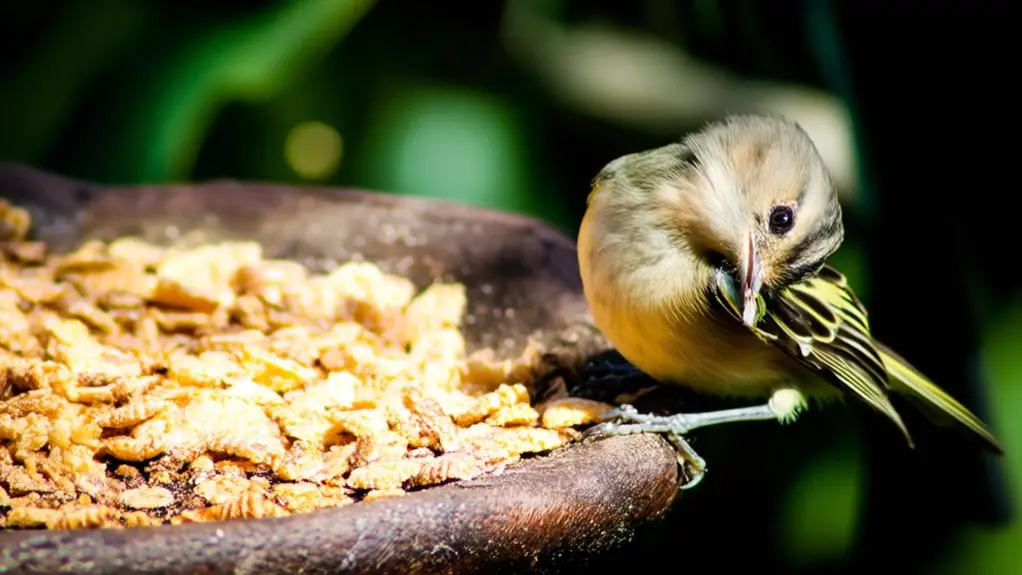
You can offer birds plain All Bran in moderation to support digestion and provide essential nutrients like fiber, B vitamins, iron, and magnesium. It benefits species such as thrushes and robins but isn’t suitable as a sole diet because it’s low in protein. Avoid flavored varieties and serve it soaked for easier digestion.
Overfeeding can cause digestive blockages and nutrient issues, so moderation is really important. It’s a good idea to explore more about safe feeding practices and species-specific guidelines to keep your feathered friends healthy.
Can Birds Safely Eat All Bran? Key Benefits and Risks
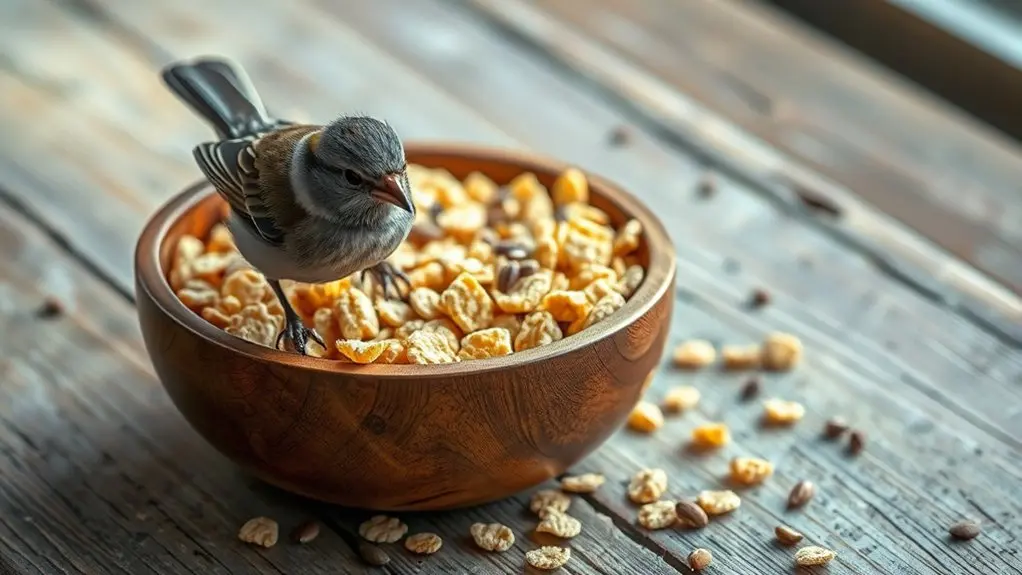
Although All Bran can provide valuable dietary fiber that aids your bird’s digestion, you should only offer it in small to moderate amounts. This cereal’s fiber content supports gut motility and helps regulate digestion when given properly.
All Bran offers beneficial fiber that supports your bird’s digestion when given in small to moderate amounts.
However, excessive consumption may cause gastrointestinal distress or create nutrient imbalances, disrupting your bird’s overall health.
Always serve All Bran plain, without added sugars, salts, or artificial flavorings, to guarantee safety.
Birds with sensitive digestive systems or compromised health should avoid high-fiber foods like All Bran unless a veterinarian specifically approves.
Remember, All Bran should complement, not replace, natural or species-specific diets.
What Is All Bran? Nutritional Profile for Birds
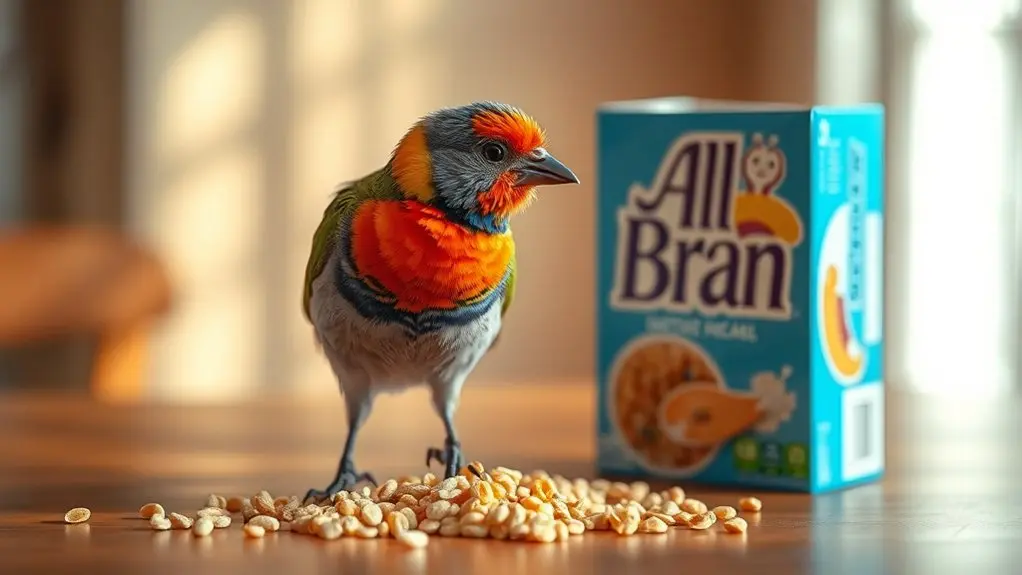
All Bran is a high-fiber cereal made mainly from whole grain wheat bran, which keeps important vitamins, minerals, and antioxidants intact.
It has about 6 grams of dietary fiber per serving, which can help support your bird’s digestion when given in the right amount.
Plus, it’s low in fat and sugar, making it a good occasional treat to add to their diet, especially if you’re looking to support their gastrointestinal health.
All Bran Composition
Since wheat bran forms the primary ingredient, All Bran consists mostly of the outer layer of the wheat kernel, which is rich in dietary fiber. This high fiber content is great for digestion but can cause problems if birds eat too much of it.
Besides wheat bran, All Bran includes malt flavoring and sometimes added sweeteners. These can introduce unwanted sugars and additives to a bird’s diet. So, it’s something to watch out for if you’re feeding this to birds.
The cereal is also fortified with vitamins and minerals like iron, B vitamins, and folic acid, which boost its nutritional value. However, All Bran is low in fat and protein, so it doesn’t provide a complete diet for birds.
When you’re thinking about feeding All Bran, keep these points in mind. This way, you can avoid any nutritional imbalances or digestive discomfort for your feathered friends.
Bird Nutrient Benefits
How does All Bran contribute to a bird’s nutrition? All Bran is a high-fiber cereal made from whole wheat bran, which offers essential dietary fiber that helps keep a bird’s digestion healthy. The fiber helps regulate digestive transit and can prevent constipation, supporting overall gastrointestinal function.
Besides fiber, All Bran provides B vitamins, iron, and magnesium—these nutrients are important for a bird’s metabolism and general health. It’s also low in fat and sugar, making it a safe treat to offer occasionally, but not something to feed as a main food source.
When you feed All Bran to birds, just make sure it’s plain. Avoid versions with added sugars or artificial flavors to keep it nutritious and safe.
Adding All Bran thoughtfully can boost a bird’s diet by giving beneficial nutrients and supporting digestive health.
How All Bran’s Fiber Helps Bird Digestion
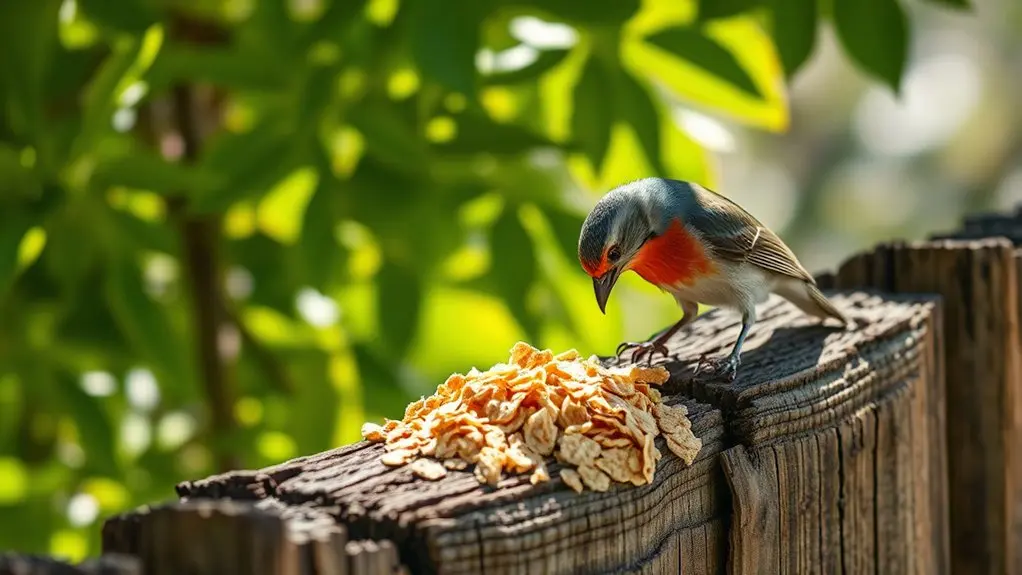
You’ll find that All Bran’s high dietary fiber content plays a vital role in regulating your bird’s gut motility and overall digestive health.
The soluble fiber absorbs water to soften stool, while the insoluble fiber adds bulk to support natural food movement through the digestive tract.
That said, it’s important to provide All Bran in moderation to avoid any interference with nutrient absorption or digestive upset.
Dietary Fiber Benefits
Many bird species benefit greatly from the dietary fiber found in All Bran, as it promotes regular bowel movements and prevents constipation. This fiber, both soluble and insoluble, enhances gut motility, reducing the risk of digestive disorders.
By slowing digestion, it allows birds to absorb nutrients more efficiently, optimizing energy extraction from their diet.
Maintaining a healthy gut microbiome through fiber intake supports overall digestive function. During migration or harsh weather, fiber-rich foods like All Bran help birds sustain energy levels by stabilizing nutrient absorption.
Digestive Health Support
Building on the benefits of dietary fiber for birds, All Bran’s fiber plays a direct role in supporting digestive health by regulating bowel function and maintaining gut balance. The soluble fiber in All Bran helps keep bowel movements consistent and prevents constipation in avian species.
Plus, its fiber content promotes a balanced gut microbiome. This balance enhances nutrient absorption and overall digestive efficiency.
When you feed All Bran in moderation, it can help ease mild digestive issues like diarrhea or stomach upset. Just be careful not to overdo it—too much fiber might mess with nutrient absorption and cause digestive discomfort.
Preventing Digestive Issues
Although birds have specialized digestive systems, incorporating All Bran’s high dietary fiber can effectively regulate their digestion and prevent common issues like constipation. The soluble fiber in All Bran absorbs water in the gut, facilitating consistent bowel movements.
When you feed your bird small amounts, this fiber supports healthy gut flora, which is vital for nutrient absorption and overall health.
However, moderation is key to avoid gastrointestinal blockages. To optimize digestion, consider these points:
- Introduce All Bran gradually to monitor tolerance and prevent digestive upset.
- Maintain a balanced diet alongside All Bran to support diverse nutrient intake.
- Avoid excessive All Bran, which may cause obstruction rather than aid digestion.
Which Birds Benefit Most From All Bran Feeding?
When you offer All Bran to birds, species such as robins, thrushes, and blackbirds benefit most due to the cereal’s high fiber content, which supports their digestive health.
Omnivorous birds like nuthatches and woodpeckers also gain from All Bran, as its soft, easily digestible fiber complements their varied diets.
Ground-feeding species, including sparrows and dunnocks, utilize All Bran effectively when it’s part of a mixed soft-food regimen.
Additionally, finches undergoing molting or facing winter’s metabolic demands benefit from the increased fiber, aiding nutrient absorption and gut function.
Conversely, small seed-eaters such as goldfinches typically avoid All Bran, likely due to its coarse texture and fiber composition, which differ from their natural seed-based diet.
Why All Bran Should Be Fed in Moderation
While All Bran offers digestive benefits to certain bird species due to its high fiber content, feeding it without restraint can lead to complications. You should moderate All Bran feeding to avoid nutritional imbalances and maintain overall health. Here’s why:
First, too much fiber can cause constipation or an upset stomach. Birds need a balanced diet, so overfeeding All Bran isn’t a great idea. It’s all about keeping things in moderation.
Also, All Bran lacks essential nutrients. If birds eat too much of it, they might miss out on other important foods like seeds, fruits, and insects. These are necessary for a varied and healthy diet.
Digestive Issues From Feeding Too Much All Bran
If you feed birds too much All Bran, the excess fiber can cause digestive blockages and discomfort. You might notice they get constipated or even have diarrhea because their digestive system is struggling to handle all that fiber.
This can mess with how they absorb nutrients, which isn’t good for their health. So, it’s best to offer All Bran only sparingly to keep their digestion running smoothly.
Excess Fiber Effects
Although All Bran offers valuable nutrients, feeding birds too much can cause digestive problems because of its high fiber content. When you give them too much, fiber overload might mess with their normal digestion and nutrient absorption. This can lead to several issues.
First, diarrhea and stomach discomfort can happen since fiber speeds up how fast food moves through their intestines. Also, the risk of malnutrition goes up because too much fiber stops birds from absorbing the important nutrients they need.
Plus, dehydration can set in because fiber soaks up water in the digestive tract, leaving less fluid available.
To keep things safe, it’s really important to moderate how much All Bran you feed your birds. Finding the right balance lets them enjoy fiber’s benefits without stressing their digestion or harming their overall health.
Digestive Blockage Risks
Because All Bran contains a high amount of insoluble fiber, feeding it excessively to birds can cause digestive blockages by accumulating bulk in their intestines. Birds lack enzymes to break down this fiber efficiently, which leads to constipation or impaction.
Undigested material builds up and obstructs nutrient absorption and normal digestion. This can cause severe health complications if not addressed promptly.
| Symptom | Cause | Consequence |
|---|---|---|
| Constipation | Insoluble fiber bulk | Discomfort and lethargy |
| Intestinal block | Undigested material buildup | Impaired nutrient uptake |
| Digestive stress | Enzyme deficiency | Risk of severe impaction |
You should monitor fiber intake carefully to avoid these potentially dangerous outcomes. It’s better to be cautious and keep an eye on what your birds are eating.
Moderation Importance
When you feed birds too much All Bran, their digestive systems can quickly become overwhelmed by its high fiber content. This overload can lead to various digestive issues, including diarrhea, constipation, and bloating.
Since birds have delicate digestive tracts, excessive All Bran intake may also interfere with nutrient absorption, causing imbalances that affect overall health.
To prevent these problems, moderation is essential. Consider these three key points:
- High fiber can disrupt normal gut function, risking digestive distress.
- Overconsumption may block nutrient uptake, leading to deficiencies.
- Small birds are especially vulnerable to gut blockages and bloating.
Balancing All Bran with other suitable foods ensures your birds maintain ideal digestion and nutrient intake without adverse effects. It’s all about keeping things balanced for their health!
Why to Avoid Flavored or Sugary All Bran Cereals
If you want to maintain ideal bird health, steering clear of flavored or sugary All Bran cereals is essential. These varieties contain added sugars and artificial ingredients that can cause digestive distress and allergic reactions.
High sugar levels disrupt birds’ digestion and nutrient absorption, while artificial preservatives may be toxic. Plus, sugary cereals lack the fiber and nutrients necessary for a balanced avian diet.
Feeding such cereals can also promote dependence on processed foods, which reduces natural foraging instincts.
| Concern | Impact on Birds |
|---|---|
| Added sugars | Digestive issues, health decline |
| Artificial flavorings | Toxicity, allergic reactions |
| Preservatives | Potential toxicity |
| Nutrient deficiency | Imbalanced diet |
| Processed food reliance | Reduced natural foraging behavior |
How to Prepare and Serve All Bran Safely
Avoiding flavored or sugary All Bran cereals is only part of ensuring your birds benefit from this high-fiber food. To prepare and serve it safely, follow these steps:
- Soak plain All Bran in water or natural fruit juice to soften the cereal. This makes it easier for birds to digest and eat.
- Serve it in a shallow dish or scatter it on a bird table placed in a sheltered, dry area. This helps prevent moisture buildup and spoilage.
- Regularly remove uneaten portions and clean feeding areas to avoid mold growth and keep pests away.
Avoid adding milk or dairy because most birds are lactose intolerant. Plus, extra moisture can promote harmful microbial growth.
What to Mix With All Bran for Balanced Bird Nutrition
Although All Bran provides valuable fiber, you’ll need to combine it with other foods to guarantee balanced bird nutrition. Mixing it with fresh fruits like berries or apple slices enhances vitamin intake and offers natural sugars for energy.
Combining All Bran with cooked oatmeal or soaked grains improves digestibility and adds moisture, making it more palatable. Incorporating small amounts of crushed nuts or seeds boosts protein and healthy fats, which are essential for metabolic functions.
Adding chopped vegetables or greens supplies additional fiber and micronutrients crucial for physiological health. You can also include a few drops of liquid vitamins or vitamin-enriched supplements to address micronutrient requirements that All Bran alone can’t fulfill.
This multifaceted approach ensures comprehensive nutrient availability for your bird’s optimal well-being. It’s all about mixing things up to keep your feathered friend happy and healthy!
How to Monitor Bird Health After Introducing All Bran
When you introduce All Bran into your bird’s diet, closely observe their behavior and physical condition to detect any early signs of digestive distress or other adverse reactions. Monitoring guarantees you catch problems before they escalate.
Focus on these key indicators:
- Digestive Health: Watch for diarrhea, changes in droppings’ color, consistency, or frequency.
- Behavior: Note any reduced activity, lethargy, or altered feeding patterns that may indicate discomfort.
- Physical Signs: Check for choking hazards or difficulty swallowing, especially if All Bran is dry or clumped.
If you notice persistent symptoms or unusual changes, consult a bird veterinarian promptly to ensure your pet’s well-being.
Regular, systematic observation helps maintain excellent health after dietary adjustments involving All Bran. So, keep an eye on your feathered friend and don’t hesitate to get professional advice if something seems off.
Frequently Asked Questions
Can All Bran Help Improve a Bird’s Feather Quality?
No, All Bran alone won’t improve your bird’s feather quality. It lacks essential proteins, vitamins, and fatty acids needed for feather growth.
You’ll need to supplement it with protein-rich foods for ideal feather health. That way, your bird gets all the nutrients it needs to have vibrant, healthy feathers.
Is It Safe to Feed All Bran to Baby Birds?
You shouldn’t feed all bran to baby birds since its high fiber content can cause digestive blockages and malnutrition.
Instead, give them easily digestible, protein-rich foods like insects or specialized formulas. These choices help support healthy growth and development. It’s much better for their little systems!
How Often Should All Bran Be Offered to Pet Birds?
Think of All Bran as a spice, not the main course. You shouldn’t feed it to your bird more than once or twice a week.
Excess fiber risks digestive upset, so moderation guarantees a balanced, healthy diet.
Keep it simple and don’t overdo it—your bird will thank you!
Can Wild Birds Eat All Bran From Backyard Feeders?
Yes, you can offer wild birds All Bran in backyard feeders, but only in small, plain amounts. Mixing it with seeds guarantees balanced nutrition, while avoiding additives prevents health issues and supports their digestive system effectively.
Just remember, a little goes a long way. Too much All Bran on its own might not be the best for them. So, keep it simple and mixed with their usual seeds for happy, healthy birds.
Does All Bran Affect Birds’ Water Consumption Habits?
Yes, All Bran increases birds’ water consumption due to its high fiber content. You should always provide fresh water, as the fiber promotes digestion but can cause dehydration if birds don’t drink enough to process it properly.
Conclusion
You can safely offer All Bran to your bird in moderation. This helps support digestion without causing any harm. For example, a parakeet named Kiwi thrived when given small, plain All Bran servings mixed with seeds and fresh fruits.
Just make sure to avoid flavored varieties and keep an eye out for any digestive upset. By carefully balancing All Bran within a varied diet, you help maintain your bird’s health and well-being. This promotes ideal nutrient absorption and digestive function.