
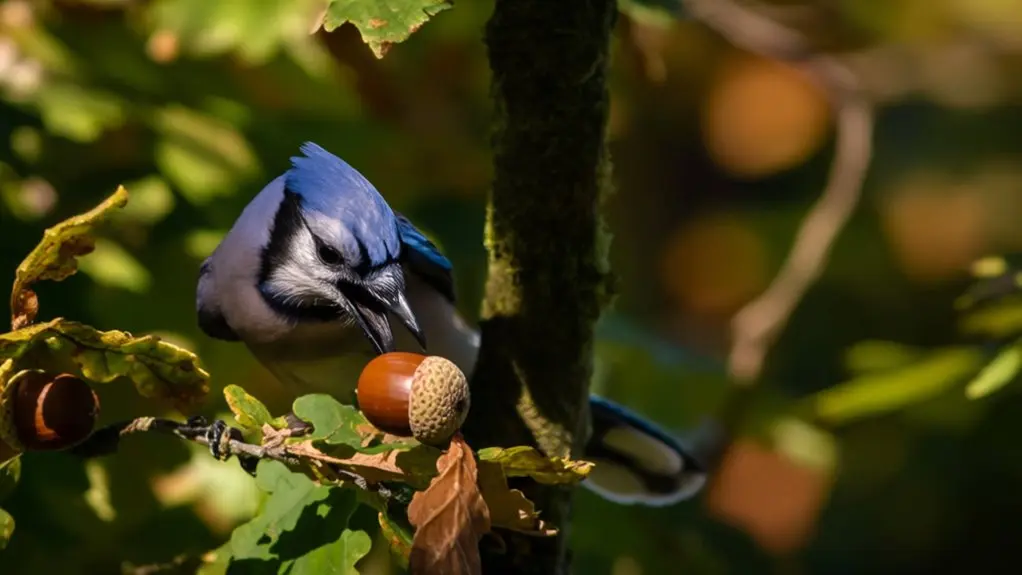
You can safely offer acorns to birds if you consider their tannin content. This varies between oak types. White oak acorns have lower tannins and are safer for birds.
High tannins can cause digestive and kidney issues by inhibiting protein absorption. So, it’s important to prepare acorns properly. Soaking, leaching, or roasting helps reduce tannin toxicity and prevents spoilage.
Different bird species eat acorns using distinct techniques. These depend on their size and beak shape. When you understand these factors, it becomes clear how acorns support both bird health and forest ecosystems.
Are Acorns Safe for Birds?
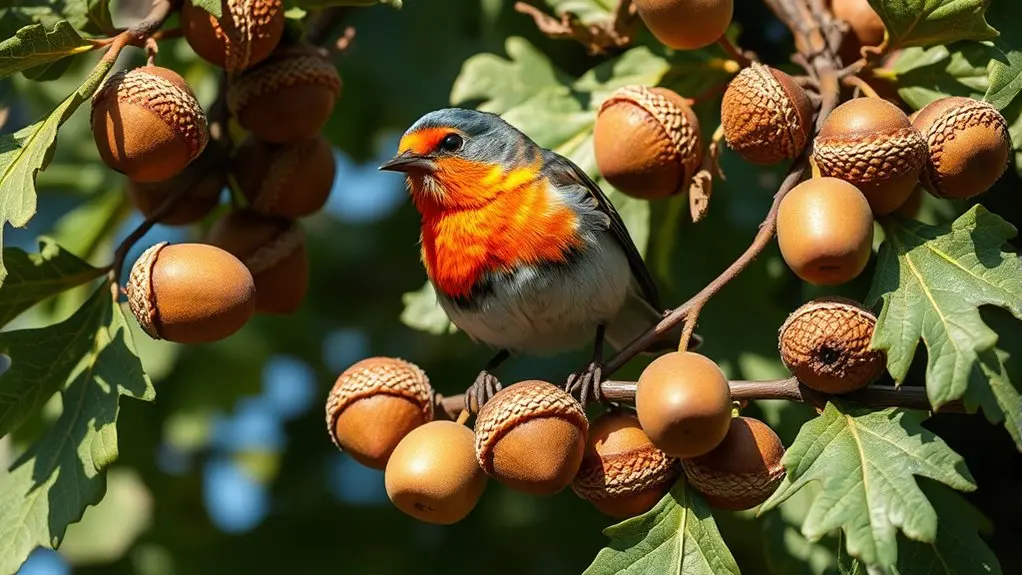
Although not all birds eat acorns, many species like blue jays and woodpeckers rely on them as a primary food source. You’ll find that acorns from white oak trees are generally safer for birds due to their lower tannin levels compared to red oak acorns.
When you observe blue jays, you’ll notice they often cache acorns underground, inadvertently aiding oak tree propagation.
Smaller birds, such as chickadees and nuthatches, need acorns to be cracked open or otherwise processed before consumption, since their beaks aren’t strong enough to handle whole acorns.
While acorns offer nutritional benefits, some bird species avoid them if tannin concentrations are too high or if the acorns contain toxic compounds.
How Tannins Affect Birds and How to Remove Them
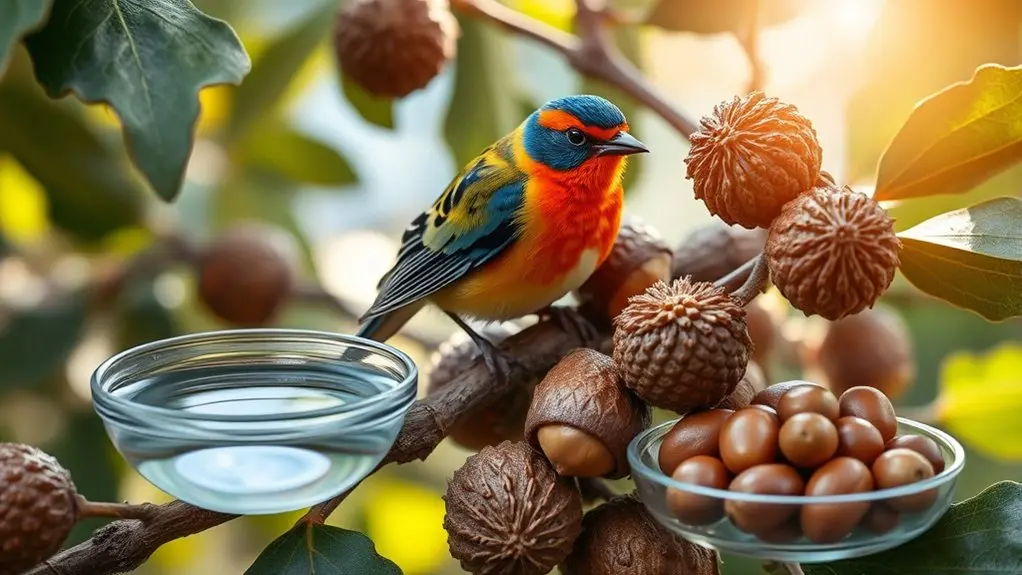
You should know that tannins in acorns can harm birds by causing gastrointestinal issues and kidney damage, especially those from black and red oak species.
But don’t worry, there’s a way to reduce this risk.
You can leach acorns by soaking them in water and changing the water regularly until the bitterness fades.
This simple process helps remove the tannins, making the acorns much safer for birds to eat.
Tannin Toxicity In Birds
Because tannins in acorns are polyphenolic compounds that bind to proteins and digestive enzymes, they can cause gastrointestinal irritation and reduce nutrient absorption in birds.
When birds consume acorns with high tannin levels, these compounds interfere with protein digestion and enzyme function, leading to malabsorption and potential toxicity.
This can result in symptoms such as digestive discomfort, reduced growth rates, and compromised overall health.
Tannin toxicity is dose-dependent; small amounts may be tolerated, but larger quantities pose significant risks.
So, it’s important to understand why unprocessed acorns aren’t safe for birds.
To avoid these problems, acorns need proper preparation to lower their tannin content before feeding.
This step is essential to prevent adverse health outcomes and make sure acorns are a beneficial, rather than harmful, food source for birds.
Methods To Remove Tannins
Since tannins in acorns pose significant risks to birds by causing gastrointestinal irritation and potential kidney damage, it’s crucial to remove these compounds before feeding.
You can effectively reduce tannin content through leaching, which involves soaking shelled acorns in water until the liquid runs clear and the bitterness disappears.
Cold water leaching preserves the starches in acorns, making it suitable for finely ground acorns.
Hot water leaching works better for whole or chunky pieces by accelerating tannin removal.
Regularly changing the water during soaking enhances the process.
Once fully leached, acorns become safe and nutritious for birds, providing an excellent treat or supplement in feeders.
Properly removing tannins ensures you minimize toxicity risks while supporting birds’ dietary needs.
Which Birds Eat Acorns and How They Feed
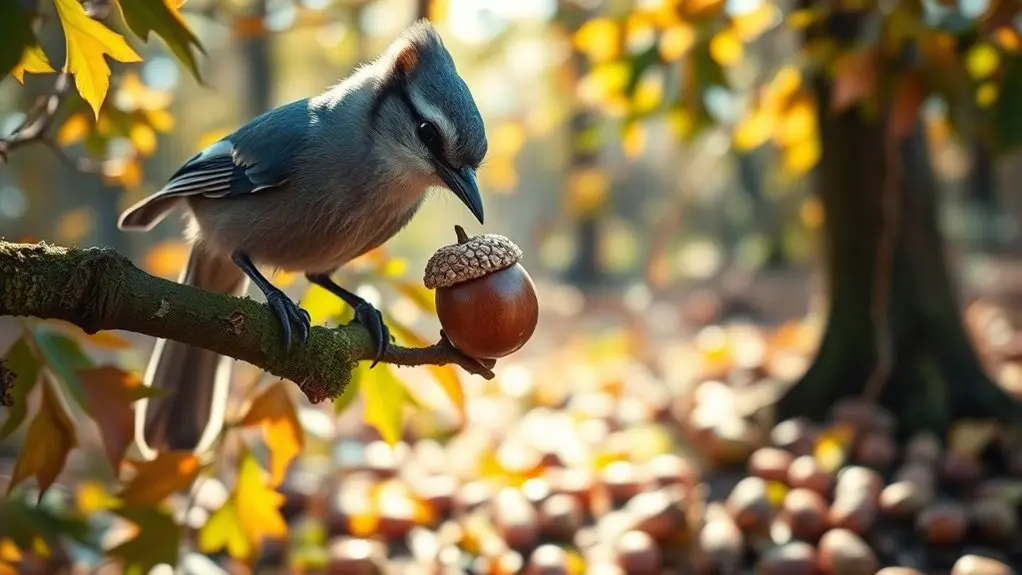
You’ll find that different bird species eat acorns in their own unique ways, depending on their beak shape. For example, bigger birds like wild turkeys tend to swallow acorns whole.
On the other hand, smaller birds like chickadees actually crack the acorns open to get to the nut inside. Knowing these feeding habits really shows how acorns are an important food source for a variety of birds.
Bird Species Eating Acorns
Although acorns may seem like a simple food source, various bird species have developed specialized ways to consume and transport them. Blue jays, for instance, primarily carry and hide whole acorns. They often peck them open later to access the nut meat.
Wild turkeys, mallards, and wood ducks swallow acorns whole, digesting them directly.
Smaller birds, such as chickadees, titmice, and nuthatches, need acorns to be smashed open beforehand to reach the edible interior.
Many of these birds contribute to oak tree propagation by burying acorns, which helps with seed dispersal. They use their beaks or gular pouches to transport seeds efficiently across different habitats.
Understanding which bird species eat acorns and their feeding habits reveals important ecological roles in seed dispersal and forest regeneration.
Acorn Feeding Techniques
Understanding which bird species consume acorns sets the stage for examining how they feed on them. Birds like blue jays and woodpeckers actively gather and store whole acorns for later use. They often bury them in soil or bark crevices.
Smaller-billed birds, such as chickadees and nuthatches, have to crack or smash acorn shells to get to the nutritious nut inside. Larger species, including wild turkeys and mallards, usually swallow acorns whole or in large pieces. These feeding techniques show how birds adapt to acorn size and hardness.
Many birds also cache acorns by digging holes or hiding them away. This behavior helps ensure they’ve food for the future.
Preparing Acorns Safely for Your Feathered Friends
When preparing acorns for your feathered friends, shelling and thoroughly drying them is essential to prevent mold and spoilage. After drying, leach acorns by soaking them in water, changing the water regularly until the bitterness, caused by tannins, disappears. This process makes acorns safe and more palatable for birds.
To help smaller species, crush or break the shells to expose the nut meat. This makes it easier for them to access the good stuff.
You can also roast leached acorns at high heat for 15-20 minutes, which really brings out their flavor. Just be sure they cool completely before offering them to your feathered pals.
Finally, store processed acorns in moisture-proof containers and keep them in a cool, dry place. This helps maintain freshness and prevents mold or pest infestations. That way, the acorns stay safe and nutritious for your birds over time.
How Acorns Boost Bird Nutrition and Energy
Once you’ve prepared acorns safely, you can really see how their high fat and carbohydrate content makes them a dense energy source for birds. This nutritional profile is super important during cold months when other food sources become scarce. Birds like jays and woodpeckers actually cache acorns to use as stored energy reserves.
This behavior helps boost their chances of survival and supports their reproductive success. Eating acorns improves their health and stamina, which in turn supports growth and resilience.
| Nutrient | Role in Birds | Benefit |
|---|---|---|
| Fats | Energy-dense fuel | Sustains prolonged activity |
| Carbohydrates | Quick energy source | Immediate energy availability |
| Proteins | Tissue repair and growth | Supports development |
| Vitamins | Metabolic regulation | Enhances immune function |
| Minerals | Bone and feather formation | Ensures structural integrity |
Including acorns in their diets promotes overall bird vitality in a very efficient way.
Managing Squirrels Around Acorn Feeding Spots
Although squirrels are naturally drawn to acorns, you can manage their presence around bird feeding spots by strategically placing acorn piles away from feeders. This approach distracts squirrels and reduces their interference with birds.
Creating separate feeding stations for squirrels and birds helps prevent squirrels from raiding bird feeders. That way, birds get access to their food without being bothered.
Positioning acorn piles directly on the ground keeps squirrels occupied and protects your feeding stations. To keep squirrels from taking over a single spot, try moving these acorn piles around regularly.
Changing the location prevents squirrels from establishing dominance over one feeding area. By using these strategies, you create a balanced feeding environment.
Both squirrels and birds can enjoy acorns safely without messing up your bird feeding spots.
How Bird Foraging Helps Oak Trees and Forests
Because birds actively forage and transport acorns, they play an essential role in dispersing these seeds across various forested areas. When birds like blue jays collect and bury acorns, they inadvertently plant potential new oak trees if the seeds remain uneaten.
This seed dispersal supports forest regeneration and enhances biodiversity by spreading oaks into different habitats.
You’ll notice that many bird species depend on acorns as a critical food source during autumn and winter, which motivates their foraging behavior. By gathering and caching acorns, birds influence both the growth and spatial distribution of oak forests.
This ecological interaction helps maintain healthy oak populations, ensuring sustainable forest ecosystems.
Understanding this process highlights the interconnected roles birds and oaks play in forest dynamics. It’s pretty amazing how these creatures work together without even realizing it, right?
Frequently Asked Questions
Can Acorns Affect Bird Migration Patterns?
Yes, acorns can affect bird migration patterns by providing essential energy reserves. They influence migration timing and prompt birds to adjust routes and stopovers to coincide with peak acorn availability.
This helps birds optimize their survival during long journeys. So, you could say acorns play a pretty important role in how some birds travel.
Do Acorns Influence Bird Mating Behaviors?
You won’t find direct evidence linking acorns to bird mating behaviors, but abundant acorns can boost bird health and territory defense. This indirectly supports mating success by increasing energy and social interactions during breeding seasons.
How Do Seasonal Changes Impact Acorn Availability for Birds?
As autumn leaves drift down, you’ll notice acorn abundance peaks, offering birds rich nourishment. By winter, these nuts dwindle, forcing you, the bird, to adapt your foraging strategies.
Seasonal food scarcity and availability shifts really make a difference in how you find your meals. So, you have to get creative and maybe explore new spots to eat during the colder months.
Are Acorn-Eating Birds More Prone to Predators?
You’re more likely to face predators when eating or caching acorns due to increased movement and visibility.
However, species like blue jays use cautious strategies. So, predation risk varies based on behavior and environment.
Can Acorns Cause Allergic Reactions in Birds?
Like a rare thunderstorm in summer, acorn allergies in birds are pretty uncommon. You don’t often see reactions. But if birds with nut sensitivities eat acorns, it’s good to keep an eye out.
Watch carefully for signs like respiratory issues, swelling, or even changes in behavior. These could be clues that something’s not right. So, while acorn allergies aren’t common, it’s better to be safe than sorry.
Conclusion
You can safely offer acorns to birds once you’ve removed tannins, ensuring their digestive health. Remember, “one man’s trash is another man’s treasure.” What might seem inedible to you can provide essential nutrients and energy to birds like jays and woodpeckers.
By preparing acorns properly, you support both avian nutrition and forest ecosystems. Just manage squirrels carefully to keep feeding spots effective.
Also, observe how birds’ foraging benefits oak regeneration and biodiversity. It’s pretty amazing how everything works together!