
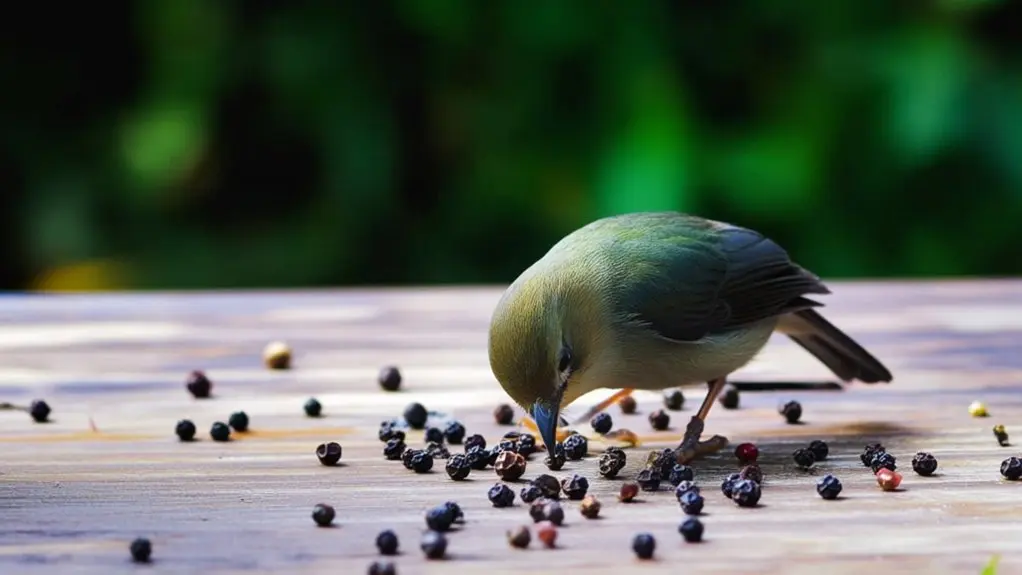
Yes, you can safely include black pepper in bird feed in moderation. Birds tolerate piperine, the active compound in black pepper, without irritation or harm because they lack receptors for the heat sensation it causes in mammals.
While black pepper doesn’t deter birds, it may help mildly discourage mammals like squirrels when used sparingly alongside other strategies. You’ll find more about its effects, differences from hot pepper, and best practices for use if you explore further.
Why Birds Can Eat Black Pepper Safely
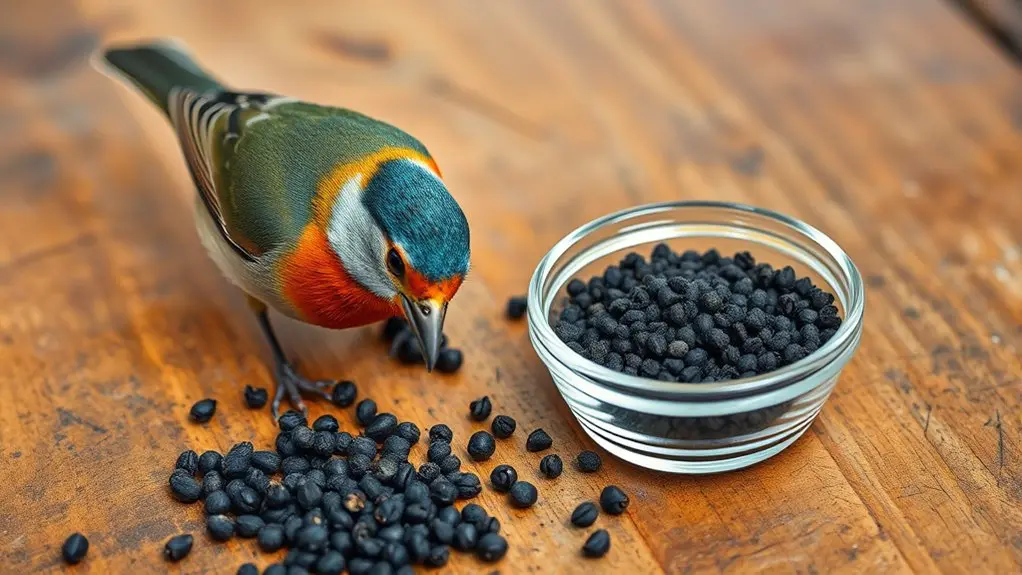
How can birds eat black pepper without any adverse effects? Unlike chili peppers containing capsaicin, black pepper’s active compound, piperine, doesn’t trigger a burning sensation in birds.
You should know birds lack the specific pain receptors that respond to capsaicin, so they don’t perceive spicy heat the way mammals do. Plus, birds don’t have the same taste receptors for heat, meaning black pepper isn’t irritating or harmful to them.
Studies indicate that when you include black pepper in moderation in their diet, it may even benefit digestion and overall health.
Because of these factors, using black pepper in bird feed or treats is generally safe, and it doesn’t stop birds from eating it.
How Black Pepper Affects Birds and Mammals Differently
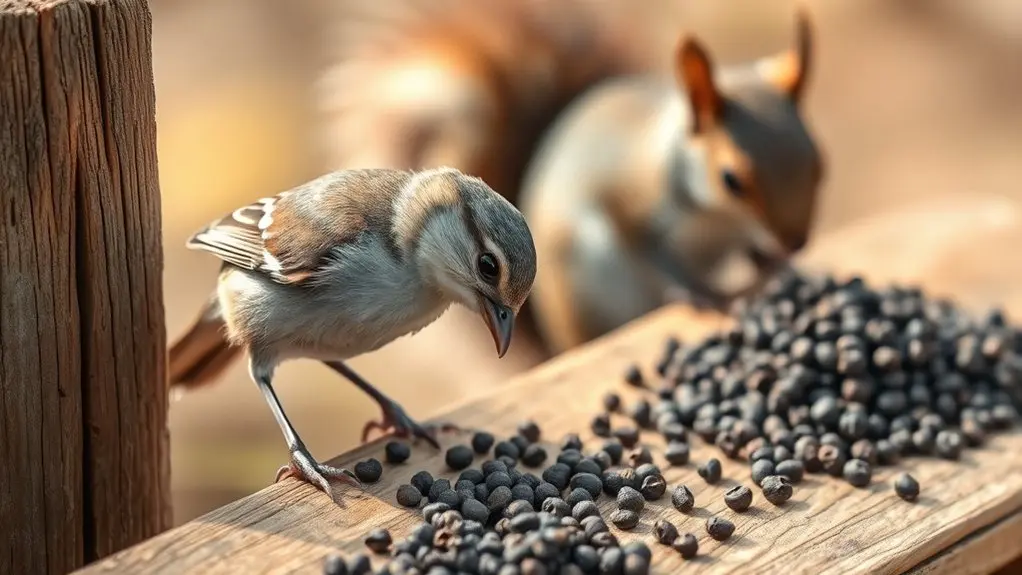
Although black pepper contains piperine, a compound distinct from capsaicin in chili peppers, it affects birds and mammals in markedly different ways due to variations in their sensory receptors. You’ll find that birds lack the pain receptors for capsaicin, so piperine doesn’t cause them discomfort.
In contrast, mammals experience digestive irritation and find black pepper’s pungent flavor unpalatable. Specifically, birds can safely consume small amounts without adverse reactions. Piperine doesn’t trigger a burning sensation in mammals like capsaicin does.
Mammals often avoid black pepper due to its strong, irritating effects. Birds generally remain indifferent to black pepper’s presence in their diet.
Understanding these differences helps explain why black pepper isn’t a deterrent for birds, yet it can affect mammals negatively.
Can Black Pepper Keep Squirrels Away?
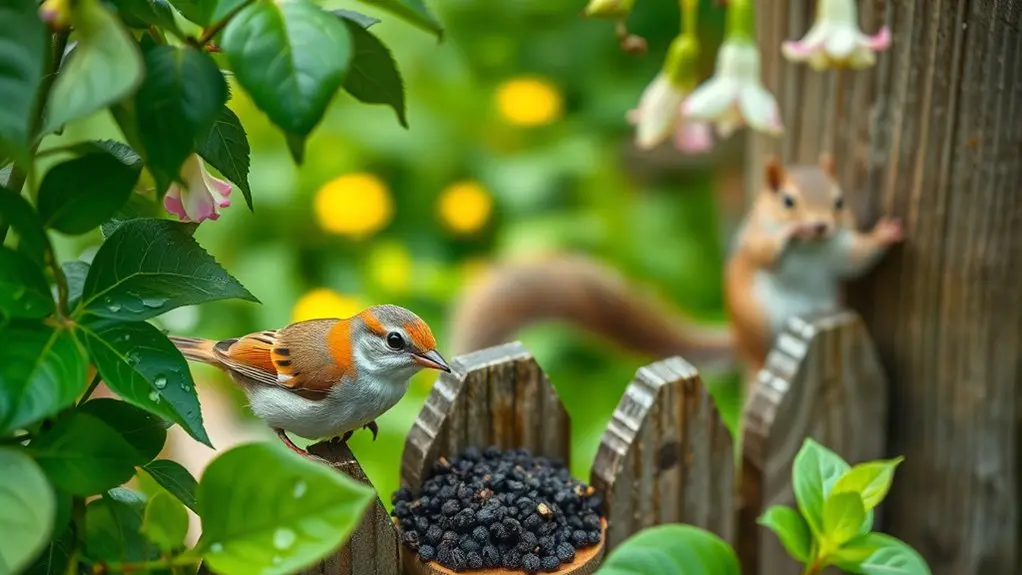
When you’re looking to protect your bird feeders, relying on black pepper to keep squirrels away may not be effective. Black pepper contains piperine, which doesn’t have the capsaicin compound responsible for the heat that usually deters mammals like squirrels.
Unlike hot peppers, black pepper doesn’t create a sensation that repels these animals.
Scientific observations show there’s limited evidence supporting black pepper as a natural squirrel deterrent. Using it in birdseed or around feeders usually doesn’t stop squirrels from feeding.
If you want to reduce squirrel interference, it’s better to consider more reliable options such as specially designed squirrel-proof feeders. These methods tend to be more consistent and effective at protecting your bird feeders than relying on black pepper, which hasn’t been proven to repel squirrels.
How Black Pepper Differs From Hot Pepper Seed for Birds
While black pepper lacks the capsaicin compound responsible for heat, hot pepper seeds contain this active ingredient, which creates a burning sensation that mammals find unpleasant.
You should understand these key differences when considering their effects on birds:
Black pepper contains piperine, which doesn’t produce heat or irritation. Birds can taste black pepper but experience no deterrent effects.
Hot pepper seeds are formulated to repel mammals by causing a burning sensation.
Black pepper doesn’t deter mammals or squirrels in bird feeding contexts. Because black pepper lacks capsaicin, it’s generally safe for birds to eat in small quantities, unlike hot pepper seeds that serve a specific protective function.
This distinction is crucial when selecting spices for bird feeders or diets.
Using Black Pepper Safely in Bird Feeders
When you’re handling black pepper around birds, it’s good to remember that piperine—the compound that gives pepper its kick—can actually irritate their digestive systems and make them uncomfortable.
Because there isn’t much scientific information on how safe it’s to use black pepper in bird feeders, it’s best to steer clear of adding it to their food.
A smart move is to keep spices like black pepper separate from bird feed altogether. That way, you can help avoid any potential health issues and keep your feathered friends safe and happy.
Handling Black Pepper Safely
Because black pepper contains piperine instead of capsaicin, you can safely include it in bird feeders in small amounts without harming the birds. However, handling black pepper requires attention to avoid irritation from its fine powder.
So, it’s a good idea to follow some simple guidelines to use it safely.
Wear gloves when mixing black pepper into bird feed to protect your skin. Also, try to avoid inhaling black pepper dust because it can cause respiratory discomfort. Mixing the pepper thoroughly with the feed helps ensure even distribution and keeps birds from ingesting large quantities.
Make sure to store black pepper in a sealed container away from moisture. This keeps its quality intact and prevents clumping.
Taking these steps will help you handle black pepper safely and effectively.
Effects On Birds
Although birds lack the taste receptors to detect piperine, the active compound in black pepper, you can safely include small amounts of it in bird feeders without causing discomfort.
Black pepper doesn’t contain capsaicin, so it won’t produce the hot, irritating sensations that affect some animals.
Scientific data on its effects in avian diets is limited, but no harmful impacts have been documented when used moderately.
Excessive amounts, however, might cause mild digestive or respiratory irritation, so moderation is key.
Unlike hot peppers, black pepper’s chemical profile makes it unlikely to cause adverse reactions.
Protective Measures Needed
To guarantee the safe use of black pepper in bird feeders, you must apply it in controlled, minimal amounts to prevent digestive irritation in birds. Piperine, the active component in black pepper, can irritate avian digestive systems if consumed excessively.
When handling black pepper, take precautions to avoid skin irritation or accidental ingestion.
Make sure to monitor birds closely to detect any adverse reactions and stop use immediately if needed. It’s really important to follow these protective measures for safe application:
- Use only small quantities to minimize potential harm
- Wear gloves to prevent skin contact during application
- Apply black pepper sparingly to avoid overwhelming birds’ senses
- Observe bird behavior and health regularly after introduction
Black Pepper vs. Hot Pepper Seed: Which Works Best?
When comparing black pepper and hot pepper seed as deterrents for mammals like squirrels, the chemical composition plays a crucial role in their effectiveness. Black pepper contains piperine, which doesn’t produce the same hot sensation as capsaicin found in hot pepper seeds.
Because piperine lacks that spicy, irritating effect, black pepper doesn’t really stop mammals from coming around.
On the other hand, hot pepper seeds treated with capsaicin cause a strong, unpleasant reaction in mammals. This makes them much better at keeping squirrels away from your birdseed.
Birds can safely eat black pepper since it doesn’t have capsaicin, but that safety doesn’t mean it works well against squirrels.
Other Ways to Keep Squirrels Away From Bird Feeders
If you want to keep squirrels away from your bird feeders, using squirrel-proof designs can really help. These feeders often have physical barriers or weight-sensitive parts that make it hard for squirrels to get in.
You can also try natural deterrents. For example, applying certain scents or planting vegetation that squirrels don’t like nearby can discourage them from coming close.
Honestly, combining these methods usually works best. It helps protect your bird feed while keeping the squirrels safe too.
Squirrel-Proof Feeder Designs
Although squirrels are persistent in accessing bird feeders, you can considerably reduce their success by using specially designed squirrel-proof feeders. These feeders use mechanical and physical features that selectively allow birds to feed while keeping squirrels out.
Key design elements include weight-activated mechanisms that close access when a squirrel’s weight is detected, preventing them from feeding. Baffle barriers, like metal or plastic domes, block squirrels from climbing or jumping onto feeders.
The feeders are often made with metal or smooth surfaces that squirrels can’t grip or chew through easily.
Plus, perches have rings that are too small for squirrels but just right for birds to feed comfortably.
When you combine these designs with smart placement—like keeping feeders away from trees—you can make your feeder much more resistant to squirrels without harming the birds.
Natural Deterrent Techniques
Since squirrels have adapted to many physical barriers, incorporating natural deterrent techniques can really boost your overall strategy for protecting bird feeders.
Black pepper contains piperine, which causes mild irritation in mammals like squirrels but doesn’t have the burning sensation of capsaicin. That makes it a less potent deterrent.
You can mix small amounts of black pepper into bird seed to discourage squirrels without harming birds, since it’s generally safe in moderation. Just be careful not to use too much because excessive amounts might irritate birds’ respiratory systems. So, it’s best to apply it sparingly.
Combining black pepper with squirrel-proof feeder designs makes the approach even more effective.
Also, other natural methods, like using scents squirrels dislike or planting squirrel-repellent plants nearby, can really help.
Using multiple deterrents together is a smart, balanced way to minimize squirrel interference at your feeders.
Frequently Asked Questions
Can Baby Birds Eat Black Pepper?
You shouldn’t feed baby birds black pepper, as their sensitive digestive systems can react negatively to piperine. Even small amounts may cause discomfort or digestive upset, so it’s safest to avoid giving them spicy foods altogether.
It’s really better to stick with mild, bird-safe foods to keep them healthy and happy. Trust me, their little tummies will thank you!
Does Black Pepper Affect Bird Digestion?
Black pepper can mildly irritate your bird’s digestive tract if consumed excessively because of piperine. You should limit how much your bird eats to prevent discomfort or mild gastrointestinal issues. Birds’ digestive systems can be quite sensitive to spices, and it really varies from one bird to another.
Is Black Pepper Safe for All Bird Species?
You can’t assume black pepper is safe for all birds; some species tolerate it poorly, while others show no reaction. Coincidentally, its piperine content varies, making universal safety unpredictable.
Can Black Pepper Cause Allergic Reactions in Birds?
Black pepper rarely causes allergic reactions in birds, but you should still watch for sensitivity or digestive upset. Piperine can irritate some species, so it’s wise to introduce it cautiously and monitor your bird’s response carefully.
Just take it slow and keep an eye on how your feathered friend reacts. If you notice any signs of discomfort, it’s best to stop and consult a vet. Better safe than sorry!
How Much Black Pepper Is Too Much for Birds?
You shouldn’t give birds more than a tiny pinch of black pepper. Even small amounts can irritate their digestive system, so avoid regular feeding to prevent gastrointestinal distress or potential toxicity.
Always prioritize caution and moderation. It’s better to be safe than sorry when it comes to their health. Just keep the black pepper as an occasional tiny sprinkle, if at all.
Conclusion
You can safely add black pepper to bird feeders without harming your feathered friends, as their unique physiology handles it well. Unlike mammals, birds don’t find black pepper irritating, making it a clever way to deter squirrels without risking your birds’ health.
However, remember that hot pepper seed often works better for repelling pests. When it comes to protecting your feeders, don’t put all your eggs in one basket. It’s best to combine methods for the best results.