
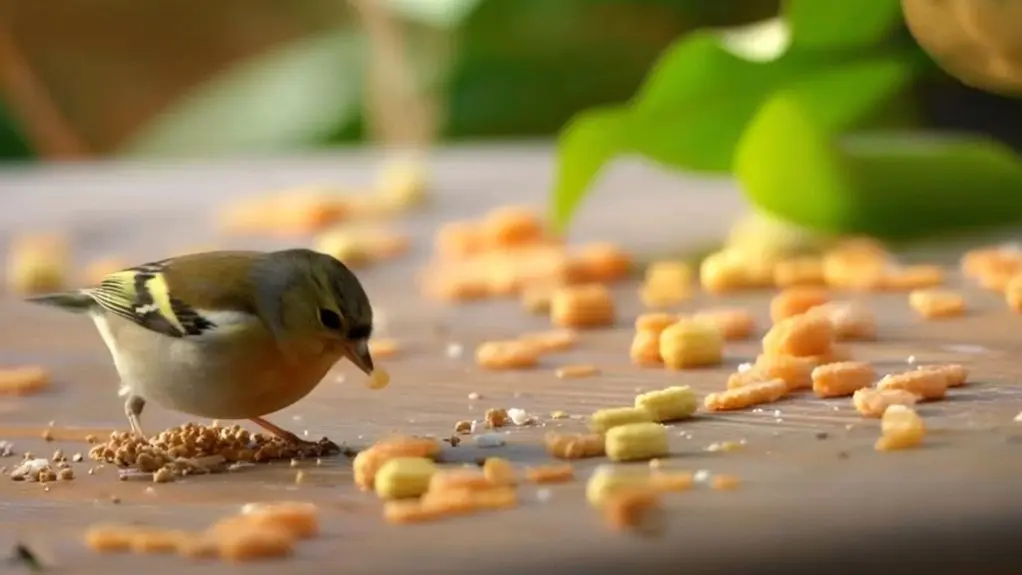
You can safely offer birds plain, unsweetened breakfast cereals like shredded wheat or bran flakes in moderation. Avoid sugary, salty, or artificially flavored cereals because these can harm birds’ health. Never soak cereal in milk or dairy products since they cause digestive issues and increase the risk of mold.
Treat cereals as occasional snacks, not staples. It’s a good idea to pair them with fresh fruits or veggies for a balanced diet. Exploring proper preparation and alternatives helps make sure your birds stay healthy and happy.
Which Breakfast Cereals Are Safe for Birds?
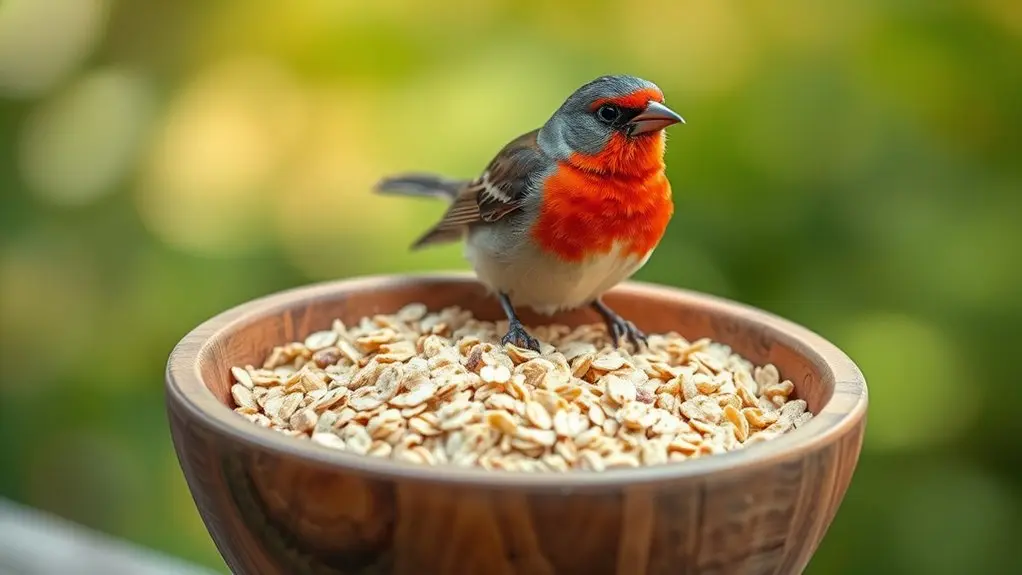
Many breakfast cereals can be safe for birds if you choose them carefully. Whole-grain options like shredded wheat and oats are generally suitable when given in moderation.
You can also offer cereals such as Cheerios and Rice Krispies as occasional treats, but make sure they contain no added sugars, salt, or artificial ingredients.
Always select unsweetened, natural cereals free from artificial colors, flavors, or sweeteners to guarantee safety. Checking ingredient labels is essential to avoid harmful additives like xylitol or other artificial sweeteners that can pose serious health risks.
By focusing on simple, natural cereals without harmful additives, you can provide safe, enjoyable treats that complement your bird’s diet without compromising their health.
It’s really about keeping things plain and natural for your feathered friend.
Why You Should Avoid Sugary or Salty Cereals for Birds
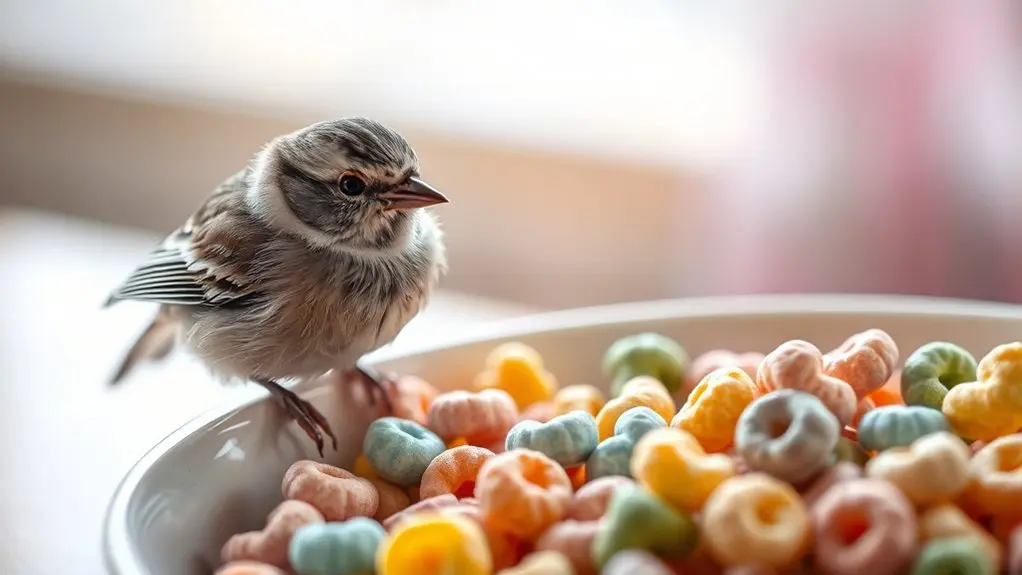
You should avoid feeding birds sugary or salty cereals. See, sugar can lead to obesity, diabetes, and even liver problems in birds.
On the other hand, too much salt is risky too—it can cause dehydration and kidney damage.
Plus, both sugar and salt mess with birds’ electrolyte balance, which can cause long-term health issues.
Health Risks of Sugar
Although sugary and salty cereals might seem like a convenient treat, they pose significant health risks to birds. High sugar levels in cereals can lead to obesity, diabetes, and fatty liver disease in your feathered friends. Refined sugars and artificial sweeteners often cause digestive upset and weaken their immune system, reducing overall health.
Watch out for these dangers when feeding birds:
- Obesity and metabolic disorders from excess sugar
- Digestive problems caused by refined sugars
- Immune system weakening due to added sugars and salts
- Toxicity from artificial sweeteners like xylitol
- Dehydration risks linked to salty cereals (explored later)
To protect your bird’s health, avoid sugary cereals and opt for natural, bird-safe foods instead. It’s really better for them that way!
Dangers of Excess Salt
Sugary cereals pose serious health risks to birds, but salty cereals can be just as dangerous. Many processed cereals contain salt levels exceeding seawater, which is toxic for birds.
When birds consume cereals high in salt, like certain cornflakes, they risk dehydration, kidney damage, and electrolyte imbalances.
Excess salt makes birds drink more water, leading to diarrhea or worsening dehydration. In severe cases, this can be fatal.
To protect birds, always check ingredient labels and avoid feeding cereals with added salt.
Providing salty cereals puts their health at risk, so it’s best to steer clear of these products.
If you want to share breakfast treats with wild or pet birds, choose safer, salt-free options instead.
How to Prepare Breakfast Cereal Before Feeding Birds
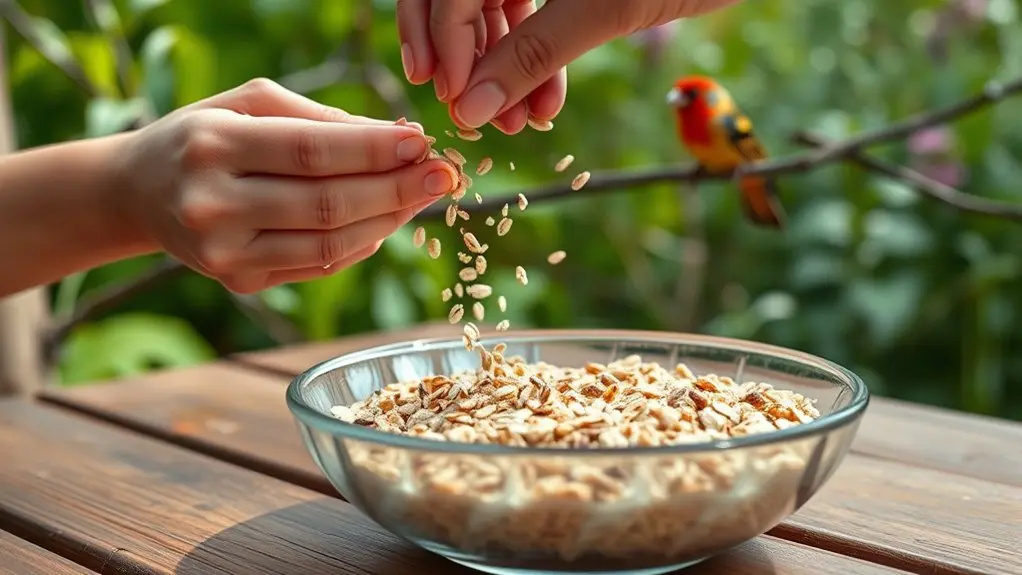
When preparing breakfast cereal for birds, it’s important to serve it dry and plain, without milk or dairy products. This helps prevent any digestive issues.
Start by choosing whole-grain, unsweetened cereals like bran flakes or puffed rice. Make sure to avoid any with added sugars, salt, or artificial ingredients.
If the cereal is stale or too hard, break it into smaller pieces. This makes it easier for birds to swallow.
For a little extra nutrition, you can sprinkle small amounts of fresh, chopped fruits or vegetables on top.
Always check that the cereal is clean and free of contaminants before offering it to birds. This way, you’re making sure they get a safe and healthy treat.
Choose whole-grain, unsweetened cereals
Avoid added sugars, salt, and artificial flavors
Serve dry and plain, no milk or dairy
Break stale cereal into smaller pieces
Add small amounts of fresh fruits or vegetables
Can Birds Eat Breakfast Cereal Soaked in Milk or Dairy?
While serving dry cereal is recommended, you might wonder if soaking it in milk or other dairy products is safe for birds. Birds are lactose intolerant, so feeding them cereal soaked in milk can cause diarrhea and digestive issues.
Birds are lactose intolerant, so avoid feeding cereal soaked in milk to prevent digestive problems.
Excess milk in their diet may lead to dehydration and upset stomachs, posing serious health risks.
Also, dairy-soaked cereal creates a moist environment that promotes mold growth, which is toxic if ingested. To avoid these problems, it’s safer to offer dry cereal or cereal soaked in water or plant-based milk alternatives, which birds tolerate better.
Always remove any leftover cereal soaked in milk promptly to prevent spoilage and avoid attracting insects.
Prioritizing these precautions helps maintain your birds’ health and well-being. It’s always better to be safe and keep their diet simple!
Common Bird Species That Safely Eat Breakfast Cereal
You’ll find that several common bird species enjoy breakfast cereal safely when offered in moderation. Parrots, budgerigars, and wild birds like blue jays each have their own cereal preferences that match their dietary needs.
Knowing what they like helps you give them the right, nutritious treats. It’s all about understanding their tastes and making sure you’re offering something healthy for them to munch on.
Popular Cereal-Loving Birds
Which common bird species enjoy breakfast cereal as part of their diet? Several birds safely consume cereal when it’s low in sugar, salt, and artificial ingredients. You’ll find both pet and wild birds accepting cereal as an occasional treat, especially whole-grain varieties.
Popular cereal-loving birds include:
- Parrots and cockatiels enjoy small amounts of low-sugar cereals like Cheerios and Grape Nuts.
- Budgerigars accept cereals mixed with seeds and vitamins.
- Blue jays and orioles favor cereals such as Grape Nuts, supplemented with natural foods.
- Blackbirds and thrushes readily eat plain bran flakes and puffed rice.
- Various garden birds benefit from plain, unsweetened cereals in moderation.
Species Dietary Preferences
Because different bird species have varied dietary needs, understanding which cereals are safe and preferred is crucial for responsible feeding. Parrots and cockatiels can safely enjoy moderate amounts of whole-grain cereals like Cheerios and Grape Nuts as treats.
Wild birds such as blue jays and orioles often prefer cereals like Grape Nuts or bran flakes, especially when combined with fruits or seeds.
Robins, blackbirds, and thrushes supplement their diet with oats, bran flakes, or puffed rice.
Waterfowl like ducks and moorhens favor cooked rice, peas, and sweetcorn over processed grains.
Small songbirds including finches and sparrows tend to avoid high-sugar cereals but may nibble on plain oats or unsweetened bran flakes.
Tailoring cereal offerings to species guarantees their health and safety.
How Often Should You Feed Breakfast Cereal to Wild Birds?
Although wild birds can enjoy breakfast cereal as a treat, you should limit feeding it to once or twice a week to avoid nutritional imbalances. Offering cereal too frequently may cause health problems like obesity or digestive issues due to high sugar or salt content.
Limit feeding wild birds cereal to once or twice weekly to prevent obesity and digestive issues.
It’s best to provide cereal during critical times, such as the breeding season or winter when natural food is scarce.
Always serve it plain, dry, and free from artificial additives or sweeteners to keep birds safe.
Keep these points in mind when feeding cereal to wild birds:
- Feed cereal only occasionally, once or twice weekly
- Choose plain, additive-free options
- Avoid overfeeding to prevent health risks
- Offer during breeding or food-scarce seasons
- Monitor bird behavior and adjust accordingly
How to Tell If Cereal Isn’t Right for Your Birds
Feeding breakfast cereal to wild birds requires careful selection to guarantee their safety and health. You should avoid cereals high in sugar, salt, or artificial additives, as these can harm birds. Always check labels for added sugars, preservatives, and harmful ingredients like chocolate, cacao, or xylitol, which are toxic to birds.
Never offer cereal that contains dairy or has been soaked in milk, since birds can’t digest these properly. Also, discard any stale, moldy, or suspicious cereal immediately.
By scrutinizing ingredients carefully and avoiding unsafe components, you assure the cereal you feed supports birds’ well-being rather than endangering it.
Vigilance in selection helps you protect the wild birds you want to nourish safely and responsibly. It’s all about making smart choices so the birds stay healthy and happy.
Keep an eye on what you offer, and you’ll be doing a great job helping them thrive.
Alternatives to Breakfast Cereal for Feeding Birds
When you want to offer birds nutritious options beyond breakfast cereal, consider natural foods like suet, nuts, seeds, fruits, and cooked vegetables. These alternatives provide essential nutrients and energy that support their health.
You can also include live insects or mealworms to supply natural protein, closely mimicking wild diets.
Whole grains such as oats, rice, and barley are excellent cereal substitutes, especially when unsweetened and unprocessed.
Additionally, fresh water and natural sources like berries and aquatic plants help sustain diverse bird species.
Prepared treats like homemade seed cakes or fruit and nut mixes serve as effective replacements for commercial cereals.
- Suet and cooked vegetables
- Nuts and seeds
- Live insects or mealworms
- Whole grains (oats, rice, barley)
- Homemade seed cakes and natural fruit mixes
Safely Adding Cereal to Your Parrot’s Diet
Offering your parrot a variety of foods can include small amounts of plain, unsweetened whole-grain cereals like oats or bran flakes as occasional treats. You should avoid cereals containing added sugars, salt, artificial colors, or flavorings, as these additives may harm your bird’s health.
Always serve cereal dry, steering clear of dairy or processed ingredients that could cause digestive issues.
To boost nutritional value, pair cereals with fresh fruits or vegetables, promoting a balanced diet.
Introduce new cereals gradually, observing your parrot’s reaction to ensure tolerance and prevent adverse effects.
If you have any doubts about specific cereal types, consult an avian veterinarian for tailored advice.
Taking these precautions helps you safely add cereal to your parrot’s diet without compromising its well-being.
Tips for Feeding Breakfast Cereal to Birds Responsibly
When you’re picking out cereals for your bird, go for plain, unsweetened whole-grain options—make sure there are no added sugars or artificial ingredients.
It’s best to feed cereal sparingly, treating it as an occasional snack rather than something your bird eats every day.
Choosing Bird-Friendly Cereals
Although feeding breakfast cereal to birds can be a delightful way to attract them, you need to select bird-friendly options carefully to guarantee their health and safety. Choosing the right cereals means prioritizing natural, nutritious ingredients while avoiding harmful additives. Here’s what you should keep in mind:
Choose whole-grain, low-sugar cereals like shredded wheat or organic muesli. Avoid cereals with added salt, artificial flavors, colors, or high sugar content. Check ingredient labels to ensure cereals contain no preservatives or artificial additives.
Serve cereals dry and plain. Avoid soaked or dairy-based options. Opt for cereals without nuts or dried fruits high in sugar and monitor portion sizes to prevent overfeeding.
Following these guidelines helps you feed birds responsibly and supports their well-being. It’s a simple way to make sure our feathered friends stay healthy and happy!
Feeding Frequency Guidelines
Since breakfast cereal should only complement a bird’s natural diet, you’ll want to feed it sparingly and thoughtfully. Offer cereal as an occasional treat, avoiding daily feeding to prevent health issues like obesity. Limit quantities to guarantee cereal remains a small part of a balanced diet.
Try to provide cereal during natural low-food periods, such as winter or post-breeding seasons. Avoid sugary, salty, or artificially flavored cereals and always remove uneaten portions promptly. Keep an eye on your birds’ health and adjust feeding frequency as needed.
| Feeding Frequency | Quantity | Cereal Type |
|---|---|---|
| Occasional (weekly) | Small portions | Plain, unsweetened cereals |
| Seasonal | Moderate portions | High-quality, low sugar |
| Avoid daily | Minimal or none | Sugary, flavored cereals |
Frequently Asked Questions
Can Baby Birds Eat Breakfast Cereal?
You shouldn’t feed baby birds breakfast cereal, as their sensitive digestive systems can’t handle processed foods. Instead, offer soft, natural options like soaked oats or mashed fruits.
Always consult an expert before introducing new foods. It’s better to be safe and make sure your little bird gets exactly what it needs to grow strong and healthy.
Is Breakfast Cereal Safe for Pet Birds With Allergies?
Think of breakfast cereal as a garden with hidden thorns. If your pet bird has allergies, you shouldn’t risk it. Always check ingredients carefully.
And don’t forget to consult your avian vet to protect your feathered friend’s health and happiness. It’s better to be safe than sorry, right? Keeping your bird healthy is what matters most.
What Time of Day Is Best to Feed Birds Cereal?
You should feed birds cereal early in the morning when they’re most active and need energy to start their day. Mid-morning also works well.
Just try to avoid late evening though, since that can disrupt their natural roosting behavior. It’s all about timing it right to help them out without causing any issues.
Can Cereal Crumbs Attract Unwanted Pests When Feeding Birds?
Imagine tiny ants marching toward crunchy cereal crumbs you left behind. Yes, cereal crumbs can attract unwanted pests. So, you should clean up daily and use covered feeders to keep your bird feeding area pest-free and hygienic.
Should Birds Be Given Fresh Cereal or Is Old Cereal Okay?
You should give birds old, dry cereal rather than fresh. Fresh cereal may contain moisture or perishable ingredients that spoil.
Old cereal, if mold-free, offers a safe, economical snack without risking their health. It’s a simple way to make sure the birds stay safe while enjoying a treat.
Conclusion
Feeding birds breakfast cereal can be a small, safe treat if you choose wisely and prepare it properly. Avoid sugary or salty options, and never offer cereal soaked in milk. That can upset their digestion.
Think of cereal as a tiny puzzle piece in their balanced diet, not the whole picture. By sticking to bird-friendly cereals and feeding responsibly, you’ll keep your feathered friends healthy and happy without ruffling any feathers.