
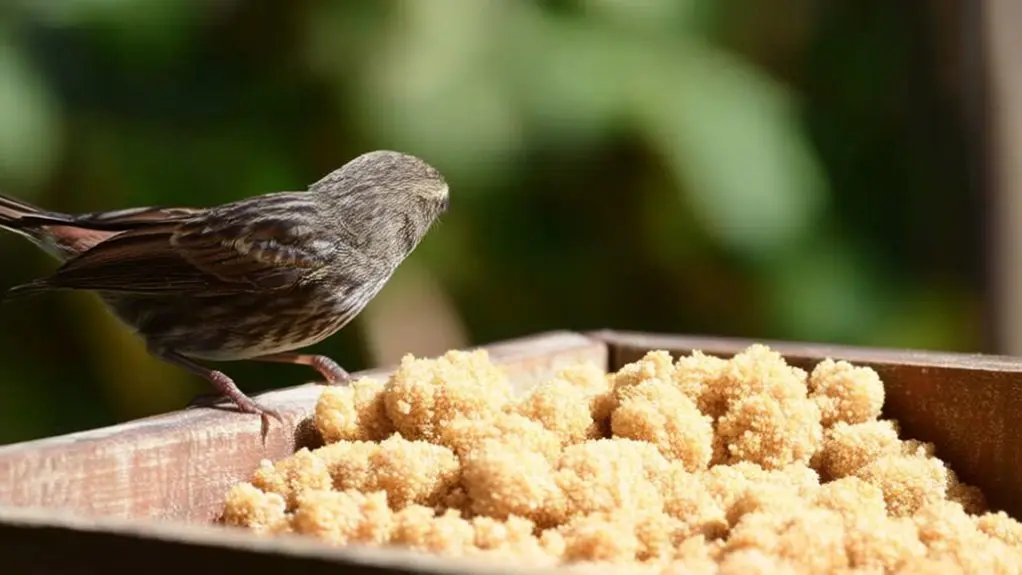
You can safely feed birds bulgur wheat when it’s properly rinsed and cooked. It provides fiber, minerals, and steady energy. Grain-eating birds like finches, sparrows, and pigeons digest it best when served plain, without salt or seasoning.
Cooking reduces anti-nutrients and microbial risks, making it easier to digest than raw. Offer small portions during scarce seasons and watch for spoilage signs. To fully understand preparation, feeding guidelines, and safety, keep exploring the details.
What Is Bulgur Wheat?
Although you might primarily associate bulgur wheat with Middle Eastern cuisine, it’s important to understand that bulgur is a whole grain made from cracked, parboiled wheat kernels that have been dried and hulled. This process preserves most of the wheat’s nutrients, including fiber, vitamins, and minerals, making bulgur highly nutritious.
Typically, the kernels undergo soaking, boiling, or steaming before use, which softens them and enhances digestibility.
You’ll often find bulgur in dishes like tabbouleh and pilafs, where its texture and nutritional profile are prized.
Because it retains the integrity of whole wheat, bulgur provides sustained energy and essential nutrients, distinguishing it from refined grains.
This scientific understanding highlights bulgur’s value as a wholesome grain for human diets and potential inclusion in small amounts for birds.
Birds That Can Safely Eat Bulgur Wheat
You’ll find that grain-eating birds, like finches and sparrows, really benefit from bulgur wheat as part of their diet. It’s a great source of energy for them.
Birds that aren’t too picky and have generalist feeding habits can also safely eat cooked or soaked bulgur. They get plenty of complex carbs and fiber from it, which is great for their digestion.
Just be sure the bulgur is plain and properly prepared—no added salt or spices—to keep them healthy and avoid any risks.
Grain Eaters Preference
When feeding grain-eating birds, such as finches, grosbeaks, and native sparrows, you can safely include bulgur wheat in their diet to provide a natural, carbohydrate-rich energy source. Bulgur wheat is an unprocessed grain that suits birds with a preference for grains because it offers essential nutrients and energy.
To optimize feeding, consider these points: Soak or cook bulgur wheat before offering it to birds to enhance digestibility and minimize choking hazards. Incorporating bulgur wheat into feeding stations can attract and support the health of grain-eating species effectively.
Also, many generalist birds like pigeons and starlings accept cooked or soaked bulgur wheat, which broadens its utility. This way, you’re making sure bulgur wheat meets the dietary needs of grain-eating birds safely and efficiently.
Generalist Bird Diets
Bulgur wheat suits not only specialized grain eaters but also generalist birds like pigeons, doves, and starlings, which consume a wider variety of foods. This nutritious, unprocessed grain provides essential carbohydrates and fiber, supporting the varied dietary needs of omnivorous and seed-eating birds.
Since bulgur is typically pre-cooked or parboiled, it’s easy to prepare and serve in small amounts.
When offering bulgur wheat, make sure it’s plain. Avoid salt, seasoning, or oils to keep it safe for consumption.
Including bulgur wheat in their diet can diversify their food intake, especially during winter when natural food sources dwindle.
Raw vs. Cooked Bulgur Wheat: What’s Best for Birds?
You might think feeding raw bulgur wheat to birds is a good idea because it keeps all the nutrients and natural enzymes intact. But keep in mind, raw bulgur can have anti-nutrients and tough fibers that might be hard for birds to digest.
On the other hand, cooked bulgur wheat loses a little bit of its nutrients during cooking, but it’s way easier for birds to digest. Plus, cooking lowers the chances of choking or impaction.
Raw Bulgur Wheat Benefits
Many bird species, including finches and sparrows, can safely consume raw bulgur wheat. It offers a rich source of fiber, protein, and essential nutrients.
When you feed raw bulgur wheat to birds, you provide them with higher nutrient retention. Raw bulgur keeps more vitamins and natural enzymes compared to cooked, which supports better digestion and overall health.
It also encourages natural foraging behavior. Birds get to engage in their instinctual activities, which is great for their mental and physical stimulation.
Plus, raw bulgur is a clean, additive-free option. Without salt or seasonings, it helps prevent birds from being exposed to harmful substances.
Cooked Bulgur Wheat Risks
Although cooked bulgur wheat is generally safe for birds, it presents fewer risks compared to its raw counterpart. Cooking reduces phytate content, which helps enhance nutrient absorption and makes it easier to digest.
That said, you should still be cautious. Serving cooked bulgur in small, plain portions is best to avoid digestive upset. Raw bulgur can harbor bacteria, mold, or fungi. These risks are largely eliminated by cooking.
| Aspect | Cooked Bulgur Wheat |
|---|---|
| Nutrient Absorption | Improved due to reduced phytates |
| Microbial Risk | Low if properly cooked |
| Digestibility | Higher than raw bulgur |
Preparing Bulgur Wheat for Birds
When preparing bulgur wheat for birds, start by rinsing it thoroughly to eliminate dust and impurities that could harm their health. Proper preparation guarantees the wheat is safe and nutritious. Follow these steps:
First, cook the rinsed bulgur wheat in boiling water for 10 to 15 minutes until it becomes soft and fluffy. This makes it easier for birds to digest.
Cook rinsed bulgur wheat in boiling water for 10–15 minutes until soft and fluffy for easier digestion by birds.
Then, allow the cooked wheat to cool completely to avoid burns or discomfort when feeding.
Serve the cooled bulgur wheat plain, without salt or seasonings, in small portions on platform or ground feeders. Using unflavored bulgur wheat and avoiding additives keeps it safe.
This careful preparation supports bird health and helps them absorb nutrients better.
How Much Bulgur Wheat Should You Offer Birds?
Since bulgur wheat should complement a bird’s varied diet, you need to offer it in controlled amounts to guarantee safety and nutritional balance. A tablespoon of cooked bulgur wheat per feeding is an appropriate portion for most birds, preventing overfeeding and minimizing waste.
Always serve it plain, avoiding salt, spices, or oils, which could harm their digestive systems.
Overconsumption may lead to digestive discomfort or imbalances, so it’s essential to regulate the quantity closely.
Observe your birds’ reactions after feeding bulgur wheat to identify any adverse effects and adjust portions accordingly.
Nutritional Benefits of Bulgur Wheat
Because bulgur wheat provides a rich source of dietary fiber, essential minerals like magnesium and iron, and B vitamins, it supports multiple aspects of your bird’s health. By including bulgur wheat in their diet, you supply:
Bulgur wheat offers dietary fiber, essential minerals, and B vitamins, supporting your bird’s overall health.
- Dietary fiber that enhances digestion and promotes gut health, reducing digestive discomfort.
- Essential nutrients, such as magnesium and iron, indispensable for metabolic processes and oxygen transport.
- High-quality protein that aids in feather growth and muscle development, critical for active birds.
Plus, bulgur wheat’s low glycemic index means it releases energy steadily, so your bird won’t experience blood sugar spikes. As a complex carbohydrate, it provides sustained nourishment when properly prepared.
Incorporating bulgur wheat thoughtfully can help maintain your bird’s vitality. It contributes to overall well-being through balanced nutrition.
How to Tell If Bulgur Wheat Is Unsafe for Your Birds
Although bulgur wheat is generally safe for birds, you need to carefully check it before feeding to avoid health risks. Look out for mold, a sour smell, or a slimy texture. These signs usually mean spoilage or bacterial growth.
That can lead to problems like aspergillosis or upset stomachs. Also, stay away from bulgur that’s too dry or burnt because it’s tough to digest and might cause choking.
Whether it’s cooked or raw, always give bulgur a good inspection to make sure it’s safe and clean for your birds.
| Unsafe Sign | Potential Risk |
|---|---|
| Mold or slimy texture | Aspergillosis, bacterial infection |
| Sour or rancid smell | Gastrointestinal upset |
| Overly dry or burnt | Digestive difficulty, choking |
When Should You Feed Bulgur Wheat to Birds?
When natural food sources become scarce during winter or early spring, you should feed bulgur wheat to birds in small amounts as part of a varied diet.
To optimize its benefits, follow these guidelines:
Follow these tips to maximize the benefits of feeding bulgur wheat to birds.
Offer cooked or soaked bulgur wheat to improve digestibility and encourage acceptance.
Make sure the bulgur wheat is fresh, plain, and free from additives or seasonings to avoid health risks.
Avoid feeding bulgur wheat during summer when birds have abundant natural foods and may reject it.
Storing and Handling Bulgur Wheat Safely
To maintain the quality and safety of bulgur wheat for bird feeding, you should store it in an airtight container placed in a cool, dry area away from direct sunlight and heat sources.
Before storage, make sure the bulgur wheat is completely dry to prevent mold growth. Use clean, dry utensils when handling it to avoid introducing moisture or contaminants.
Regularly inspect your stored bulgur wheat for any signs of spoilage, such as discoloration, off odors, or mold development.
Keeping bulgur wheat in these controlled conditions minimizes pest infestation risks and preserves its nutritional value. This way, it remains safe and beneficial for your birds over time.
Proper storage and handling are essential to maintain bulgur wheat’s freshness and prevent health hazards. So, it’s worth taking these steps seriously to keep your bird food in top shape.
Frequently Asked Questions
Can Bulgur Wheat Replace Regular Birdseed Completely?
You shouldn’t replace regular birdseed completely with bulgur wheat because it lacks essential fats and nutrients.
Instead, use bulgur as a supplement. This way, you ensure birds get a balanced diet for ideal health and nutrition.
Do Birds Prefer Bulgur Wheat Over Other Grains?
You won’t find all birds preferring bulgur wheat over other grains, but many seed-eaters favor its soft texture and high fiber.
Offering it fresh and plain increases acceptance, though preferences vary widely across species. So, it really depends on the bird you’re feeding. Some might love it, others not so much.
Can Bulgur Wheat Cause Allergies in Birds?
Yes, bulgur wheat can cause allergies in birds, especially those sensitive to gluten or wheat. You should introduce it gradually and watch for respiratory or digestive symptoms.
If you notice any signs of allergic reactions, it’s best to consult an avian vet. They can help determine if bulgur wheat is the cause and suggest alternatives.
Always keep an eye on your bird’s health when trying new foods. This way, you can keep them safe and happy!
Is Bulgur Wheat Safe for Baby Birds?
You’re nurturing a fragile flame. Yes, bulgur wheat is safe for baby birds if it’s cooked and unsalted. It offers essential carbs and nutrients.
Just make sure to avoid raw forms because they can cause digestive distress and might carry contamination risks. It’s all about keeping those little ones healthy and happy!
How Does Bulgur Wheat Affect Birds’ Digestion?
Bulgur wheat aids your bird’s digestion by providing high fiber, which helps promote healthy bowel movements.
You should introduce it gradually. Overfeeding or sudden changes might cause bloating or diarrhea, especially in sensitive species or those with digestive issues.
Conclusion
You can safely add bulgur wheat to your bird’s diet, but it’s essential to prepare it properly and feed it in moderation. Think of bulgur as a nutritional puzzle piece. When combined with a balanced diet, it supports your bird’s health without overwhelming their system.
Always monitor for signs of intolerance, and store bulgur wheat correctly to maintain freshness. With these steps, you’ll provide a wholesome, beneficial treat that keeps your feathered friend thriving.