
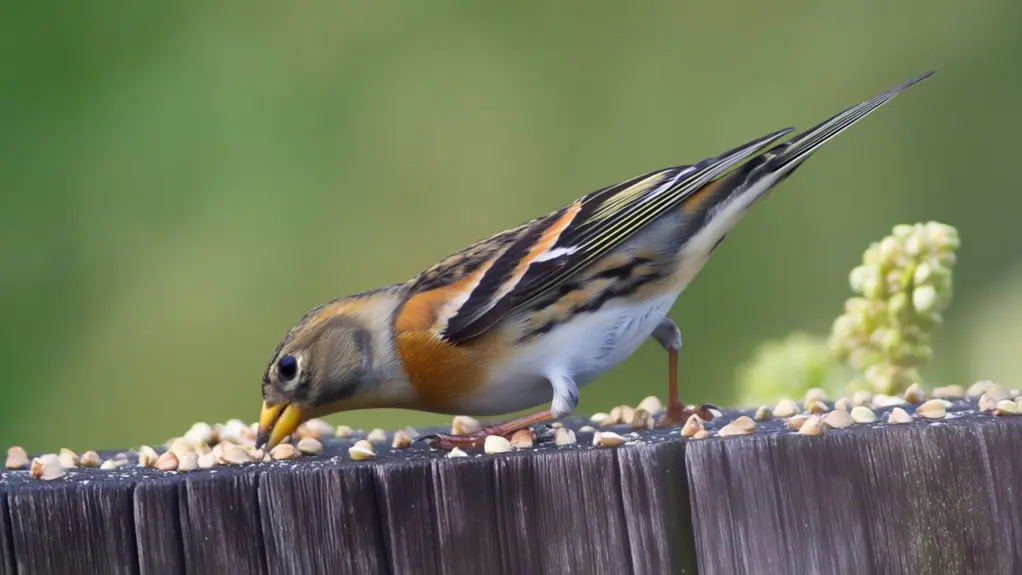
Yes, you can safely feed buckwheat to many bird species like doves, finches, and parrots. It offers essential nutrients, fiber, and antioxidants that support their health and energy needs. Just make sure the buckwheat is clean and pesticide-free.
Introduce it gradually while keeping an eye out for any adverse reactions. Also, store it properly in cool, dry, airtight containers to keep it fresh.
If you want to optimize feeding practices and source quality, there’s a bit more to consider beyond these basics. But starting with these steps will definitely help your birds enjoy buckwheat safely.
Can Birds Safely Eat Buckwheat?
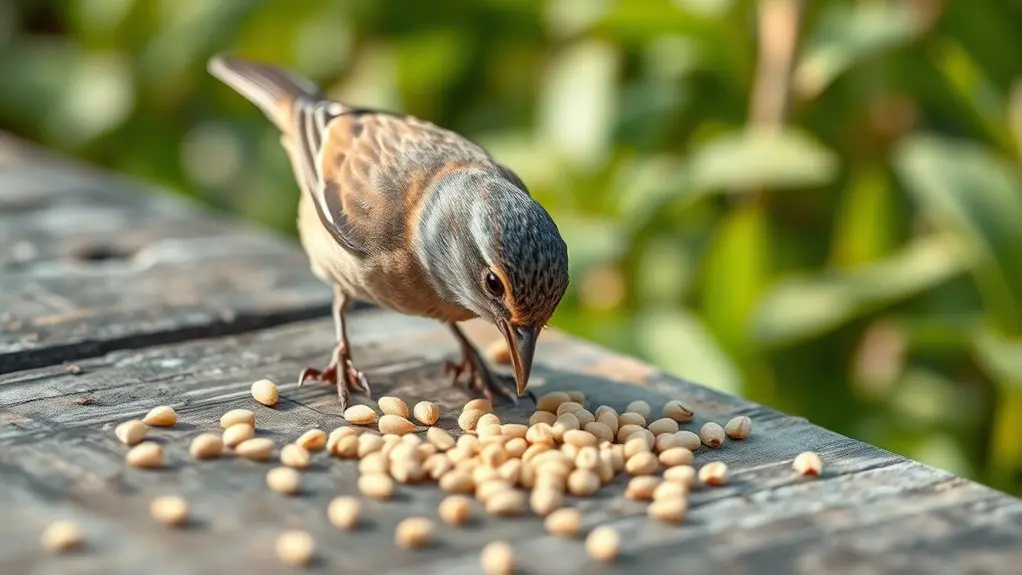
How safely can birds eat buckwheat? Most birds, including doves, finches, and parrots, can consume buckwheat safely. It offers rich nutrients and antioxidants that are essential for their health.
Buckwheat’s triangular fruit is botanically linked to rhubarb and provides a natural dietary component when given in moderation. Its high fiber content supports digestion, while amino acids contribute to overall vitality and healthy growth.
Furthermore, buckwheat supplies essential minerals needed for metabolic functions. However, you must guarantee the buckwheat is free from pesticides and additives before feeding it to birds to prevent toxic exposure.
Which Bird Species Enjoy Buckwheat?
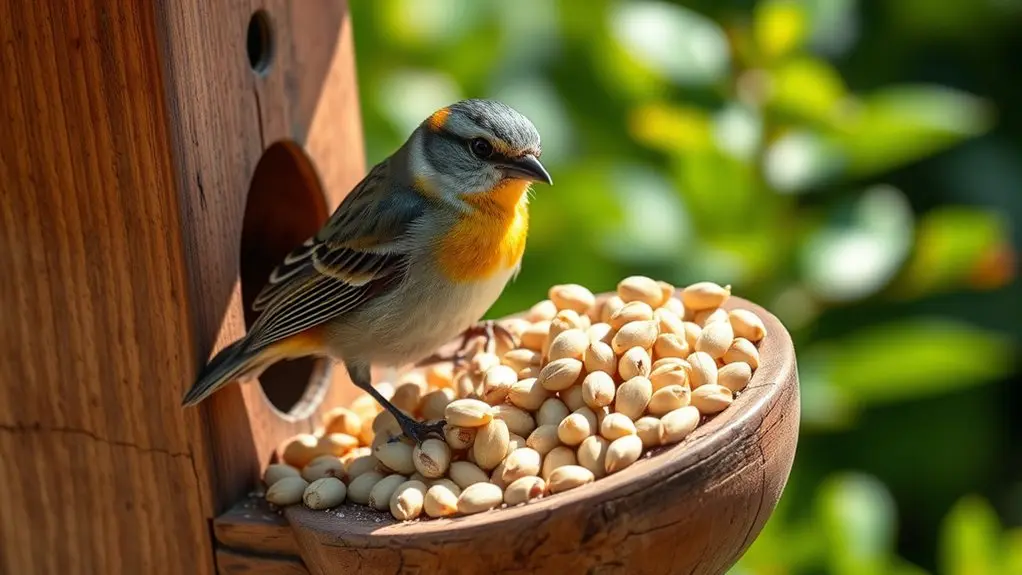
Although many seeds attract various birds, buckwheat stands out as a favored choice among species such as doves, finches, canaries, pheasants, and parakeets. You’ll notice these birds actively seek buckwheat due to its nutty flavor and dense nutrient profile.
Wild birds, including garden songbirds, also benefit from its high fiber and antioxidant content. Additionally, pigeons and upland game birds incorporate buckwheat into their diets, likely because of its complex carbohydrates that provide sustained energy.
When you offer buckwheat, these species readily consume it, making it an excellent supplemental food source. Understanding which birds enjoy buckwheat helps you tailor feeding practices, ensuring you support their dietary needs effectively while attracting a diverse range of species to your bird-feeding area.
Why Buckwheat Is Great Nutrition for Birds
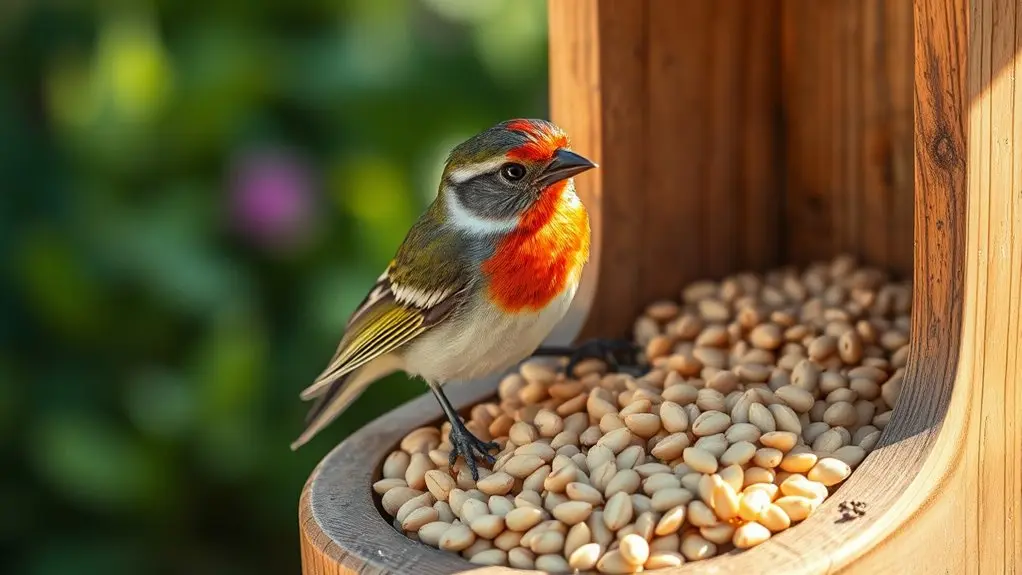
Recognizing which bird species favor buckwheat sets the stage for understanding its nutritional benefits. Buckwheat is a nutritionally dense seed, rich in fiber, antioxidants, and essential minerals that support overall avian health.
Identifying bird species that prefer buckwheat reveals its rich nutritional benefits for avian health.
Its complex carbohydrates provide sustained energy, essential for active birds and migratory species.
Plus, the amino acid profile in buckwheat promotes muscle development, growth, and strengthens immune function. Many birds are attracted to its natural nutty flavor, which encourages instinctive foraging behaviors.
Since buckwheat is minimally processed and farm-grown, it offers a natural food source, ideal for both garden and captive birds.
Incorporating buckwheat into their diet can enhance nutritional intake without introducing artificial additives. This helps support their vitality and well-being effectively.
How to Feed Buckwheat to Your Birds Safely
Before introducing buckwheat into your birds’ diet, make sure it’s thoroughly cleaned and free from pesticides or contaminants. Always avoid raw or chemically treated buckwheat because additives can harm birds.
Try offering buckwheat in a shallow feeder or scatter it on the ground. This encourages natural foraging behavior, which birds really enjoy.
Store your buckwheat in a cool, dry place to keep it fresh and prevent mold growth. Mold can be risky to your birds’ health, so it’s best to be cautious.
Introduce buckwheat gradually so you can see how your birds respond. This way, you can catch any adverse reactions early on.
Watch These Signs When Introducing Buckwheat
When you introduce buckwheat, keep a close eye on your birds’ eating habits. You might notice some hesitation or reluctance at first, and that’s totally normal. Just make sure they’re actually eating it.
Also, watch out for any allergic reactions. Look for digestive issues or unusual behaviors, like excessive scratching. These can be signs that something isn’t agreeing with them.
And don’t forget to pay attention to their activity levels. If they seem less active than usual, it could be an early sign of a problem.
Catching these changes early will help you keep your birds happy and healthy.
Monitor Eating Habits
Although introducing buckwheat to birds’ diets can offer nutritional benefits, you need to closely monitor their eating habits to make certain of safe adaptation. Observing their response helps prevent adverse effects and guarantees they incorporate buckwheat effectively.
When monitoring, focus on these key signs:
- Whether birds consistently consume buckwheat or ignore it
- Any digestive issues or changes in stool consistency
- Preference shifts toward buckwheat compared to regular feed
- Behavioral changes such as lethargy or reduced activity
- Amount ingested to avoid overconsumption and nutritional imbalance
Check For Allergic Reactions
Since buckwheat is a new addition to your birds’ diet, you need to watch carefully for allergic reactions such as sneezing, swelling around the eyes, or breathing difficulties.
Observe if your birds scratch or rub their beaks and faces excessively after eating, which may indicate irritation or allergy.
Also, keep an eye out for gastrointestinal symptoms like diarrhea or vomiting, as these can signal food intolerance.
It’s best to introduce buckwheat gradually so you can spot any problems early before making it a regular part of their diet.
If you notice persistent allergic signs or any unusual symptoms, don’t hesitate to consult an avian veterinarian promptly.
Early detection and professional guidance will help keep your birds healthy and safe while incorporating buckwheat into their feeding routine.
Observe Bird Behavior Changes
As you introduce buckwheat to your birds’ diet, closely monitor their behavior for clear indicators of acceptance or distress. Behavioral cues will help you assess whether buckwheat suits them or causes issues.
Watch for increased foraging and pecking around buckwheat seeds, signaling interest and adaptation.
Also, pay attention to altered vocalizations or signs of agitation, which may indicate discomfort or confusion.
Changes in droppings consistency could suggest possible digestive upset.
Notice if they’ve extended feeder visits or amplified social interactions—this usually implies the new food appeals to them.
On the other hand, avoidance or refusal to eat buckwheat can indicate it’s not suitable for certain species.
Keep an eye out and adjust accordingly!
How to Store Buckwheat to Keep It Fresh
To keep your buckwheat fresh, store it in a cool, dry place and use an airtight container. This helps prevent moisture and pests from compromising its quality. Avoid exposing it to direct sunlight or humid environments because these conditions speed up spoilage.
Store buckwheat in a cool, dry, airtight container to prevent moisture, pests, and spoilage.
Proper storage preserves buckwheat’s nutty flavor, amino acid profile, and antioxidant content. For the best nutritional value and quality, try to use the stored buckwheat within five months.
Make sure the container seals tightly to keep it fresh and avoid contamination. It’s also a good idea to check the storage area regularly for any signs of moisture or pests.
This helps protect the integrity of your buckwheat. By following these simple storage tips, you’ll keep your buckwheat tasty and nutritious for your birds for a long time.
Common Myths About Feeding Buckwheat
Why do so many misconceptions surround feeding buckwheat to birds? These myths often come from misunderstandings about what it’s made of and how it affects birds. Here are some common inaccuracies you should know about:
Buckwheat is indigestible for birds because it’s a seed. That’s not true. It’s actually a grain-like food that many bird species can enjoy. Some people think buckwheat is toxic, but it’s safe and loved by doves, finches, and parrots.
Others say its hardness makes it difficult to eat. Nope, the triangular shape and fiber content actually help birds consume it easily. There’s also a belief that buckwheat lacks essential nutrients, which is wrong. It’s packed with antioxidants, minerals, and amino acids.
Some worry feeding buckwheat causes poor health or nutritional imbalance. That’s untrue. When included as part of a balanced diet, buckwheat promotes good health.
Knowing these facts will help you provide nutritious and safe food to your birds.
Where to Buy Quality Buckwheat for Birds
You can find high-quality buckwheat for birds at trusted specialty suppliers who focus on organic or non-GMO options. These sellers usually have better quality control and more reliable products.
If you’re looking to save some money and ensure freshness, buying in bulk—like 15 kg bags—is often the way to go. It’s not just about quantity; bigger bags tend to stay fresher longer when stored properly.
Just make sure to check the source and certifications before you buy. That way, you’ll know the buckwheat meets the nutritional standards your birds need. It’s always worth a little extra effort to get the best feed for your feathered friends.
Trusted Specialty Suppliers
Although sourcing quality buckwheat can be challenging, trusted specialty suppliers provide seeds that meet rigorous standards for bird consumption. You’ll find their products free from fillers, dyes, and additives, guaranteeing safety for your birds. These suppliers implement strict quality control to exclude mold, pests, and contaminants, promising freshness and peak nutrition.
When choosing a supplier, consider that they offer:
- Triangular-shaped buckwheat grown specifically for avian dietary needs
- Nutrient-rich seeds containing amino acids, fiber, and antioxidants
- Bulk packaging options, such as 15 kg or 30 kg sacks
- Consistent seed quality verified through stringent testing
- Transparency in sourcing and cultivation practices
Relying on these specialty suppliers ensures you provide your birds with premium buckwheat that supports their health and wellbeing. It’s a smart choice for any bird owner looking to keep their feathered friends happy and healthy.
Bulk Purchase Benefits
When purchasing buckwheat for birds, opting for bulk quantities such as 15 kg or 30 kg bags offers significant cost savings by lowering the price per kilogram. Buying in bulk is especially advantageous if you maintain multiple feeders or operate a bird farm, as pallet delivery rates further reduce overall expenses.
High-quality bulk buckwheat is stored in cool, dry environments, which helps preserve its freshness and amino acid content for months. Sourcing directly from farm-based suppliers guarantees a nutty flavor profile and nutritional suitability for diverse bird species.
Plus, bulk vendors typically provide flexible ordering options, including delivery and price quotes via email, phone, or enquiry forms. This setup works well for both individual bird enthusiasts and commercial buyers.
Frequently Asked Questions
Can Buckwheat Cause Allergies in Birds?
Buckwheat rarely causes allergies in birds, but you should keep an eye on them when you first introduce it.
Make sure the buckwheat is properly sourced and clean to reduce any contamination risks. If your bird starts showing signs of discomfort, stop feeding it buckwheat right away.
Then, check in with a vet to figure out if your bird has any specific sensitivities. It’s always better to be safe and catch any issues early!
Is Sprouted Buckwheat Better for Birds?
Yes, sprouted buckwheat is better for birds because it enhances nutrient bioavailability and improves amino acid absorption. It also softens the seed coat, making digestion easier for them.
Plus, sprouted buckwheat has increased moisture content, which helps keep birds hydrated. This supports their overall health more effectively. So, it’s definitely a smart choice if you want to give birds a nutritious boost.
Can Baby Birds Eat Buckwheat?
Yes, baby birds can eat buckwheat. It contains 23% protein, which is essential for their growth.
You should introduce it gradually in soft, small pieces. It’s best to combine it with other foods to guarantee balanced nutrition and safe digestion. This way, your little birds get all the nutrients they need without any trouble.
How Often Should Birds Be Fed Buckwheat?
You should feed birds buckwheat a few times weekly to provide essential nutrients without over-reliance.
Adjust frequency based on species needs, seasonal changes, and natural food availability.
Make sure they get a varied, balanced diet for ideal health.
Does Buckwheat Affect Bird Seed Mix Preferences?
Yes, buckwheat considerably influences bird seed mix preferences. You’ll notice birds actively choose mixes containing buckwheat due to its nutritional benefits, including complex carbohydrates and antioxidants.
This makes it more attractive compared to filler-heavy or less nutritious seeds. Birds seem to prefer it naturally, probably because it gives them better energy and health benefits. So, including buckwheat in your bird seed mix can really make a difference.
Conclusion
So, can birds safely enjoy buckwheat? Absolutely. With proper introduction and storage, it’s a nutritious choice for many species.
You’ll want to watch for any adverse reactions and avoid feeding moldy or stale buckwheat. Remember, quality matters, so sourcing from reputable suppliers is key.
Isn’t providing ideal nutrition worth a little extra care? By following these guidelines, you guarantee your feathered friends benefit from buckwheat’s rich protein and minerals without any risk.