
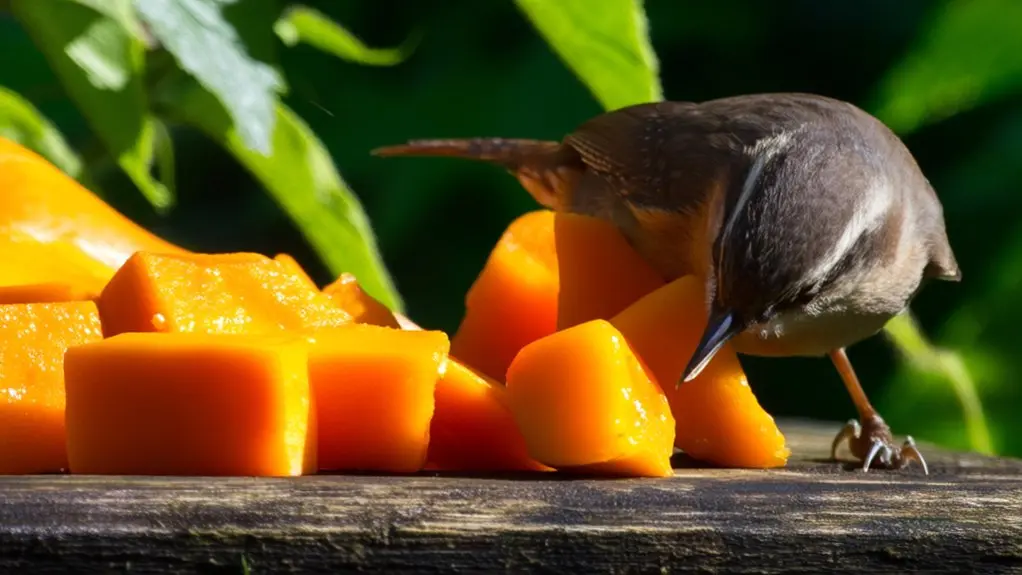
Yes, you can safely feed butternut squash seeds to birds, as they’re packed with protein, healthy fats, and essential vitamins that boost birds’ energy, immunity, and feather health. Just make sure to clean and dry the seeds thoroughly, removing all pulp to avoid mold. Roasting seeds without salt enhances taste and digestibility.
These seeds attract various bird species and even support their health during tougher seasons. Learn how to prepare and serve them properly for the best results.
What Nutrients Do Butternut Squash Seeds Offer Birds?
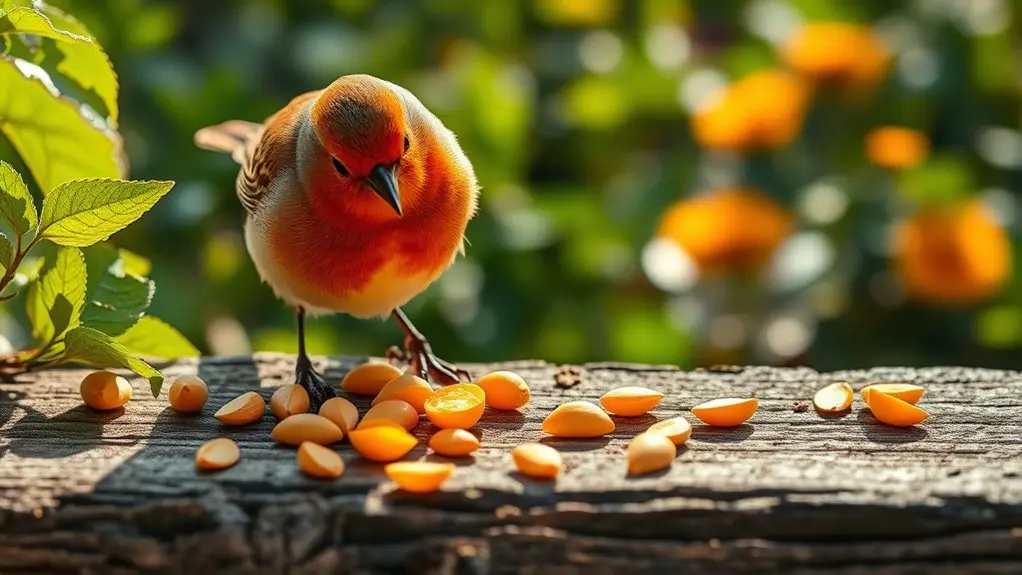
Although often overlooked, butternut squash seeds provide birds with a rich source of essential nutrients, including high-quality protein, healthy fats, and crucial vitamins such as A, B, and E. You’ll find these nutrients support birds’ energy levels and immune health effectively.
The seeds also contain important minerals like magnesium and iron, which are vital for maintaining blood health and metabolic functions. By incorporating butternut squash seeds into their diet, birds can improve feather quality and boost overall vitality, especially during demanding periods like moulting and migration.
These seeds closely mimic the natural food sources birds rely on in the wild, helping them build resistance against environmental stresses and diseases. Offering such nutrient-dense seeds promotes healthy growth and sustained maintenance for your feathered visitors.
Can Birds Safely Eat Raw Butternut Squash Seeds?
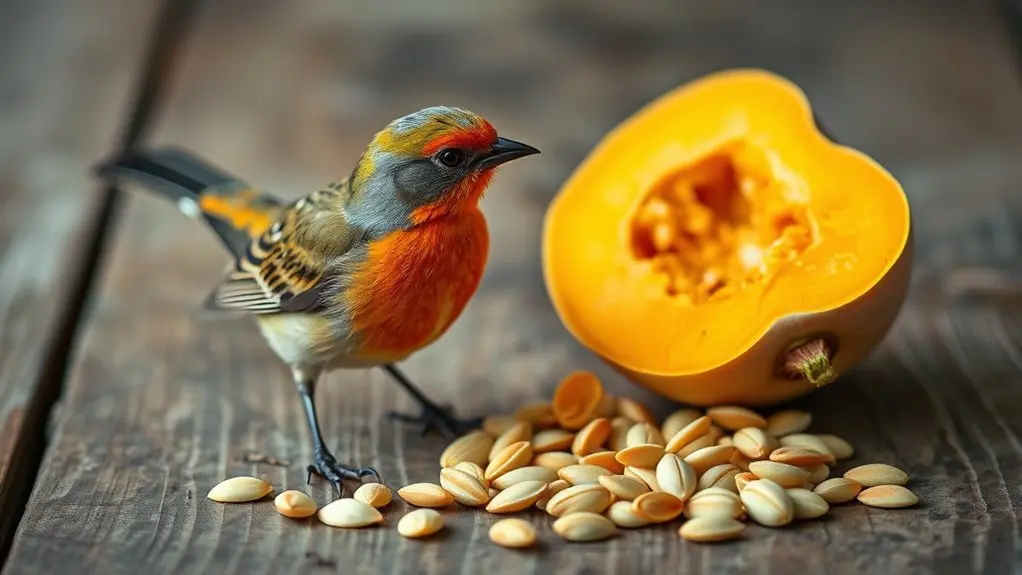
You can safely offer raw butternut squash seeds to birds, but make sure you clean them thoroughly. It’s important to remove all the pulp so the seeds don’t spoil.
Preparing the seeds properly not only makes them easier to digest but also helps keep their nutritional value intact.
Just remember to serve the seeds in moderation.
And keep an eye on your birds for any signs of digestive issues after eating the seeds. Better safe than sorry!
Raw Seed Safety
A key factor in feeding birds raw butternut squash seeds is ensuring the seeds are thoroughly cleaned and free from any pulp, mold, or contaminants. Removing the pulp is essential because it prevents spoilage and reduces the risk of bacterial growth that could harm birds.
You should also inspect seeds carefully for mold or signs of spoilage before offering them.
Since raw seeds are unprocessed, proper cleaning minimizes exposure to parasites or harmful bacteria. While raw seeds can be safe if prepared correctly, roasting them without salt or spices can further improve safety and appeal.
Preparation And Digestibility
When feeding raw butternut squash seeds to birds, thorough cleaning and removal of pulp are essential to guarantee digestibility and safety. The pulp can cause spoilage and mold, posing health risks. Raw seeds are safe, but roasting without salt or spices can improve their appeal and reduce potential contaminants.
To ensure proper preparation and digestibility, follow these steps:
- Clean seeds thoroughly, removing all pulp residues.
- Consider roasting seeds plain to enhance safety and attractiveness.
- Crush or chop seeds to aid smaller birds like finches and sparrows.
- Store prepared seeds in a dry, cool place to prevent mold growth.
How to Clean and Prepare Butternut Squash Seeds for Birds
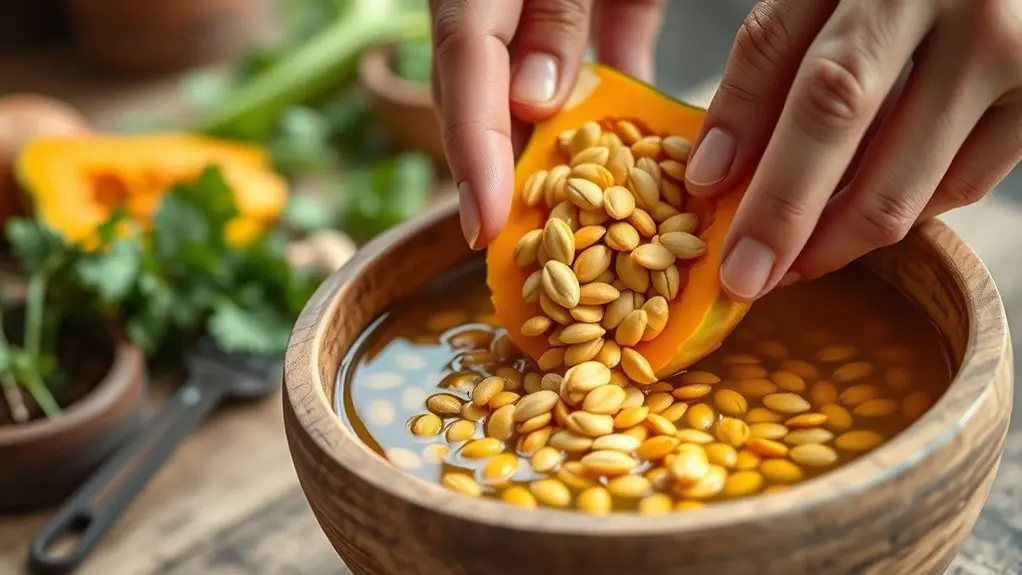
First, you want to remove all the pulp from the butternut squash seeds. This makes them more appealing and easier for birds to digest.
Next, roast the seeds, but be sure not to add any salt or other additives—keeping them plain is safer for the birds and helps the seeds last longer.
Finally, give the seeds a gentle crush. This little step makes it easier for smaller birds to get to all the good nutrients inside.
Removing Pulp Thoroughly
Although removing pulp from butternut squash seeds may seem tedious, doing so thoroughly is essential to prevent mold growth and spoilage. This helps ensure the seeds remain safe and nutritious for birds.
Proper cleaning reduces bacteria and lowers the risk of disease transmission.
Here’s how you can prepare the seeds: First, rinse them under cool water, scrubbing gently to remove all pulp. Then soak the seeds briefly in clean water to loosen any stubborn residue.
After that, dry the seeds completely to stop fungal growth and help them last longer.
Finally, store the seeds in a clean, dry container before feeding. It’s a simple process that really makes a difference!
Roasting And Crushing
Once you’ve thoroughly cleaned and dried the butternut squash seeds, roasting them without any salt or spices enhances their appeal and safety for birds. Roasting improves digestibility while preserving nutrients.
After roasting, crush the seeds using a mortar, pestle, or food processor. This step is essential for smaller birds like finches and sparrows, making the seeds easier to consume.
Remember to clean seeds and feeders regularly to prevent disease spread.
| Step | Purpose | Tools Needed |
|---|---|---|
| Roast seeds | Enhance flavor, guarantee safety | Oven, baking sheet |
| Crush seeds | Aid small bird digestion | Mortar & pestle or processor |
| Clean regularly | Maintain hygiene | Water, mild soap |
Should You Roast Butternut Squash Seeds Before Feeding?
If you want to offer butternut squash seeds to birds safely and appealingly, roasting them without salt or spices is a smart choice. Roasting not only improves flavor but also guarantees the seeds are hygienic and easier to digest.
Here’s why you should consider roasting before feeding:
It eliminates bacteria and mold, making seeds safe for birds. Roasting enhances texture, helping small birds crack and digest seeds easily. Proper roasting retains nutrients like healthy fats and minerals essential for bird health.
Avoid adding salt, spices, or sugar, as these can harm birds. Plain roasting or using light natural oils are your best bet. This way, you keep things safe and tasty for your feathered friends.
How to Serve Butternut Squash Seeds to Attract More Birds
To attract more birds with butternut squash seeds, you should prepare and present them thoughtfully to maximize appeal and accessibility. First, thoroughly clean and remove all pulp to make the seeds more digestible. Next, roast the seeds without salt or spices to enhance flavor safely.
For smaller birds like finches and sparrows, crush or chop the seeds using a mortar, pestle, or food processor to ease consumption. Offer the seeds on bird tables, scattered on the ground, or mixed with other birdseed to draw a diverse range of species.
Finally, regularly clean and disinfect your feeders to prevent disease and maintain a healthy feeding environment. These steps guarantee your feeding efforts attract and support more birds effectively. It’s really about making it easy and safe for them to enjoy!
What Bird Species Enjoy Butternut Squash Seeds?
Understanding which bird species enjoy butternut squash seeds helps you tailor your feeding efforts more effectively. Many wild birds are attracted to these nutrient-rich seeds, making them a valuable addition to your feeding routine.
Here are key species that commonly enjoy butternut squash seeds:
- Finches. They’re drawn to both whole and crushed seeds for their high energy content.
- Jays. These birds appreciate the protein and healthy fats found in the seeds.
- Woodpeckers. Particularly fond of roasted or raw seeds, they rely on them as a nutrient source.
- Robins and Starlings. These versatile feeders also seek out butternut squash seeds during colder months.
How Butternut Squash Seeds Help Birds Stay Healthy
You’ll find that butternut squash seeds offer birds some really important nutrients like protein, healthy fats, and essential vitamins. These help support their immune system and keep their feathers in great shape.
To get the most out of these benefits, it’s key to prepare the seeds properly. Make sure to clean them well and roast them without adding anything extra.
That way, the birds get a natural, nutrient-rich food source that helps them stay healthy during migration, moulting, and the cold winter months.
Nutritional Benefits Overview
Although birds naturally forage for a variety of foods, incorporating butternut squash seeds into their diet provides a concentrated source of essential nutrients like protein, healthy fats, vitamins A, B, and E, as well as magnesium and iron. These nutrients play a key role in supporting birds’ overall health and well-being.
Here’s how butternut squash seeds benefit birds:
- Boost immune function, helping birds resist diseases.
- Supply energy needed for demanding periods like migration and moulting.
- Mimic wild diets, encouraging natural foraging behaviors.
- Provide minerals indispensable for feather and bone health.
Seed Preparation Tips
When preparing butternut squash seeds for birds, you must remove all pulp thoroughly to make the seeds more appealing and easier to digest. Clean seeds reduce spoilage and health risks, ensuring safety. Roasting without salt or spices enhances taste and preserves nutrients.
Crushing seeds helps smaller birds access the goodness. Remember to clean feeders regularly to prevent disease spread.
| Preparation Step | Benefit |
|---|---|
| Remove Pulp | Improves digestibility |
| Clean Seeds | Reduces spoilage |
| Roast Plain | Maintains nutrition |
| Crush Seeds | Helps small birds eat |
Following these tips promotes healthy feeding and supports birds’ well-being effectively. It’s a simple way to keep your feathered friends happy and healthy!
How Butternut Squash Seeds Compare to Commercial Bird Feed
Three key advantages set butternut squash seeds apart from commercial bird feed. You’ll find these seeds offer a natural, nutrient-rich alternative that better mimics wild birds’ diets. When properly cleaned and roasted, they provide enhanced safety and nutrition.
Plus, they support sustainable feeding by reducing food waste.
Consider these points:
- Nutritional Value: They’re rich in proteins, healthy fats, and essential minerals, even surpassing many processed feeds.
- Natural Diet Alignment: These seeds closely resemble what wild birds eat, which helps promote healthier bird populations.
- Sustainability: Reusing seeds cuts down on packaging waste that’s common with commercial products.
- Species Attraction: Butternut squash seeds attract a diverse range of wild birds and often offer better quality than mass-produced feeds.
Understanding these differences can really help you choose the best option for feeding wild birds.
How to Feed Squash Seeds Safely and Prevent Disease
To feed butternut squash seeds safely and prevent disease, you need to clean and prepare the seeds thoroughly before giving them to birds. Start by removing all the pulp so the seeds are more appealing and easier to digest. Washing the seeds well helps get rid of mold, bacteria, and any spoilage that could harm the birds.
Next, roast the seeds without adding salt or spices. This makes them safer and more attractive to birds without introducing anything harmful.
If you’re feeding smaller bird species, try crushing or breaking the seeds using a mortar, pestle, or food processor. This makes the seeds easier for little birds to eat.
Finally, keep things clean by regularly disinfecting feeders and storage containers. This helps prevent the spread of disease and ensures the seeds stay safe to eat. Following these steps encourages healthy feeding habits and keeps your feathered friends happy and healthy.
How Feeding Squash Seeds Supports Sustainable Bird Care
Why choose butternut squash seeds for feeding birds? They provide a natural, nutrient-rich food source that closely mimics birds’ wild diet. This helps support their overall health.
When you feed birds butternut squash seeds, you’re promoting sustainable bird care through a few key benefits.
First, the nutritional benefits. These seeds are high in protein, healthy fats, and essential vitamins like A, B, and E. They also contain minerals such as magnesium and iron, which strengthen immune function.
Packed with protein, healthy fats, vitamins A, B, E, and minerals like magnesium and iron for strong immunity.
Second, waste reduction. Using leftover seeds helps cut down on food waste, which is great for eco-friendly practices.
Third, safety. Properly cleaned and roasted seeds make sure birds get nutritious, safe food without any harmful additives.
Finally, seasonal support. Seeds give birds a boost during important times like moulting, migration, and winter by helping improve their resilience.
Incorporating butternut squash seeds into bird diets supports sustainability and helps foster healthier, stronger bird populations.
Frequently Asked Questions
Can Birds Eat the Flesh of Butternut Squash?
You shouldn’t feed birds the flesh of butternut squash because it’s watery and lacks nutrients.
Instead, offer them the seeds or peels. These are more appealing and beneficial for their diet and health.
Is Butternut Squash Safe for Baby Birds?
You might not expect this, but yes, butternut squash is safe for baby birds if you clean, roast, and crush the seeds properly.
Just make sure the flesh is fresh and unseasoned before offering it to them.
How Often Should I Feed Butternut Squash to Birds?
You should feed butternut squash to birds once or twice a week. Make sure to space servings every 3-4 days.
This helps prevent overfeeding and keeps their diet balanced. Just be sure to combine it with other natural foods for variety.
Can Butternut Squash Cause Any Allergic Reactions in Birds?
Though butternut squash rarely sparks allergic reactions in birds, it’s wise to tread carefully. You should introduce it slowly, watching closely for any signs like swelling or itching to keep your feathered friends safe and healthy.
Just take it one step at a time and keep an eye out. That way, if anything unusual shows up, you can act quickly. Better safe than sorry when it comes to your birds!
What Are Signs a Bird Likes Butternut Squash?
You’ll know a bird likes butternut squash if it enthusiastically pecks at the flesh or seeds. It might also return repeatedly, showing it’s really into the treat.
Birds that enjoy it often consume the roasted seeds and spend more time actively feeding around the squash. You’ll notice persistent foraging behavior, which is a good sign they like it.
Conclusion
You can safely feed birds butternut squash seeds. They pack a surprising 6 grams of protein per ounce, which is great for their health and energy. Just remember to clean and prepare the seeds properly to avoid disease.
Roasting isn’t necessary but it can make feeding easier. By offering these nutritious seeds, you’re supporting sustainable bird care and providing a healthy alternative to commercial feed. It’s a simple way to help your feathered friends thrive year-round.