
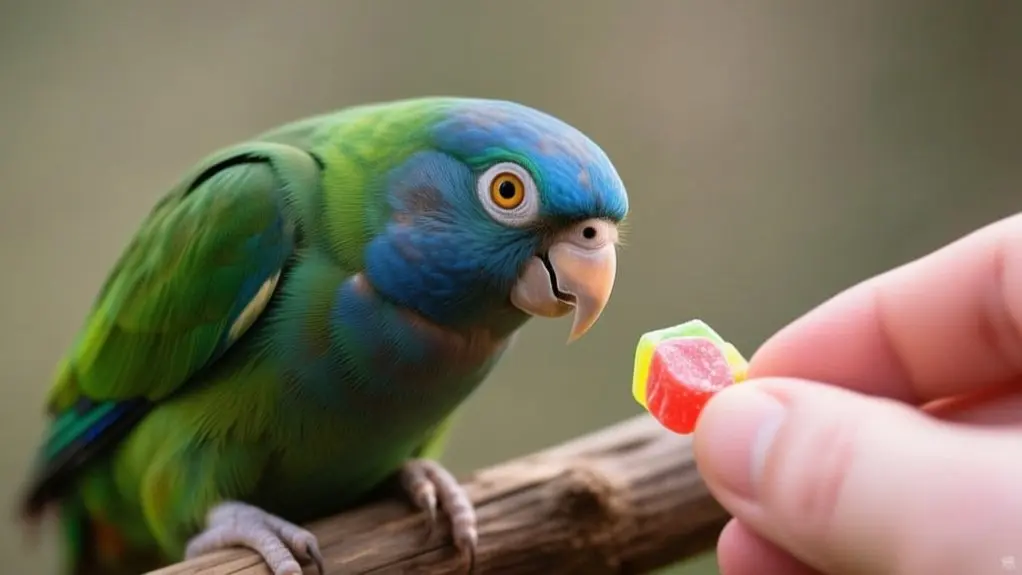
You shouldn’t feed candy to your bird because it has high sugar, artificial additives, and toxic ingredients like xylitol and chocolate. These can cause severe health problems, including hypoglycemia, liver damage, seizures, and digestive distress.
Even small amounts can trigger obesity and long-term organ damage. Hard candies also pose choking risks. So, it’s best to protect your bird by offering natural, safe treats instead.
Understanding these dangers and signs of poisoning can help you keep your bird healthy and safe. Just stick to bird-friendly snacks, and your feathered friend will thank you!
Why Candy Is Dangerous for Your Bird
Why should you avoid giving candy to your bird? Candy contains high levels of sugar and artificial additives that can cause obesity, diabetes, and digestive problems in birds.
Many candies include artificial sweeteners like xylitol, which is toxic and can induce hypoglycemia and liver damage.
Hard candies and those with artificial coloring pose choking risks and may irritate your bird’s digestive tract.
Ingredients such as chocolate or caffeine, found in some candies, are highly toxic and can result in seizures or death.
Feeding candy disrupts your bird’s natural diet and nutrient balance, leading to long-term health issues.
Harmful Ingredients in Candy for Birds
You should know that many ingredients in candy can be harmful to birds. For example, artificial sweeteners like xylitol and certain compounds found in chocolate are toxic to them. Eating these can lead to serious health problems such as low blood sugar, organ damage, or even be fatal.
On top of that, candy often has a lot of sugar and fat, which isn’t good for your bird either. Over time, this can cause chronic issues like obesity and heart disease.
Toxic Components In Candy
Although candy might seem harmless, it contains several toxic components that pose serious health risks to birds. Ingredients like xylitol, theobromine, and caffeine are particularly dangerous.
Plus, high sugar content, artificial additives, colors, and preservatives can also negatively affect your bird’s health. Hard candies come with their own risks too, like choking or causing injuries.
Knowing about these toxic elements can really help you keep your feathered friend safe.
| Toxic Component | Common Sources | Risks to Birds |
|---|---|---|
| Xylitol | Sugar-free candies | Hypoglycemia, liver damage, death |
| Theobromine & Caffeine | Chocolate candies | Heart problems, seizures, death |
| Artificial additives | Most candies | Allergic reactions, toxicity |
| Hard candies | Lollipops, mints | Choking, dental/internal injuries |
Effects Of Candy Ingredients
When birds consume candy containing harmful ingredients like xylitol, chocolate, or caffeine, they face immediate and severe health risks including hypoglycemia, poisoning, and organ failure.
Xylitol, a common artificial sweetener, triggers rapid hypoglycemia and liver failure in birds. Chocolate and caffeine contain toxic compounds that induce neurological symptoms such as seizures and vomiting.
Additionally, the excessive sugar and fat content in candy predispose birds to obesity and fatty liver disease, compromising their long-term health.
Preservatives, artificial colors, and chemical additives often irritate the digestive tract or cause allergic reactions, further endangering avian well-being.
Because birds metabolize these substances differently from humans, even small amounts can be lethal.
Health Risks of Candy for Birds
Because birds have small bodies and sensitive metabolisms, even tiny amounts of candy can pose severe health risks. Candy often contains harmful substances that disrupt avian health quickly and severely. You should be aware of these risks to protect your bird effectively.
Artificial sweeteners like xylitol can cause hypoglycemia, liver damage, and even death. High sugar and fat content contribute to obesity and fatty liver disease. Toxic ingredients such as chocolate, caffeine, and certain dyes endanger birds.
Candy also disrupts digestion, causing diarrhea, vomiting, and gastrointestinal distress. Birds’ low body weight makes them extremely vulnerable to even minimal toxin exposure.
Signs Your Bird Is Sick From Candy
If your bird eats candy, you might first notice some early warning signs like vomiting, diarrhea, or even hyperactivity. These symptoms can be your bird’s way of telling you something’s wrong.
In more serious cases, things like tremors, seizures, or trouble breathing can happen. These are clear signs that your bird has ingested something toxic and needs immediate help.
It’s also really important to keep an eye out for signs like lethargy or irregular heartbeats. Catching these early can make a big difference in preventing life-threatening problems.
Early Warning Signs
Although candy might seem harmless, it can cause serious health issues in birds. So, recognizing early warning signs is really important. If your bird eats candy, watch closely for any sudden changes in behavior or physical condition that could mean toxicity.
Catching these signs early means you can act quickly and avoid bigger problems down the line.
Pay attention to these signs:
- Vomiting or diarrhea, which shows gastrointestinal distress
- Hyperactivity or tremors, meaning neurological irritation
- Increased or irregular heartbeat, a sign of cardiovascular stress
- Lethargy or weakness, indicating systemic toxicity
- Sudden behavioral changes like agitation or withdrawal
If you notice any of these symptoms, take away the candy immediately and talk to an avian veterinarian.
Spotting these issues early helps keep your bird healthy before things get worse.
Severe Symptom Indicators
How can you tell when your bird’s candy consumption has escalated from mild discomfort to a severe health crisis? Look for hyperactivity, seizures, or difficulty breathing. These signs indicate serious toxicity and shouldn’t be ignored.
An increased or irregular heartbeat signals potential cardiac distress that requires immediate attention. If you notice tremors, weakness, or paralysis, the bird’s nervous system might be compromised by toxic substances like artificial sweeteners or chocolate.
Vomiting, diarrhea, or sudden lethargy suggest gastrointestinal upset or systemic poisoning. Both conditions demand urgent veterinary care.
Rapid symptom onset or worsening condition after candy ingestion is a life-threatening emergency.
Act quickly if you observe these signs to prevent irreversible damage. Prompt intervention is critical to safeguard your bird’s health and improve its chances of recovery.
Immediate Steps If Your Bird Eats Candy
If your bird eats candy, especially one containing chocolate, xylitol, or artificial sweeteners, contact a veterinarian or Pet Poison Helpline immediately. Prompt action is vital to prevent severe toxicity.
Make sure to provide detailed information about the candy type, quantity, and ingestion time to help with diagnosis and treatment.
Meanwhile, keep a close eye on your bird for symptoms like vomiting, diarrhea, hyperactivity, or breathing difficulties.
Follow all veterinarian instructions carefully. This might include bringing your bird in for an examination or giving activated charcoal as directed.
Note the candy type, amount, and when your bird ate it. Watch for any signs like vomiting, diarrhea, hyperactivity, or trouble breathing.
Reach out to a veterinarian or Pet Poison Helpline right away. Be ready to take your bird to a professional if they say it’s necessary.
Only give treatments if the vet tells you to.
Bird-Safe Treats to Replace Candy
You can swap out candy for bird-safe treats like small pieces of fresh fruit, unsweetened dried berries, or veggies such as carrots and peas.
Nuts like almonds and walnuts are also great options, but remember to offer them in moderation.
There are even commercial treats made without sugar that make safe alternatives. Just be sure to remove any seeds and pits before giving treats to your bird.
And don’t forget to pick treats that suit your bird’s species and size to keep them healthy and avoid any toxins or health risks.
Healthy Fruit Alternatives
Although candy might seem like a tempting treat, offering your bird healthy fruit alternatives guarantees their nutrition and safety. Fruits provide natural sugars, essential vitamins, and antioxidants without harmful additives found in candy.
Always remove seeds and pits from fruits to prevent toxin exposure.
Consider these bird-safe fruit options:
- Small pieces of berries, apple slices (seedless), and peeled pear segments
- Fresh mango, watermelon, and melon for hydration and low fat
- Blueberries and kiwi, rich in antioxidants and natural sweetness
- Dried apricots, cranberries, and figs without added sugars or preservatives (in moderation)
- Seedless cherries, peaches, and apricots with pits removed
These fruits aren’t only safe but also delicious for your feathered friend. Mixing them up keeps snack time interesting and nutritious. Just remember, moderation is key when offering dried fruits.
Nutritious Seed Options
When selecting bird-safe treats to replace candy, nutritious seed options offer essential fats and proteins that support your bird’s health. Seeds like millet, sunflower, and safflower provide valuable nutrients and are widely favored by many bird species.
You should choose unsalted, unroasted seeds to prevent exposure to excess sodium and unhealthy fats.
Including flaxseed and chia seeds introduces omega-3 fatty acids, which enhance plumage quality and overall well-being. Offering a small amount of mixed seeds can serve as a healthier treat alternative to sugary candy.
However, you must feed seeds in moderation and verify they complement a balanced diet.
Avoid processed seed mixes high in fat or sugar that mimic candy, as these can undermine your bird’s nutritional status and health.
It’s always better to keep things simple and natural when it comes to your bird’s treats!
Safe Vegetable Snacks
Since candy contains harmful ingredients like sugar and artificial additives, switching to safe vegetable snacks provides a healthier alternative for your bird. Vegetables supply essential vitamins and minerals without exposing your bird to toxic substances found in candy.
Before serving, always wash vegetables thoroughly to eliminate pesticides and contaminants. Consider these bird-safe vegetable treats to replace candy:
- Carrots: rich in beta-carotene and fiber
- Bell peppers: high in vitamin C and antioxidants
- Cucumbers: hydrating and low-calorie
- Leafy greens (spinach, kale): provide iron and calcium
- Frozen peas or corn: nutritious, low-calorie snacks
Offering these vegetables not only satisfies your bird’s natural cravings but also supports their overall health and well-being. Avoid candy to protect your bird from sugar and artificial additives that can be harmful.
Preventing Your Bird From Accessing Candy
To protect your bird from the dangers of candy ingestion, you need to store sweets securely in sealed, bird-proof containers or cabinets. Keep all candy out of reach, avoiding countertops, tables, or open shelves where your bird can get to them.
Store candy securely in sealed, bird-proof containers and keep it out of your bird’s reach.
Make sure everyone in the house knows the risks of feeding candy to birds. Ask visitors to be careful and not leave candy unattended.
It’s also a good idea to regularly check common areas for dropped wrappers or candy pieces. Even small amounts can be harmful to your bird.
Try not to leave candy near open windows or doors, since birds might get curious and try to investigate.
Staying consistent with these simple steps helps keep your bird safe and healthy.
Common Myths About Birds Eating Candy
Although candy might seem like an occasional harmless treat, you should understand that many common beliefs about birds eating candy are misleading and dangerous. You might hear these myths, but they risk your bird’s health.
For example, some people think small amounts of candy are safe for birds. Or that birds can digest human treats without problems. Others believe natural or fruit-flavored candies are harmless. Some even say candy poses no significant health risks because of low toxicity. And that additives in candy don’t affect birds negatively.
The truth is, candies often contain toxic substances like artificial sweeteners, preservatives, and high sugar levels. These ingredients can cause poisoning or severe digestive issues. Even tiny quantities of harmful ingredients may lead to serious illness or death.
Xylitol in Candy: Why It’s Dangerous for Birds
When you offer candy to birds, you need to be especially cautious about xylitol, a sugar substitute commonly found in sugarless gum, candies, and baked goods. Xylitol is highly toxic to birds because it triggers a rapid release of insulin, causing severe hypoglycemia.
Exercise caution with xylitol in candies, as it causes dangerous insulin spikes and severe hypoglycemia in birds.
Even small amounts can be dangerous due to birds’ low body weight and heightened sensitivity. Ingesting xylitol may lead to liver damage, seizures, and potentially death if untreated.
Symptoms can develop quickly, so avoiding any candy containing xylitol is essential to protect your bird’s health. Understanding these risks helps you make informed decisions and prevents accidental poisoning.
Always check ingredients before offering treats and prioritize your bird’s safety by steering clear of xylitol-containing products.
When to Contact a Vet After Candy Exposure
If your bird consumes candy, especially those containing harmful substances like xylitol, chocolate, or artificial sweeteners, you should contact a veterinarian immediately. Prompt vet consultation is essential since even small amounts may be toxic.
When you call, provide detailed information about the type of candy ingested, quantity consumed, time since ingestion, any observable symptoms such as vomiting or difficulty breathing, and your bird’s species and general health status.
Keep a close eye on your bird for signs like diarrhea, hyperactivity, or respiratory distress. If you notice any symptoms, seek urgent veterinary care right away.
Make sure to follow all instructions given by the veterinarian, including treatment protocols and observation periods, to keep your bird safe and help it recover. Early intervention really improves outcomes after candy exposure.
Frequently Asked Questions
Can Wild Birds Eat Candy Found Outdoors?
You shouldn’t let wild birds eat candy found outdoors because it often contains harmful artificial sweeteners and additives. These substances can cause toxicity, digestive blockages, and disrupt their natural diet. This can threaten their health and survival.
It’s better to stick with foods that are safe for birds, like seeds and fruits, instead of risking their well-being with candy. Trust me, they’ll thank you for it!
Are There Any Types of Candy Safe for Birds?
You won’t find any candy safe for birds because all contain harmful sugars, artificial sweeteners, or toxins. Even natural or organic options pose risks like digestive irritation, toxicity, or choking hazards. So, it’s best to avoid feeding candy to birds entirely.
When it comes to their health, it’s always better to stick with bird-safe treats like fresh fruits or seeds. Candy just isn’t worth the risk. Your feathered friends will thank you for keeping their diet clean and safe!
How Does Candy Affect Different Bird Species Differently?
You’ll find candy affects bird species differently due to variations in metabolism, size, and sensitivity. Smaller birds and species like parrots metabolize sugars poorly, increasing toxicity risk. Meanwhile, sturdier birds may tolerate sugars but still face health issues.
It’s important to remember that even if some birds seem fine with candy, it can still be harmful over time. So, it’s best to avoid giving candy to any birds whenever possible. They thrive on natural foods that suit their unique needs.
Can Candy Cause Long-Term Behavioral Changes in Birds?
Yes, candy can cause long-term behavioral changes in birds by inducing physiological stress, altering their metabolism, and disrupting gut microbiomes.
These changes may lead you to observe increased aggression, anxiety, feather plucking, or social withdrawal over time.
Do Baby Birds React Differently to Candy Than Adults?
Yes, baby birds react differently to candy than adults because their immature organs and delicate systems make them more vulnerable to toxins. This can cause severe symptoms like seizures or hypoglycemia even from small candy amounts.
Conclusion
When it comes to candy and your bird, remember: “An ounce of prevention is worth a pound of cure.” Candy contains harmful ingredients like xylitol and excessive sugars that pose serious health risks. If your bird consumes candy, act quickly and consult a vet immediately.
Avoiding access is the safest approach to protect your feathered friend from toxicity and illness. Staying informed and cautious ensures your bird’s health remains uncompromised. It’s always better to be safe than sorry when it comes to what your bird eats.