
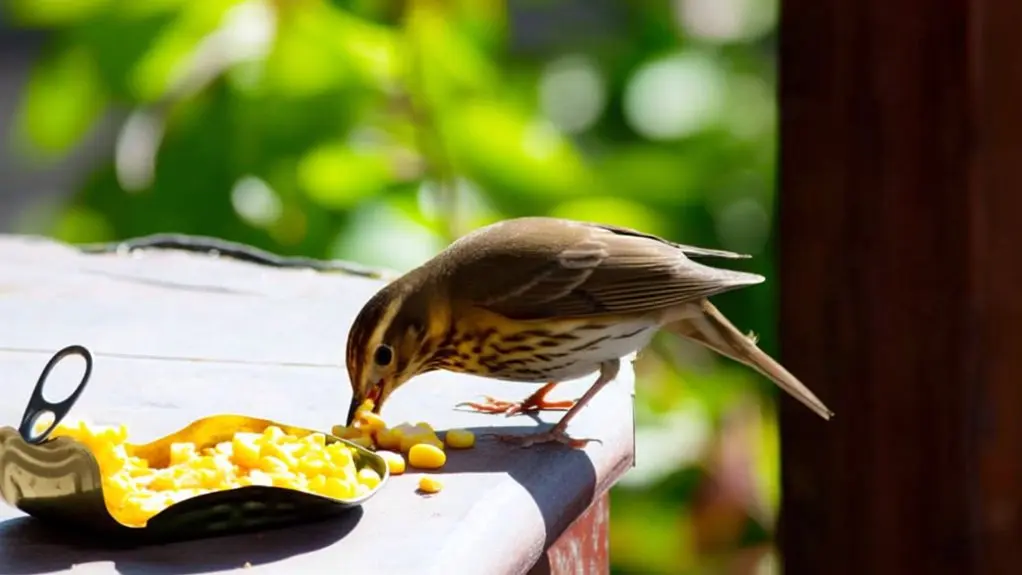
You can feed canned corn to birds safely, but only if you drain and rinse it thoroughly to remove added salts, sugars, and preservatives. Avoid seasoning it. Serve in shallow dishes, and offer it just once or twice a week as a treat, not a staple.
Ground-feeders like doves and sparrows are most likely to enjoy it. Just remember to clean and monitor the feeding area regularly to prevent mold and illness. Keep these best practices in mind to guarantee safe, healthy feeding.
Can Birds Safely Eat Canned Corn?
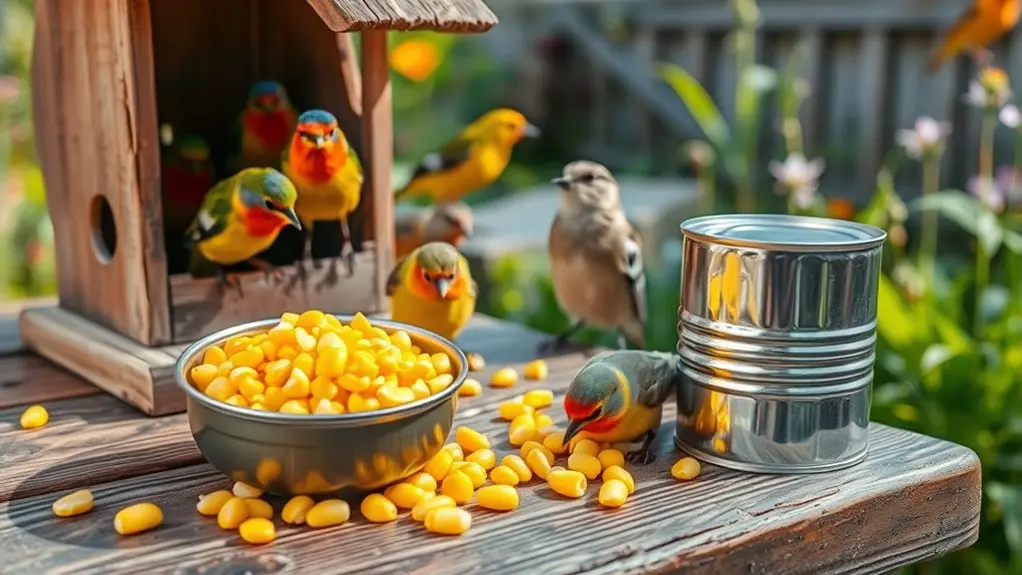
Although canned corn can be a convenient treat, you should only offer it to birds if it’s unsalted and free from preservatives or flavorings. Salt and additives can harm birds, so rinsing canned corn thoroughly before feeding is essential to remove any residues.
Keep in mind that canned corn’s high moisture content can encourage mold growth, so offer it sparingly and avoid leaving leftovers exposed. Birds often find canned corn appealing because it’s soft and moist, especially during breeding or nesting seasons when they need extra hydration.
However, canned corn lacks the natural fiber and nutrients found in fresh or dried corn, so it shouldn’t replace a balanced diet. Think of canned corn as an occasional supplement rather than a staple food for birds.
What Is Canned Corn? How It Differs From Fresh Corn
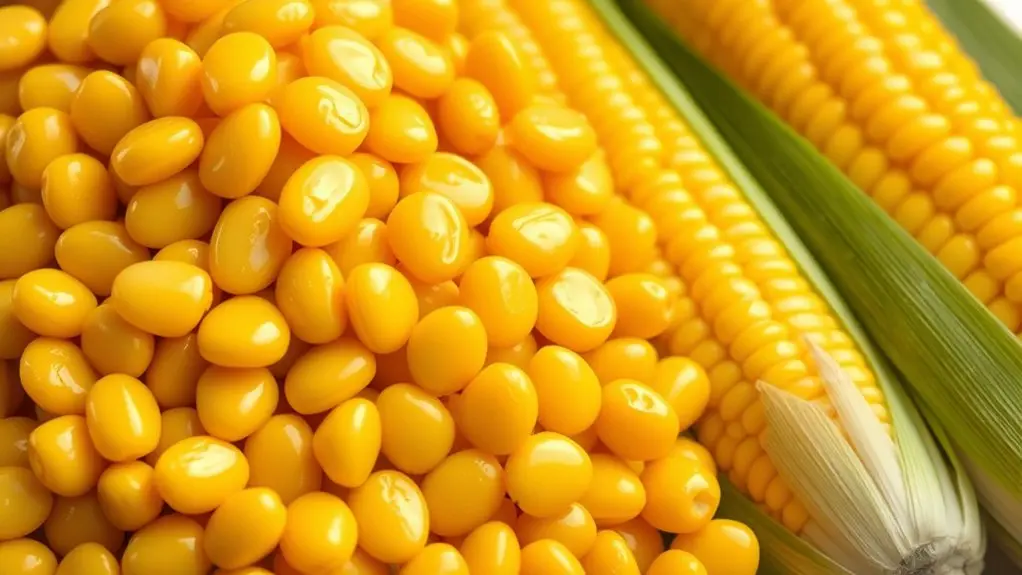
When you choose canned corn, you’re selecting a product that’s been pre-cooked and sealed in a heat-processed container. It’s often preserved in brine or water, which helps extend its shelf life.
Unlike fresh corn, which is harvested recently and can be eaten raw or cooked directly from the cob, canned corn goes through preservation that lets you store it year-round.
You should know canned corn often contains added salt, sugar, or preservatives, which fresh corn doesn’t have. This processing also changes the texture a bit.
Canned corn tends to be softer and sometimes mushier, while fresh corn stays firm and juicy.
Another thing to keep in mind is convenience. Canned corn is easy to use, but its sodium content is usually higher than fresh corn.
Which Bird Species Are Most Likely to Eat Canned Corn?
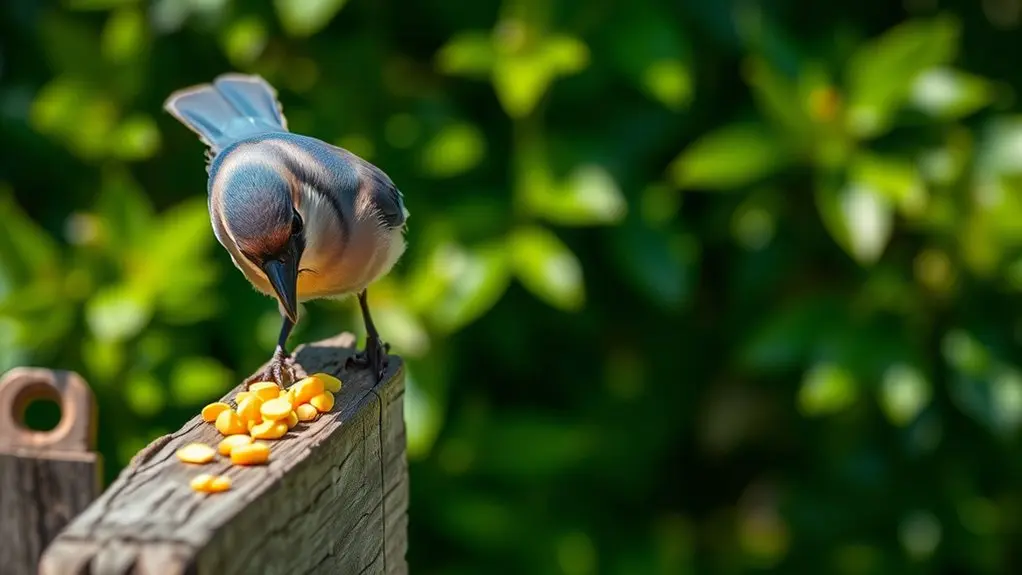
You’ll find that ground-feeding birds like doves, sparrows, and juncos are the most likely to eat canned corn because of its soft texture. It’s easy for them to peck at and digest.
Larger birds, such as crows and waterfowl, might eat it too, but usually only when it’s cut into smaller pieces and easy to handle.
Knowing these preferences can help you offer corn in ways that attract the right birds.
Common Corn-Eating Birds
If you offer canned corn, you’ll notice that several bird species readily take advantage of this food source. Most commonly, you’ll see:
- Crows, ravens, and jays. These intelligent birds frequently consume canned corn.
- Waterfowl such as ducks and geese. They’re drawn to the moisture and sweetness.
- Ground-feeding songbirds like sparrows, doves, and quail. They may eat corn if it’s accessible on the ground.
- Larger birds including turkeys and some raptors. They’ll sample canned corn when it’s available in their environment.
While birds generally prefer whole or cracked corn, opportunistic feeders won’t hesitate to consume canned corn. The moisture content in canned corn especially attracts waterfowl and certain songbirds.
Bird Preferences For Corn
Which birds are most likely to eat canned corn depends largely on their feeding habits and preferences. Jays, crows, and waterfowl such as ducks and geese favor canned corn because its soft kernels are easier for them to consume.
On the other hand, songbirds like sparrows and doves usually prefer cracked or whole dried corn. They find canned varieties less appealing.
Ground foragers like blackbirds and starlings might occasionally eat canned corn if it’s easily accessible. But many birds avoid it due to its high moisture and salt content.
Are There Any Risks in Feeding Birds Canned Corn?
Although canned corn might seem like a convenient snack for birds, it carries several risks you should consider before offering it.
First, canned corn often contains added salt, sugars, and preservatives that can be harmful to birds.
Second, its high moisture content can promote mold growth if not stored or cleaned properly.
Third, additives or preservatives in canned corn might be toxic or irritating to certain bird species.
Fourth, feeding canned corn without thorough rinsing exposes birds to residual chemicals from the canning process.
Also, relying too much on canned corn can cause nutritional imbalances since it lacks the natural variety of fresh or dried corn.
Keep these risks in mind to protect birds’ health and make sure their diet stays balanced.
It’s always better to offer them more natural and varied food options whenever possible.
How to Prepare Canned Corn Before Offering to Birds
When preparing canned corn for birds, you should first drain it thoroughly to remove any excess liquid.
Next, rinse the corn with fresh water to eliminate preservatives, salt, or sugar that might harm the birds.
Avoid adding any seasonings, butter, or salt, as these can be toxic.
To make the corn more appealing, heat it slightly to enhance its aroma. Just be sure to let it cool to a safe temperature before offering it to the birds.
Finally, serve the prepared corn in a shallow dish or on a clean platform feeder to minimize spillage and prevent contamination.
Following these steps guarantees the canned corn is safe and suitable for bird consumption.
Best Ways to Serve Canned Corn to Wild Birds
To serve canned corn to wild birds safely and effectively, you need to offer it plain and thoroughly rinsed to remove any salt or preservatives.
Here are the best ways to serve it:
Use shallow dishes or trays to prevent spills and make access easier for ground-feeding birds.
Shallow dishes help prevent spills and make feeding easier for ground-feeding birds.
Place the corn on elevated platforms or feeders to reduce contamination from dirt and predators.
Avoid mixing canned corn with sauces, spices, or sugar, which can harm birds and disrupt their diet.
Offer corn primarily during colder months when natural food is scarce, supplementing their nutrition without replacing natural foraging.
How Often Should You Feed Birds Canned Corn?
Once you’ve prepared canned corn properly for your feathered visitors, it’s important to think about how often you should offer it. Feeding canned corn once or twice a week is ideal, as it supplements their diet without causing dependency.
Offering it more frequently risks mold growth and spoilage in feeders, which can endanger birds’ health.
Remember, canned corn should never replace their primary food source, especially during critical times like breeding or migration. Always rinse the corn thoroughly to remove excess salt or preservatives before feeding.
Alternatives to Canned Corn That Birds Prefer
You’ll notice that birds tend to prefer natural seeds like sunflower hearts and millet instead of canned corn. That’s because these options not only offer better nutrition but are also safer for them.
If you use bird feeders designed for whole or cracked seeds, you’re more likely to attract sparrows, finches, and doves. It’s a simple way to make your feeders more appealing.
By switching to these natural alternatives, you’re supporting local wildlife in a healthier way—without the risks that come with processed corn.
It’s a small change that makes a big difference!
Preferred Natural Seeds
Although canned corn may seem convenient, birds show a clear preference for natural seeds like sunflower hearts and white proso millet. These options offer better nutrition and attraction for local birds.
If you want to support them effectively, consider these top natural seed options:
- Black oil sunflower seeds are favored by a wide variety of backyard birds because of their high oil content and thin shells.
- White proso millet is popular with sparrows, finches, and small songbirds since it’s small and easy to eat.
- Cracked sunflower hearts are easier for smaller birds to eat and packed with essential nutrients.
- Fresh or dried millet reduces mold risk and provides consistent nourishment compared to canned corn.
Choosing these seeds not only enhances bird health but also keeps your feeders clean and inviting. It’s a simple way to make your backyard more bird-friendly!
Effective Bird Feeders
How can you create a bird feeder setup that truly attracts and nurtures a variety of local species? Start by choosing feeders that keep seeds dry and fresh, like platform or tray feeders with proper drainage. Avoid canned corn; instead, offer natural, whole, or dried seeds such as sunflower, millet, and peanuts.
Use separate feeders for each seed type to draw diverse birds. Enhance your feeding station by including suet, dried fruits, or nectar, catering to specific species’ preferences.
Maintaining cleanliness is vital. Regularly clean feeders to prevent mold, spoilage, and disease spread.
How to Tell If Birds Like or Avoid Canned Corn
When observing birds around canned corn, pay close attention to their feeding behavior to determine their preference.
Birds tend to be cautious of canned corn due to additives and texture differences, so their reactions reveal much.
Here’s how to tell if they like or avoid it:
Frequent visits and pecking indicate acceptance and appeal.
Ignoring the canned corn or minimal pecking signals avoidance.
Watch for hesitation or quick retreats, which suggest dislike.
It’s best to monitor over several days to confirm consistent behavior patterns.
That way, you get a clearer picture of what the birds really think about the canned corn.
Tips for Safe and Enjoyable Bird Feeding With Corn
If you want to feed birds canned corn safely, make sure to rinse it really well to get rid of extra sodium. Also, try to pick varieties that don’t have added sugars or preservatives.
It’s best to use corn just as a little treat alongside a varied diet to keep the birds healthy and coming back for more.
And here’s a tip: set up your feeding spot somewhere quiet. This will help attract ground-feeders like doves and sparrows, who prefer a calm environment.
Corn Feeding Safety
Although canned corn can be a convenient treat for birds, you must guarantee it contains no added salts, sugars, or preservatives. These can harm their health, so it’s really important to check the label before offering any.
To feed corn safely and enjoyably, follow these guidelines:
- Rinse canned corn thoroughly to remove any residual sodium or additives.
- Serve the corn at room temperature to avoid shocking the birds.
- Offer canned corn only in moderation to prevent spoilage and mold growth.
- Discard any corn left out for extended periods to eliminate the risk of illness.
Attracting Birds Effectively
Since birds like jays, crows, and waterfowl are drawn to canned corn, you can attract them effectively by using platform or tray feeders placed close to the ground. Always serve corn at room temperature, free from mold or spoilage, and never add seasonings, salt, or butter.
Clean feeders regularly and remove uneaten corn to prevent health risks and mold growth.
| Tip | Reason |
|---|---|
| Use platform feeders close to ground | Attracts ground-feeding birds |
| Serve corn plain and fresh | Ensures bird safety and appeal |
| Clean feeders often | Prevents disease and mold |
Following these steps keeps feeding safe and enjoyable for both you and the birds.
Frequently Asked Questions
Can Canned Corn Cause Allergies in Birds?
Yes, canned corn can cause allergies in birds because of preservatives, additives, and high sodium levels. These ingredients might not sit well with your feathered friends.
You should watch for signs like itching, swelling, or breathing issues. It’s important to keep an eye out so you can act quickly if needed.
To keep your birds safe and healthy, it’s better to choose fresh corn whenever possible. Fresh options usually don’t have those added chemicals that might cause problems.
Is Canned Corn Suitable for Baby Birds?
No, canned corn isn’t suitable for baby birds. It contains additives and lacks essential nutrients they need.
You should provide specialized, species-appropriate foods like insects or formulated feeds. These help support their healthy growth and development.
Can Canned Corn Attract Unwanted Pests or Animals?
Yes, canned corn can certainly summon sneaky, scurrying species. You’ll attract mice, raccoons, and insects due to its sweetness and moisture. So, avoid leaving it out to prevent pest problems and protect your bird-friendly space.
Just remember, these critters are always on the lookout for an easy snack. Keeping canned corn sealed and stored properly helps keep your area pest-free. It’s a simple step that makes a big difference!
How Should Canned Corn Be Stored for Bird Feeding?
You should store canned corn in a cool, dry place, tightly sealed. Once opened, refrigerate it in an airtight container and use within 2-3 days.
Make sure to label it with the date to guarantee freshness for bird feeding. This way, you’ll always know when it’s best to use up the corn. It helps keep the birds happy and healthy!
Does Canned Corn Affect Bird Migration Patterns?
No, canned corn doesn’t affect bird migration patterns. You should know migration relies on environmental cues, not food.
While canned corn might alter local behavior temporarily, it won’t change birds’ long-term migratory routes or timing. So, it’s not something to worry about when thinking about migration.
Conclusion
Feeding birds canned corn is like offering a simple gateway to a hidden garden. It’s a small gesture that can open up a world of connection with nature. But remember, just as a key must fit the lock, canned corn needs careful preparation and moderation to keep birds healthy.
By choosing wisely and feeding thoughtfully, you uncover not only their nutrition but also the joy of watching vibrant life thrive right outside your window.