
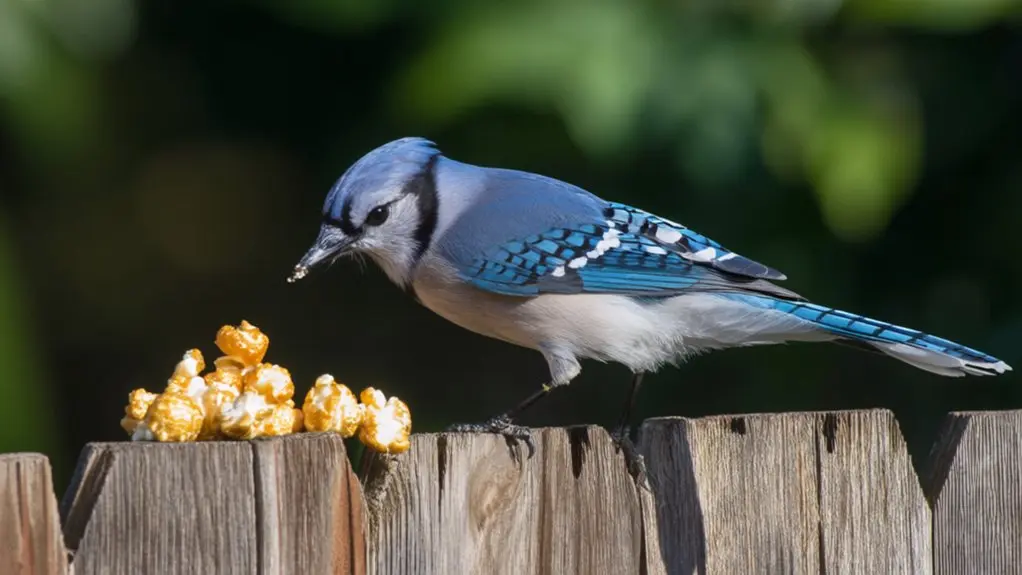
You shouldn’t feed birds caramel popcorn because its high sugar content, artificial additives, and sticky coating can cause choking, digestive blockages, and health problems like obesity and toxicity. Caramel’s adhesive texture poses physical hazards, while additives may trigger allergic reactions.
Plain popcorn is safer but should be given sparingly and prepared properly. Understanding the risks and safer alternatives will help you protect birds’ health and support their natural diet.
Is Caramel Popcorn Safe for Birds?
Although caramel popcorn might seem like a harmless treat, it’s unsafe for birds due to its high sugar content, butter, and artificial additives. These components can disrupt a bird’s metabolism and digestive system.
The sticky caramel coating poses a physical risk, as it can stick to the bird’s beak or throat, increasing the chance of choking or digestive blockages.
Consuming caramel popcorn may result in digestive upset, obesity, and even toxicity, since birds lack the enzymes to process these substances efficiently.
Plus, caramel popcorn offers no nutritional value for birds, making it an unnecessary and hazardous addition to their diet.
To keep your bird safe, avoid feeding them caramel-coated popcorn. Instead, plain, untreated popcorn is a much safer alternative.
Why Sugar and Additives Are Bad for Birds
Sugar and additives in caramel popcorn pose significant health risks to birds. The high sugar content can lead to obesity, diabetes, and metabolic disorders, which can impair liver and kidney functions. Sugar also disrupts their digestive system, causing long-term harm.
Additives like artificial flavors, preservatives, and colorings may be toxic or cause allergic reactions. Plus, the sticky caramel coating can be a choking hazard or lead to dental issues, especially for birds with delicate beaks.
Feeding sugary treats encourages birds to favor unhealthy human foods, which diminishes their natural foraging instincts and nutritional balance.
Plain vs. Caramel Popcorn: What’s Better for Birds?
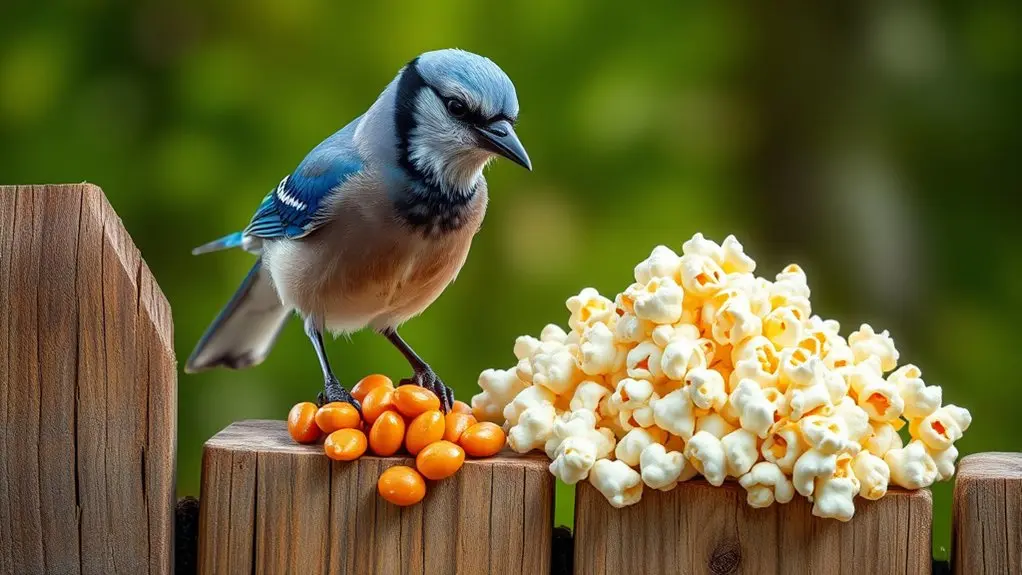
Before feeding birds, it’s important to know the nutritional differences between plain and caramel popcorn. See, caramel popcorn has additives and a lot of sugar, which isn’t great for a bird’s health or digestion.
Nutritional Differences Explained
When comparing plain and caramel popcorn, you’ll find that plain popcorn offers a healthier nutritional profile for birds. It provides beneficial fiber and essential minerals without added sugars or harmful additives.
In contrast, caramel popcorn contains high sugar levels, artificial ingredients, and sometimes butter. These can disrupt a bird’s digestive system and overall health.
| Nutrient/Factor | Plain Popcorn | Caramel Popcorn |
|---|---|---|
| Sugar Content | Low | High |
| Fiber | Present (beneficial) | Minimal |
| Calories | Moderate | High |
| Additives | None | Artificial, Butter |
| Impact on Birds | Supports digestion | Potentially harmful |
Choosing plain popcorn helps you provide a safer, more nutritious treat for your bird. It’s a simple way to keep your feathered friend happy and healthy!
Additives Impact On Birds
Although plain popcorn lacks the added sugars and artificial ingredients found in caramel popcorn, these additives in caramel varieties pose significant risks to birds. The high sugar concentration in caramel popcorn can disrupt a bird’s metabolism, increasing the likelihood of obesity, diabetes, and other chronic conditions.
Additionally, artificial flavors and caramel coloring often contain chemical compounds that may irritate or damage a bird’s delicate digestive tract. These substances aren’t metabolized efficiently by birds, potentially causing toxicity or digestive distress.
In contrast, plain popcorn, free from these harmful additives, presents a safer option for avian consumption. By avoiding added sugars, preservatives, and synthetic flavorings, you reduce health risks and support your bird’s well-being more effectively.
Feeding Safety Considerations
Since birds have sensitive digestive systems, offering plain, air-popped popcorn is the safest choice compared to caramel-coated varieties. Caramel popcorn contains sugar, butter, and artificial flavorings that can cause digestive distress, obesity, and metabolic disorders in birds.
The sticky coating also presents choking risks and dental issues, especially for smaller species. You should limit popcorn treats to plain, unsalted, air-popped kernels only.
| Aspect | Plain Popcorn | Caramel Popcorn |
|---|---|---|
| Ingredients | Corn kernels only | Sugar, butter, artificial flavorings |
| Health Risk | Minimal if moderate | High: obesity, diabetes, digestive problems |
| Physical Hazard | Safe | Sticky coating causes choking, dental issues |
Health Risks of Feeding Sticky Caramel Popcorn
Because sticky caramel popcorn has an adhesive texture, it poses a significant choking hazard for birds. You should avoid offering it, as the sticky coating can be difficult for birds to swallow and may cause airway obstruction.
Sticky caramel popcorn is a choking hazard for birds due to its adhesive texture and swallowing difficulty.
Also, the high sugar content disrupts their digestive system, potentially leading to gastrointestinal distress. Ingredients like butter and corn syrup often contain additives or toxins that can harm avian health.
When birds consume caramel popcorn, its sticky nature increases the risk of digestive impaction, which is a serious condition where food blocks the digestive tract.
Plus, leftover caramel popcorn left uncleaned can promote mold growth, and that mold produces toxins dangerous to birds.
Which Birds Are Likely to Eat Caramel Popcorn?
You’ll find that omnivorous birds like Jays, Crows, and Pigeons are most likely to munch on caramel popcorn because they’ve pretty opportunistic diets. They’re not too picky and will go for a variety of foods.
Smaller birds, like Finches and Chickadees, might take a little nibble on plain kernels if they’re broken into tiny pieces. But usually, they steer clear of the caramel coating since it’s not really their thing.
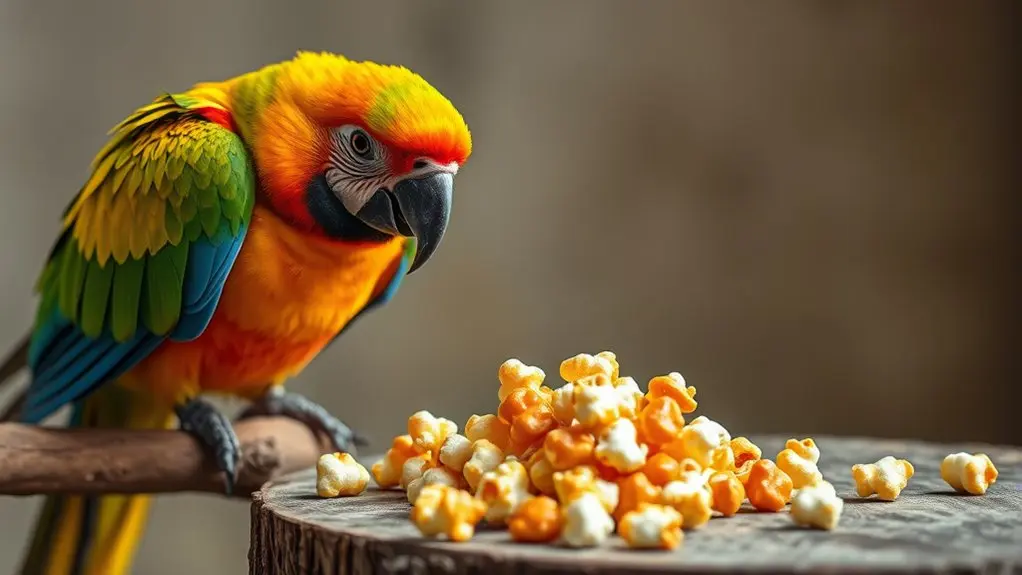
Now, when it comes to exotic birds like Parrots, they might actually be drawn to the sweetness. However, it’s important to remember that feeding them caramel popcorn isn’t a great idea because it can pose health risks.
Common Birds Eating Popcorn
Which birds are most likely to eat caramel popcorn when it’s available? Opportunistic feeders like Crows and Gulls may sample it, although caramel popcorn isn’t part of their natural diet.
Common birds such as Jays, Woodpeckers, and Pigeons might eat plain popcorn but tend to avoid caramel-coated varieties.
Smaller birds like Finches and Chickadees generally shy away from sticky, sugary coatings.
Exotic pet birds like Parakeets and Cockatiels can eat plain popcorn safely but should avoid caramel popcorn due to harmful sugars and additives.
Here’s a quick overview of common birds interacting with popcorn:
- Jays, Woodpeckers, Pigeons: eat plain popcorn, avoid caramel
- Finches, Chickadees: nibble softened popcorn, avoid caramel
- Crows, Gulls: occasionally sample caramel popcorn
- Parakeets, Cockatiels: safe with plain popcorn only
- Most birds: caramel popcorn isn’t a recommended food
Small Birds and Kernels
While some opportunistic birds like crows and gulls may sample caramel popcorn, small birds such as finches, chickadees, and sparrows are more vulnerable to its risks. These tiny birds might try to eat caramel popcorn, but the sticky, sugary coating poses significant health threats.
The caramel’s high sugar content and additives can cause toxicity and digestive blockages, which are dangerous for small birds.
Plus, the sticky texture increases the risk of choking, making caramel popcorn unsuitable for them. If you want to feed small birds popcorn, unpopped or softened kernels are safer alternatives. But even these should be given cautiously.
Exotic Birds’ Popcorn Preference
Although exotic birds like parrots and cockatiels may be curious enough to sample caramel popcorn because of its sweetness, you should know it poses significant health risks. The high sugar and caramel content can disrupt their sensitive digestive systems and introduce toxic compounds. Most exotic birds rely on nutrient-dense, unprocessed diets, making caramel popcorn unsuitable.
You might notice larger or more adaptable species investigating the treat, but it’s essential to prevent offering it regularly.
Digestive upset and toxicity from caramel ingredients
Risk of obesity and diabetes due to excessive sugar
Nutritional imbalance replacing essential vitamins and minerals
Potential poisoning from additives in caramel popcorn
Curiosity doesn’t justify feeding harmful snacks
Always prioritize safe, species-appropriate foods for your exotic birds’ health.
Signs Birds Show When They Eat Caramel Popcorn
When birds eat caramel popcorn, you might notice signs of distress such as choking or gagging because of its sticky texture and high sugar content.
If a bird tries to swallow the popcorn whole or has trouble while eating, this could mean there’s a blockage or difficulty handling the treat.
Birds struggling to swallow popcorn may be experiencing blockages or difficulty managing the sticky treat.
You might also see excessive drooling or the bird spitting out the caramel-coated kernels. That usually means the bird is struggling with the sticky stuff.
Watch for lethargy or less activity too. These can happen if the bird feels digestive discomfort or mild toxicity.
Unusual behaviors like pawing at the beak or making more noise than usual can also be a sign of irritation or stomach upset.
Keeping an eye out for these signs helps you spot any problems early and avoid serious health issues from caramel popcorn.
Best Natural Alternatives to Caramel Popcorn Treats
Because caramel popcorn contains high sugar and additives that can harm birds, you should consider safer, nutrient-rich alternatives to satisfy their treat cravings. Natural bird treats provide essential nutrients that caramel popcorn lacks, supporting overall health and wellbeing.
Think about these healthy, natural options:
- Sunflower seeds: rich in healthy fats and protein
- Mealworms: excellent protein source, stimulating natural foraging
- Fresh fruits (e.g., apple slices, berries): supply vitamins and antioxidants
- Dried fruits like raisins or cranberries: satisfy sweet cravings without harmful additives
- Fresh vegetables such as chopped carrots and leafy greens: provide crucial vitamins and minerals
Offering these alternatives ensures a balanced diet, reducing dependence on processed, sugary treats. You’ll promote your bird’s longevity and vigor while avoiding the risks associated with caramel popcorn.
How to Prepare Plain Popcorn Safely for Birds
If you want to offer popcorn as a treat for your bird, choose plain, air-popped popcorn without any additives like butter, salt, or flavorings. Avoid microwave popcorn since it often contains harmful chemicals and flavorings.
After popping, let the popcorn cool completely to prevent burns and make sure it’s safe to handle. If you have smaller bird species, crush or break larger pieces into manageable sizes.
Store any prepared popcorn in a dry, airtight container to keep it fresh and prevent mold or spoilage.
Tips for Feeding Popcorn Without Harmful Ingredients
Although popcorn can be a fun treat for your bird, you must avoid harmful ingredients like caramel, chocolate, butter, or salt because they pose health risks. To feed popcorn safely, focus on purity and careful preparation. Always choose plain, air-popped popcorn without additives, and make sure it has completely cooled before offering it.
It’s a good idea to soften unpopped kernels to prevent choking, especially if your bird is smaller. Here are some key tips to keep in mind:
Serve only plain, air-popped popcorn with no coatings or flavorings. Avoid adding butter, salt, or any artificial ingredients. Let the popcorn cool thoroughly to avoid burns or choking.
Use unflavored popcorn to reduce exposure to toxins. Soak unpopped kernels to soften them for safer consumption. Following these guidelines helps keep your bird healthy while letting them enjoy popcorn safely.
How to Monitor Birds After Feeding Popcorn Treats
You’ll want to keep a close eye on the birds after they’ve enjoyed some popcorn treats. Watch for any signs that they might be having digestive issues.
It’s also a good idea to note how often you’re giving them popcorn so you don’t accidentally overfeed them.
Watch For Digestive Issues
Since caramel-coated popcorn contains sugars that can disrupt your bird’s digestion, it’s really important to keep a close eye on their behavior after feeding. Sugary coatings might cause diarrhea, constipation, or other tummy troubles.
To make sure your bird stays healthy, watch carefully for any subtle signs of discomfort or digestive issues.
Pay attention to:
- Unusual bowel movements, like diarrhea or hard stools
- Signs of lethargy or reduced activity
- Changes in appetite or refusal to eat
- Visible signs of abdominal discomfort or bloating
- Choking hazards from hard popcorn pieces
Track Feeding Frequency
When feeding birds caramel popcorn treats, monitoring their behavior for at least 30 minutes afterward helps identify any immediate signs of digestive distress or choking hazards. You should limit treats to once or twice a week and watch for gagging or coughing, especially in smaller species.
Remove uneaten popcorn promptly to avoid spoilage or pest attraction. Keeping a detailed record of feeding frequency and bird reactions enables you to adjust servings safely.
| Feeding Date | Observed Behavior | Notes |
|---|---|---|
| 04/10/2024 | Active, no distress | No signs of choking or upset |
| 04/17/2024 | Mild coughing observed | Reduced portion next feeding |
| 04/24/2024 | Normal behavior | Continue current feeding plan |
Frequently Asked Questions
Can Caramel Popcorn Cause Long-Term Behavioral Changes in Birds?
Yes, caramel popcorn can cause long-term behavioral changes in birds by altering their natural foraging habits. It can lead them to prefer sugary, processed foods over their natural diets. This shift might disrupt their digestive systems and social interactions over time.
How Does Caramel Popcorn Affect Baby Birds Differently Than Adults?
You might think caramel popcorn affects baby and adult birds similarly, but it doesn’t. Baby birds’ immature digestion can’t handle sugar or stickiness, causing choking risks and metabolic stress.
This is different from adults who have developed systems that can manage these challenges better. So, what’s safe for an adult bird might not be safe for a baby bird at all. Always good to keep that in mind!
Are There Any Bird Species That Naturally Consume Sugary Foods?
You’ll find that only nectar-feeding birds, like hummingbirds, naturally consume sugary foods. They rely on floral nectar’s natural sugars, not processed sugars, which differ considerably from the harmful, artificial sugars found in caramel popcorn or similar treats.
Can Caramel Popcorn Attract Unwanted Pests to Bird Feeding Areas?
Yes, caramel popcorn can attract unwanted pests like ants, bees, and wasps to bird feeding areas. Its sticky coating encourages pests to linger, which can increase the risk of disease and bring more predators around.
This can really disrupt the cleanliness and safety of the feeding environment. So, it’s something to keep in mind if you want to keep your bird feeding area pest-free.
What Are the Environmental Impacts of Feeding Popcorn to Wild Birds?
You might not realize that discarded popcorn can take months to decompose, disrupting soil quality and water sources. Feeding birds with it increases waste, attracts pests, and harms ecosystems by introducing harmful chemicals and altering natural foraging behaviors.
It’s a bit surprising, but tossing popcorn to wild birds isn’t as harmless as it seems. The leftover kernels stick around for a long time, which messes with the environment more than you’d think. Plus, it changes how birds look for food naturally, which isn’t great for them or the ecosystem.
Conclusion
When offering treats, think of caramel popcorn as a sugary trap that can stick your bird in trouble. While the sweet glaze might tempt their beaks, its additives and sugars pose real health risks.
Instead, choose plain, air-popped popcorn without salt or butter to keep their feathers bright and spirits high. By feeding wisely, you guarantee your feathered friends soar in health, avoiding the sticky pitfalls of caramel-coated snacks.