
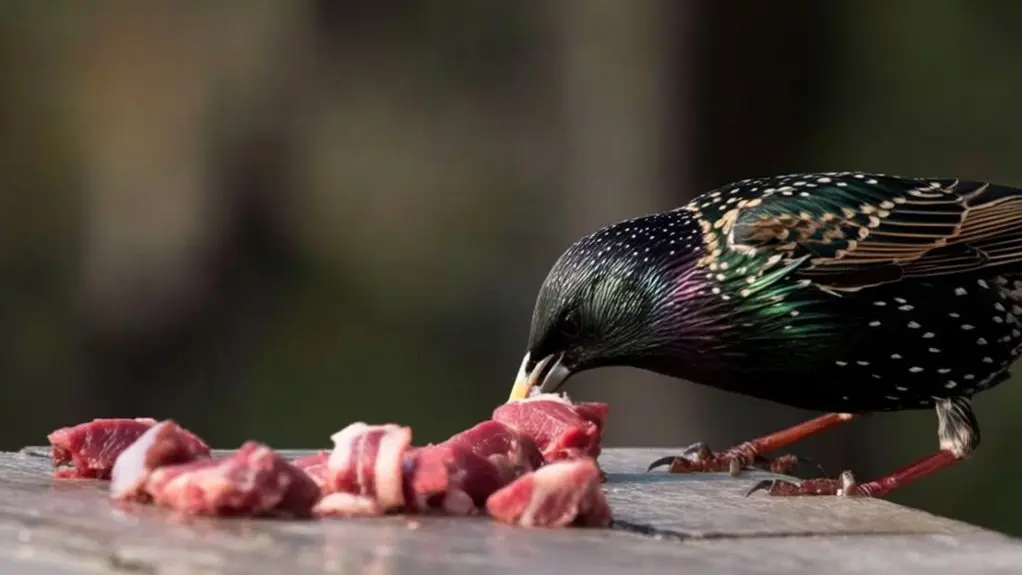
You shouldn’t feed beef to birds because their digestive systems can’t handle its dense protein and fat content. This may cause serious health issues like digestive upset, choking, and bacterial infections.
Processed beef fats and additives can be toxic and might mess with their feather waterproofing. Instead, safer fats like raw suet provide essential nutrients without these risks.
Understanding the right types of fats and feeding practices will help you support bird health effectively and safely. It’s all about giving them what they really need without any unnecessary harm.
Reasons Birds Shouldn’t Eat Beef
Although you might think feeding beef to birds is harmless, it can cause serious digestive problems because birds lack the enzymes needed to break down this type of meat. Their digestive systems are adapted to process insects, seeds, and fruits, not dense, protein-rich beef.
The high fat and protein content in beef, combined with possible additives or preservatives, can overwhelm their metabolism and impair nutrient absorption.
Also, the texture and density of beef increase the risk of choking or gastrointestinal impaction, especially in small bird species.
Feeding beef may introduce harmful bacteria or parasites, which can pose disease risks to individual birds and entire populations.
Health Risks of Feeding Birds Beef
Why should you avoid feeding birds beef? Feeding birds beef, especially processed or cooked meat, can introduce harmful bacteria and parasites, which increases the risk of infections.
Beef also contains fats and additives that aren’t suitable for birds and could cause digestive issues or illness.
Contaminated raw or rendered beef fat might spread diseases within bird populations, too.
Plus, if birds eat too much beef, their feathers can get greasy. That grease messes up their waterproofing and makes them more vulnerable to cold weather.
Processed beef products often have preservatives and chemicals that are toxic to birds. This only makes things worse for their health.
Safe Animal Fats and Suet for Birds’ Nutrition
You’ll find that beef suet, with its higher melting point around 95°F, offers a safer and more stable energy source for birds compared to rendered fats. These other fats can sometimes affect feather waterproofing, which you definitely want to avoid.
When suet is prepared properly, it provides essential nutrients and resists spoilage better than many vegetable oils—this is especially true in warmer conditions.
Plus, if you mix in some nuts or dried fruits, you’ll boost its nutritional value and make it even more appealing to a variety of bird species.
Suet Melting Points
When selecting fats for bird feed, understanding the melting points of suet and other animal fats is essential for maintaining avian health and feather integrity.
Suet, the beef fat around kidneys and loins, melts at about 110°F. This makes it stable in cooler temperatures and less likely to damage feathers.
In contrast, rendered beef fat melts at roughly 95°F, which increases the risk of contamination and hypothermia.
Vegetable oils melt even lower, between 75-77°F, and aren’t suitable for stable feeding.
Consider these key points:
- Higher melting points in fats reduce spoilage and feather contamination risks.
- Suet’s melting point closely matches natural bird diet fats, enhancing safety.
- Avoid fats that melt easily to protect feather waterproofing and bird thermoregulation.
Animal Fats Safety
Although selecting fats for bird feeding might seem straightforward, choosing those that guarantee safety and nutritional adequacy requires careful consideration of their melting points and composition.
Beef suet, melting around 110°F, is ideal because it mimics birds’ natural high-fat diets and resists melting in warm conditions. This helps reduce spoilage and feather contamination.
In contrast, rendered beef fat melts near 95°F, which poses risks by sticking to feathers and impairing waterproofing.
Additionally, low melting point vegetable fats like coconut or palm oils (75-77°F) are unsuitable due to rapid melting and potential health issues.
By providing natural, high-quality animal fats such as beef suet, you support birds’ energy requirements safely. This approach minimizes risks related to feather damage or fat spoilage.
It’s really about choosing the right fat to keep birds healthy and comfortable.
Nutritional Benefits of Suet
How do suet and animal fats contribute to birds’ nutritional needs during challenging seasons? Suet, primarily composed of rendered beef fat, offers high-energy calories essential for birds in cold months and breeding periods. Its low water content guarantees it remains a durable and concentrated food source, particularly beneficial for insect- and seed-eaters.
Additionally, suet supplies essential fatty acids that support plumage quality and overall health. Using fats with higher melting points, like beef suet, minimizes spoilage and rancidity, making it safer for avian consumption.
When you incorporate suet into bird diets, you provide crucial fat-soluble vitamins and attract diverse species.
Key benefits include:
- High-energy content aiding survival in harsh conditions
- Essential fatty acids promoting feather and health maintenance
- Reduced spoilage due to beef suet’s higher melting point
Safe Alternatives to Beef for Backyard Bird Feeding
Since feeding birds processed beef products can pose health risks due to preservatives and additives, you should consider safer alternatives that provide comparable nutritional benefits.
Natural animal fats like properly rendered beef suet or venison fat offer high energy and attract insect- and seed-eating species such as woodpeckers and chickadees. These fats have melting points around 110°F, making them more stable and less prone to spoilage in warm weather compared to vegetable oils.
To guarantee safety, store suet in the freezer and use enclosed feeders to reduce contamination risks. Avoid raw or unrendered fats, as improper preparation can lead to rancidity and bacterial growth.
How Suet and Animal Fats Support Bird Nutrition
When you provide birds with suet and animal fats, you’re giving them a dense source of calories that’s essential for keeping their energy up, especially when it’s cold outside. These fats come from rendered beef suet found around cattle kidneys and loins. They offer natural, nutrient-rich energy that helps a variety of bird species thrive.
Animal fats don’t melt easily at moderate temperatures, which makes them great to use all year long. Plus, they support both insect-eating and seed-eating birds by helping replenish the energy they need to survive.
Some key benefits include a high-calorie content that promotes sustained energy during cold weather. The nutrient density helps boost overall bird health without harming their feathers. And the stability of these fats means they won’t break down easily, so the nutritional quality stays consistent.
Best Practices for Feeding and Storing High-Fat Foods
Although high-fat foods like suet provide essential energy for birds, improper feeding and storage can compromise their nutritional value and pose risks to bird health. Store suet and rendered fats in cool, airtight containers or the freezer to prevent rancidity and spoilage.
Feed fats in shaded areas or during cooler parts of the day to minimize melting and contamination of feathers.
Use secure, enclosed feeders such as suet cages or mesh bags to keep pests away and avoid fats contacting bird feathers.
Make sure to clean feeders regularly with soap and water to get rid of leftover fats and reduce mold or bacterial growth.
Avoid exposing fats to direct sunlight or high temperatures because melted fats can coat feathers, impair waterproofing, and increase the risk of hypothermia.
Following these practices will help you provide safe, nutritious feeding for your feathered friends.
How to Attract Birds With Proper Fat-Based Feeders
Properly designed fat-based feeders play a big role in attracting birds while keeping them healthy and their feathers in great shape. To get the most out of your feeder setup, use enclosed feeders or suet cages. This helps prevent fats from getting on their feathers, which can cause health issues.
It’s a good idea to place feeders in shaded spots. This reduces fat melting and keeps the feed fresh longer. Also, avoid putting fats directly on tree limbs or surfaces where birds might get oil on their feathers.
Here are some key points to keep in mind: Use fats with a high melting point, like raw suet or rendered beef fat, to cut down on spoilage. Make sure to clean feeders regularly to stop mold and bacteria from growing. Hanging feeders in shaded areas helps control temperature and keeps the fats consistent.
Avoiding Common Mistakes When Feeding Birds Fats
Because feeding birds fats incorrectly can harm their feathers and overall health, you need to avoid common mistakes that lead to feather contamination and injury.
Never offer raw or rendered beef fat with a melting point below 95°F, as it can melt and coat feathers. This can impair waterproofing and increase the risk of hypothermia.
Avoid fats like coconut or palm oil, which also melt easily and spread onto feathers. Always use enclosed metal suet cages to contain fats and prevent direct contact with feathers.
Don’t spread fats on tree limbs or surfaces where birds can get coated.
Make sure to clean feeders regularly with soap to remove residual oils that birds can’t groom off.
Finally, avoid fats with additives or preservatives. These can harm birds and contribute to feather damage or illness.
Frequently Asked Questions
Can Baby Birds Digest Small Amounts of Beef?
You can’t expect baby birds to digest small amounts of beef effectively. Their immature systems struggle with complex proteins and fats, which can lead to digestive upset and malnutrition.
Instead, they need easily digestible diets like insects or specialized formulas. These options are much gentler on their developing bodies and provide the nutrients they actually need. So, it’s best to stick with what’s natural and easy for them to handle.
Do Wild Birds Ever Naturally Eat Meat Like Beef?
Wild birds rarely eat meat like beef naturally. You’ll find scavengers consuming carrion occasionally, but most rely on insects, seeds, or small animals.
Beef isn’t a typical or intentional part of their diet in nature. So, it’s pretty uncommon to see wild birds going after beef on their own. They usually stick to what’s easier and more natural for them to find.
How Does Beef Affect a Bird’s Digestive System Compared to Insects?
Beef clogs your bird’s digestive system like thick mud, slowing nutrient absorption and risking impaction. Unlike insects’ soft, high-moisture tissues, beef’s dense fats and proteins challenge your bird’s short, quick-processing gut. This can cause potential digestive issues.
Birds are built to handle insects easily because their bodies process them fast and efficiently. But beef is tougher to break down and doesn’t pass through as smoothly. So, feeding beef to birds isn’t really the best idea for their digestion.
Are There Any Bird Species That Can Safely Eat Cooked Beef?
Yes, scavenger birds like vultures can safely eat cooked beef because they have strong digestive enzymes and can tolerate decomposed meat.
But typical backyard birds don’t have this kind of adaptation. They should avoid cooked beef to prevent any health risks. It’s just not made for their digestive systems.
Can Feeding Beef to Birds Impact Local Wildlife Ecosystems?
Yes, feeding beef to birds can disrupt local ecosystems by altering native dietary balances. It can increase competition among species and attract invasive animals.
This also impacts natural foraging behaviors, which might threaten native bird populations. Overall, it can affect the ecological stability in the area.
Conclusion
So, while you might think tossing beef to birds is a gourmet treat, it’s actually a nutritional misstep loaded with health risks. Birds aren’t designed to digest beef’s complex proteins and fats, which can harm their delicate systems.
Instead, stick to scientifically backed suet and safe animal fats that support their energy needs. Ironically, what seems like a generous offering could turn into a dietary disaster, so feed smart, not just generously.