
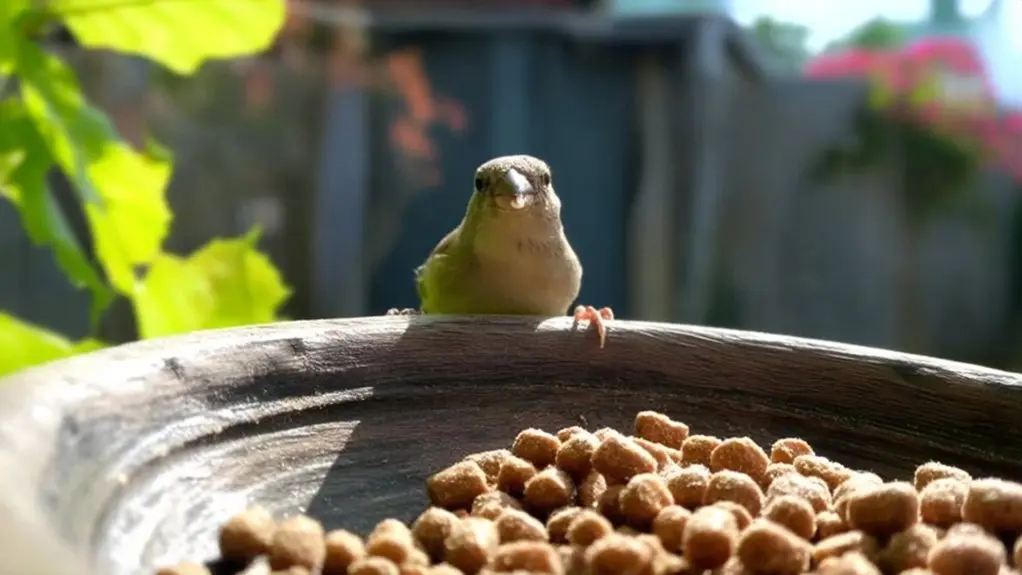
You shouldn’t feed birds cat food because it’s high in protein, fat, and additives that aren’t safe or healthy for them. Birds need specific nutrients found in seeds, fruits, and vegetables to thrive. Cat food can cause digestive upset, obesity, and liver problems in birds.
It also disrupts their natural behavior and diet balance. If your bird does nibble on cat food, there are steps you can take to protect their health and well-being. Just keep an eye on what they’re eating and try to offer them the right foods instead.
What’s in Dry Cat Food and Why Birds Should Care
Although dry cat food is designed to meet the nutritional needs of felines, you should know it contains high levels of protein and fat that aren’t suitable for birds. Typically, cat food has 30-45% protein and significant fat content, which can overwhelm a bird’s metabolism.
You’ll also find grains, meat by-products, and fillers in these foods that birds struggle to digest or that may harm them. Additionally, many cat foods include additives, preservatives, and flavorings that pose health risks to avian species.
Birds thrive on diets rich in seeds, fruits, vegetables, and specialized pellets, which differ greatly from cat food’s composition. Understanding these differences helps you avoid feeding birds something that could jeopardize their health.
Can Birds Safely Eat Dry Cat Food Occasionally?
While birds can technically eat dry cat food, you should only offer it occasionally and never as a main part of their diet. Cat food is high in protein and fat, which aren’t ideal for birds over time.
Offering it as an occasional treat won’t harm them if it doesn’t replace their regular balanced diet of seeds, fruits, and vegetables.
You need to guarantee their primary nutrition remains appropriate for their species. Also, when you provide dry cat food outdoors, be aware it might attract unwanted wildlife like raccoons or squirrels.
Health Risks of Birds Eating Cat Food
You should know that cat food has lots of protein and fat, which can cause nutritional imbalances that aren’t good for birds.
Plus, some of the preservatives and additives in cat food might be toxic or could even trigger allergic reactions.
If birds eat cat food regularly, it can lead to digestive problems and other health issues down the line.
Nutritional Imbalance Concerns
Because cat food contains high levels of protein and fat designed for feline needs, feeding it to birds can cause serious health problems such as obesity and liver issues.
You should know that cat food lacks essential vitamins and minerals vital for avian health, which puts birds at risk of nutritional deficiencies.
When birds consume cat food regularly, it disrupts their natural dietary balance, potentially leading to metabolic and neurological problems.
You might also notice that feeding cat food interferes with birds’ natural foraging behavior, which further contributes to nutritional imbalances over time.
To maintain your bird’s health, it’s important to avoid feeding them cat food. Instead, provide a diet formulated specifically for their nutritional requirements.
Toxic Ingredients Risks
Although cat food provides essential nutrients for cats, it contains several ingredients that pose significant health risks to birds. You should avoid letting birds eat cat food because it often includes substances that can harm them.
Here are key toxic ingredient risks you need to know:
High protein and fat levels can overwhelm a bird’s metabolism. Rawhide and certain preservatives may cause digestive blockages or poisoning. Excessive salt and minerals can lead to dehydration and kidney problems.
Artificial flavors and toxic additives might trigger neurological or allergic reactions. Frequent consumption disrupts a bird’s natural diet, causing nutritional deficiencies or poisoning.
Being aware of these risks helps you protect your bird’s health by preventing exposure to harmful components found in cat food. So, it’s best to stick to food made just for birds to keep them safe and healthy.
Digestive Health Issues
When birds consume cat food, their digestive systems often struggle to process the high levels of protein and fat designed for felines. Unlike cats, birds require lower protein intake, and eating too much can cause digestive upset or obesity.
Ingredients like high fat and certain grains might irritate their gastrointestinal tract and throw off their natural digestive balance.
Feeding birds cat food regularly can lead to nutrient imbalances, which might result in malabsorption or specific deficiencies. You could notice symptoms like diarrhea, bloating, or lethargy—these are signs your bird is experiencing digestive distress.
Also, frequent ingestion of inappropriate ingredients raises the risk of blockages or impactions in their digestive tract.
How Cat Food Can Upset Your Bird’s Digestion
If you feed your bird cat food, you risk upsetting its delicate digestive system. Cat food contains high protein and fat levels, which can overwhelm your bird’s metabolism. Ingredients like rawhide and certain fillers are hard to digest and may cause blockages or discomfort.
The meat by-products and additives disrupt the natural nutrient balance necessary for avian health. These factors can lead to diarrhea and other digestive disturbances, which can mess with your bird’s nutrient absorption from its regular diet.
Specifically, you should be aware that excess fat and protein overload digestion. Indigestible fillers cause blockages. Additives disrupt nutrient balance. Digestive disturbances like diarrhea can happen, and nutrient absorption from natural foods declines.
How Cat Food Affects Wild Birds’ Behavior
Because wild birds often find dry cat food easily accessible, they may start eating it regularly, which changes their natural foraging habits. When birds rely on this high-protein, readily available food source, they spend less time searching for natural foods.
This shift can alter their behavior, making them dependent on human-provided or accessible pet foods. You should understand that such habituation may impact birds’ health by reducing dietary variety.
Additionally, increased attraction to cat food can lead to more frequent interactions between wild birds and domestic cats. This change influences local bird behavior and raises safety concerns.
Why Cat Food Can’t Replace a Bird’s Balanced Diet
You can’t just feed your bird cat food and expect it to get everything it needs. Cat food doesn’t have the essential vitamins and minerals that birds require.
Plus, it’s packed with high levels of protein and fat, which can actually be harmful—things like obesity and liver damage can happen.
Nutritional Differences Explained
Although cat food might seem like a convenient option, it can’t meet a bird’s complex nutritional needs. Birds require a balanced intake of seeds, fruits, and insects.
Cat food, on the other hand, is designed for cats’ high protein and fat demands.
Feeding birds cat food ignores these essential differences and may lead to nutrient imbalances. It’s important to know what makes bird diets unique.
Key nutritional differences include:
- Excessive protein (30-45%) and fats in cat food unsuitable for birds
- Lack of bird-specific vitamins and minerals
- Ingredients that birds may find indigestible or toxic
- Absence of necessary carbohydrates and fiber found in bird diets
- Imbalance in nutrient ratios critical for bird metabolism
Understanding these distinctions helps guarantee you provide a diet that truly supports your bird’s health.
Risks Of Cat Food
When birds consume cat food, they risk missing critical nutrients that their bodies need to function properly. Cat food is designed for feline dietary needs, lacking essential vitamins and minerals birds require. Its high protein and fat content can cause obesity and other health problems if birds eat it regularly.
Ingredients like rawhide and certain additives may lead to digestive blockages or toxicity. Plus, feeding cat food can disrupt birds’ natural foraging behaviors, which affects their overall well-being.
Prolonged consumption often results in nutritional imbalances or deficiencies, compromising their health further.
While occasional ingestion mightn’t cause immediate harm, relying on cat food puts your bird at significant risk. It just can’t replace the specialized, balanced diet that supports their unique physiological needs.
Importance Of Balanced Diet
Because birds need a carefully balanced diet tailored to their unique nutritional requirements, feeding them cat food can’t meet their health needs. Cat food is designed for felines, with high protein and fat levels that just aren’t suitable for birds.
Essential vitamins and minerals birds require are often missing or imbalanced in cat food, which can lead to nutritional deficiencies or excesses. This imbalance might cause health problems like obesity or weakened immunity.
To make sure your bird thrives, you need to provide a diet that supports their overall well-being.
Key reasons why cat food can’t replace a bird’s balanced diet:
- Birds need specific seeds, fruits, vegetables, and pellets.
- Cat food has excessive protein and fat.
- Essential nutrients for birds are absent or imbalanced.
- Nutritional imbalances cause health risks.
- Balanced diets enhance immunity and longevity.
Safer Alternative Treats Instead of Dry Cat Food for Birds
If you want to provide birds with nutritious treats without the risks of dry cat food, consider offering small portions of cooked rice, pasta, or unsalted nuts.
Fresh fruits and vegetables like berries, apple slices, and leafy greens also support bird health effectively.
You can choose commercially available bird-specific treats and seed mixes, which are formulated to meet avian dietary needs safely.
Additionally, mealworms, crickets, or other insects offer protein-rich options that mimic natural diets.
Homemade treats such as dried fruit or millet sprays provide safe, non-toxic rewards.
These alternatives deliver essential nutrients while avoiding the harmful ingredients and imbalances found in dry cat food.
That way, your birds enjoy safe, beneficial snacks that promote their overall well-being.
How to Prevent Birds From Accessing Cat Food Outdoors
If you want to keep birds away from your cat’s food outdoors, try putting the feeding stations in secure spots that are either elevated or enclosed. This makes it harder for birds to get to the food.
Another good idea is to feed your cat when birds are less active, like during the nighttime. This way, there’s less chance of attracting them in the first place.
You can also use physical barriers or deterrents to block birds from reaching the food.
And don’t forget to clean up any leftovers quickly—this helps keep birds from coming back again and again.
Secure Feeding Locations
When you want to keep birds from accessing your cat’s outdoor food, securing the feeding location is essential. You can minimize bird access by controlling where and how you offer food. Consider these effective strategies:
Place cat food bowls inside sheltered areas or covered feeders to block bird access. Elevate dishes on platforms or hanging feeders that birds find hard to reach. Use predator-proof or bird-proof enclosures that allow cat access but restrict birds.
Remove any leftover or spilled food quickly to avoid attracting foraging birds. Position feeding spots away from trees or open areas frequented by birds.
Applying these measures helps reduce the chance of birds eating cat food outdoors. This protects both your cat’s nutrition and the local bird population.
Scheduled Feeding Times
Securing the feeding location goes hand in hand with establishing scheduled feeding times to keep birds from eating your cat’s food outdoors. Feeding your cat at consistent times and removing leftover food promptly reduces the chance that birds will access it.
You can place food in elevated or enclosed feeders to limit bird access during feeding.
Using automatic feeders or timing devices helps dispense food only during set hours, ensuring no food remains outside longer than necessary.
Monitor the feeding area closely and clean up any spills immediately to avoid attracting birds and other wildlife.
Use Bird Deterrents
Although managing feeding times helps reduce bird visits, using bird deterrents can further protect your cat’s outdoor food. You can try several practical measures to keep birds away effectively.
Installing physical barriers like bird netting or mesh prevents direct access to food dishes.
Placing food in elevated or sheltered feeders also helps deter ground-feeding birds.
Motion-activated deterrents such as reflective tape or scare devices discourage birds from coming too close.
Cleaning up leftover food and removing dishes promptly reduces the attraction.
Plus, positioning feeding stations away from trees, shrubs, or open spaces limits bird access even more.
Here are some quick tips you can use:
- Use bird netting or mesh around feeding areas
- Elevate or shelter feeders to restrict bird access
- Employ motion-activated scare devices or reflective tape
- Clean leftover food and remove dishes after feeding
- Place feeders away from trees and open spaces
What to Do If Your Bird Nibbles Cat Food
If your bird nibbles on cat food, you should monitor them closely for any signs of digestive upset or unusual behavior. Make sure to provide fresh, bird-specific food right away to keep their diet balanced and avoid nutritional gaps.
Remove any leftover cat food quickly to prevent them from eating too much, which could cause health problems. Remember, cat food is made for cats, so it’s not good for regular feeding to birds.
Keep your bird’s diet consistent and suited to their species to support their health. While watching them, look out for any changes in appetite, stool, or energy levels.
Taking these steps helps lower risks and makes sure your bird stays healthy after accidentally eating cat food.
When to Consult a Veterinarian About Your Bird Eating Cat Food
While keeping a close eye on your bird after it nibbles cat food is important, knowing when to consult a veterinarian is just as crucial. You should seek professional advice if your bird frequently eats cat food or starts showing signs of illness.
Immediate consultation is necessary for symptoms like weight loss or digestive upset.
Even behavioral changes or large amounts consumed are reasons to visit the vet. Always check with a professional before making any diet changes or if you think your bird has ingested something harmful.
Watch for these signs and situations:
- Regular ingestion of cat food
- Lethargy or abnormal droppings
- Difficulty breathing or weight loss
- Feather plucking or digestive issues
- Behavioral changes or large quantity consumption
Contact an avian vet for assessment and dietary guidance to keep your bird healthy.
Frequently Asked Questions
Can Birds Transmit Diseases to Cats by Eating Their Food?
Yes, birds can transmit diseases to cats if they contaminate cat food with pathogens like Salmonella.
You should clean feeding areas regularly to minimize risks. This helps prevent indirect disease transmission through shared food or surfaces.
Keeping things clean is really the best way to protect your cat.
Does Wet Cat Food Pose the Same Risks as Dry Cat Food?
Wet cat food poses greater risks than dry, acting like a ticking time bomb due to moisture that encourages bacterial growth. You should handle and store it carefully to prevent spoilage and potential harm to birds.
It’s really important to keep an eye on how you store wet food. If it’s left out too long, bacteria can multiply quickly. So, always refrigerate any unused portions and use them within the recommended time.
Being cautious with wet cat food helps keep your pets safe and avoids any unintended problems with the birds around you. Just a little extra care goes a long way!
Are Certain Bird Species More Attracted to Cat Food Than Others?
Yes, you’ll notice small songbirds, pigeons, and opportunistic species like crows are more attracted to cat food. Ground-feeders and omnivores explore it more, while strict insectivores or nectar feeders usually avoid it.
They’re just not interested in what doesn’t fit their diet. So, if you’re feeding birds with cat food, expect to see the ones that are open to a variety of foods stopping by. It’s kind of like catering to their tastes!
How Quickly Do Symptoms Appear After a Bird Eats Cat Food?
Symptoms usually appear within a few hours to a day after your bird eats cat food. Watch for digestive upset, lethargy, or behavioral changes.
If you notice any concerning signs, seek veterinary care promptly. It’s better to be safe and get your bird checked out quickly.
Can Feeding Cat Food to Pet Birds Cause Long-Term Behavioral Changes?
Yes, feeding cat food to your pet birds can cause long-term behavioral changes. They may develop a dependency on unnatural foods, which isn’t good for them. Over time, this can lead to a reduction in their natural foraging behavior.
Birds might also become more aggressive or start guarding their food. This disrupts their normal dietary habits and activity levels. So, it’s really best to stick to bird-appropriate foods to keep them happy and healthy.
Conclusion
So, while it might seem like a harmless snack, feeding your bird cat food is like offering them a fast food meal. It’s tempting but far from ideal. Sure, birds might nibble it occasionally, but that doesn’t mean it’s safe or nutritious for them.
Instead of risking their health and digestion, stick to bird-friendly treats. After all, you wouldn’t want your feathered friend turning into a feline foodie, right? Keep their diet safe and species-appropriate.