
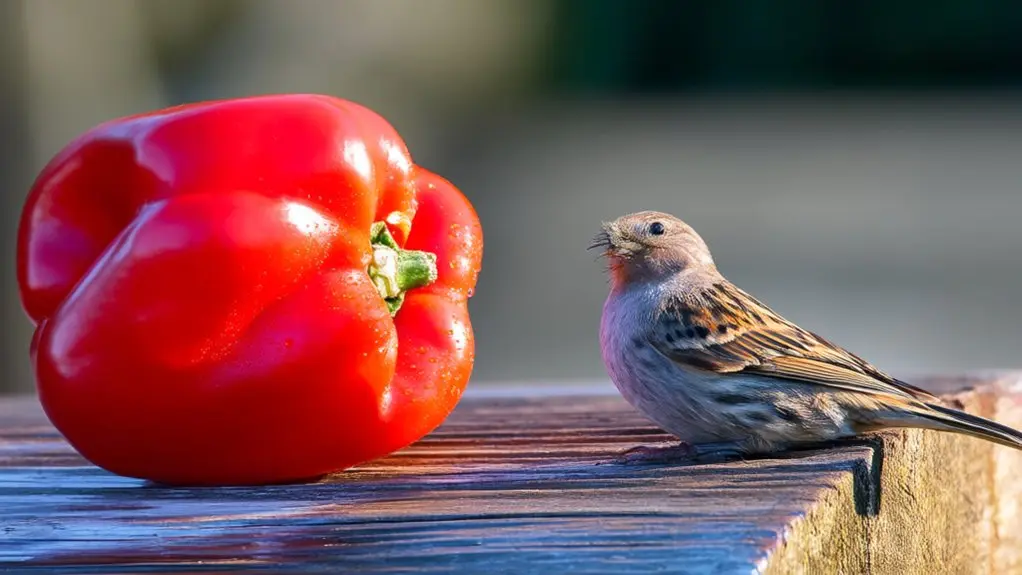
You can safely feed capsicum peppers to birds because they tolerate capsaicin’s heat without pain, unlike mammals that feel burning due to active TRPV1 receptors. Birds can taste the spice but aren’t harmed, making peppers a nutritious treat rich in vitamins and antioxidants.
Capsicum also helps deter mammal pests and supports natural seed dispersal. By choosing mild varieties and preparing peppers properly, you promote bird health and responsible feeding practices.
Discover how to maximize these benefits while keeping your feathered friends safe. It’s a great way to add some variety to their diet and help out your garden at the same time!
Why Capsaicin Is Harmless to Birds but Painful to Mammals
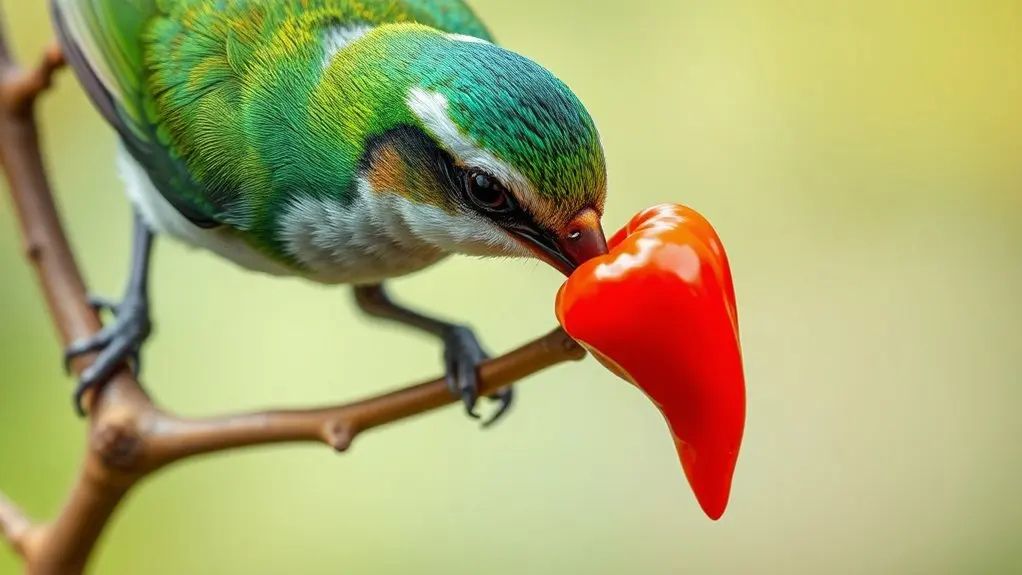
Although both birds and mammals can taste capsaicin, only mammals feel its painful, burning sensation because they’ve specific pain receptors that birds don’t.
When capsaicin binds to these pain receptors in your body, it triggers that intense heat you feel. Birds do have taste receptors for capsaicin, but they lack these pain receptors, so they don’t feel any discomfort.
This difference is really important because capsaicin evolved as a way to stop mammals from eating seeds.
At the same time, it allows birds to eat the fruit without any pain. Since birds don’t experience that burning sensation, they can safely eat spicy peppers.
Eating the peppers helps birds spread the seeds over wider areas.
Why Birds Don’t Feel Capsaicin’s Heat Like Mammals Do
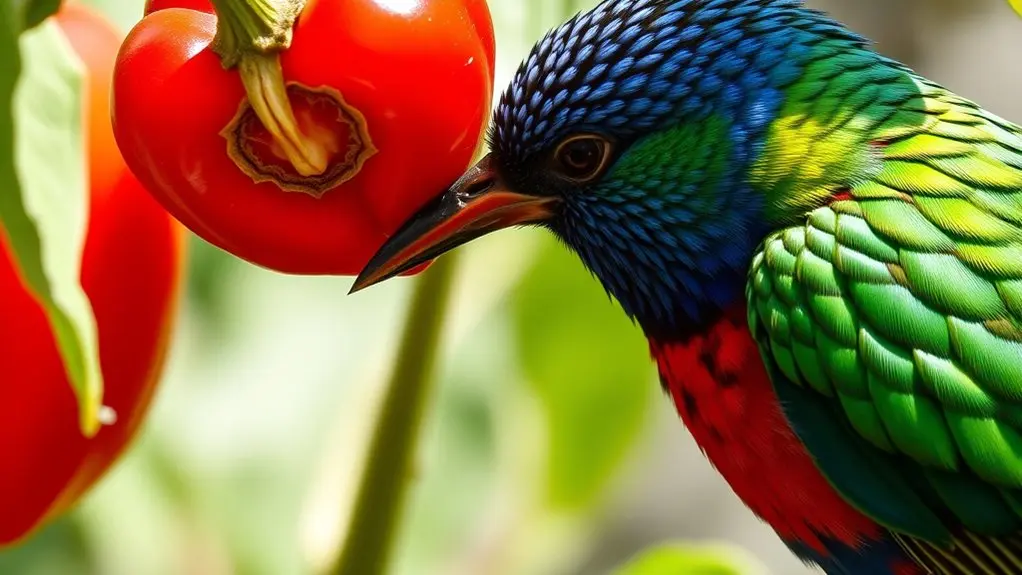
Because birds lack the specific pain receptors that mammals have, they don’t feel the burning heat caused by capsaicin. Mammals possess TRPV1 receptors, which capsaicin activates to create that familiar sensation of heat and pain.
Birds, on the other hand, either don’t have these receptors or theirs stay inactive when exposed to capsaicin.
So, you won’t see birds reacting negatively to spicy peppers, even ones that are super hot to mammals.
Although birds can detect capsaicin through their taste receptors, they simply don’t feel the pain that comes with it.
This evolutionary adaptation benefits both birds and plants. Birds can safely eat and spread pepper seeds, while the spicy compounds keep mammals from damaging the plants.
Understanding this helps explain why birds handle capsaicin’s heat so well.
Can Birds Taste the Spicy Heat in Capsicum Peppers?
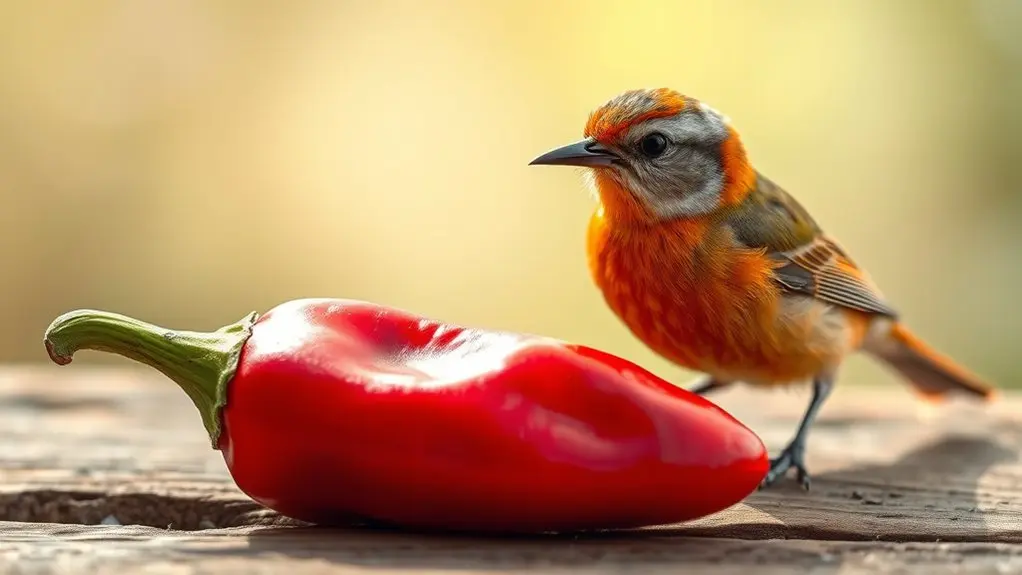
While birds don’t experience the burning pain of capsaicin like mammals do, they can still detect its spicy flavor through taste receptors. Contrary to popular belief, birds aren’t completely immune to capsaicin’s heat. They sense spiciness without the associated pain because they lack the specific pain receptors mammals have.
Research shows many bird species reduce seed consumption when capsaicin levels exceed about 500,000 Scoville Heat Units. For example, northern cardinals strongly avoid seeds coated with very spicy peppers. This proves they can taste the heat.
This sensitivity influences how certain plants evolve, producing peppers spicy enough to deter mammals but still appealing to birds.
Benefits of Feeding Capsicum Peppers to Birds
When you include capsicum peppers in bird food, you provide valuable vitamins and antioxidants that support their health. Capsicum peppers deliver essential nutrients without causing discomfort because birds lack the pain receptors mammals have. This means they can enjoy these peppers safely.
Capsicum peppers offer birds essential nutrients and antioxidants without causing them any discomfort.
Plus, capsicum acts as a natural deterrent for mammals like squirrels. That helps protect bird feeders from unwanted visitors. It’s a simple way to keep your birdfeeders for the birds.
The presence of capsaicin in wild peppers attracts or repels different bird species. This influences their feeding behavior and promotes biodiversity. So, adding capsicum to bird diets enhances their nutritional intake while keeping a safe feeding environment.
This approach benefits birds without exposing them to the spicy heat mammals experience. That makes capsicum a practical and healthful supplement in bird care. It’s an easy way to support your feathered friends!
Risks and Safety Tips for Feeding Birds Hot Peppers
Although birds don’t feel the burning sensation that capsaicin causes in mammals, you should still handle hot peppers and capsaicin-treated seeds with care. Use protective gloves when applying high-capsaicin seed coatings to avoid skin irritation.
Feeding hot peppers to birds is generally safe since they lack the pain receptors mammals have and don’t experience adverse effects.
That said, avoid overexposure by using properly prepared, specialized seed coatings. This helps prevent harm from concentrated capsaicin.
Also, keep in mind that excessively spicy seeds might deter some birds, so it’s best to stick to moderate spice levels.
How Capsaicin Supports Natural Seed Dispersal by Birds
Because birds lack the pain receptors that make capsaicin irritating to mammals, they can consume spicy peppers without harm. This means they play an essential role in natural seed dispersal.
You’ll notice birds are attracted to the bright red and ultraviolet colors of ripe peppers, which signal ideal seed maturity.
When birds eat these peppers, they ingest the seeds, which then pass through their digestive system unharmed. This process considerably enhances seed germination rates by as much as 370% and boosts resistance to fungal infections.
As a result, plants benefit by having their seeds dispersed effectively across wide areas, ensuring successful reproduction.
Meanwhile, birds gain a nutritious food source. This mutualistic relationship highlights how capsaicin supports the natural cycle of seed dispersal through bird consumption.
It’s a neat example of nature working together for the benefit of both plants and animals.
How Hot Pepper Seed Mixes Keep Mammals Away From Feeders
If you want to keep mammals like squirrels and raccoons away from your bird feeders, hot pepper seed mixes offer an effective solution. These mixes contain capsaicin, a compound that produces a burning sensation in mammals, deterring them from feeding.
Birds, however, have different sensory receptors and don’t perceive capsaicin as painful, so they can comfortably eat pepper-laced seeds. The capsaicin in these seed mixes is carefully produced in specialized facilities to guarantee it’s safe and effective for birds.
Best Capsicum Varieties Safe for Feeding Birds
If you’re thinking about feeding birds, it’s best to stick with mild capsicum varieties like bell peppers. These peppers have low levels of capsaicin, making them safe for birds to eat in small amounts.
Plus, their bright, ripe colors mean they’re packed with nutrients that can really support bird health.
Just make sure you pick fresh, organically grown capsicum whenever possible. And it’s a good idea to introduce these peppers to your feathered friends gradually, so they can get used to the new treat.
Mild Capsicum Types
When selecting capsicum varieties for feeding birds, opting for mild types like bell peppers guarantees safety and palatability. Mild capsicums contain very low capsaicin levels, usually under 1000 Scoville Heat Units, making them far less spicy than hot peppers such as jalapeños.
Birds can detect capsaicin but generally tolerate these milder peppers without discomfort or adverse reactions.
By choosing mild capsicum types, you reduce the risk of digestive upset and help prevent your birds from developing an aversion to these vegetables.
Incorporating mild capsicums into their diet also introduces valuable nutrients like vitamin C and beta-carotene, supporting overall health.
Nutritional Benefits Overview
Although birds can handle a range of foods, choosing the right capsicum varieties guarantees they receive maximum nutritional benefits without harm.
Sweet bell peppers, especially yellow, orange, and red, are ideal because they contain low levels of capsaicin and high concentrations of vitamins A and C. These vitamins, along with antioxidants present in capsicum, support your bird’s immune system and overall health.
Birds enjoy the mild sweetness of these peppers without the discomfort of spicy heat, which is common in wild or hot varieties. Cultivated capsicum types generally have safer, lower capsaicin levels, reducing risks.
Before feeding, always remove seeds and wash the peppers thoroughly to minimize pesticide residues and assure your bird’s safety. This way, you’re providing a nutritious, safe treat for your feathered friend.
Safe Feeding Practices
How can you guarantee the capsicum you offer your birds is both safe and nutritious? Choose common varieties like bell peppers and sweet peppers. These have lower levels of capsaicin, making them suitable for birds in moderation.
Avoid hot chili peppers such as ghost peppers. Their high capsaicin content can cause discomfort.
Always provide fresh, unseasoned, and unspiced capsicum to preserve nutritional value and prevent harmful additives.
Before feeding, remove seeds and stems since these parts may have higher concentrations of capsaicin or be tough to digest.
By selecting milder capsicum varieties and preparing them properly, you make sure your birds enjoy a safe, healthy treat without any adverse reactions.
This approach supports their well-being and enhances their diet responsibly.
Frequently Asked Questions
Can Baby Birds Safely Eat Capsicum Peppers?
You can safely offer baby birds small, finely chopped capsicum peppers, but introduce them gradually. Always remove seeds, guarantee freshness, and monitor for any irritation. Their developing digestive systems may react sensitively to capsaicin.
How Often Should I Feed Birds Capsicum Peppers?
You should feed birds capsicum peppers a few times per week to avoid overexposure. This frequency helps attract them without causing digestive issues or aversion.
It supports their health and encourages regular visits to your feeder. Just keep it balanced, so the birds stay happy and healthy!
Do All Bird Species Enjoy Eating Capsicum Peppers?
No, not all bird species enjoy eating capsicum peppers. You’ll find some tolerate or like them, while others avoid the heat. Their preferences and sensitivity to spice vary widely across different bird groups.
It really depends on the species. Some birds are more adventurous with their food, while others stick to milder options. So, it’s not a one-size-fits-all kind of thing.
Can Capsicum Peppers Affect a Bird’s Digestion?
Capsicum peppers can affect your bird’s digestion. While most tolerate capsaicin well, some species might experience mild irritation or digestive upset if they consume large amounts.
It’s a good idea to monitor their intake and adjust their diet accordingly to guarantee their health. Just keep an eye on how they react, and you should be fine.
Should Capsicum Peppers Be Served Cooked or Raw to Birds?
You should serve capsicum peppers raw to birds, as cooking reduces capsaicin and alters texture, diminishing their nutritional benefits and natural spiciness. Birds prefer and need these qualities for ideal digestion and seed dispersal.
Conclusion
So, can birds safely enjoy capsicum peppers? Absolutely. Since birds don’t feel the heat of capsaicin, they can benefit from its nutrients without discomfort. Feeding them hot peppers even supports natural seed dispersal and helps keep mammals away from feeders.
Of course, you should choose the right varieties and offer them in moderation to guarantee safety. Isn’t it fascinating how something spicy to us can be perfectly harmless and even helpful to birds?