
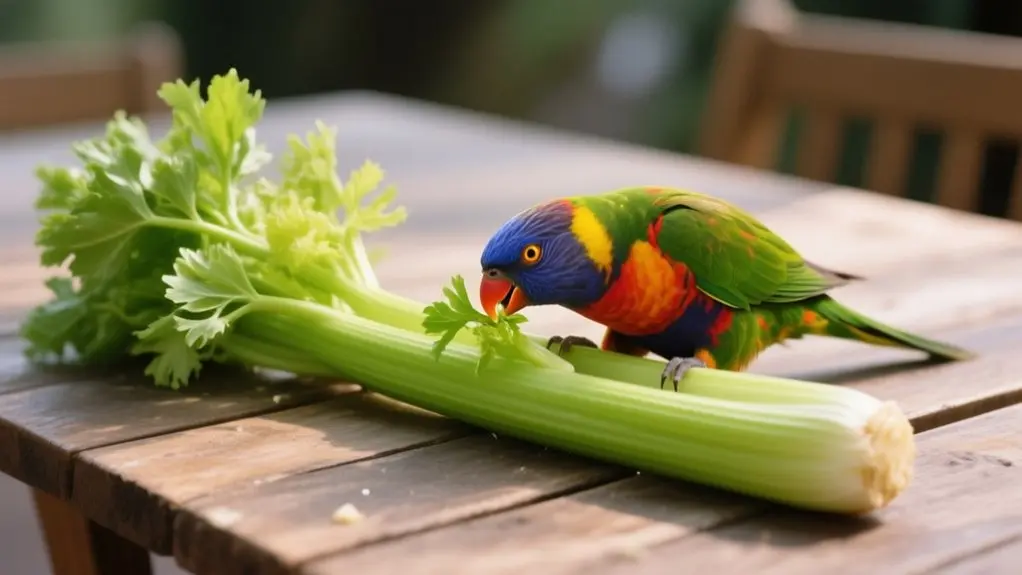
You can safely feed your bird small amounts of thoroughly washed celery leaves in moderation, as they’re rich in vitamins A, C, and K and have fewer choking risks than stalks. Avoid overfeeding since their low calories and water content don’t meet all nutritional needs, and pesticide residues may pose health risks if not properly cleaned.
Always introduce new foods gradually and monitor your bird’s response. To understand safe preparation, portion sizes, and potential risks, keep exploring further details.
Safety of Celery Leaves for Birds
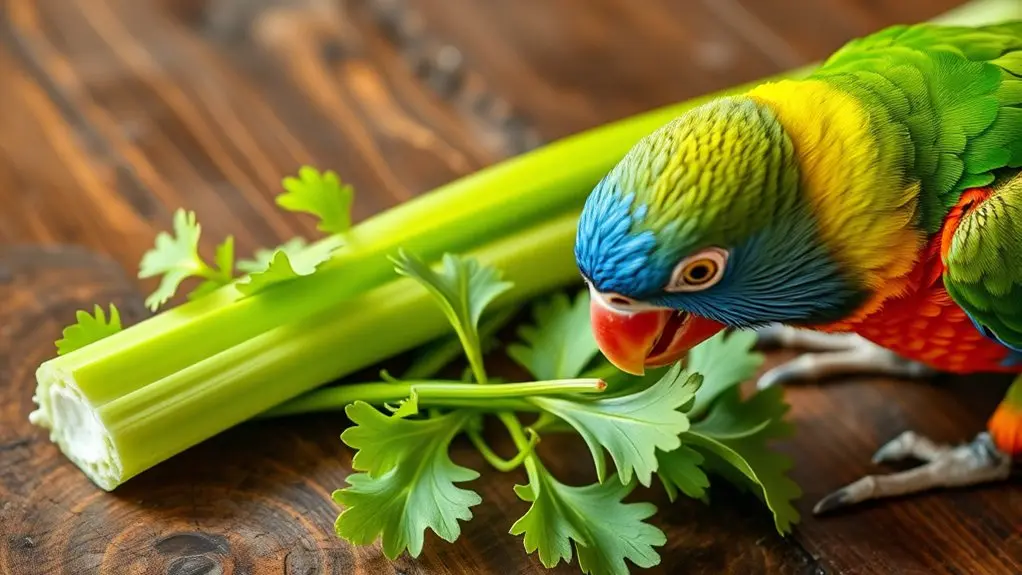
Although celery leaves are generally safe for birds to eat, you should always wash them thoroughly and offer them in moderation.
Unlike the fibrous stalks, celery leaves lack tough fibers that can cause choking or crop impaction, making them a safer choice.
However, pesticide residues on conventionally grown celery leaves can pose health risks, so opting for organic, pesticide-free leaves is essential.
Since celery leaves are primarily water with limited calories, they shouldn’t replace a bird’s staple diet.
Feeding celery leaves excessively or frequently may cause nutrient imbalances, especially if your bird’s diet lacks sufficient protein and calcium.
Nutritional Benefits of Celery Leaves for Birds
When you include celery leaves in your bird’s diet, you provide a rich source of essential vitamins such as A, C, and K. These vitamins play crucial roles in supporting immune function, skin health, and blood clotting.
Compared to celery stalks, the leaves contain higher concentrations of these nutrients, making them a more beneficial choice. They also supply calcium and antioxidants that help maintain cellular function and overall health.
Celery leaves offer more nutrients, calcium, and antioxidants than stalks, supporting better cellular health.
Because celery leaves have a softer texture, they reduce choking risks common with fibrous stalks. However, celery leaves are mostly water and low in calories, so you should incorporate them as part of a varied diet alongside other nutrient-dense foods.
This balanced approach ensures your bird receives thorough nutrition for prime well-being.
Preparing Celery Leaves Safely
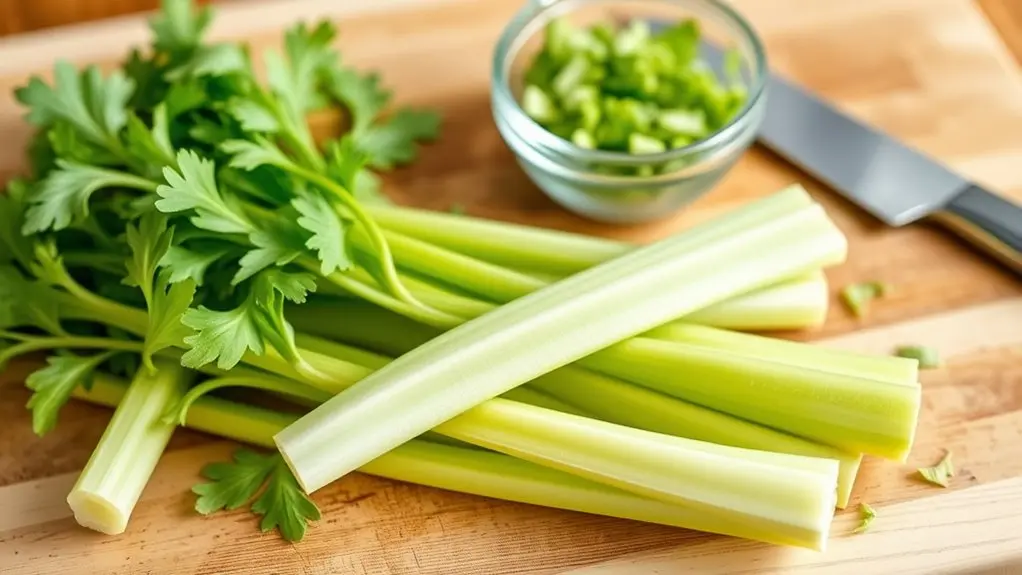
Since celery leaves can carry pesticides and dirt, you should always wash them thoroughly before offering them to your bird. Rinsing under cold running water helps remove surface contaminants effectively.
After washing, check the leaves for tough fibers or grit. If you find any, peel or trim these parts to reduce ingestion risks. Chopping the leaves into small, manageable pieces minimizes choking hazards and makes it easier for your bird to eat.
To make things even safer, consider lightly steaming the leaves. This softens the fibrous tissues, making them gentler on your bird’s digestive system and reducing potential irritation.
Always make sure the leaves are fresh and free from chemicals before feeding. By following these steps, you can safely give celery leaves as a nutritious treat for your bird now and then.
Safe Portion Sizes for Feeding Celery Leaves
After preparing celery leaves properly, understanding the right portion size helps maintain your bird’s health. Overfeeding can cause nutritional imbalances and digestive issues, so precise amounts are essential.
Follow these guidelines:
For adult parrots, offer 1-2 teaspoons of celery leaves per feeding, about 2-3 times a week.
Baby birds and small species should get a tiny pinch, roughly 1/4 teaspoon, once a week.
Wild birds need even less—limit it to a quantity the size of a fingernail clipping to avoid giving them too much.
Also, make sure to remove leftover leaves after a few hours to prevent spoilage, especially when it’s warm. This keeps your feathered friends safe and happy!
Health Problems to Watch For With Celery Leaves
Although celery leaves might seem like a harmless treat, feeding them in large amounts can pose several health risks to your bird. Their fibrous, leafy texture increases the chance of choking, especially if your bird consumes them quickly or in large pieces.
Also, pesticide residues often found on conventionally grown celery leaves can be toxic if not thoroughly washed or sourced organically. Overconsumption may lead to digestive upset or intestinal blockages because of the leaves’ high fiber content.
Plus, celery leaves contain minimal nutrients and don’t provide significant energy. So relying on them too much can mess with your bird’s mineral balance, especially calcium and phosphorus levels, which might cause metabolic issues.
It’s really important to watch the quantity and where you get them from to avoid these health problems.
Safer Veggies to Feed Instead of Celery Leaves
When you’re picking safer veggies for your birds, it’s a good idea to go for nutrient-packed leafy greens like kale, spinach, dandelion greens, and arugula. These choices not only give your feathered friends important vitamins and antioxidants but also have softer textures, which means less chance of choking compared to celery leaves.
Just be sure to offer organic greens that are thoroughly washed to keep pesticides away and help your bird stay healthy overall.
Nutrient-Rich Alternatives
Three categories of vegetables stand out as safer, nutrient-rich alternatives to celery leaves for birds: leafy greens, brightly colored vegetables, and edible herbs. You can enhance your bird’s diet by choosing options that deliver essential vitamins, minerals, and antioxidants while minimizing risks.
Bell peppers and carrots provide vitamin C and beta-carotene. These nutrients are essential for immune function and vision health.
Broccoli and Brussels sprouts supply fiber, antioxidants, and calcium. They support bone strength and overall wellbeing.
Edible herbs like parsley, cilantro, and basil offer safe, flavorful variety and additional nutrients.
Leafy greens such as kale, spinach, and arugula deliver important vitamins and minerals. We’ll cover these in detail later.
Avoid celery stalks due to low nutrition and choking hazards. Instead, opt for these nutritious, safer choices.
Safe Leafy Greens
While celery leaves present a safer alternative to celery stalks, you can provide your bird with a wider range of leafy greens that deliver more substantial nutritional benefits.
Options like kale, spinach, Swiss chard, and collard greens offer higher concentrations of vitamins A, C, and K, along with essential minerals such as calcium and iron. These greens have softer textures and fewer fibrous strands, reducing choking risks compared to celery stalks.
Always wash leafy greens thoroughly to remove pesticides and contaminants before feeding.
Introduce new vegetables gradually and in small, chopped portions to monitor your bird’s tolerance.
While celery leaves can be a hydrating, low-calorie treat, choosing nutrient-rich greens ensures your bird receives balanced nourishment for prime health and vitality.
How to Get Birds to Eat Celery Leaves
Because birds can be hesitant to try unfamiliar foods, you should introduce celery leaves gradually by presenting them alongside greens they already recognize. Start by thoroughly washing the leaves to eliminate pesticides and contaminants.
Introduce celery leaves slowly with familiar greens, ensuring they’re thoroughly washed to remove pesticides.
Then, help your bird acclimate by following these steps: Offer small, shredded portions of celery leaves to make them easier to eat. Mix celery leaves with your bird’s regular diet or favorite treats to encourage trial.
Place the leaves near your bird or demonstrate eating them yourself as a positive visual cue. Maintain consistency in offering celery leaves alongside familiar greens to promote acceptance.
This systematic approach leverages your bird’s natural curiosity and social learning, increasing the likelihood that celery leaves become a safe, nutritious addition to their diet. Just be patient and keep offering them regularly!
When to Consult a Vet About Feeding Celery Leaves
Introducing celery leaves to your bird’s diet can be beneficial, but there are important things to keep in mind before making them a regular part of their meals. You should definitely check with a veterinarian before introducing celery leaves, especially if your bird is young, elderly, or has any underlying health issues.
If your bird shows signs of digestive upset, lethargy, or behaves oddly after eating celery leaves, seek veterinary advice right away. A vet can help figure out if celery leaves are a good fit for your bird’s diet and suggest safe portion sizes.
Regular check-ups are a great way to keep an eye on calcium levels and overall health. This makes sure treats like celery leaves don’t interfere with nutrition or any medications your bird might be on.
Always put professional guidance first to keep your bird happy and healthy when trying out new foods.
Frequently Asked Questions
Can Celery Leaves Affect a Bird’s Feather Color?
Yes, celery leaves can subtly influence your bird’s feather color by providing chlorophyll and carotenoids. These nutrients help support pigmentation and vibrancy in the feathers.
That said, effects can vary a lot from bird to bird. Overconsumption of celery leaves won’t drastically change feather coloration all by itself. So, it’s good to offer them as part of a balanced diet rather than relying on them alone.
Do Celery Leaves Attract Insects Harmful to Birds?
Yes, celery leaves attract insects like aphids and ants, which can carry parasites, pathogens, or toxins harmful to birds. You should wash leaves thoroughly to reduce insect presence.
But even with washing, it’s a good idea to stay cautious about the potential risks when feeding birds celery leaves. Better safe than sorry!
Are Celery Leaves Safe for Baby Birds to Eat?
Just like a cautious gardener tends seedlings, you should only offer baby birds thoroughly washed, finely chopped celery leaves sparingly. Their high water content means you need to be careful with how much you give them.
Too much can cause digestive upset, so moderation is key. This way, you keep it safe and still provide some nutritional benefit.
Can Celery Leaves Be Mixed With Birdseed Safely?
Yes, you can safely mix small, chopped celery leaves with birdseed as an occasional treat. Just make sure they’re thoroughly washed and pesticide-free.
Always keep an eye on your birds when you introduce this new food. That way, you can catch any adverse reactions early. It’s all about keeping your feathered friends happy and healthy!
Do All Bird Species Tolerate Celery Leaves Equally?
Not all birds tolerate celery leaves equally. While finches and budgerigars digest them well, larger parrots may need moderation.
Think of tolerance as a spectrum shaped by species-specific digestive traits and dietary needs. You really have to consider these carefully.
Conclusion
You can safely serve celery leaves to your bird, but stay savvy about sizing and signs of sensitivity. Celery leaves supply significant nutrients, supporting your bird’s health, but should be supplemented with safer, varied veggies. Preparing leaves properly prevents potential problems.
And if your bird is picky, don’t worry—it might just take some patient persuasion. Prioritize prevention and promptly consult a vet if concerning symptoms surface. Careful, consistent choices create a healthier, happier habitat for your feathered friend.